![[DJC]](/gifs/djc.gif) | |
![[design '97]](design97.gif)
|
|
| |
|
|
Creative responses in changing water utility industryBy JOHN FORMANR.W. Beck In the United States today, about 80 percent of our water systems are municipally operated and 20 percent are privately operated. About 95 percent of our wastewater systems are municipal-owned. Those statistics will change over the next few years as public and private entities find innovative ways to work together in response to marketplace pressures.
Many of our water utilities have aging facilities in need of repair and replacement, and face more stringent regulatory requirements. The Safe Drinking Water Act, for example, calls for more than $30 billion in new facilities over the next five years, and the Clean Water Act directs these utilities to spend nearly $175 billion over a longer period, but there is likely to be less federal funding available to help meet these requirements.
On top of that regulatory pressure, population shifts and growth have put existing facilities at or beyond their design capacity. Increasingly, well-financed private-sector firms are targeting municipal wastewater projects.
Alternative project delivery approaches to contracting and financing such as engineer/procure/construct arrangements, and the various forms of design/build options have been available for some time. More recently, President Clinton and the Environmental Protection Agency have been promoting public-private partnerships.
R.W. Beck recently has been involved in two creative efforts to meet these challenges: the Seattle Public Utilities' Tolt Water Treatment Facilities and the Cranston, R.I., Wastewater Treatment Facilities.
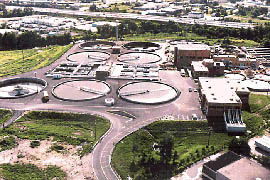
The other case involves an East Coast industrial city with aging facilities. It needed to deal with regulatory compliance and limited resources, which meant that it could afford fundamental technology that would get the job done with as few extras as possible.
Both utilities saw that alternative project delivery systems could produce significant savings that could be used elsewhere, while allowing them to maintain ownership of their facilities. Seattle had done extensive planning and preliminary design, which gave planners a good idea of the project costs using a conventional approach. Cranston's engineer had proposed construction costs of about $50 million for that city's project.
Seattle uses DBO
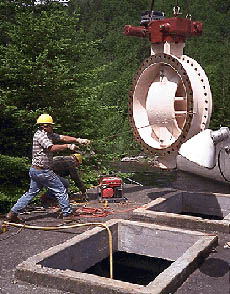
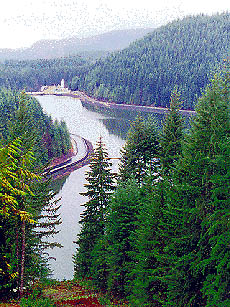
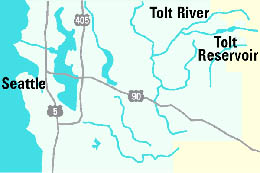
Seattle chose a creative design/build/operate (DBO) route that combines design, construction and long-term operation in one contractual arrangement. The 120 mgd Tolt project will provide nearly a third of the drinking water for the Seattle metropolitan area. It is the largest water treatment plant in the United States to be developed using this type of contracting.
The process was initiated in an effort to reduce capital and operating costs. Once the selected DBO contractor, Camp Dresser McKee, completes the facility, it will include ozonation, flocculation, filtration and chlorination treatment processes, as well as fluoridation and corrosion control.
These will result in water quality that exceeds federal and state regulatory requirements, while substantially reducing many environmental impacts. The simple, compact and aesthetically appropriate facility will also save the city about $70 million over using the conventional approach. The 25-year operating agreement with Camp Dresser McKee will also provide some long-term stability.
Cranston was a cash-strapped city carrying a sizable debt and its wastewater system was out of compliance with the EPA. It appeared that an outright sale of the system with a major rate increase would be necessary, and a new facility or a facility upgrade had the potential to become a political football.
Cranston chose another option: a public/private partnership with Triton Ocean State, a subsidiary of Poseidon Resources Corp. Triton will modify a 23 mgd treatment plant, 21 pump stations, 190 miles of sewer pipeline and provide advanced wastewater treatment to meet effluent standards, operating and maintaining the system under a 25-year operating lease. This is one of the first of its kind under new federal guidelines.
The arrangement also includes a front-end concession payment of about $48 million that Cranston will use to defease outstanding bonds and pay back sewer system loans from other city funds.
Seattle will see savings over the long-term and realize lower capital costs annually, while Cranston is seeing its savings immediately and is able to use those funds for other urgent needs.
Although neither the Seattle or Cranston facilities are constructed yet, the end results for both look promising, and should provide good models for other utilities debating similar issues.
John Forman is a management consultant in the Seattle office of the consulting engineering firm of R.W. Beck.
 Return to design '97 top page Return to design '97 top pageCopyright © 1997 Seattle Daily Journal of Commerce. |