



|
||
|
Fazio Associates |
||
|
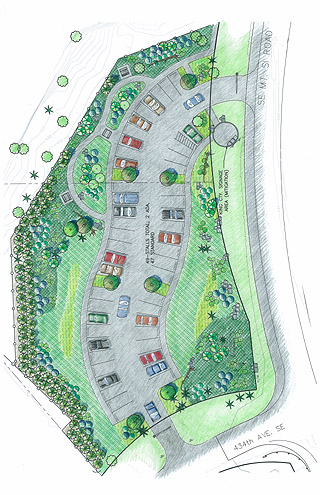
Landscape architects are being brought onboard development projects earlier in the process, said Rob Fazio, principal of Fazio Associates. “It just makes better use of the site,” said Fazio, who said he’s seen this change in the last six to eight years. More than trees Firms like Fazio’s do more than just plant trees. Working with civil engineers, they provide site planning, including outlining view corridors, laying out pathways, sidewalks and crosswalks, he said. They understand pedestrian and vehicular circulation, and their relationship to each other, he said. One industry trend, Fazio said, is more developers are buying into sustainability in regards to landscape architecture. They are using plants to provide shade and keep buildings cool, developing roof gardens, layering vegetation, and keeping existing on-site trees. Doing these things can help “soften” the impact of a high-rise building and reduce energy consumption, he said.
A “sub-trend” of sustainability, Fazio said, is that private and public developers have become more cognizant of the effects of storm water runoff on the environment. They are using an array of approaches to mitigate its effect, he said. Among those approaches are bio-retention swales, rain gardens and planters that filter storm runoff before it discharges or retain the water. Development slowing? One concern Fazio has is development locally has apparently slowed in the last three to four months. He said it appears that developers are not moving forward with as many projects as in the recent past. “I am just hearing through people in the industry that developers are being a little more prudent on projects,” he said. |