
Jones & Stokes
Specialty: Transportation, urban planning, restoration
Management: Greg Summers, regional operations leader; Deborah Munkberg, Bellevue branch leader
Founded: 1970, 1981 (Washington)
Headquarters: Sacramento, Calif.; Portland (Pacific Northwest)
2005 revenues: $10.5 million (Pacific Northwest)
Projected 2006 revenues: $12 million
Current projects: Kitsap County’s GMA comprehensive plan and EIS; feasibility study for U.S. Army Corps of Engineers on replacing the Elliott Bay seawall; Pierce County restoration projects on Clover Creek
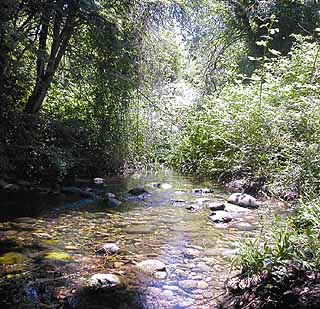
Photo courtesy Jones & Stokes Jones & Stokes is working with Pierce County to plan, design and permit several projects along Clover Creek that would restore habitat, improve floodplain function and increase native plant diversity.
|
The Washington state offices of Jones & Stokes will be carefully monitoring how Initiative 933, the “property fairness” initiative, does at the polls this fall. This initiative, which would require governments to compensate landowners when regulations “damage the use or value” of private property, could have a major effect on land-use planning and regulations, said Deborah Munkberg.
“Our role as planning consultants is to help communities plan for the greatest public benefit,” Munkberg said.
“Initiative 933 may make it more difficult for communities to balance community benefit and individual property use and value.”
|
Jones & Stokes is also keeping track on how the recent U.S. Supreme Court decision on wetlands, U.S. v. Rapanos, plays out with local regulators. In that decision, which limited federal jurisdiction over wetlands, the court decided that only “relatively permanent” water bodies such as oceans, lakes and flowing streams are regulated by the Clean Water Act. The decision preempts U.S. Army Corps of Engineers regulation of wet meadows, storm sewers, culverts and drainage ditches.
“The Clean Water Act and corps jurisdiction are one of the bigger regulatory drivers for our region,” said Chris Cziesla of Jones & Stokes’ Bellevue office.
As a result of the Supreme Court decision, Cziesla said, projects which impact wetlands may no longer have to go through so many layers of review because federal NEPA and ESA requirements would not be necessary.

Munkberg |
“It would change the process,” Cziesla said.
Web-based water permits
Jones & Stokes is excited about the new Web site it has just developed, working with several state and federal agencies, for people who need water permits. With the Joint Aquatic Resource Permit Application, anyone needing a federal, state or local water permit can now apply for it online.