 |
Subscribe / Renew |
 |
Contact Us |
| ► Subscribe to our Free Weekly Newsletter | |

Construction Bids
| home | Welcome, sign in or click here to subscribe. | login |


 print print  email to a friend email to a friend  reprints add to mydjc reprints add to mydjc |  |
June 8, 2022
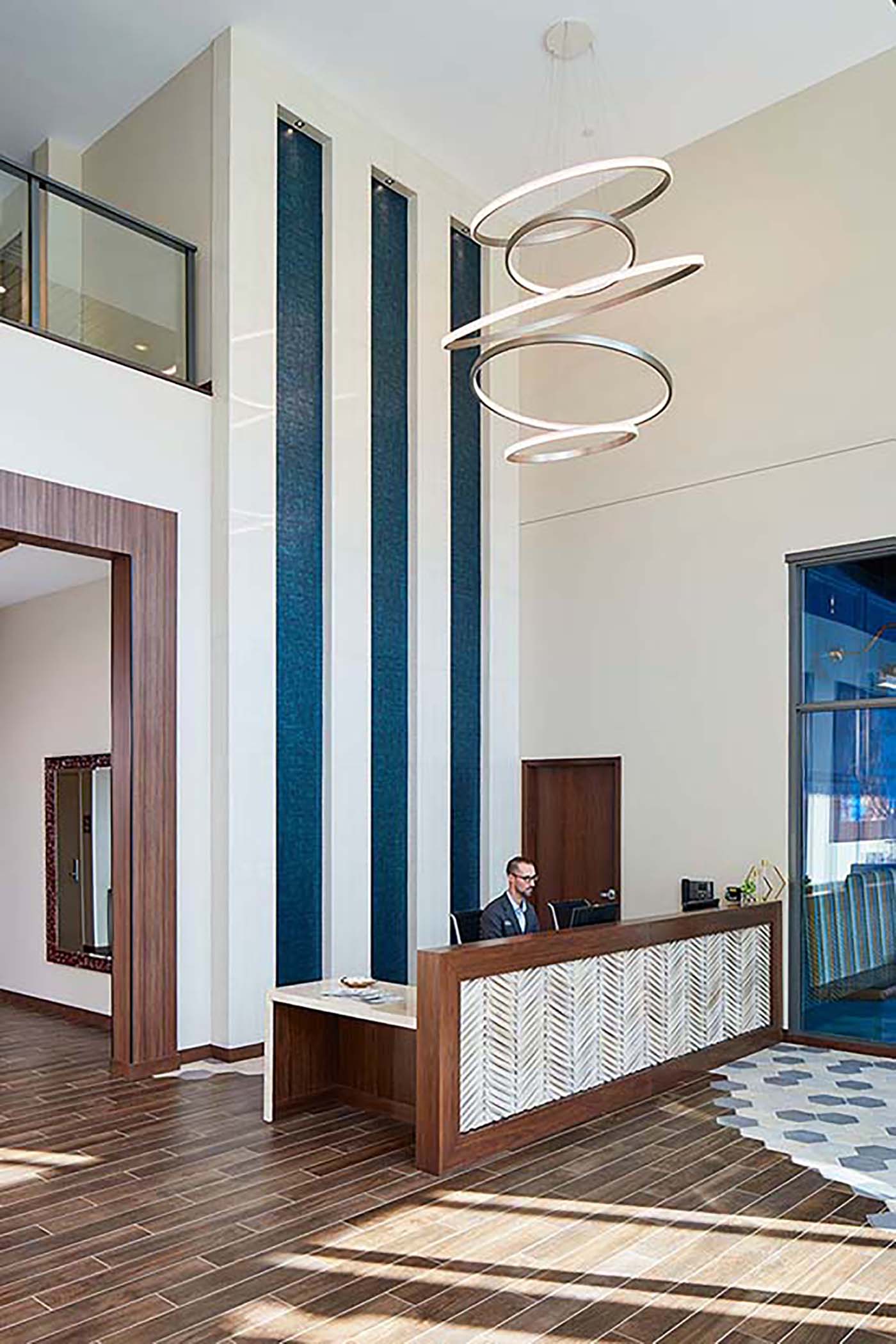
The experience of walking into a senior community in Washington might not be what you expect. Often associated with a clinical or institutional feel, today's communities are more akin to entering a hotel or a luxury apartment building.
Speaking with architecture firms in Washington, they note how hospitality-minded design has taken over the sector in the last 10 to 15 years for both for- and non-profit senior communities/developments. The other major design driver is resident health and not just in a medical or physical sense. Most senior communities in Washington offer different levels of care in one space (typically independent, assisted living, and memory care) which greatly influences design but communities are also planned in ways that promote the social, cultural and mental health of residents.
“When we are designing for these communities we need to make sure that we have spaces to provide the needed care and support for residents but it's equally important that this is done in a way that makes the space feel less like an institution and more like a hotel or resort,” Dean Kelly, principal in Rice Fergus Miller's housing studio, shared. “One thing we really prioritize is the blending of hospitality and health elements so that they work together and it's not like you walk into a community and see a separate health wing and a social wing, the care and physical health element is always there but it's more in the background now,” Jennifer Fleming, principal and interior designer at Rice Fergus Miller, added.
“When we design in this market we have three main goals: to empower residents by creating choice and variety, to design spaces that enhance quality of life and spaces that create an air of care and inclusivity,” Jason Erdahl, director of senior communities at Ankrom Moisan, said.
This is achieved in large part by designing communities with a variety of amenity spaces, like those you would expect to find at a resort. The numbers and types being dependent on the size and setting of the development. “It's almost like creating a cruise ship but within a building,” Fleming explained. For example, it is now typical to find two or three restaurants within a community rather than having one dining hall. Restaurant choice is also diverse and often ranges from casual to high end, all within one development. “What we aim to do is create destination dining,” Fleming continued.
Typical amenity spaces include lounges, wellness rooms, event rooms and pools. In smaller more urban communities sometimes you have to get more creative. For example, at the 10-story, 189,917-square-foot Bayview Retirement Community in Queen Anne, which Rice Fergus Miller renovated and rehabbed in 2016, the architects added an arts, crafts and maker space, and a 10th floor sky lounge. The community library also underwent a major transformation. Rice Fergus Miller shared that since the $57 million renovation, Bayview has seen a big uptick in residents and also a decrease in their age, as people have come to take advantage of the amenities on offer.
Another way that quality of life is being aided by design in senior communities is through the creation of flex spaces within a project and/or building. “Creating flexible spaces that can pivot and host diverse activities is a great way of adding excitement to a resident's day, which has been shown to increase happiness and wellbeing,” Erdahl explained. This principle was applied at Ankrom Moisan's Murano Senior Living community, which opened in 2019 in the First Hill neighborhood. The front desk and lobby at Murano is conceived as a flex space and transitions from a coffee bar in the morning to a wine and cocktail area at night.
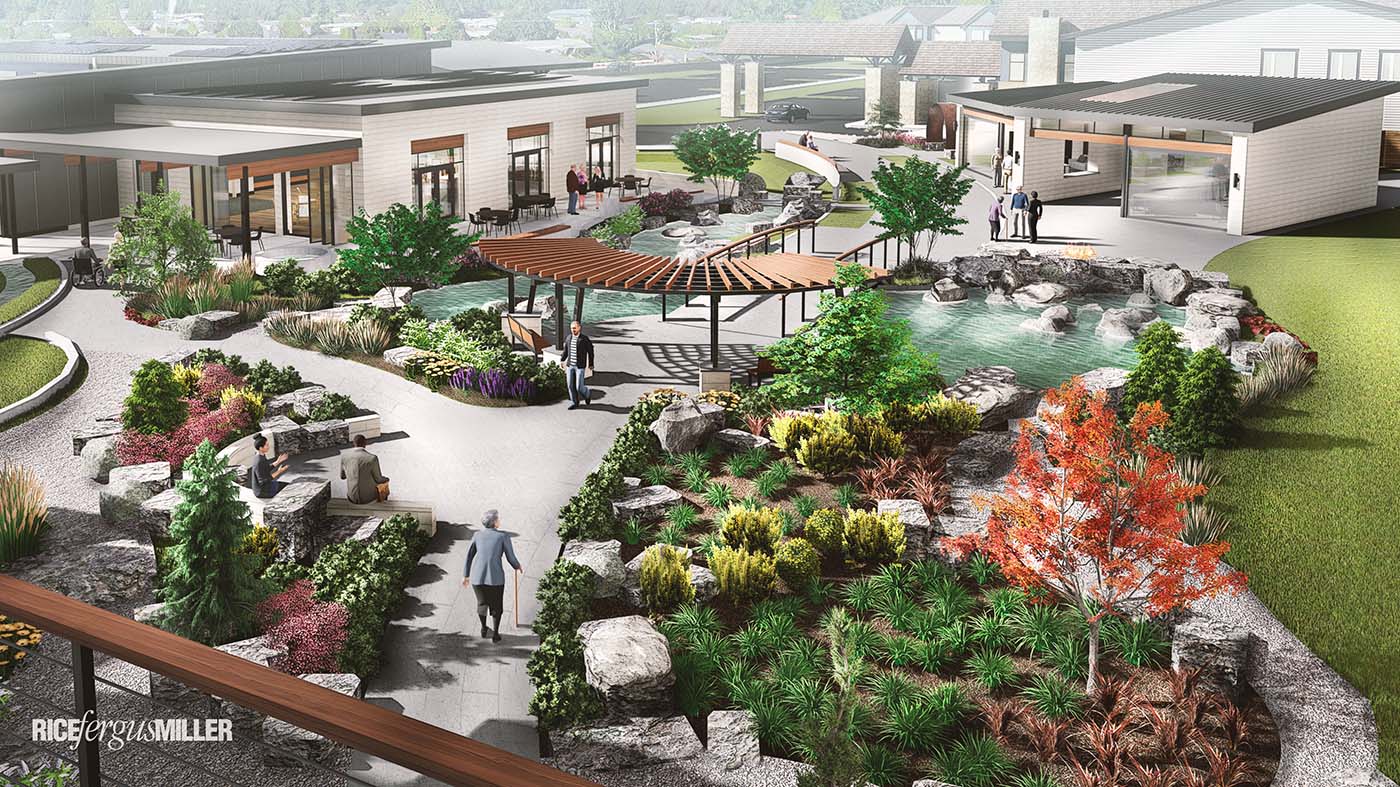
Making sure that there is ample access to nature and the outdoors is also really important when designing for the senior market. Lushly landscaped courtyards and biophilic interiors are common. Architects also take great care to ensure that common areas are orientated to let in as much natural light as possible for those residents who might have a hard time physically getting outside. Rice Fergus Miller's outdoor garden and courtyard expansion project at Panorama in Lacey is a great example of how the biophilic trend is impacting design in this sector. The new courtyard, which is currently under construction, will have a mix of indoor and outdoor spaces that include a covered dining pavilion fitted with heaters for year round use. Residents can also sit amidst beautifully landscaped gardens with a manmade pool and bridge feature.
As with all markets, the client has a big impact on design. In Washington, where seniors tend to be more active than in some other areas of the country, Erdahl shared that in recent years he has seen a rise in demand for communities within an urban setting and with intergenerational components. Examples include Aegis Living's community in Newcastle which has a daycare and its Kirkland community that has a publicly accessible coffee shop. Both of these communities are designed by Ankrom Moisan.
Another thing that Erdahl shared was typical of the design of senior communities is that they tend to reflect or at least have some nod to the historical architecture of the neighborhoods in which they are located. “Seniors tend to like to live in spaces with a design that is grounded in community and history,” he explained, “I think this makes the experience of living there more meaningful.”
Broader architectural trends have also been playing out in this market. “One thing that has been really exciting to incorporate into the design of these communities is sustainable features and also new technology, which is something I think we will only continue to see more of,” Kelly said. At Panorama for example there is an electronic dashboard in a community room where residence can see data about the building's performance. The community also features a solar array. “Another trend that I think we can expect to see more of in the future is the growth of communities that take a less western, and more communal approach, to senior living,” Fleming said, noting the preference of many tribal elders to live in developments with a more communal and informal structure opposed to the more individualist resort style model.
Emma Hinchliffe can be
reached by email or by phone
at (206) 622-8272.


