|
Subscribe / Renew |
 |
Contact Us |
| ► Subscribe to our Free Weekly Newsletter | |

Construction Bids
| home | Welcome, sign in or click here to subscribe. | login |


 print print  email to a friend email to a friend  reprints add to mydjc reprints add to mydjc |  |
September 23, 2024

The Interstate Bridge Replacement Program has published the draft supplemental environmental impact statement (SEIS) for the replacement of the Interstate 5 Bridge over the Columbia River.
The project, which is expected to cost in the region of $6 billion, will replace the aging bridge with a modern, seismically resilient multimodal structure. It will also make a host of infrastructure improvements along a 5-mile stretch of the I-5 corridor that extends from approximately Victory Boulevard in Portland to state Route 500 in Vancouver.
The central element in the project is a new pair of bridges crossing the Columbia — one for northbound and one for southbound travel — to be built west of the existing bridge.
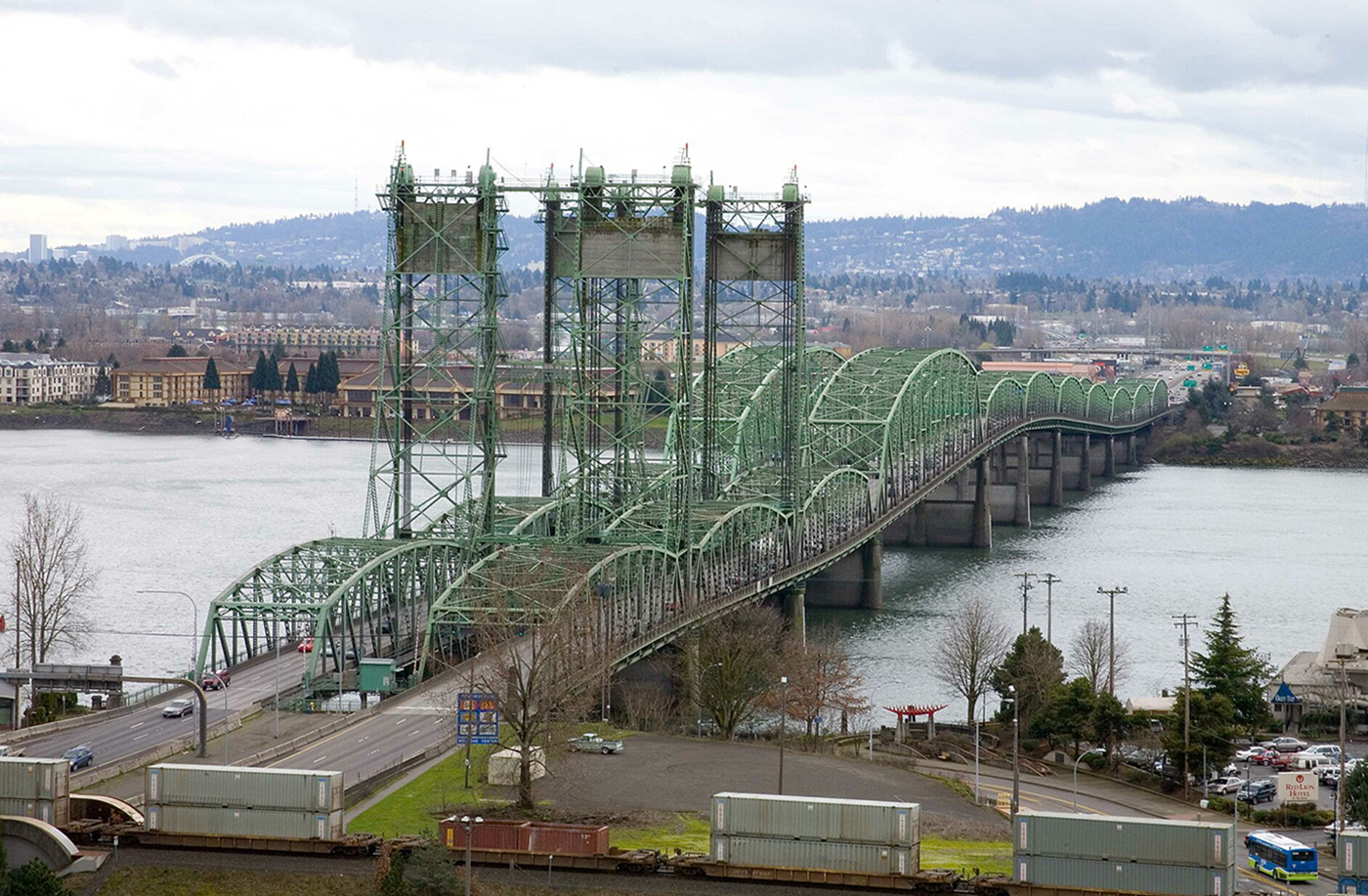
The original span of the current bridge is more than a century old and at risk of collapse in the event of an earthquake. It is also frequently congested with traffic, which is something the replacement project will be designed to reduce.
The draft SEIS was published Friday. It studies the bridge replacement program's potential benefits and impacts on transportation, the environment and the local community. It also provides a detailed overview of the preferred design alternatives/options for the new Columbia River bridges, evaluating the major design elements and the potential associated benefits, impacts, and proposed mitigation measures. The draft SEIS also evaluates a no-build alternative in order to understand what would happen in the future if the proposed improvements are not constructed.
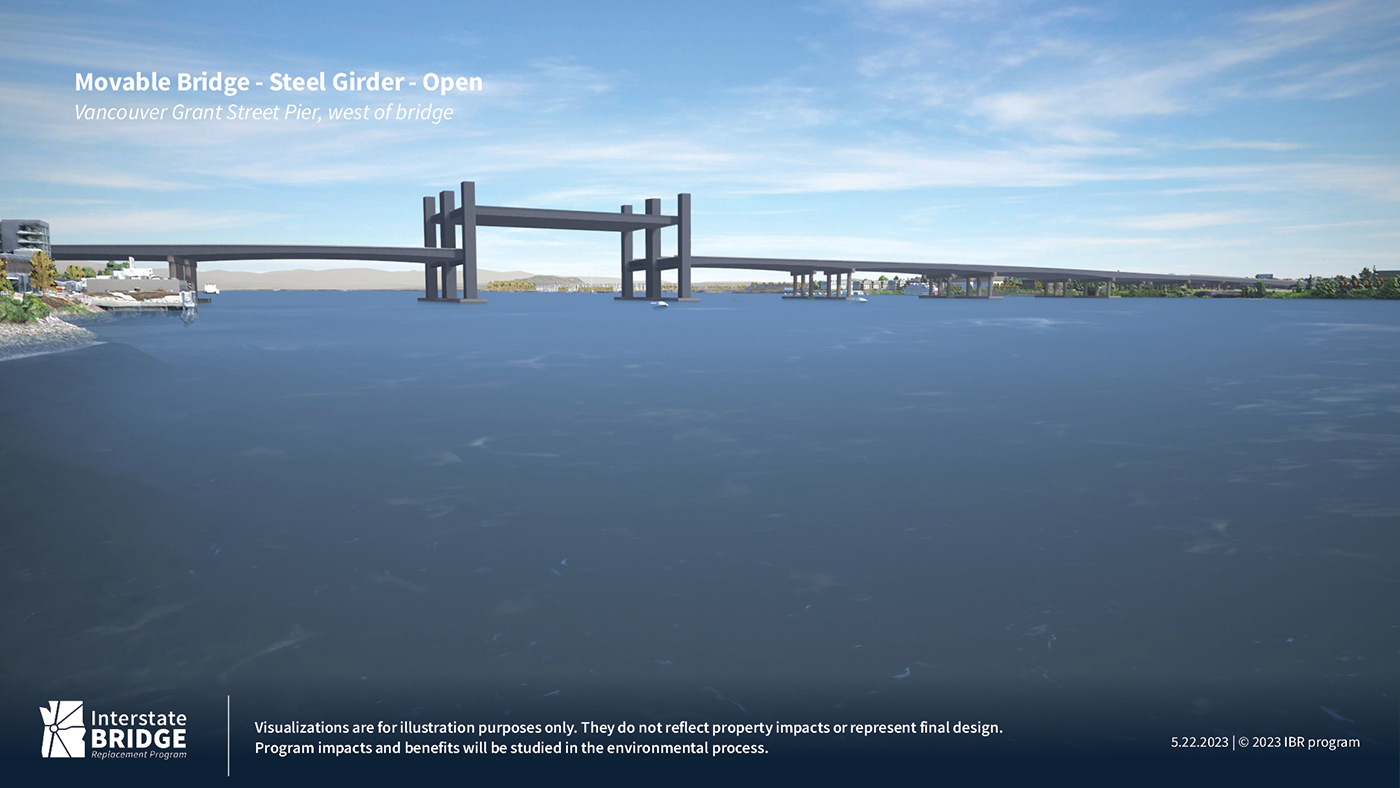
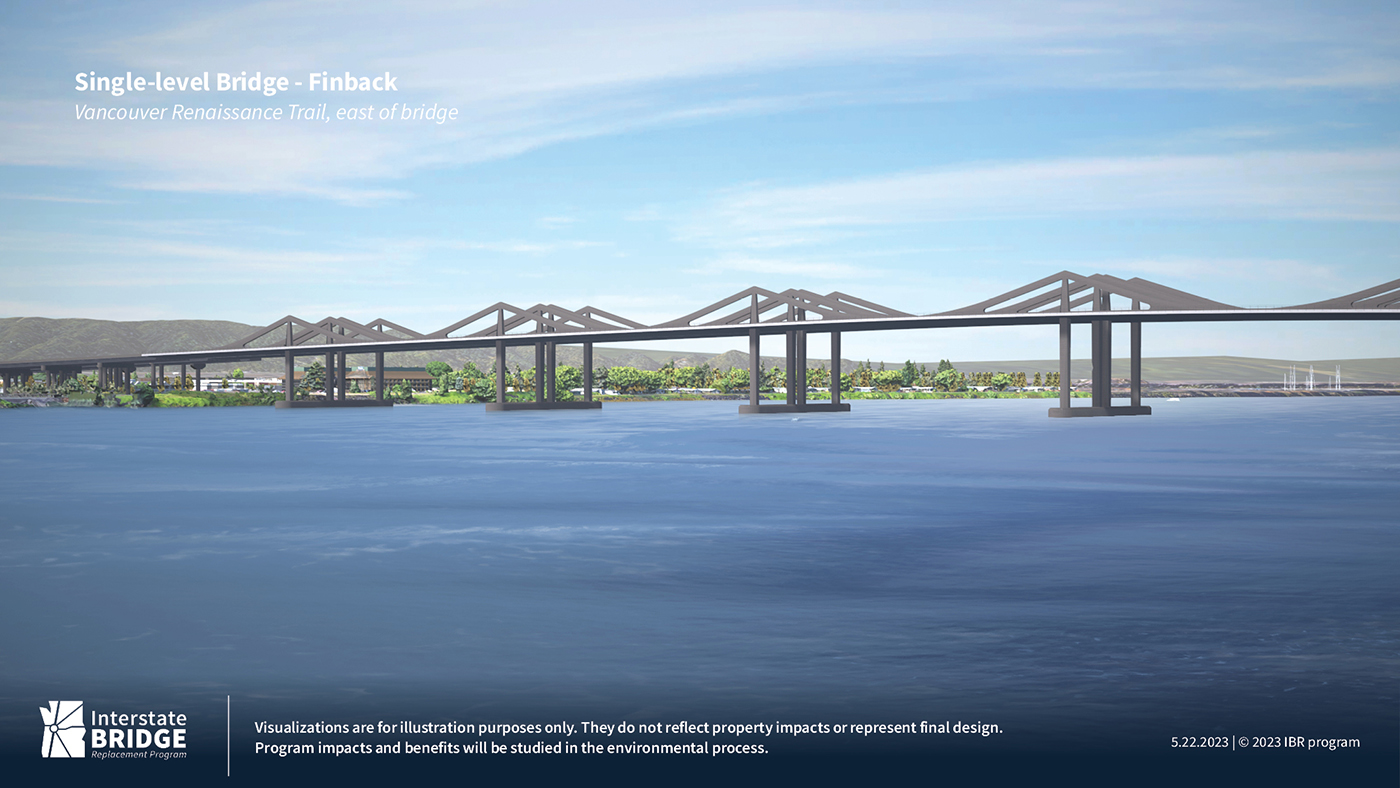
Three configuration options for the replacement bridges are under consideration and explored in detail in the statement. Those are a single-level fixed-span, double-deck fixed-span, and single-level movable-span. In any of the configurations, the new bridges would each include three through lanes, safety shoulders, and one auxiliary lane in each direction.
The fixed-span configurations would provide up to 116 feet of vertical navigation clearance, and the movable-span configuration would provide 178 feet of vertical navigation clearance in the open position.
Other proposed project elements discussed in the draft SEIS include:
• Six new adjacent bridges across North Portland Harbor: one on the east side of the existing I-5 North Portland Harbor bridge and five on the west side or overlapping with the existing bridge (which would be removed)
• A 1.9-mile light-rail transit (LRT) extension of the current Metropolitan Area Express (MAX) Yellow Line, crossing the replacement bridge(s)
• The integration of local bus transit service, including bus rapid transit and express bus routes, in addition to the proposed LRT service
• Improvements to seven I-5 interchanges and I-5 mainline improvements between Interstate Avenue/Victory Boulevard in Portland and SR 500/39th Street in Vancouver
• A variety of improvements for people who walk, bike and roll throughout the study area
• Variable-rate tolling for motorists using the river crossing as a demand management and financing tool
Now that the draft SEIS has been published, the public can weigh in on the project elements and proposed designs. The release kicked off a 60-day public comment period that will run through Nov. 18.
Community feedback will help inform technical analysis, design options and refine the preferred design alternative and configuration for the replacement bridges moving into the final SEIS, including program footprint and mitigations.
The draft SEIS, and more information about how to comment, are at http://www.interstatebridge.org/DraftSEIS#review
The community is encouraged to review the document and provide feedback on the potential benefits and effects of program investments on transportation, the environment and the local community.
The final SEIS and record of decision are anticipated to be issued in 2025 by the Federal Highway Administration and Federal Transit Administration.
The program will then move into the construction phase. Construction of the replacement I-5 bridges is expected to begin in 2026 and take four to seven years. The general work sequence would include initial preparation and installation of foundation piles, shaft caps, pier columns, superstructure, and deck. Demolition of the existing bridge would take place after the new Columbia River bridges were opened to traffic.
Construction of the six smaller bridges is expected to take between four and 10 years.
The project will be funded in part with $2.1 billion from federal grant programs.
Emma Lapworth can be
reached by email or by phone
at (206) 622-8272.