 |
Subscribe / Renew |
 |
Contact Us |
| ► Subscribe to our Free Weekly Newsletter | |

Construction Bids
| home | Welcome, sign in or click here to subscribe. | login |


 print print  email to a friend email to a friend  reprints add to mydjc reprints add to mydjc |  |
January 23, 2025
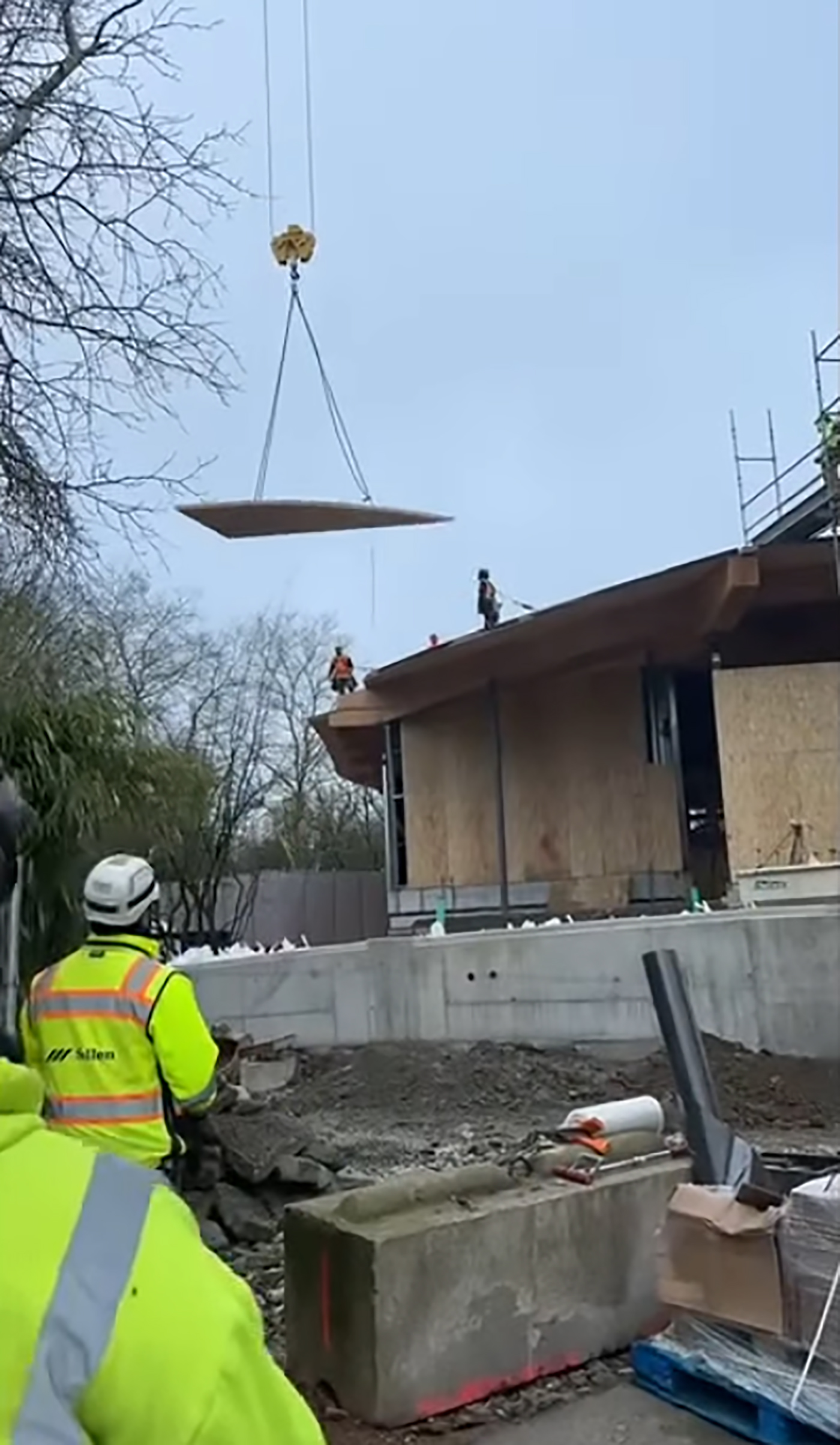
Sellen Construction has placed the final roof panel for the new Forest Trailhead exhibit at Woodland Park Zoo.
Designed by LMN Architects, the interactive exhibit is replacing the former Day/Night House, which was severely damaged in a 2016 fire. It includes a 12,000-square-foot, two-story pavilion building on one acre of grounds and natural habitat.
Construction began in March 2024 and the project topped out last week.
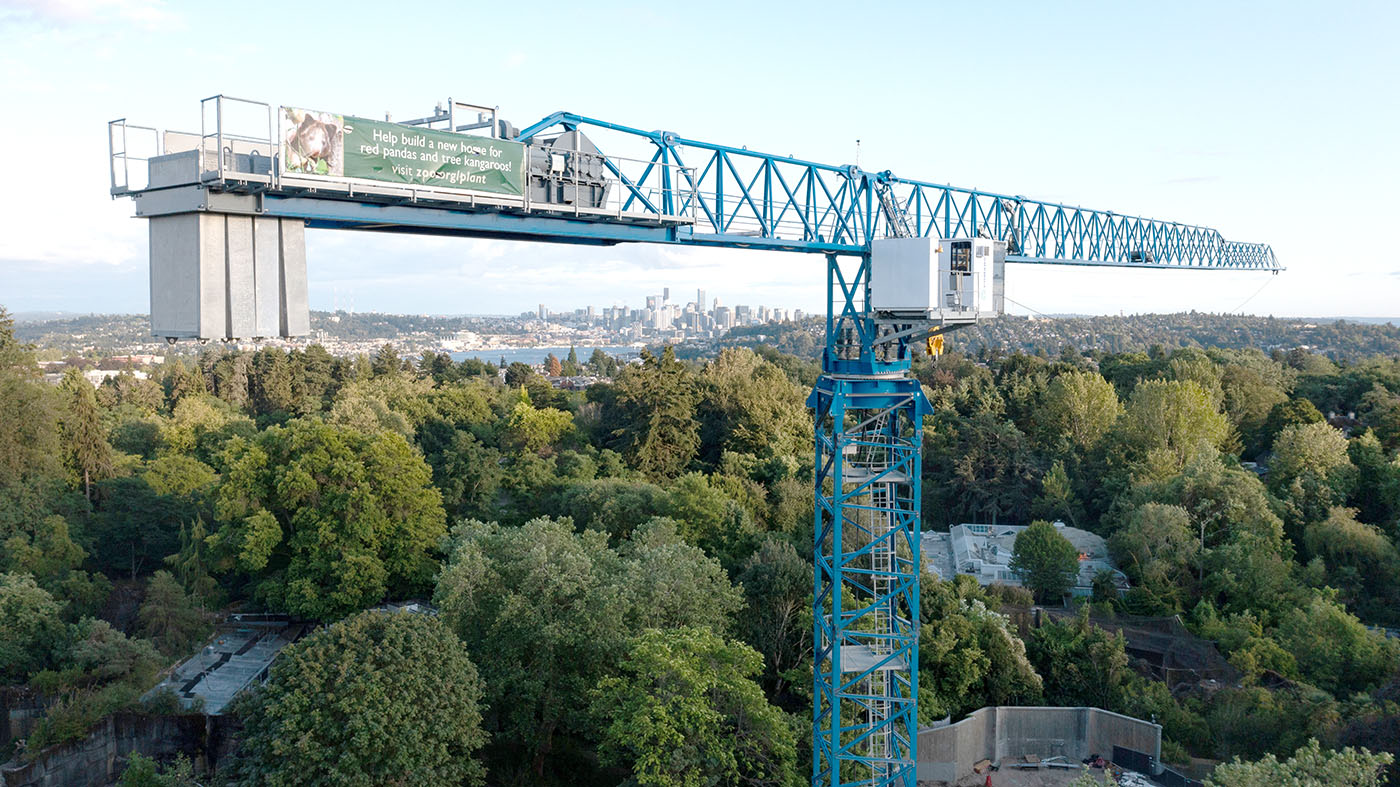
Since last summer, a 125-foot-tall, blue construction crane has towered above the project site. The crane weighs 350,000 pounds and can lift up to 44,000 pounds. It should be dismantled soon now that the exhibit has topped out.
The pavilion will be connected to the habitat via new paths, including an elevated canopy walkway that reaches to surrounding treetops to be populated with resident red pandas and tree kangaroos.
Forest Trailhead is slated to open next year. The new exhibit is expected to cost $39 million and is the final capital project of the zoo's $110 million Forests for All comprehensive fundraising campaign, launched in 2018.
The thematic focus of Forest Trailhead is conservation awareness. Visitors will get to experience the wildlife of the world's forests firsthand, while also learning about conservation efforts by the zoo and its partners to preserve those habitats.
Guests will enter the exhibit via the elevated canopy path, which will lead them through the trees into the pavilion. Once inside, the pavilion's upper level will offer additional viewing spaces for the treetop-dwelling animals. A fully accessible path will lead guests down to the mid-level of the building, which will house habitats featuring kea parrots. The lower level of the structure will include habitats for tree-dwelling reptiles, colorful amphibians, fish and invertebrates in mixed-species groups.
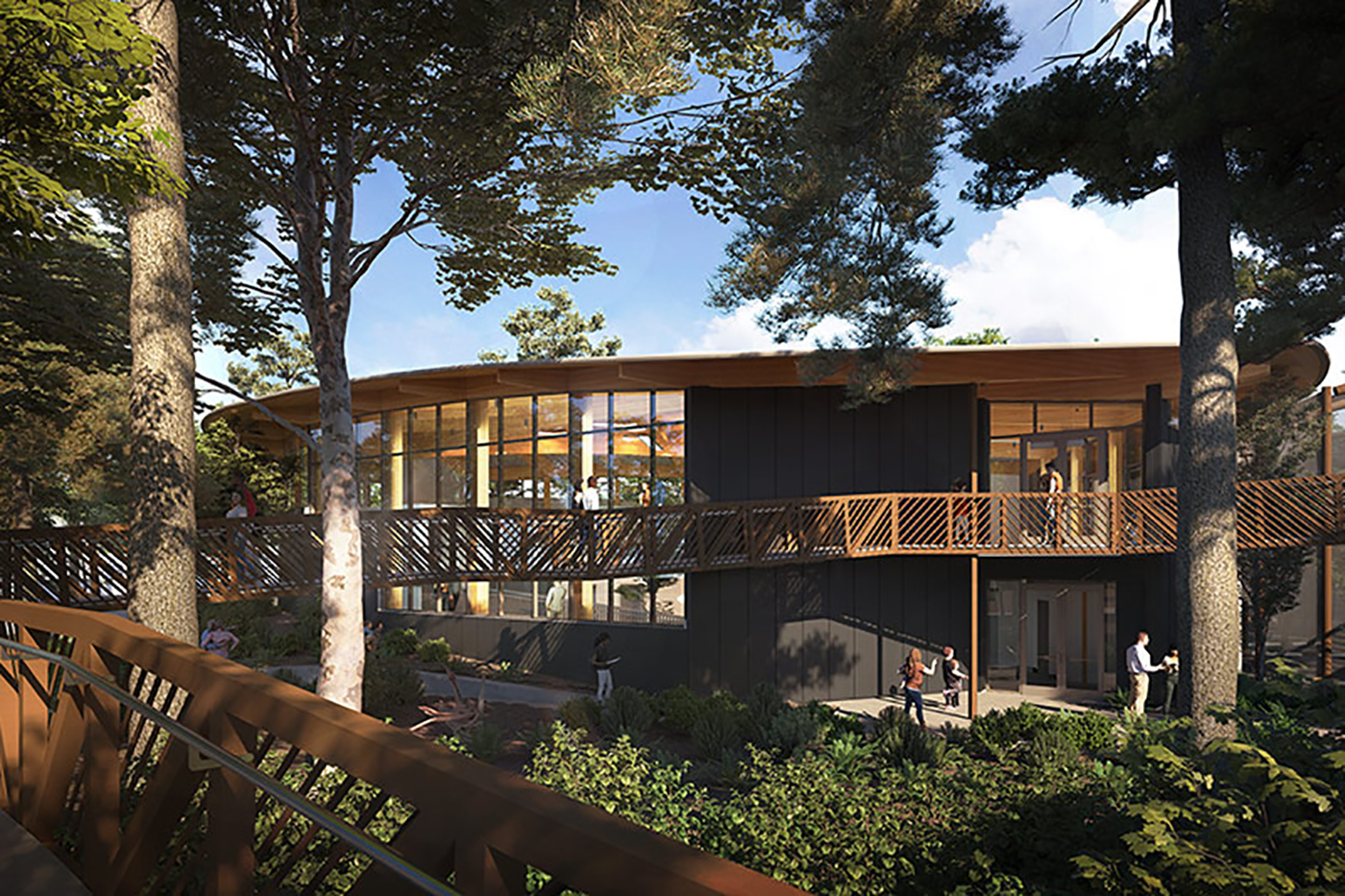
In the pavilion, open plazas will offer interpretive information and can also be used to host animal keeper talks and special events.
CLR Design, which has offices in Philadelphia and Capistrano Beach, California, designed the habitats. The zoo’s in house exhibits team also played a key role in the exhibit design.
The project team also includes Walker Macy, landscape architect; Aware Institute, animal welfare scientist; Tahoma Peak Solutions, indigenous horticulture; Headwater People, tribal engagement; Mayfly Engineering + Design, civil engineer; PAE, MEP engineer; Lund Opsahl, structural engineer; Dark Light Design, lighting design; Stantec, acoustics; Humming Voices, community engagement; Studio Matthews, interpretative design; and DCW Cost Management, cost estimator.
Emma Lapworth can be
reached by email or by phone
at (206) 622-8272.


