 |
Subscribe / Renew |
 |
Contact Us |
| ► Subscribe to our Free Weekly Newsletter | |

Construction Bids
| home | Welcome, sign in or click here to subscribe. | login |


 print print  email to a friend email to a friend  reprints add to mydjc reprints add to mydjc |  |
 |
April 24, 2025

Woltman
|
multi-year, two-phase contaminated marine sediments cleanup project is reshaping the Bellingham waterfront, breathing new life into the Port of Bellingham's economic outlook. The Whatcom Waterway remediation project addresses decades of industrial pollution, while also paving the way for commercial and industrial growth, enhanced public access and recreation, and modernization of a deepwater port terminal facility.
At the center of this ambitious initiative is the revitalization of a site long burdened by contamination from historical industrial uses. The Whatcom Waterway was once home to Georgia-Pacific's pulp and chemical mill operations, which for decades released mercury, pulp waste and other byproducts into the bay. Today, this legacy is being replaced by clean water, new public parks, upgraded infrastructure and developable waterfront property.
A TWO-PHASE APPROACH TO RECOVERY
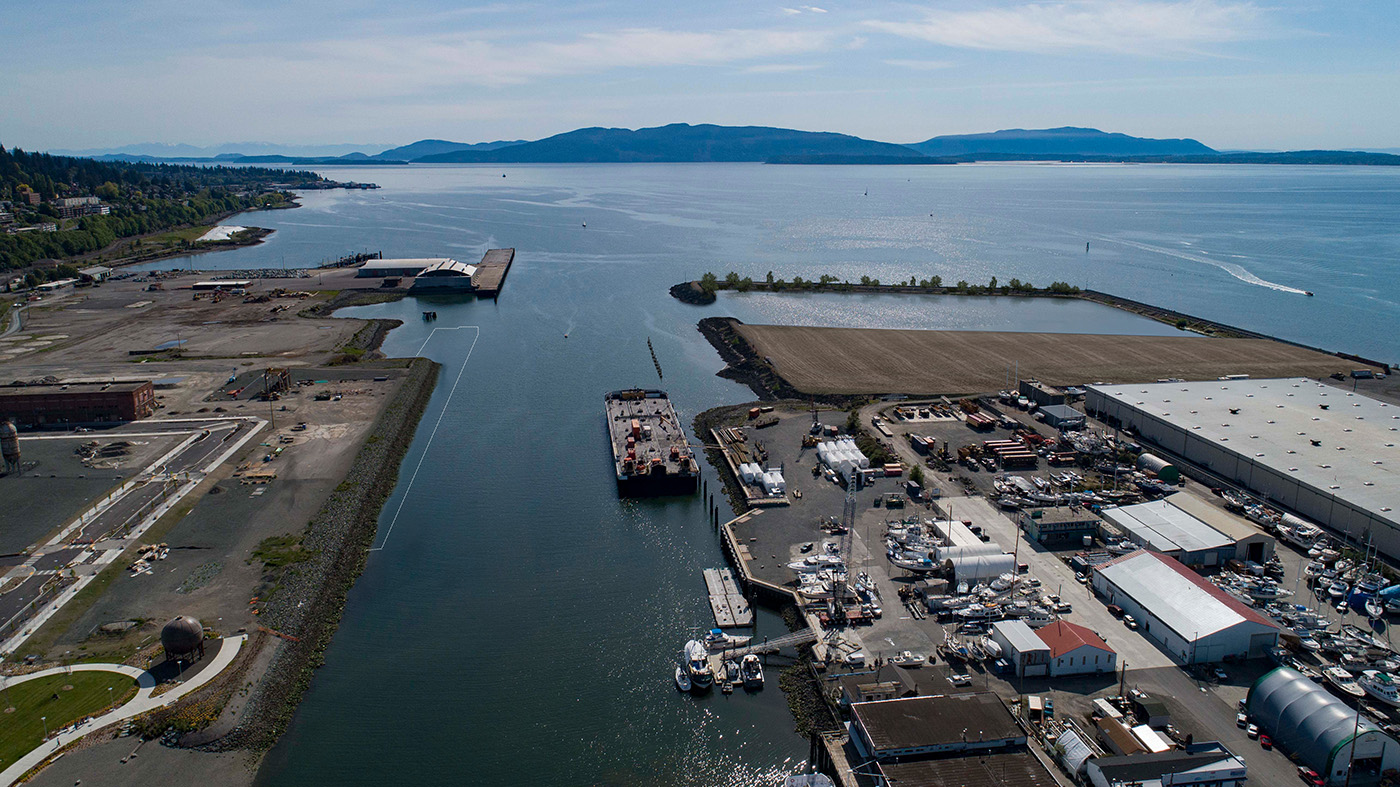
The project is structured in two major phases. Phase 1, completed in 2016, removed over 100,000 cubic yards of contaminated sediment, capped remaining materials and implemented habitat improvements designed to make the effort self-mitigating. Phase 2, currently in the design stage and scheduled for construction between 2027 and 2030, significantly expands the scope of the remediation and its associated benefits.
The cleanup has been guided by a consistent team with deep experience in sediment remediation and shoreline redevelopment. From the outset, the project was intended to do more than address contamination. It is designed to support future investment — clearing the way for port-related industry, expanding public shoreline access and generating environmental credits that can help accelerate permitting for future development.
DEVELOPMENT OPPORTUNITIES ON THE HORIZON
As cleanup progresses, new land is becoming available for high-value economic uses. Once the site of wastewater processing, the 26-acre Aerated Stabilization Basin (ASB) is being reimagined to serve existing and future marine trades tenants. Approximately 13 acres of upland property will be created as part of the cleanup, opening the door for maritime operations, manufacturing or other commercial tenants requiring waterfront access for their businesses.
This aligns with the port's broader land-use vision and Bellingham's goals for job creation and economic diversity. The area is already seeing increased interest from businesses seeking proximity to the deepwater terminal and multimodal shipping routes.
INFRASTRUCTURE AND INDUSTRIAL ACCESS

The Whatcom Waterway cleanup is also helping to restore key transportation infrastructure. In 2023, the port began early dredging at the Bellingham Shipping Terminal to ensure continued navigational access and prevent the redistribution of contaminated sediment from vessel activity. Additional dredging will follow during Phase 2 of the cleanup project, resulting in deepening of the navigational channel.
The project is further coordinating efforts to return rail service to the Bellingham Shipping Terminal. A federal grant secured through congressional support is funding upgrades to the BNSF mainline spur and a switchback track system. These improvements will strengthen Bellingham's role as a flexible and competitive port along the Seattle-to-Vancouver corridor.
CREATIVE SOLUTIONS, LONG-TERM VALUE
A defining feature of the Phase 2 cleanup project is the plan to manage contaminated sediments onsite, saving both time and resources. Rather than transporting over 500,000 cubic yards of contaminated sediments offsite, the cleanup strategy involves building a containment wall within the ASB to create a nearshore confined disposal facility. This secure structure will isolate the material and allow the remaining acreage to be used for future development.
This revised approach required amending the site's consent decree and cleanup action plan with the Washington State Department of Ecology, which originally called for a full marina conversion. By adjusting the plan to current community and economic needs, the port is achieving both environmental protection and long-term usability. The result is reduced cleanup costs, added flexibility for redevelopment and the generation of valuable habitat mitigation credits.
ENHANCING THE PUBLIC REALM
While economic development remains central, the project also contributes significantly to the quality of life along Bellingham Bay. Partnerships between the port and the city of Bellingham have already produced parks and trails, with more improvements on the horizon. Waypoint Park, for example, transformed portions of the former mill site into one of the community's most popular shoreline destinations, with further expansion planned.
The Whatcom Waterway project is part of a comprehensive port-wide remediation and redevelopment effort that weaves together environmental restoration, infrastructure upgrades and land-use planning. The cleanup project is supported in part by Department of Ecology grants. Additional Ecology funding for habitat improvement also includes enhancing the intertidal habitat between the Roeder Avenue and Holly Street bridges — and highlights the value of a holistic approach that integrates cleanup with long-term civic investment.
A MODEL FOR INTEGRATED PORT REDEVELOPMENT
The Whatcom Waterway cleanup offers a compelling model for port cities seeking to balance environmental restoration with economic renewal and public priorities. By tightly integrating cleanup planning with long-term land use, infrastructure goals and habitat enhancement, the project is creating lasting value for the community and for future users of the working waterfront.
When complete, the project will have transformed more than 70 acres of contaminated land and water into a productive, accessible and sustainable shoreline — demonstrating what's possible when environmental responsibility and economic vision align.
Matt Woltman is a principal engineer with Anchor QEA and project manager and lead design engineer on the Whatcom Waterway Phase 2 cleanup project.
Other Stories:


