 |
Subscribe / Renew |
 |
Contact Us |
| ► Subscribe to our Free Weekly Newsletter | |

Construction Bids
| home | Welcome, sign in or click here to subscribe. | login |


 print print  email to a friend email to a friend  reprints add to mydjc reprints add to mydjc |  |
May 14, 2025
Considering an unfavorable office market and a lack of housing stock, much recent discussion — and legislation — in Seattle's commercial real estate sector has centered around the conversion of empty downtown office buildings to residential properties.
Global architecture firm Gensler has been somewhat of a pioneer in the office-to-residential conversion market, and in 2021 developed a conversion calculator that rapidly assesses the suitability of commercial buildings for conversion to multifamily residential using criteria common to all buildings and information that is readily accessible.
The calculator finds on average that around 20% of existing buildings are good candidates for conversion.
Architects at Gensler offices in Portland and Seattle have recently been exploring a different kind of conversion type, which they say could also help reactivate and revitalize struggling downtowns — the conversion of existing but no longer used and/or outdated civic buildings.
I recently spoke with Maurice Reid, managing director and leader of the Building Transformation and Adaptive Reuse practice in Gensler's Portland office, and Chris Kimball, an architect in the Seattle office, about the potential for civic conversions in their respective locales.
OLD BUILDINGS, NEW POSSIBILITIES
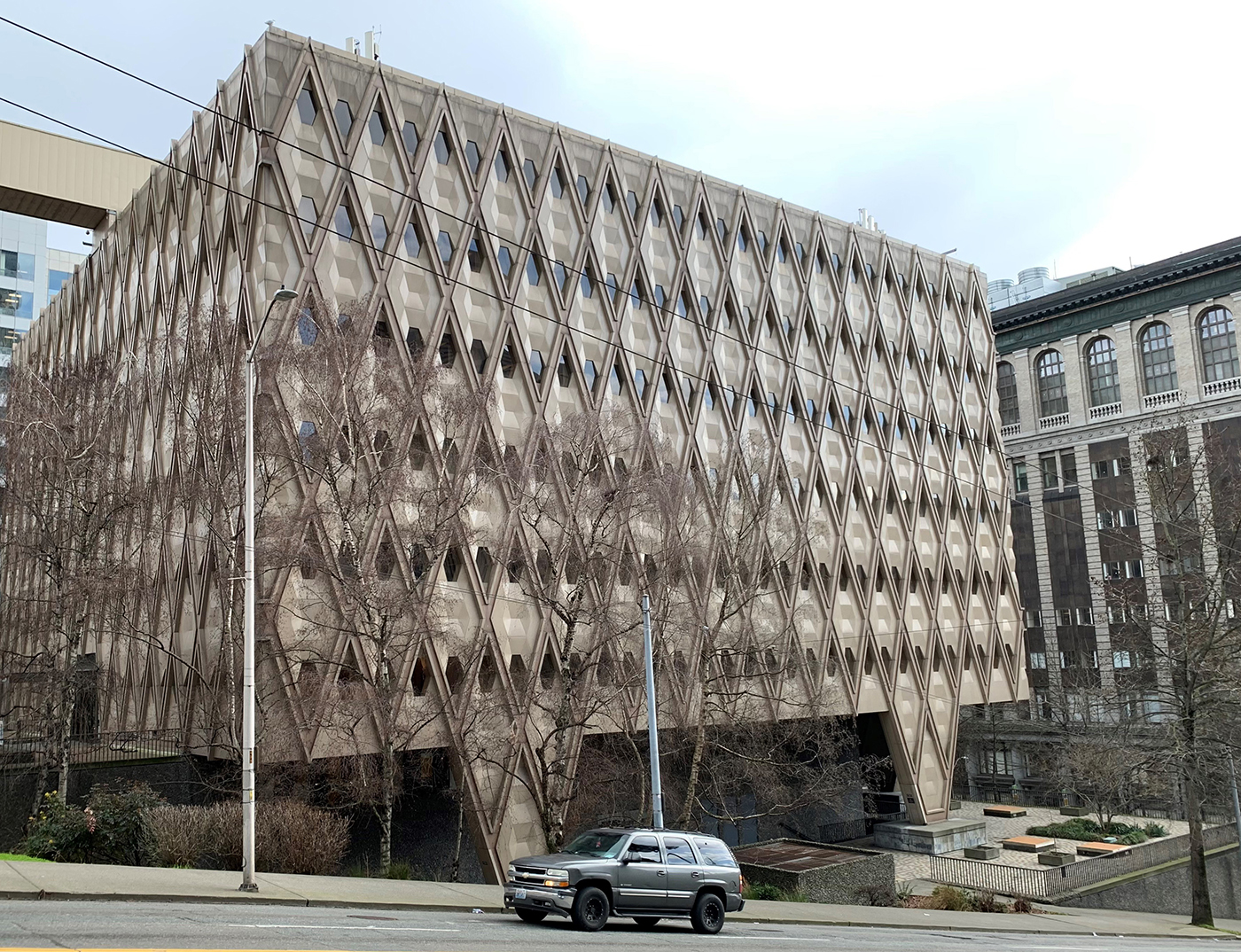
Both shared that the civic conversions discussion has stemmed in part from walking around downtown Portland and Seattle and seeing city and/or county-owned buildings sit empty (such as the King County Administration Building at 500 Fourth Ave.) These empty buildings stand as prominent reminders of the hardships that downtowns have faced since the COVID-19 pandemic, and risk becoming community eyesores and unfortunate reminders of downtown decay.
The conversion discussion is all about flipping that narrative and imagining how these buildings might be transformed to once again serve, and help revitalize, the community.
“The question is, how can we save these civic buildings in a way that keeps them as valuable assets to the community,” Reid said. “There is huge opportunity and possibility to do something different with many of these properties.”
Civic buildings are often sited in prominent downtown areas well served by local transit to nearby neighborhoods, making them good candidates for this kind of repurposing.
Another positive of choosing to convert these buildings is the avoidance of the demolition of what are often well-known and sometimes historic and architecturally distinct structures, not to mention the environmental benefits of conversion over demolition and redevelopment.
Possible new uses are as wide as they are diverse, and could include the introduction of sports courts/facilities, indoor parks, arts spaces/galleries, events spaces or even business incubators.
“It's all about creating dynamic and energized community spaces,” Kimball said.
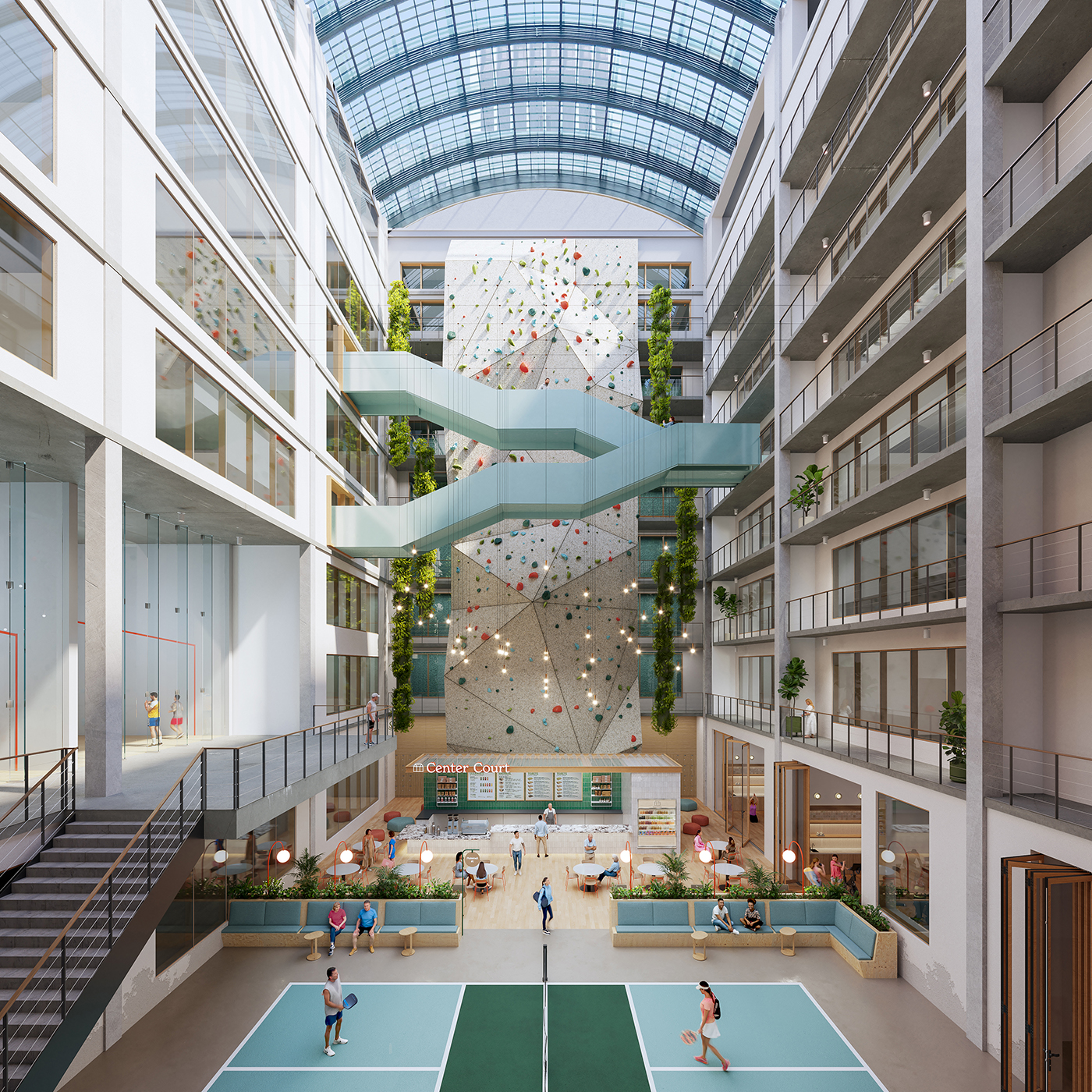
Reid has been exploring a hypothetical conversion of the historic Multnomah County Courthouse in downtown Portland, which closed in 2020, based around a “courts to courts” concept.
His proposal includes the reopening of an original interior courtyard, topping that space with a new transparent roof, and programming the area below with sports courts, including pickleball courts, and a seating and concessions area. He also suggests the addition of a climbing wall to one side of the newly created atrium space and turning old courtrooms into squash courts, citing the power of sports and physical activity to bring people together and forge community.
In Seattle, King County has already been exploring potential future uses at its 8-acre downtown civic campus, and in 2023 shared a proposal developed with Northwest Studio on the potential redevelopment/repurposing of eight underpopulated if not empty county-owned properties at the campus and in SoDo, including the landmarked county courthouse, the likely doomed Administration Building and the county jail.
The county's proposal is centered mainly on creating new housing, with the possible help of private developers, as well as converting some of the existing buildings to offices and possibly relocating (or adding) a future light-rail station in the process.
While not working with the county in any capacity on this project, Kimball and the Gensler Seattle office have been inspired by this work and have been exploring other potential new uses for the county's buildings.
“King County's civic campus has historically connected people and I've been thinking about how these buildings can continue to give back to the community,” Kimball shared.
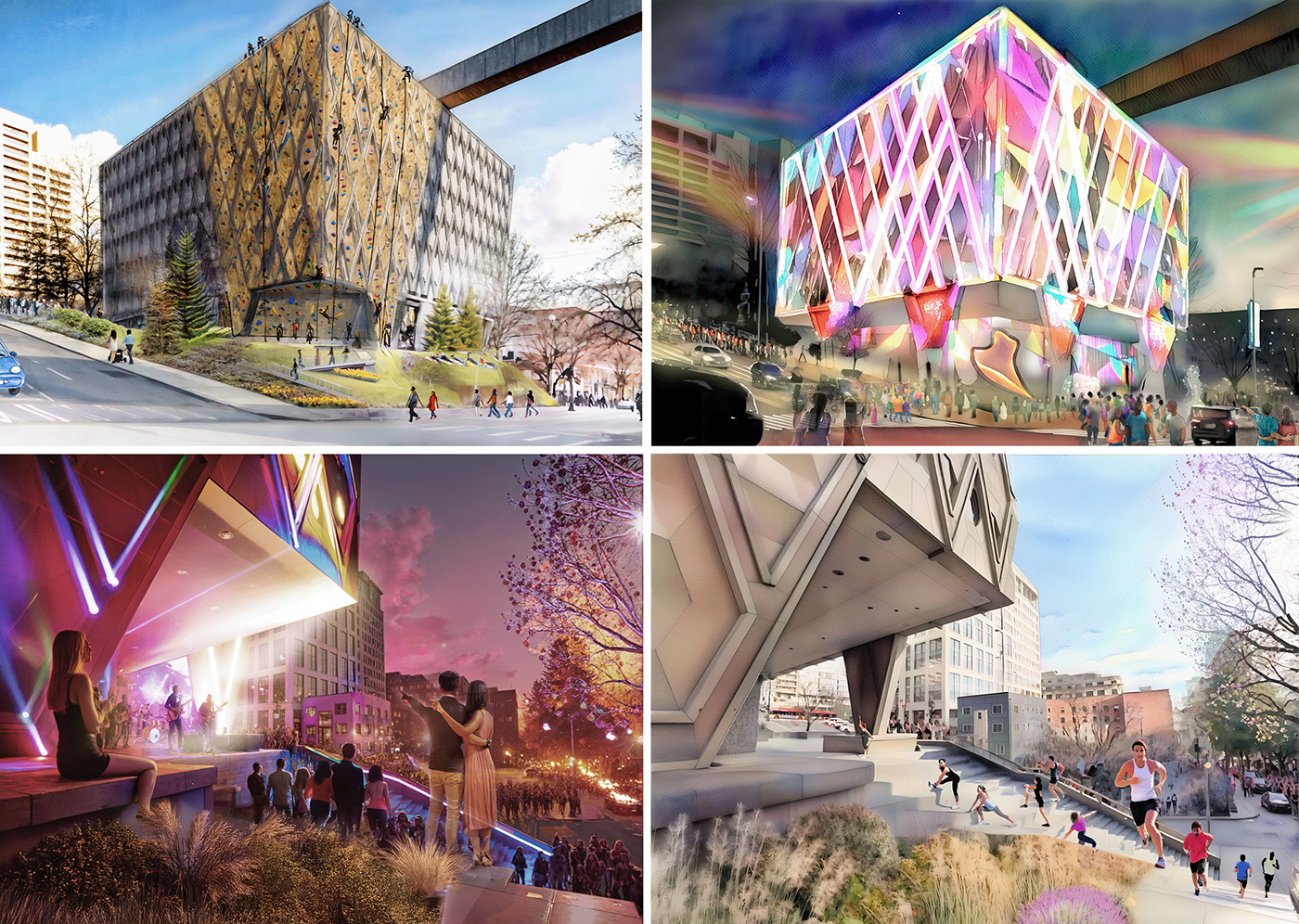
In particular, he has been looking at hypothetical interim uses for the Administration Building's exterior and podium level, ahead of its expected future demolition.
Instead of just sitting and waiting for the wrecking ball, Kimball argues that the building's existing exterior could be refreshed and updated to “enliven the public realm,” and even public health. Proposed interventions include the addition of a climbing wall to a section of the exterior, and the creation of an artistic facade featuring bright colors and lighting.
For the podium level, Kimball has explored carving out this space to open it up to the surrounding streetscape and community. The newly exposed podium could be returned to nature with new landscaping/plantings, or it could be repurposed as a new community gathering area and/or arts and events space. Another possibility would be to encourage people to use the podium level and attached stairs for their fitness goals, like the nearby Yesler Terrace Hillclimb.
“These options are all focused on reopening the building to the community without having to touch the interior,” Kimball said.
The building's close location to the nearby and growing Yesler Terrace neighborhood makes a temporary repurposing especially attractive, Kimball argues. “There is great opportunity to do something new with this building before its demolished.”
THE KEYS TO SUCCESS
Both Reid and Kimball feel that successful civic building conversions are contingent on choosing new uses that meet a recognized community need, and that having the community involved in some role should be an important part of the process. It could also be beneficial to get private entities/local businesses involved in some capacity.
In a related but side note, it is possible that some federal buildings in Seattle and Portland will be shuttered and sold as part of the Trump administration's efforts to downsize the government and reduce federal spending. Cities and/or counties could step in to purchase and find new community-focused uses for these existing assets.
Another element that could contribute to both the viability and success of conversions is selecting new uses that are relatively affordable and do not trigger the need for expensive things like seismic upgrades.
The most successful and likely conversions therefore might encompass a light intervention rather than a full repurposing.
EXAMPLES TO FOLLOW
Other Gensler offices across the U.S. have completed several conversions of civic buildings that could serve as models for Portland and Seattle.
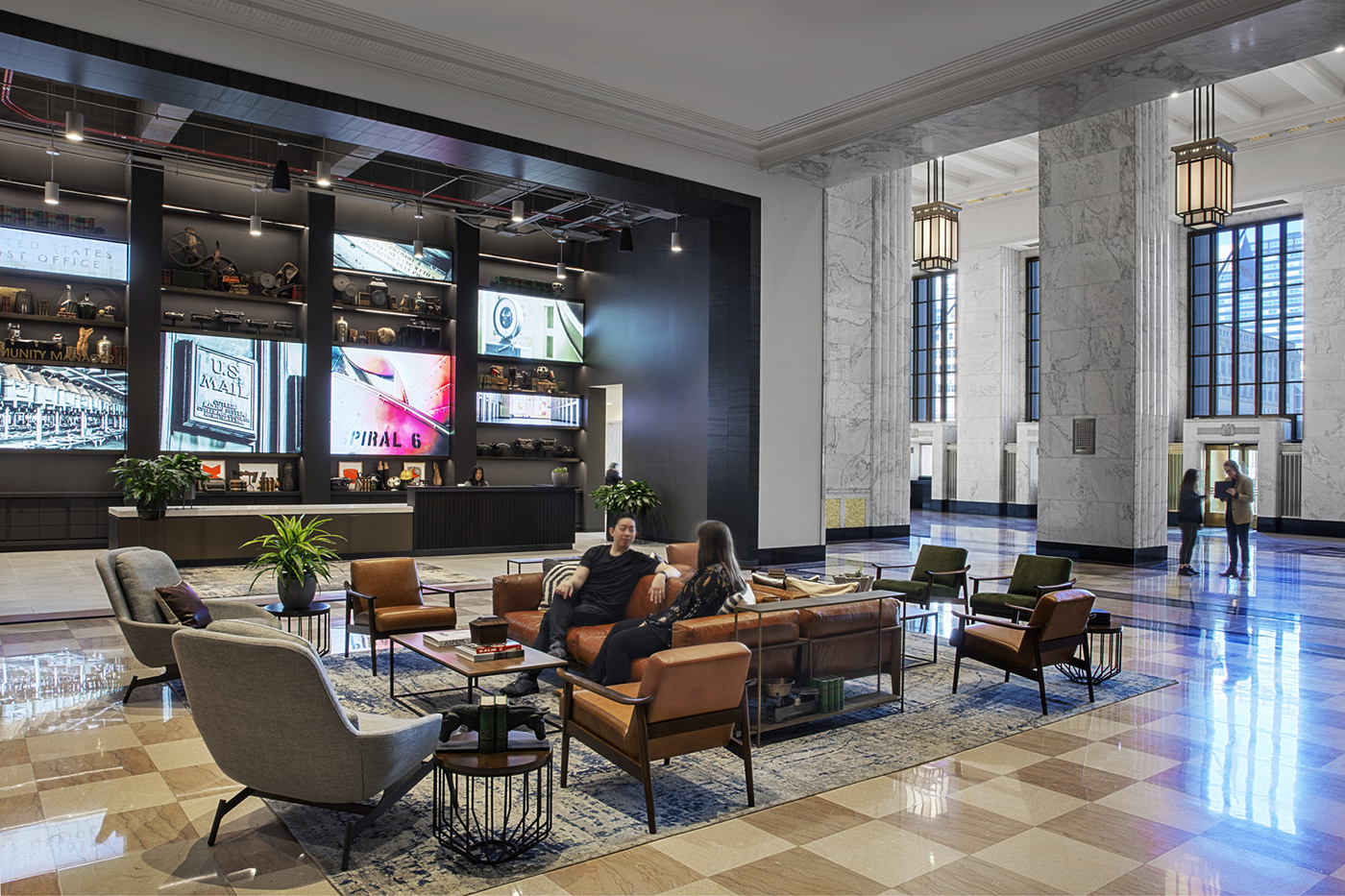
In Chicago, the firm designed the restoration and repositioning of a 2.8-million-square-foot former post office into a technology incubator and hub for business and commerce.
The historic building's facade, windows, main lobby, Postmaster-General's suite, and historic corridors were restored, and new tenant amenities were added. Gensler created detailed documentation of existing equipment related to the building's history including scales, mail chutes, conveyors, historic corridors, original mosaic tile floors, and plaster ceilings. Preservation of these elements is paired with graphic stories and displays of postal relics.
Closer to home, the city of Auburn recently restored and converted its original 1930s post office into a new community art gallery and arts space, called the Postmark Center for the Arts. The final phase of that adaptive reuse project was completed last month. Johnston Architects designed the conversion.
Another Gensler civic building conversion project in Detroit, Michigan, turned an abandoned historic building, originally built as the city's main post office and then used as a Detroit Public Schools Book Depository, into flexible speculative office space, with community-focused amenities. Gensler says the reimagining of this historic three-story building was “conceptualized to attract innovators, entrepreneurs, emerging technology companies, designers, and technologists.” This project is a collaboration between the city of Detroit and the Ford Foundation. “This is a time to be bold and think big when it comes to the possibility of civic building conversions,” Reid concluded.
Emma Lapworth can be
reached by email or by phone
at (206) 622-8272.


