|
Subscribe / Renew |
 |
Contact Us |
| ► Subscribe to our Free Weekly Newsletter | |

Construction Bids
| home | Welcome, sign in or click here to subscribe. | login |


 print print  email to a friend email to a friend  reprints add to mydjc reprints add to mydjc |  |
November 6, 2025
On Monday, the American Institute of Architects (AIA) Seattle hosted its annual Honor Awards at Town Hall Seattle to celebrate excellence in design in Washington. The awards were announced by the jury as hundreds of practitioners and interested community members attended in person while others livestreamed the event.
Of the 109 submissions, 16 winners were chosen by the jury panel, one by the young voices committee and two for energy in design. The jury included Alan Organschi (GOA), Armida Fernández (Estudio ALA), Nader Tehrani (NADAAA), with Seattle's Lauren Gallow as moderator. Their story was published on Wednesday in the DJC.
Categories for submission were built, conceptual, and research & innovation. The AIA Seattle community identified four considerations: Inspiration, Problem-Solving, Environmental Sensitivity, and Social Impact. The judges had their own, which became evident at the awards presentation, as the judges introduced themselves.
Organschi self-proclaimed his bias to be “environmental focus” and an evaluation of “planetary implications” and leveraging a “circular economy” when he reviewed projects.
New to visiting Seattle, Fernández was impressed with the natural environment and use of natural materials. She said she was looking for “the connection between the place and the project” in project submissions.
Tehrani, dubbed the “resident philosopher” of the panel by Gallow, was impressed by “new investments to urbanism,” in Washington and the “excess of excellence” he found in the submissions.
The panel described their findings in detail as each award was announced. A video of the presentation can be found on YouTube: http://www.youtube.com/live/Wx-c6Z9tZko
AWARDS OF HONOR
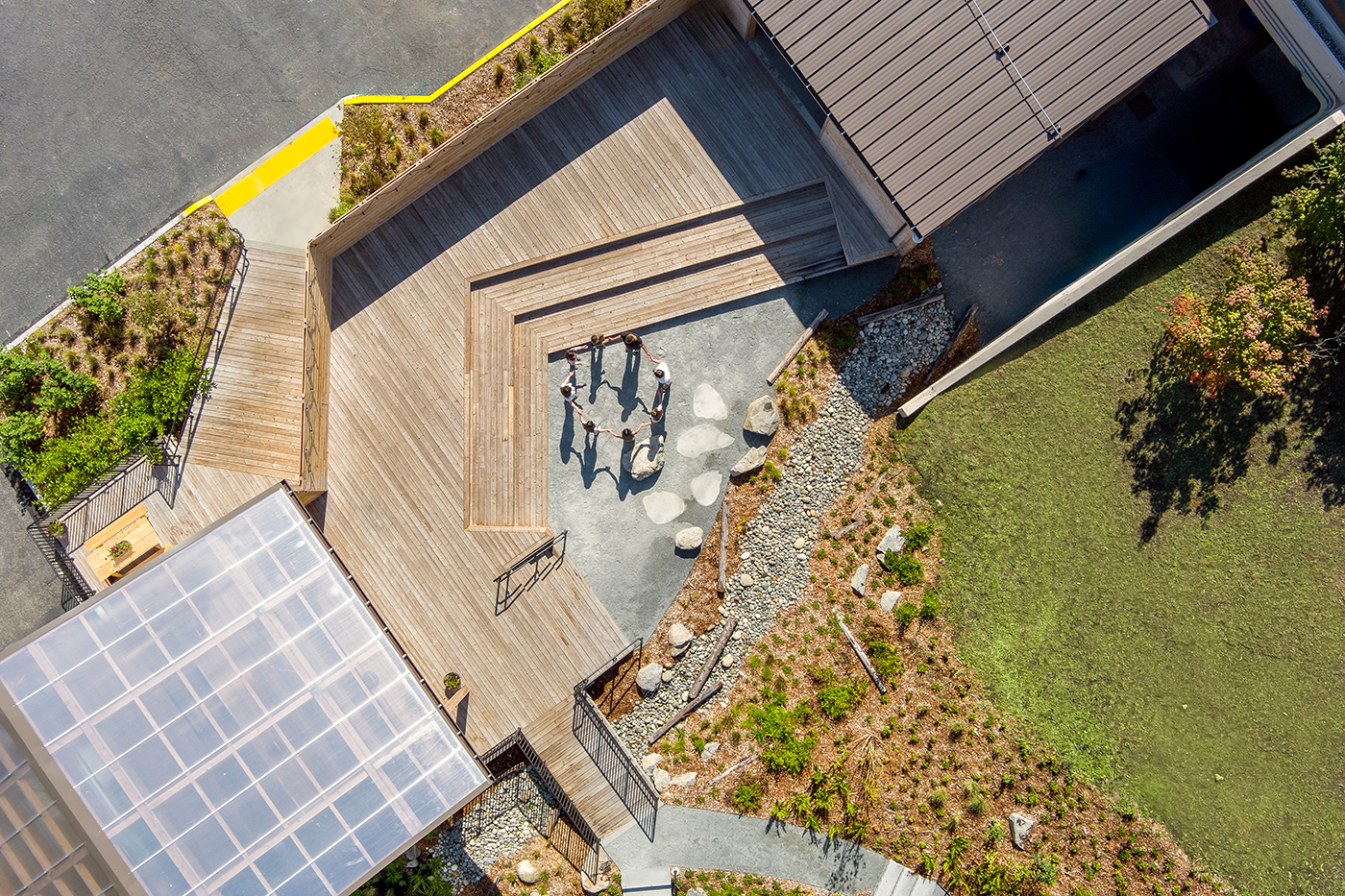
Snoqualmie Tribe Child Development Center by Boulder Associates is an educational and cultural center on sovereign land of the Snoqualmie Tribe. The Coast Salish Cedar Plank House inspired design features such as the exposed cedar structure that doubles as drying racks for bark, herbs, and hides. Other materials align with tribal colors and emulate patterns in traditional basket weaving. Flexible layouts provide multifunctionality. Cedar detailing brings texture and beauty, while being strong enough to keep out large wild animals.
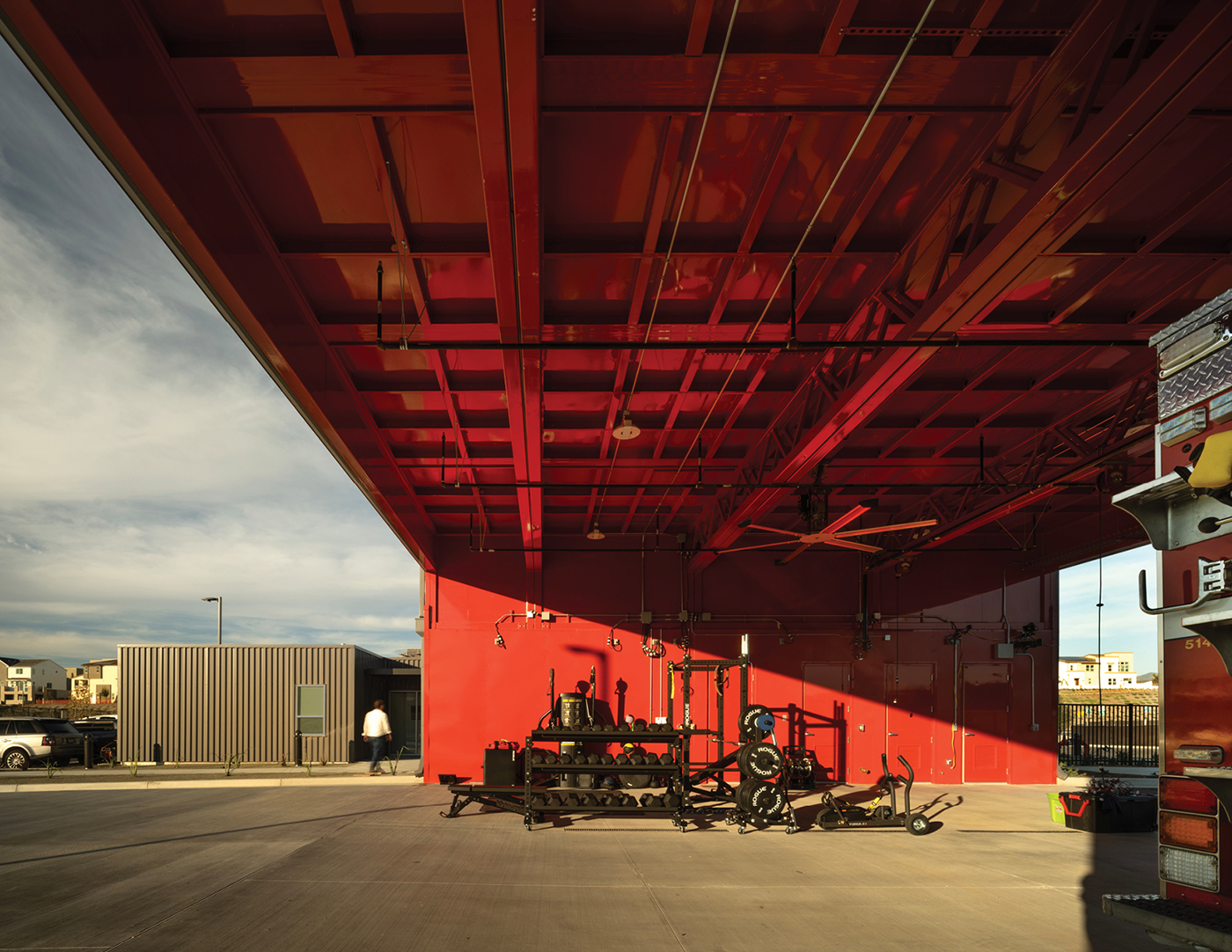
Modular Fire Station 67 by Wittman Estes is a prefabricated modular fire station designed and built for rapid assembly and allows for future relocation and reconfiguration. Moderator Gallow introduced this winner as “love at first sight” for all the judges. The sturdy and durable steel modules are easily transportable and can be rearranged in the future, accommodating a longer lifespan. An architectural kit of parts is sized and optimized for rapidly deployable transport and fast assembly using bolted cube connectors.
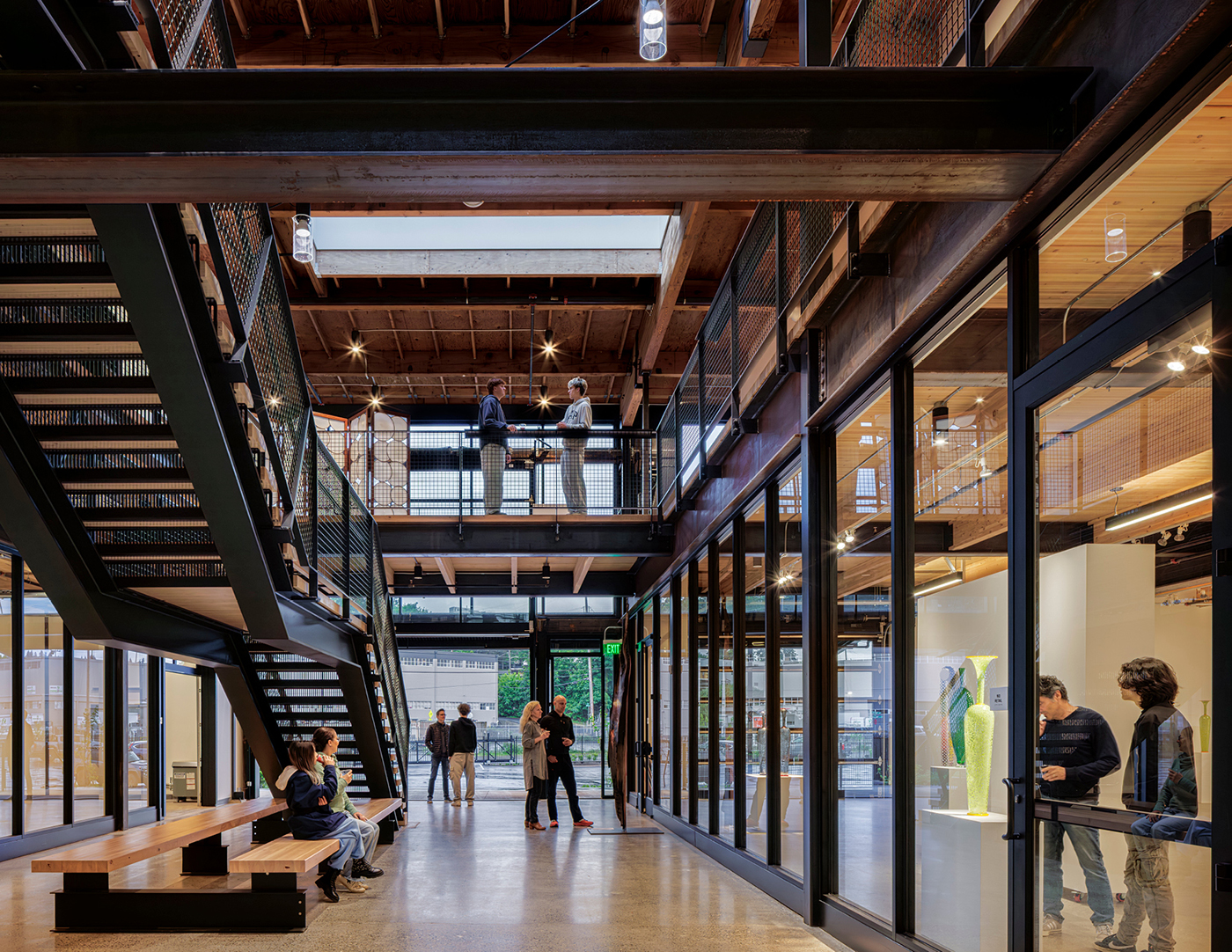
West Canal Yards by Graham Baba Architects is adaptive reuse of a nine-acre industrial fish processing facility on Seattle's ship canal. The project balances immediate reuse with long-term redevelopment flexibility, navigating a complex overlay of shoreline and marine-industrial zoning. The Yards are a first step in a planned multi-decade reinvention. By reusing and stabilizing existing structures rather than demolishing them, the project conserved embodied carbon and minimized waste.
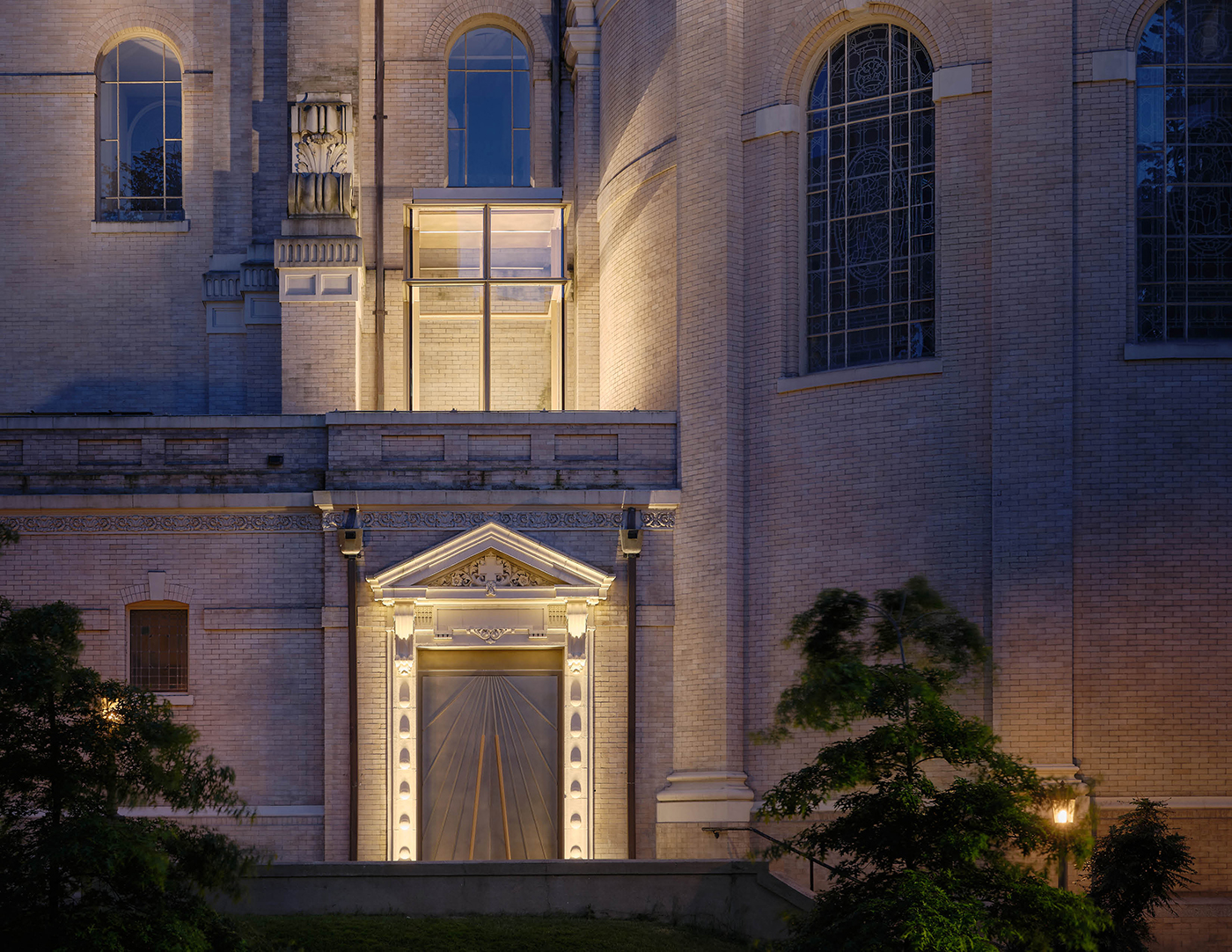
Saint James Cathedral Portico by Gerrick Office is an entry vestibule renovation to the existing Cathedral including entry doors, light monitor and holy water stoup. The judges expressed their delight in how this redesign elevated a secondary entry into a primary one. This solved the client's problem introduced by changing adjacent uses over the decades, impacting how parishioners access the building. The judges had a shared admiration for the naval brass entry doors, which are arrayed in a scallop shell pattern, and the light monitor above.
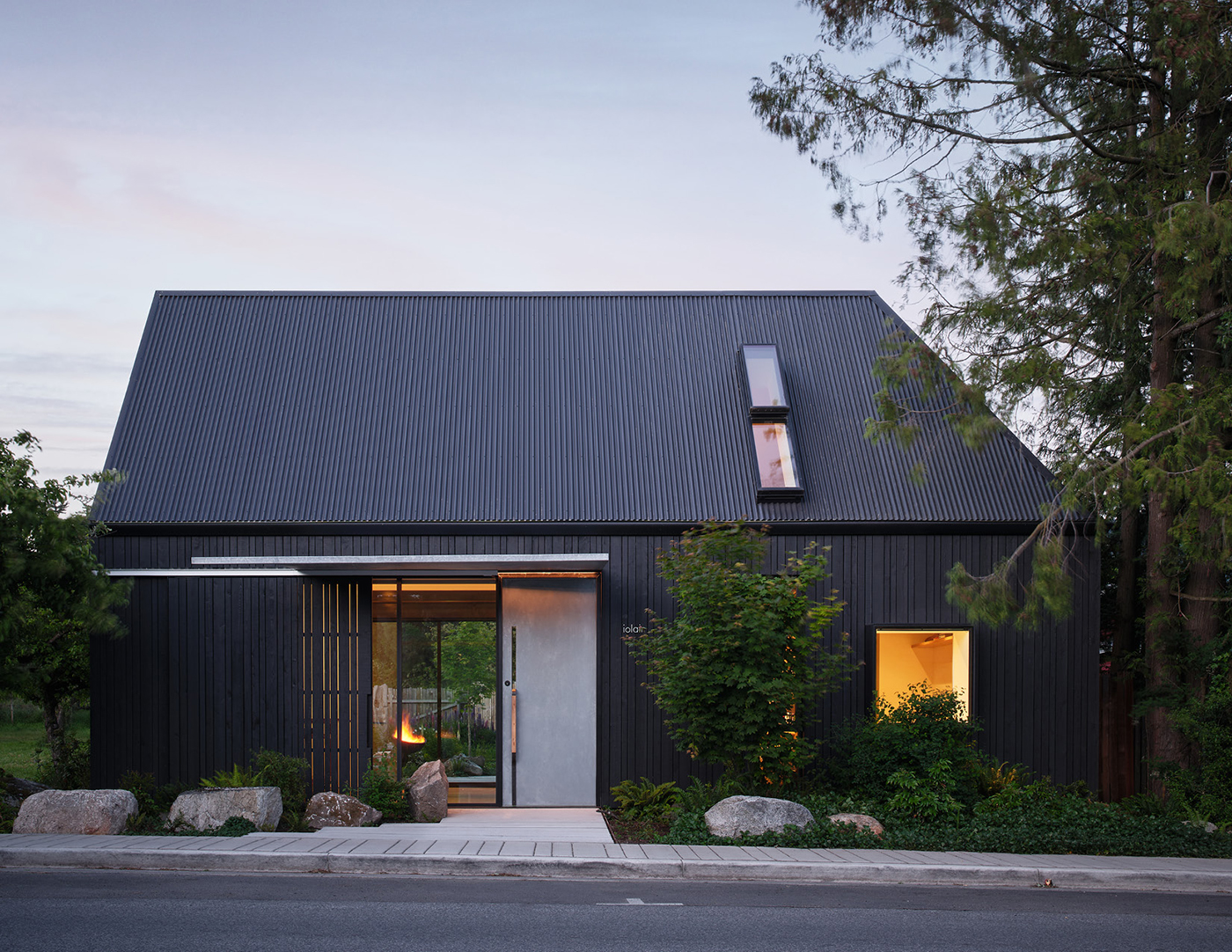
iolair by GO'C is a newly founded artist residency program and building on Orcas Island. Designed for growth, the program anticipates efficient addition of future buildings that will expand opportunities. The project was designed to support both public and private uses with a sliding shutter and extruded vitrine, giving working artists privacy while also showcasing art to the public. A sloping roof further distinguishes between the two types of uses through scale.
ENERGY IN DESIGN AWARDS
Heather Burpee, research professor with the University of Washington integrated design lab explained the criteria by which the Energy in Design Awards were selected. Burpee explained project winners were evaluated on the ability to “achieve exemplary energy performance” benchmarking to the 2030 Energy Challenge. Ninety-six built projects submitted data for this award. Burpee nodded to 20 top performers and gave awards to two projects:
Aro Homes by Olson Kundig and built by Aro homes, is ultra-low carbon, better than net-zero, modular spec-built residential construction system. Construction uses a repeatable, hybrid off-site / on-site construction strategy to shorten the delivery timeline for a standard single-family residence to just 90 days. Better than net zero energy performance is achieved by first reducing energy consumption through a high-performing envelope and high-efficiency HVAC and lighting systems. Then roof orientation offers PV solar exposure from almost any placement orientation on any site.
Deschutes County Redmond Library by The Miller Hull Partnership LLP is a civic library for Redmond, Oregon. The building's broad roof was sized to host a photovoltaic array that generates the building's entire annual energy needs, demonstrating the library's commitment to being all-electric, net-zero energy, and operationally carbon neutral. The regionally sourced mass timber structure provides abundant natural daylight. A remote access control system monitors and optimizes mechanical systems and solar power production, ensuring the building consistently meets its net-zero energy goals.
YOUNG VOICES SELECTION
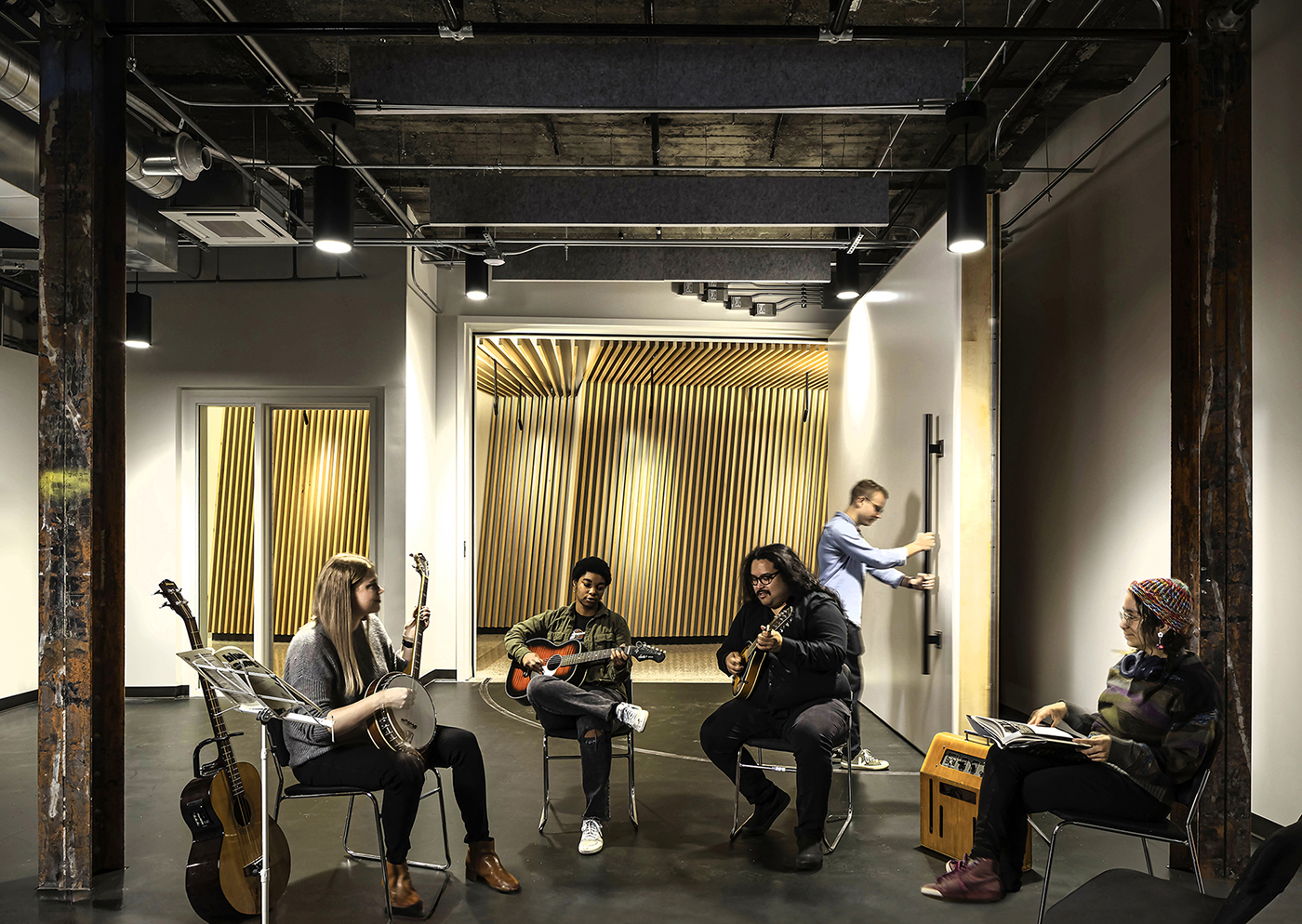
Station Space by Side x Side Architects is the conversion of a perennially unused space on the second floor of King Street Station into a vibrant creative hub for five cultural organizations serving youth. The space had been closed to the public for 60 years before Station Space opened.
AWARDS OF MERIT
• Memory Landscapes by Robert Hutchison Architecture
• Hudson Cloverleafs by Tsuga Studio
• State Street Apartments by PUBLIC47 Architects
• Whidbey Puzzle Prefab by Wittman Estes
• FORM FOLLOWS FIBER | Designing for and after Disassembly by atelierjones LLC
• Reframe Residence by Studio PHH Architecture
• The Loyal Captain by Heliotrope Architects
• Washington School for the Deaf Divine Academic and Hunter Gymnasium by Mithun
HONORABLE MENTIONS
•Hinoki @ Yesler Terrace by HEWITT (prime architect) and PYATOK architecture + urban design (associate architect)
• Hillclimb by Workshop AD
• Ceramics Studio by GO'C
AIA Seattle was founded in 1894 and is the fifth largest AIA chapter in the U.S. with 2,800 members.
Nina Milligan can be
reached by email or by phone
at (206) 219-6482.