 |
Subscribe / Renew |
 |
Contact Us |
| ► Subscribe to our Free Weekly Newsletter | |

Construction Bids
| home | Welcome, sign in or click here to subscribe. | login |


 print print  email to a friend email to a friend  reprints add to mydjc reprints add to mydjc |  |
January 21, 2026
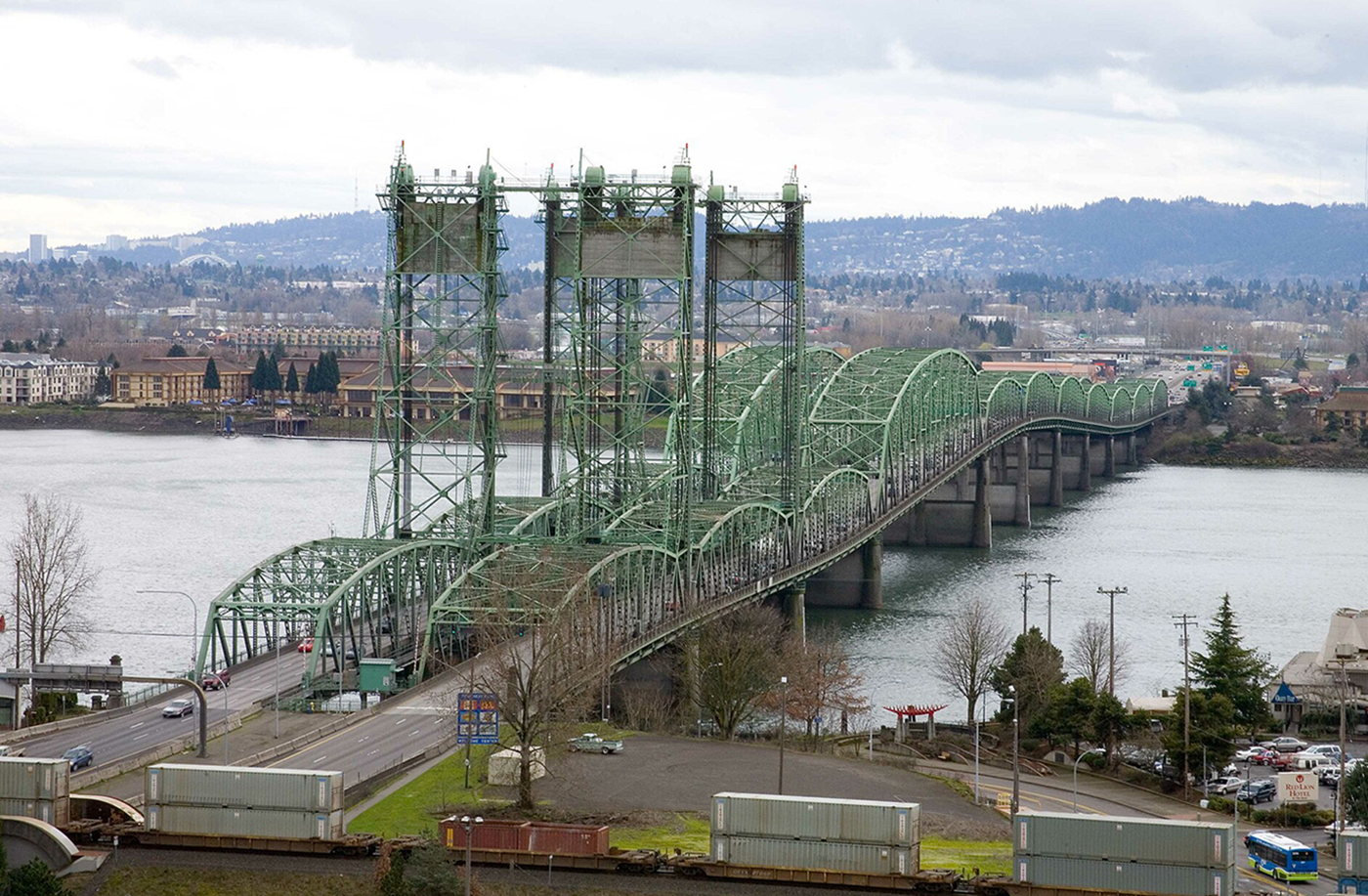
The United States Coast Guard gave a nod Friday to a fixed-span design for the proposed Interstate 5 Portland to Vancouver bridge replacement project, allowing the work to proceed hundreds of millions of dollars lighter than with a movable span. Construction could start later this year.
Fixed-span approval means the replacement span over the Columbia River where Washington and Oregon meet won't need to lift like the current one, saving at least $400 million in construction costs, according to Sen. Maria Cantwell's office.
“The Coast Guard's decision is a major step forward towards finally completing the U.S. Department of Transportation's environmental review and enabling construction to start later this year,” Sen. Cantwell said in a statement. “The vast majority of the maritime community agrees that the new bridge design will not only allow river commerce to continue but also improve safe passage down the river. I appreciate (Coast Guard) Commandant Lunday and his team for honoring their commitment to listen to our local communities and swiftly complete their review.”
The project's largest component is a new pair of bridges crossing the Columbia — one for northbound and one for southbound travel — to be built west of the existing bridge. It also includes infrastructure improvements along a 5-mile stretch of the I-5 corridor, from approximately Victory Boulevard in Portland to state Route 500 in Vancouver.
Construction of the replacement bridges is expected to take four to seven years, the DJC previously reported. The project's environmental review process began in 2021.
SUPPORT FOR A FIXED SPAN
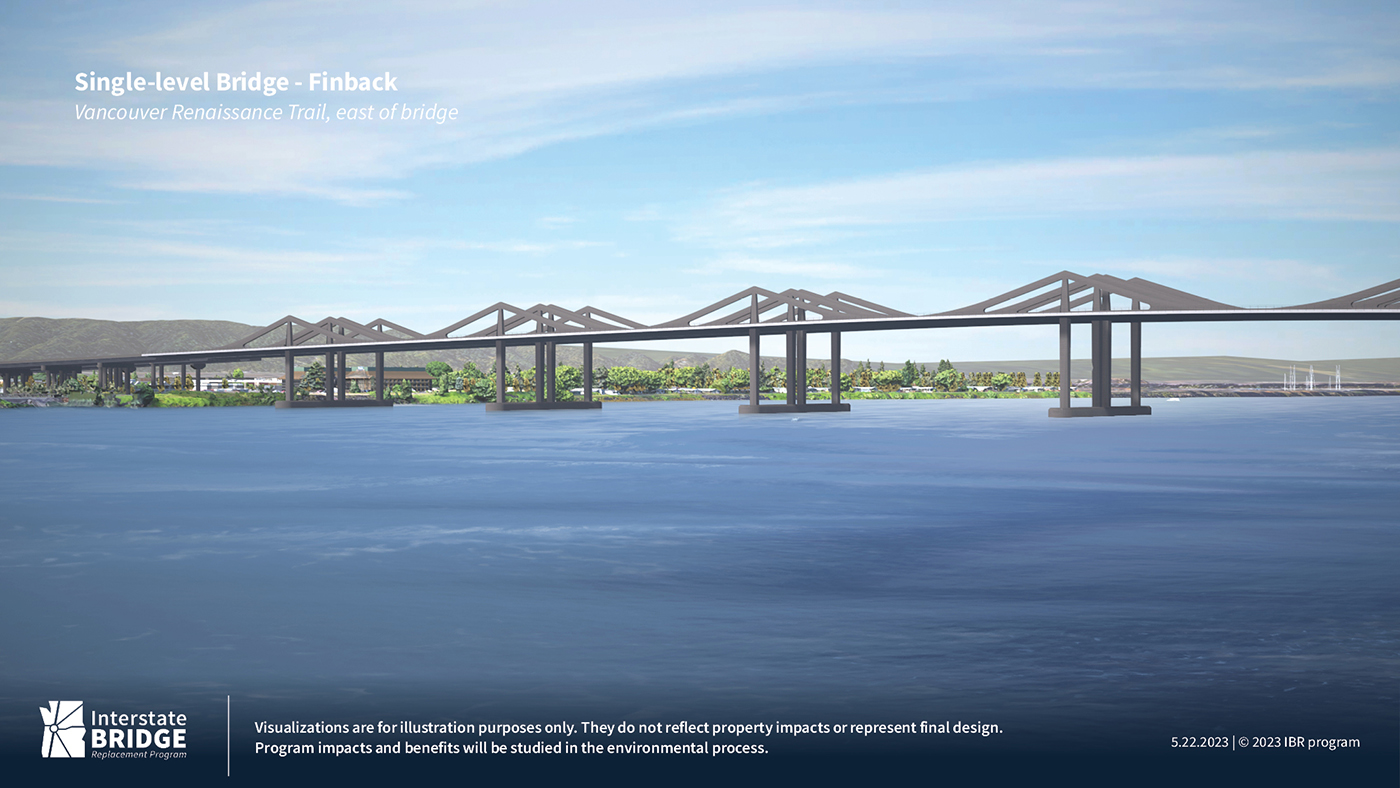
As part of the Coast Guard's permitting requirements for the project, the Interstate Bridge Replacement (IBR) Program, made up of multiple state and local transportation departments in Washington and Oregon, submitted a navigation impact report documenting how a replacement bridge could impact Columbia River navigation, with a replacement bridge height of 116 feet.
The IBR Program team submitted an updated report in October, arguing that the preferred fixed span would serve 99% of river traffic. A public comment period seeking feedback from area maritime interests followed.
“A fixed span bridge has overwhelming support from the maritime industry, businesses and community groups,” Gov. Bob Ferguson, who met with Coast Guard officials to make the case for the fixed span, said in a statement. “This is the right decision for our economy, and for commuters who use this bridge every day.”
COST, SCHEDULE UPDATES TO COME
The exact cost of the project is not known. It has been previously estimated at around $5 billion to $7.5 billion, but that could rise. This fixed-span decision means the IBR Program can finalize and share an updated cost estimate and schedule, begin the process of selecting a final design, and identify a construction contractor, the program said. The final supplemental environmental impact statement will be a key step in moving to construction.
“The IBR Program now has the clarity it needs to advance and position us to build a safer, multimodal river crossing and corridor that will serve both states for generations,” Oregon Gov. Tina Kotek said in a statement.
Federal funding for the project tops $2.1 billion, including a $1.5 billion mega grant announced in 2024 from the Bipartisan Infrastructure Law Bridge Investment Program.
In addition to its extreme age (the first span opened back in 1917), the existing Interstate Bridge rests on timber piles driven into soils likely to liquefy during a Cascadia Subduction Zone earthquake, leading to catastrophic failure of the bridge. The replacement design will include mitigations including soil stabilization techniques to minimize the potential for soil liquefaction.
The current lift over the bridge opens about 250 times per year (depending on river levels) for boats, with some recent years marking up to 480 openings, backing up traffic on an already congested corridor. The average lift stops traffic for 15-20 minutes.
The IBR Program team includes both states' departments of transportation, the Clark County Public Transit Benefit Area Authority, Tri-County Metropolitan Transportation District of Oregon, Southwest Washington Regional Transportation Council, Oregon Metro, and the cities of Vancouver and Portland.
Shawna Gamache can be
reached by email or by phone
at (206) 219-6518.


