 |
Subscribe / Renew |
 |
Contact Us |
| ► Subscribe to our Free Weekly Newsletter | |

Construction Bids
| home | Welcome, sign in or click here to subscribe. | login |


 print print  email to a friend email to a friend  reprints add to mydjc reprints add to mydjc |  |
March 26, 2026
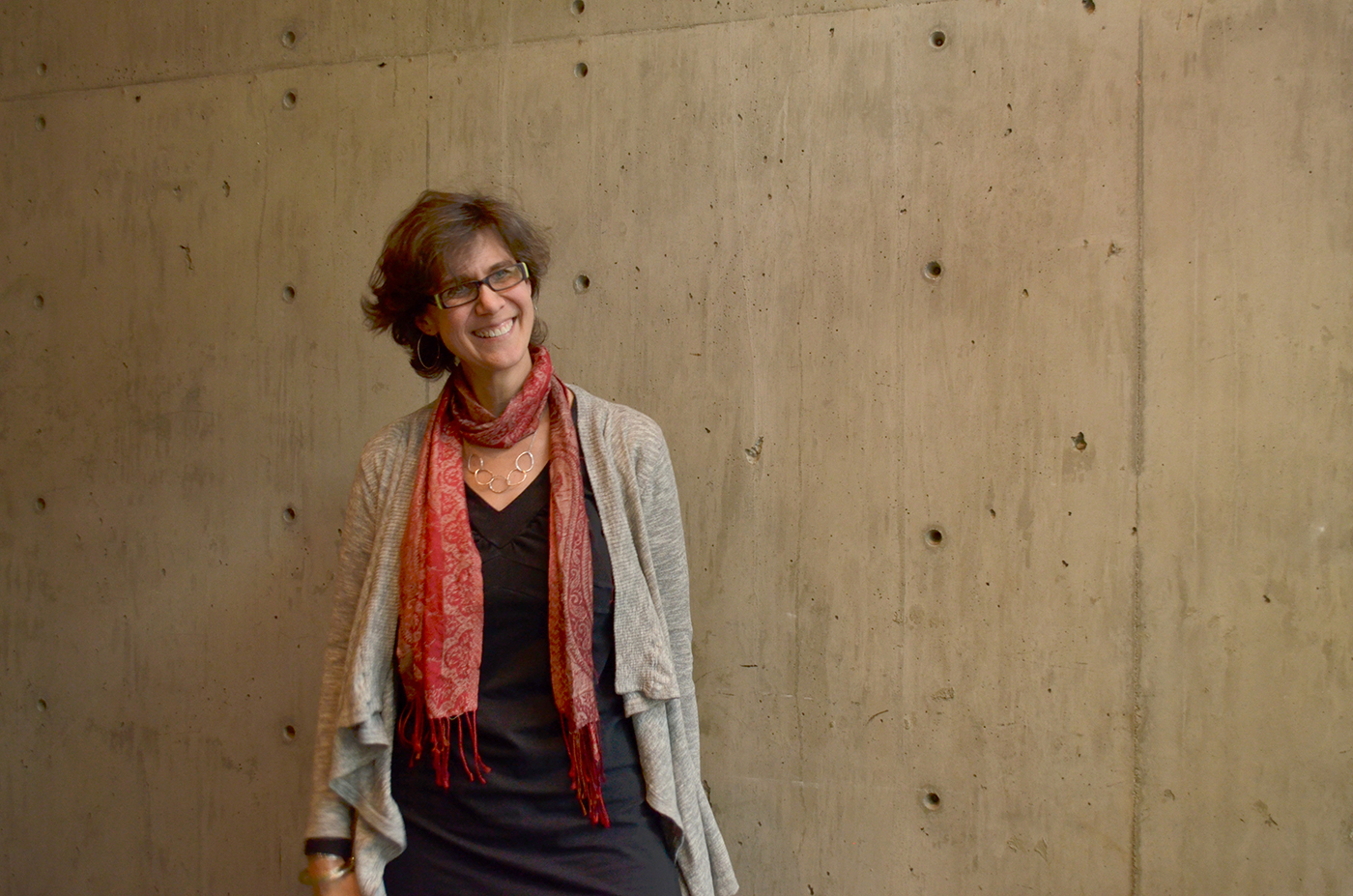
Leah Martin is co-founder and principal at Columbia City's Allied8, an architecture and advocacy firm focused on urban, medium-density residential development, bringing creative approaches and civic advocacy to neighborhood-oriented housing.
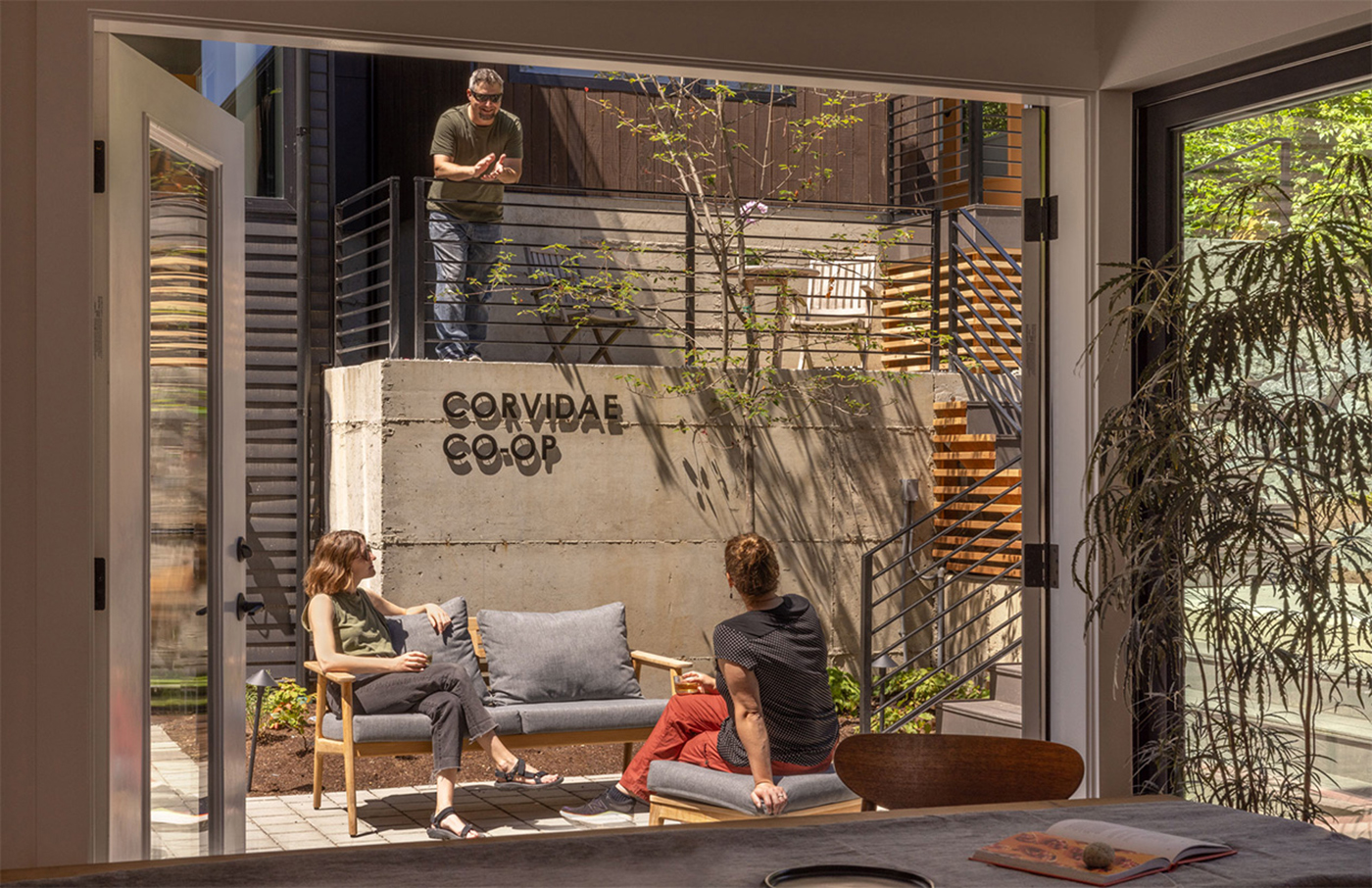
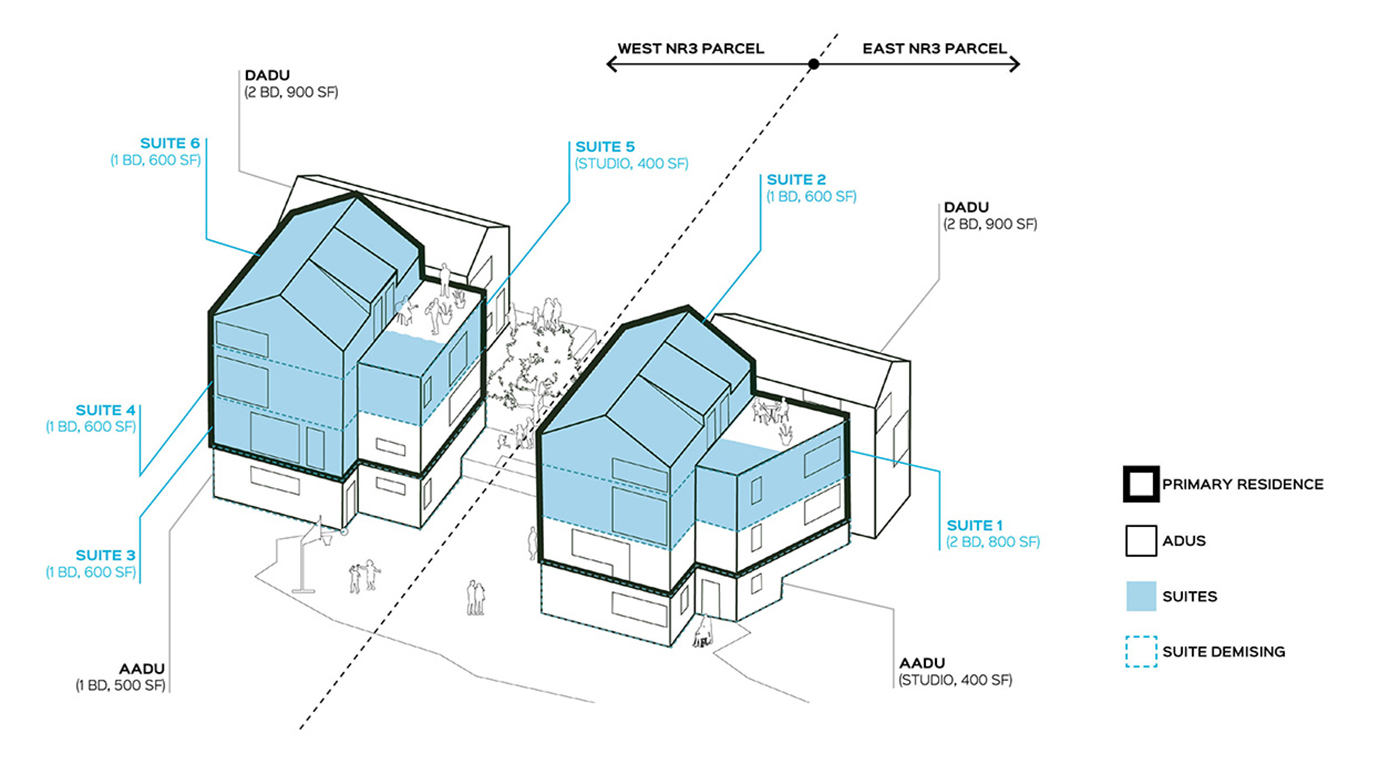
An example of this work is Martin's own development project, the 10-household Corvidae Co-op in Rainier Valley. Only six “units” would have been allowed by land use code. Martin was able to increase the number of households, which significantly brought down the cost of ownership. And working with Seattle's Community Preference Policy, buyers came from the local neighborhood who would otherwise have been priced out.
With a bachelor's degree in architecture from the University of Connecticut and a master's from the University of Washington, Martin began her career working for small and large architecture firms in Seattle and eventually started her own practice while she was raising her three children, prior to co-founding Allied8.
The DJC interviewed Martin to learn more about her approach to architecture, policy advocacy and real estate development.
Q. Do you come from a design family?
A. I don't come from a design family. As a kid I loved art and math. Somewhere in my youth I decided that the combination of those two things equated to the practice of architecture. I wasn't wrong, exactly. I was just myopic in my view. Architecture is a wonderfully all-encompassing profession. You can practice lighting design, urban planning, furniture design, advocacy, visualization, landscape design, building design, interior design, policy, etc. All of it is architecture. I will say that I sketch and do plenty of math, every day. I still love it!
Q. You are a developer and architect. What is your inspiration?
A. I've been at this for over 30 years. In my career I've done work for a variety of developers. Some developers were large, well-established companies, some were small first-timers. Eventually I started to see the patterns of when developers succeeded or failed. I made mental notes.
When Barbara [Busetti] and I founded Allied8, or as we were planning it, before we founded it, we both expressed an interest in developing a project. We knew it would have to be on the smaller side, but we were very interested in it. We had just enough confidence to take the leap. We're so glad we did.
Q. What were your houses like when you were growing up? Do you have a favorite?
A. I lived in the same house; never moved. My dad sold that home when I was in my late 40s. I didn't know anything else. My kids got to visit that house as they were growing up and have very fond memories of it. It's funny, I don't even categorize it stylistically. It's just home.
Q. What's your favorite spot to read in your current home? Did you design it to be that?
A. My bed and my car. My bedroom is aesthetically quiet. My husband and I have three kids and we have a big extended family. Our house can be boisterous. My bedroom is the most minimal room in the house. I need it that way to settle into a book. But also, I love listening to books on long drives.
Q. How did you get started in civics and advocacy?
A. That's a hard question to answer. I think some of the underpinnings were innate; some of it came from my parents, and some came from living in Seattle for so long. As a kid I would notice when people were struggling. As I got older, I started to realize how much privilege I had. Eventually I paired up my skill with advocacy.
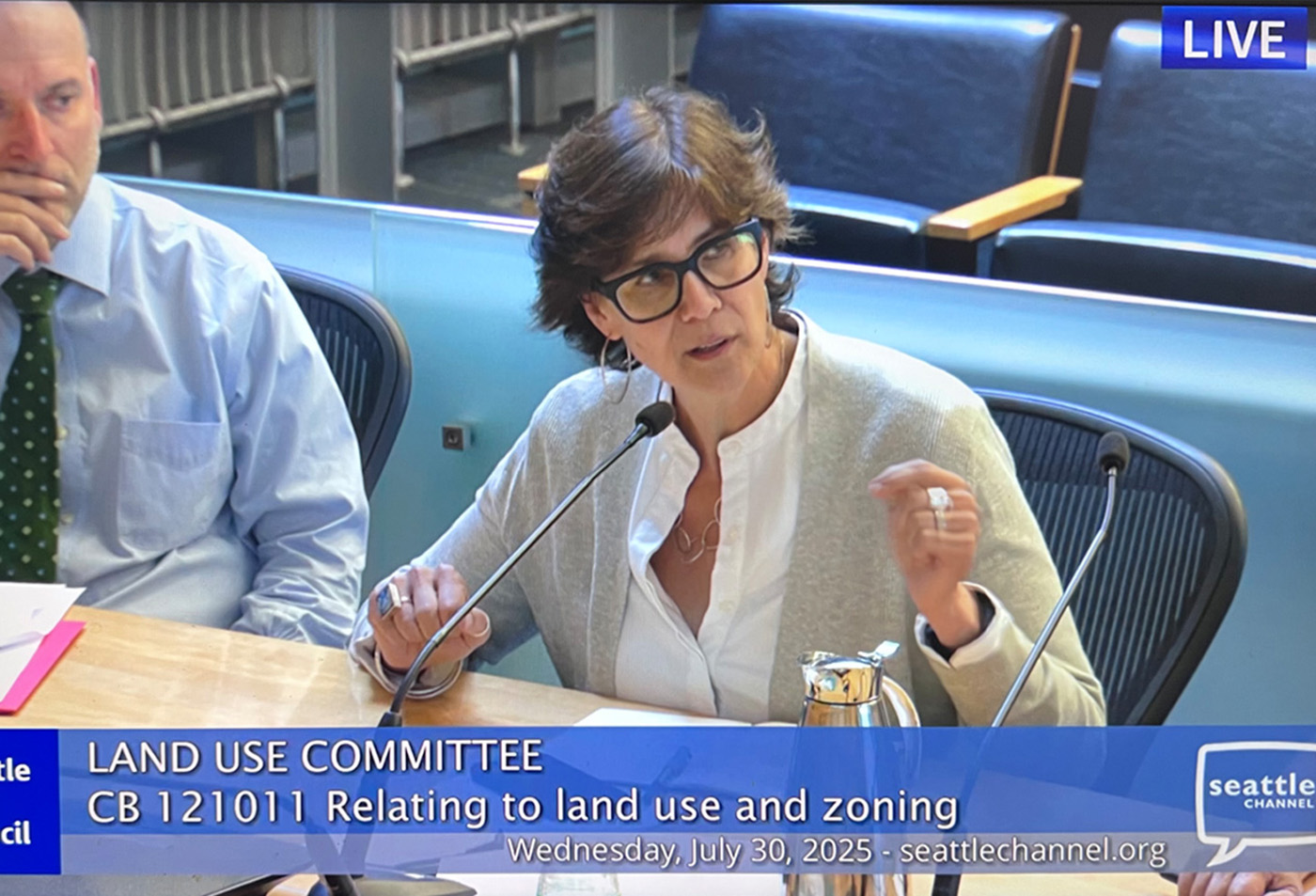
I love the line by Ijeoma Oluo, the fabulous local activist/author. She said at one of her lectures I attended: “Find where your privilege intersects someone else's oppression.” I loved how granular that was. It felt empowering rather than overwhelming. Meaning at that granularity, you can actually be an ally and make change. Whereas at the global or national scale, problems can feel completely abstract or overwhelming. As I dove deeper into local systems of government and policy, I realized my voice could be heard and that I could advocate alongside others that had been held back by local systems of government.
Q. What advice would you give design professionals who want to influence the future of building housing in the Seattle area?
A. Get civically involved. If you're not helping make good rules, you're going to have to follow bad rules. Build at least one project on your own — it could be a kitchen remodel, a deck, a shed or a house. And do at least one development with a partner — it could be a basement rental unit, a DADU for sale, or a small multifamily project. In my opinion architects are more effective when they know how things are actually built and when they know what it feels like to carry that financial risk.
Q. Why is your firm called Allied8?
A. Barbara named us! She's a great wordsmith. She also named Corvidae. When we formed Allied8 in 2015, we wanted to center the firm around people. The employees we started with had already been working with us as independent contractors for some time and it was a fantastic group! We counted up all of our skills (graphic design, lighting design, building design, policy, land analysis, planning, development, interior design) — there were eight. We were all allies and we hoped to excel at these eight skills.
Q. What is your proudest achievement in advocacy?
A. I'm not sure I look at it that way. What I can say is that one of the most wonderful outcomes of the work I do is that I've gotten to know individuals and communities I probably never would have known had it not been for advocacy. I have made some extraordinary friends.
I will say that I'm proud of Corvidae because I was told by countless people that it couldn't be done. Clearly, I didn't believe them ;-).
Nina Milligan can be
reached by email or by phone
at (206) 219-6482.
Related Stories:


