|
Subscribe / Renew |
 |
Contact Us |
| ► Subscribe to our Free Weekly Newsletter | |

Construction Bids
| home | Welcome, sign in or click here to subscribe. | login |


 print print  email to a friend email to a friend  reprints add to mydjc reprints add to mydjc |  |
September 23, 2026
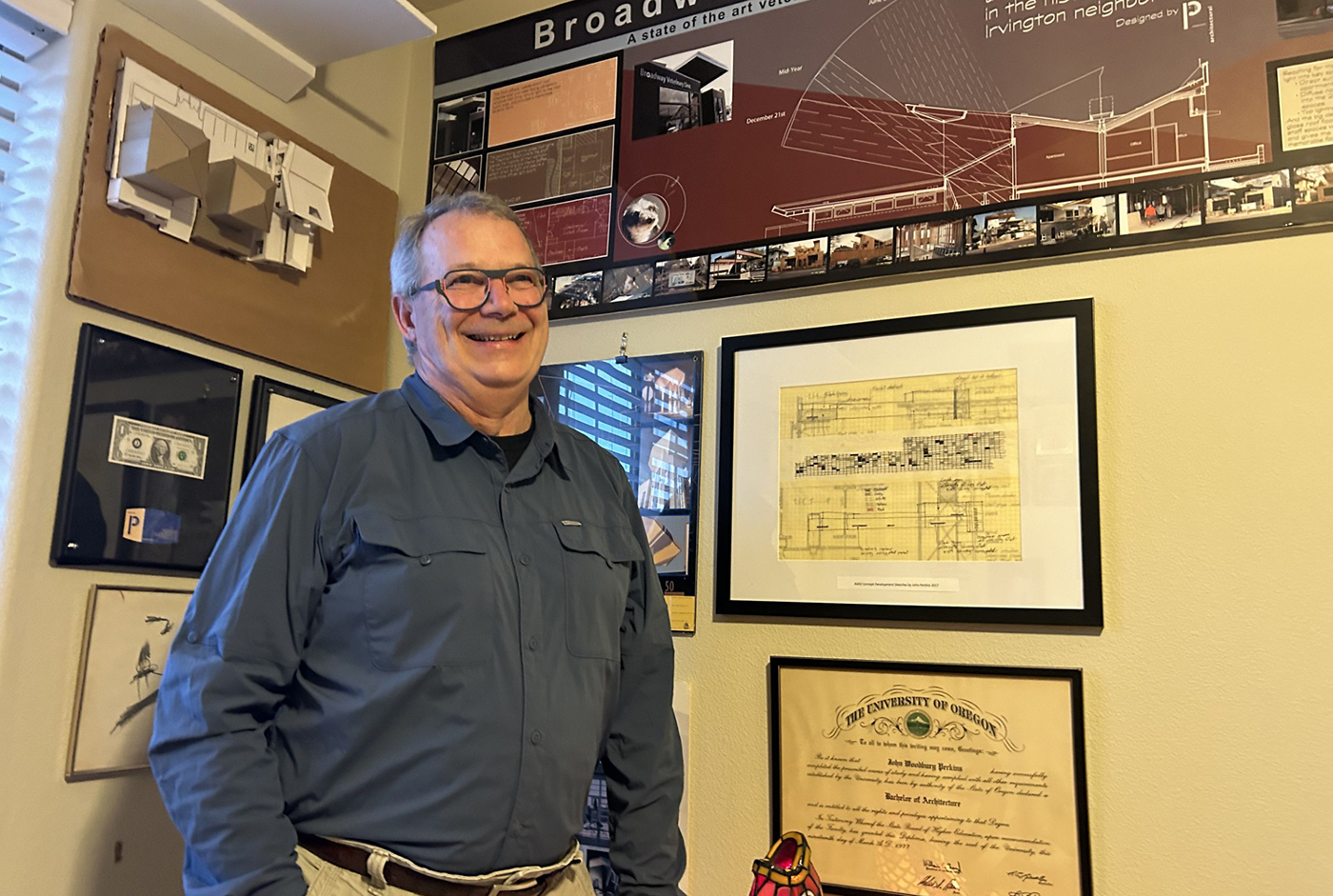
If karma means good energy or deeds that circulate back to bless the person who sent them out, John Perkins has good karma.
Perkins, a Portland-based architect, has had many career paths that all connect to circling back.
After a long career, he thought he would be retired today, but as a subject matter expert in one of design's hottest industries — semiconductor fabrication plants (fabs) — he has found himself still working.
Intending to close out a successful career, he left a firm working on Micron's new ID1 semiconductor fab in Boise, Idaho in 2025. But it did not take long for the project to circle back to Perkins. In March of this year, after it was awarded a contract for the project, Stantec brought him back to mentor and guide its teams. Boise-based Micron has two fabs on the boards in the city; the first alone is almost half a mile long.
Reflecting on trends in the semi-conductor industry, where Silicon wafers have been growing over time while the chips on them have gotten smaller, Perkins observes “Funny thing, the smaller the chips, the larger the buildings,” with a chuckle.
FOUNDATIONS IN ARCHITECTURE
Perkins knew he wanted to be an architect while still in high school. He was good at math and geometry, so to him, it seemed a good path. His parents gave him the book “The Natural House” by Frank Lloyd Wright, which fueled his enthusiasm.
Decades later, his son took him on a tour of the Wright-designed Gordon House Conservancy in Silverton, Oregon. Rekindling his early admiration, Perkins volunteered to be a docent and now not only leads tours twice a month but also serves on the Gordon House board of directors.
For his own docent training, Perkins voraciously read all he could get his hands on about Wright. Perkins admires Wright's “internal fortitude to go against the grain.”
On leaving college with a degree in architecture, Perkins did not envision a singular path for his career. And at the time, he did not even know what a semiconductor building was. He moved around from firm to firm, looking for the right fit. As a project manager he was not happy; not enough design work. A full year of work simply sketching was his kind of heaven.
One of our economic downturns sent him in a different direction, landing a job doing exterior design and construction documents for a jail facility near San Francisco. This held him over until a friend brought him in to work remediating asbestos. Though he tolerated this work, he always hoped for more.
After eight years, a client referred him to an engineering firm within CH2MHill called IDC. Although he had been out of the design practice for many years, the people at IDC saw Perkins' potential and put him to work on a 2.5-million-square-foot semiconductor campus in Phoenix. Thus began the unforeseen career in semiconductor industry.
FULL CIRCLE
Perkins holds fast to a compliment from his college days. One reviewer acknowledged his final project work had demonstrated quality flow, referring to “the structure of architecture is circulation.” Though Perkins did not know what a semiconductor building was at the time, he already had the skills to excel in this work.
As Perkins says, “semiconductor fabrication is the largest scale case study in circulation.” He describes circulation in semiconductor work to include:
• People, employees, visitors and contractors.
• Tools, some quite heavy and very large, that move in and out, up and down.
• Mechanical and electrical equipment moves in and out often with only the necessary equipment to support each phase of chip production installed, additional space provided for future equipment to get into place.
• Chemicals need to be routed from special chemical rooms through the building and connected to tools. The amount of piping is significant and takes up a lot of space.
• Supply air ducts, return air ducts, exhaust air ducts are all huge. Some are large enough to drive a car through, and most are large enough to walk through.
• All these pathways need to circulate clearly, simply, and efficiently, making the three-dimensional circulation configuration of fabs very challenging.
MOST REWARDING
Some in the design industry say having one's own practice is ideal. For Perkins, it was the best part of his career; however, he also says it was equally the worst. He chalks this up to the negatives of running a business. Still, Perkins was successful for over 11 years from 1999 to 2011 designing many buildings and projects in the historic Hollywood district of Portland.
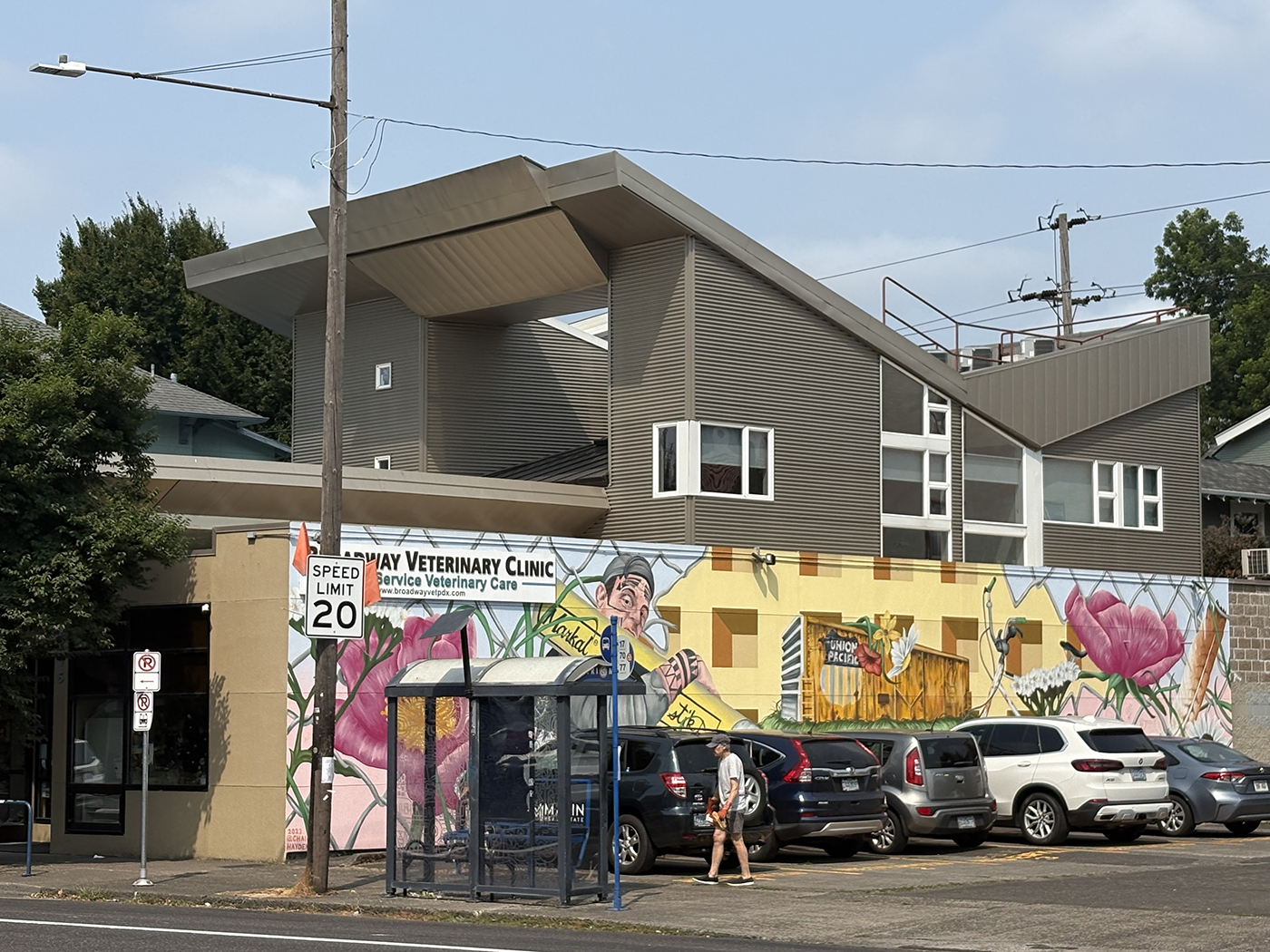
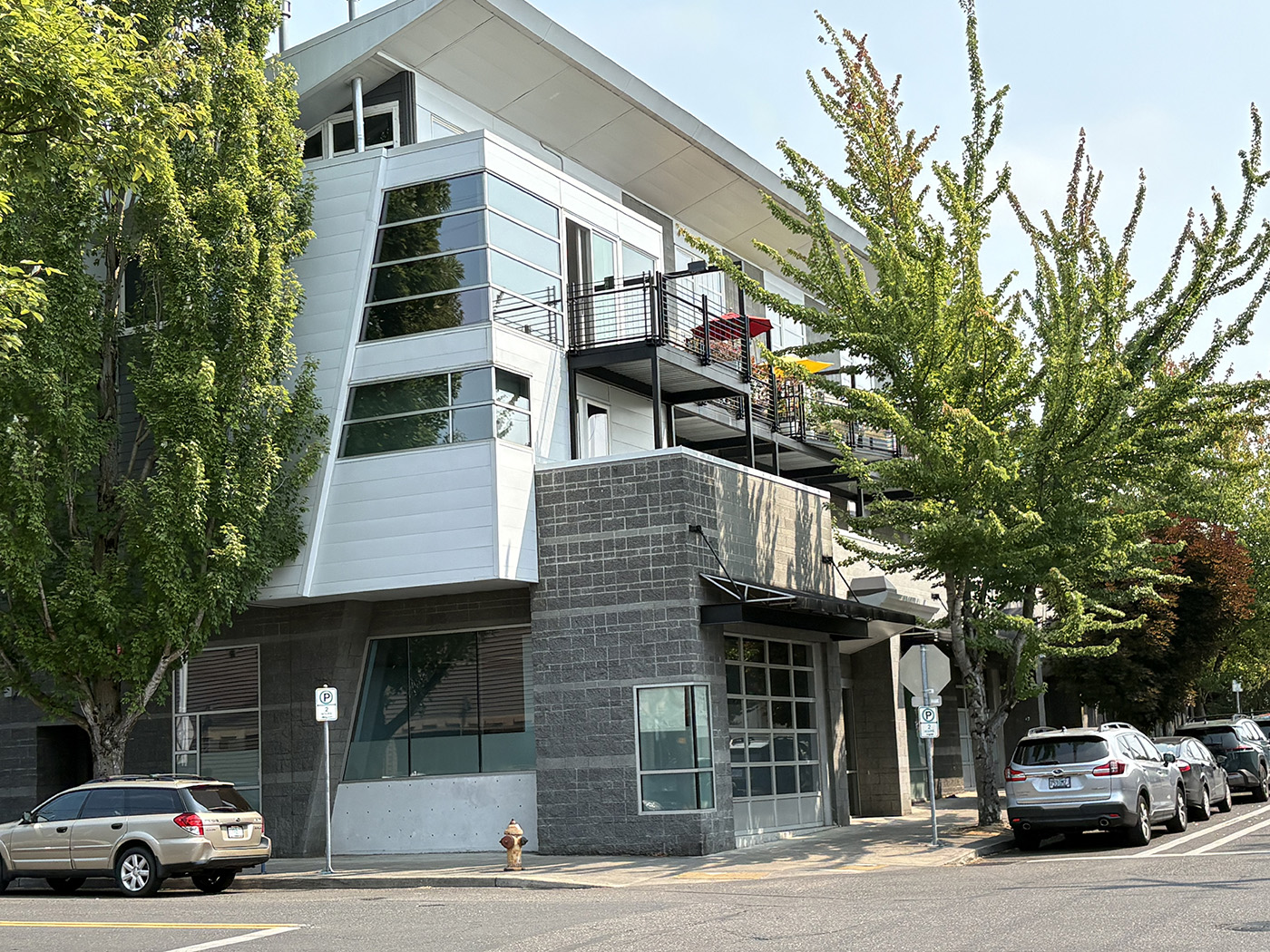
Two projects rise to the top of Perkins' favorite list from this period: Hancock 40, located at 4011 N.E. Hancock St., and the Broadway Veterinary Clinic at 2315 N.E. Broadway. The Hancock 40 building was an urban infill project, a corner lot taking on a Portland-esque mixed-use development: retail on the ground floor, townhomes above with stepped-back terraces.
The Broadway Veterinary Clinic was a favorite for many reasons, but Perkins emphasizes the supportive client who made all the difference.
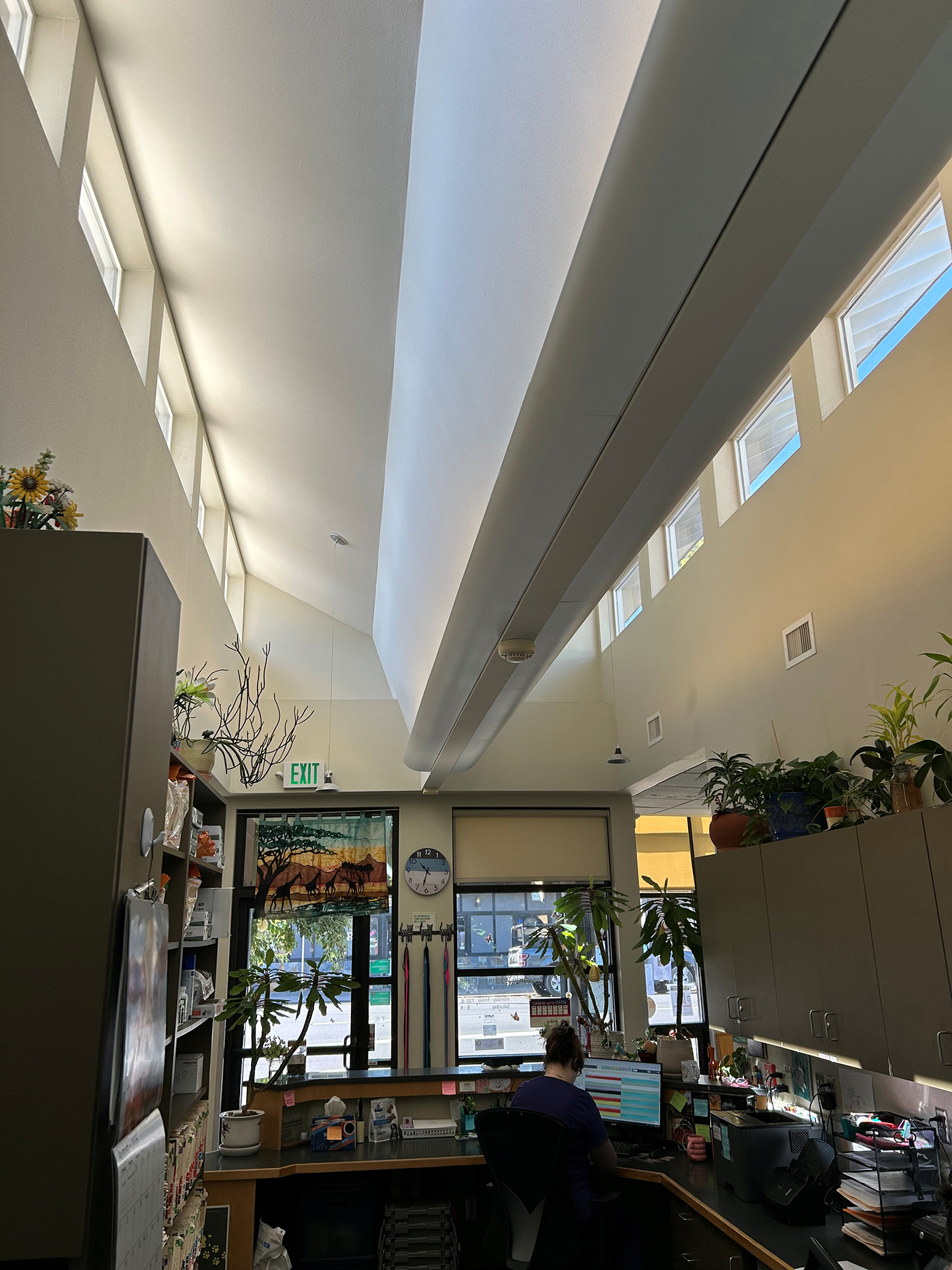
Designing this building also drew on his special skill, the exercise of circulation. Pets go in distinct directions through the building: dogs one way, cats another. People flow through in their own circulation.
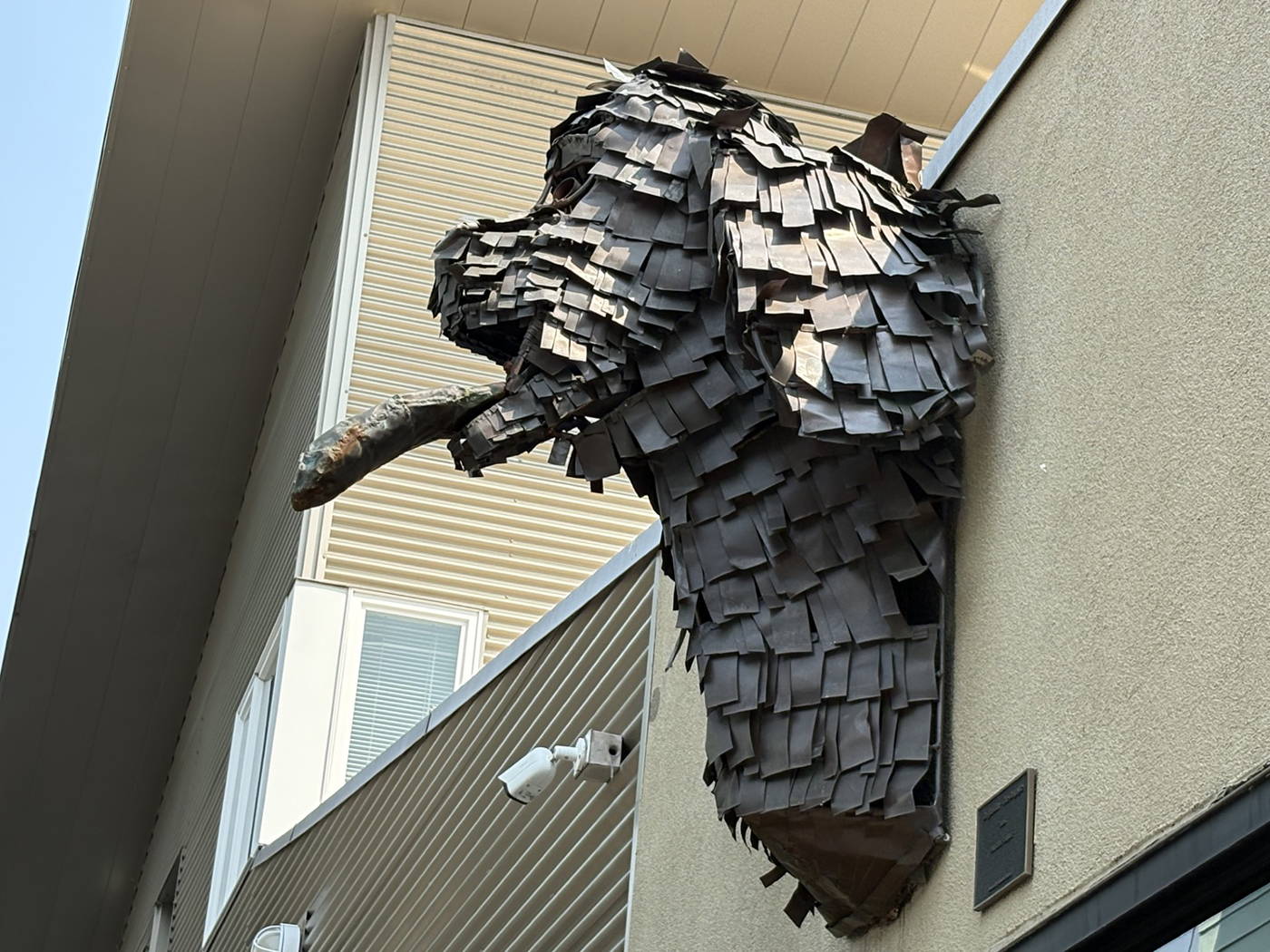
Perkins is most proud of the central gathering area at the clinic, which is full of light from a massive skylight. He worked with a local sculptor on a roof drainage scupper called a “dog-goyle” – like a gargoyle, but a dog figure with water flowing down its tongue when it rains.
“The most rewarding are projects I am proud of when the client is also proud. That's a special combination,” Perkins reflected.
NOW THE MENTOR
Perkins was the Director of Architecture when he planned to retire in 2025, a role he fully enjoyed as it involved mentoring and leading teams of talented professionals, all developing their own careers. Perkins had considered being a professor while he was still in college, the ultimate mentoring role.
Not a professor, but certainly a teacher, Perkins now mentors a team at Stantec working in a cutting-edge industry, building some of its largest structures.
Nina Milligan can be
reached by email or by phone
at (206) 219-6482.