 |
Subscribe / Renew |
 |
Contact Us |
| ► Subscribe to our Free Weekly Newsletter | |

Construction Bids
| home | Welcome, sign in or click here to subscribe. | login |


 print print  email to a friend email to a friend  reprints add to mydjc reprints add to mydjc |  |
June 8, 2015
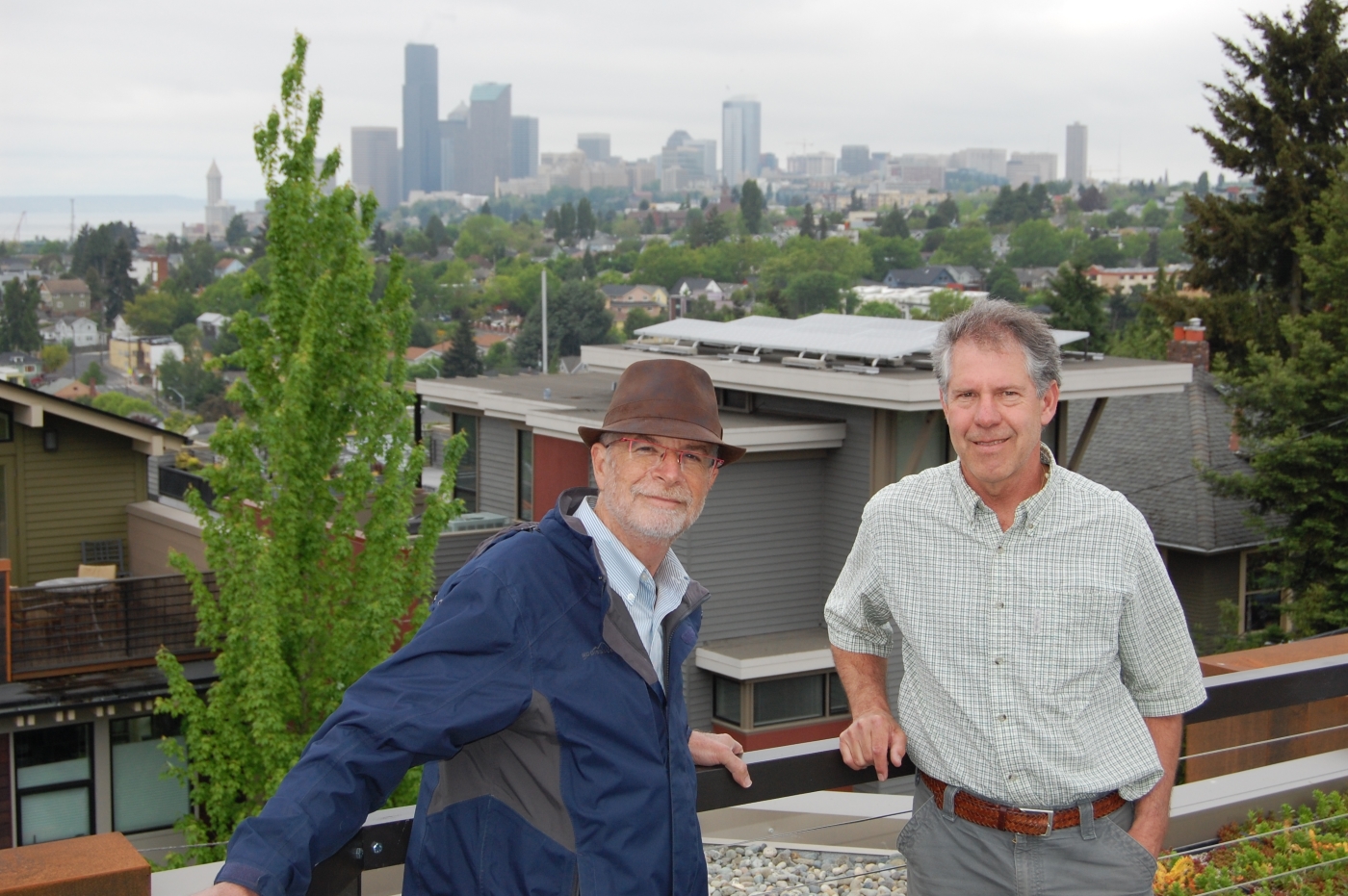
Last December, Ken Coleman told the DJC that he was leaving Compass Construction, the company he had started about 15 years earlier. He said he wanted to leave while he was still young and healthy enough to explore other opportunities.
Shortly after, Coleman found out that he had cancer. But that hasn't stopped his drive to rejuvenate the Mount Baker Ridge neighborhood where he lives. He is working with Jared Smith, his business partner, friend and neighbor.
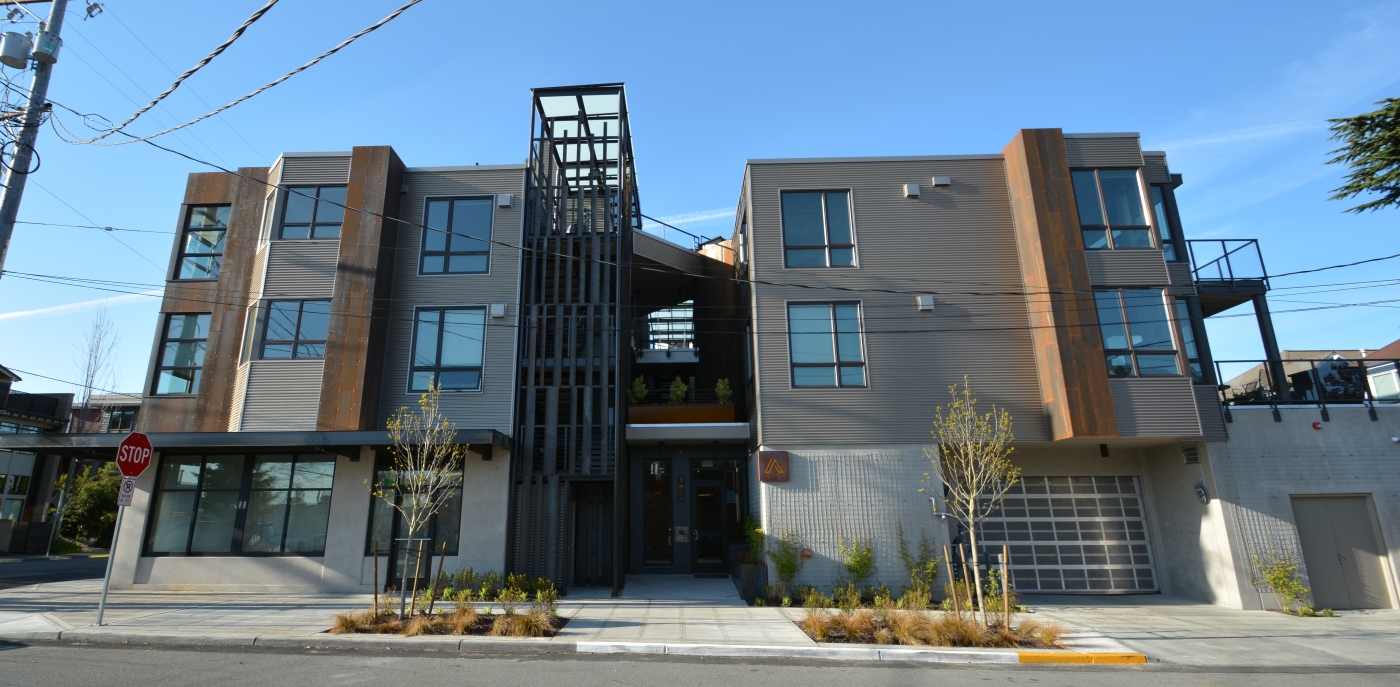
The two men just opened their most ambitious project: Atrium, an 18-unit apartment building at 31st Avenue South and South Day Street.
Both live across 31st from the Atrium site in buildings Compass constructed. Coleman once operated Compass out of the building where he now lives, but he sold his interest in the company and it moved to Kirkland. Smith lives near Coleman in a townhouse.
Atrium is owned by Coleman and his wife, Sharon, and Smith and his wife, Karen Daubert.
A gas station had once operated on the site where they built Atrium, and redeveloping it turned into a monumental challenge involving the state Department of Transportation, Chevron and two legislators.
“Ken had some real passion for the site,” Smith said, and he needed it.
The station operated there until 1976, and leaked fuel into the soil. After the station had closed, WSDOT began working on a plan to cut a swath through the neighborhood to expand Interstate 90. WSDOT bought hundreds of properties, including the gas station site.
A developer bought the station site in 1978 and a year later built 13 condo units. Neighbors told Coleman and Smith that the project was a “sham condo” built to increase the value of the land before it was sold to the state in 1981.
Coleman said the units never had any paying tenants, which was good because the construction was shoddy and the garage had “a strong odor of contamination.”
But after buying lots of property in the area to expand the freeway, WSDOT decided against that design in favor of tunnels. This left WSDOT with hundreds of unneeded parcels.
Coleman said land for the Compass building was purchased from WSDOT in 2002, and an adjacent parcel where the townhouses are now was bought in 2006.
The gas station site was the last big piece left. It had been sitting vacant since 2001 when the condo structure was demolished by WSDOT.
“The neighborhood was going ‘Hey what are you going to do with this?'” Coleman said.
Coleman said it took from 1990 to 2012 for the state to figure what could be done with the property, and that required the involvement of two legislators.
Smith said Chevron only agreed to pay for site cleanup after lawmakers got on board. But that allowed the two couples to buy the site at an auction in 2012.
Eventually, the site was cleaned, an underground liner installed and construction started on Atrium.
A 35-foot excavation was needed to clean the soil but some good things came from that: a basement with 23 storage units, a 500-square-foot art studio with a skylight for Coleman, and a 1,800-square-foot space that will be a yoga studio during the week and a speakeasy on Friday and Saturday nights.
The bar will be at one end, hidden by a theater curtain during yoga classes. Tables, chairs and a stage for the speakeasy will be stowable to create space for yoga.
Smith said the curtain will also help deaden sound in the concrete-walled basement.
The 60-seat speakeasy is called Blue. Coleman said a blue light outside will indicate when the speakeasy is open, and patrons will be buzzed in — like real speakeasies of the 1920s and 30s.
Smith said they want to finish the yoga space this month and get the speakeasy done in July.
Basement storage units will be available for rent to tenants and neighbors. Units near the concrete foundation are perfect for wine, Smith pointed out.
But that's not all going on in the basement. Deborah Brindley recently moved her Repast bakery into the basement and also operates a cafe at street level. A dumbwaiter will hoist goodies from the bakery to the cafe.
Coleman said he and Smith haven't needed a broker because tenants came to them.
Pulse Fitness took 1,100 square feet on the ground level, and a 1,700-square-foot restaurant and bar called Heyday is under construction. Owners Gary Snyder and Dang Nguyen plan to open Heyday in July.
The dumbwaiter will serve double duty, moving food from Heyday to the speakeasy.
Guy Davis of GMD Construction is building Heyday and helping with the speakeasy. Jim Graham of Graham Baba Architects designed Heyday and the speakeasy.
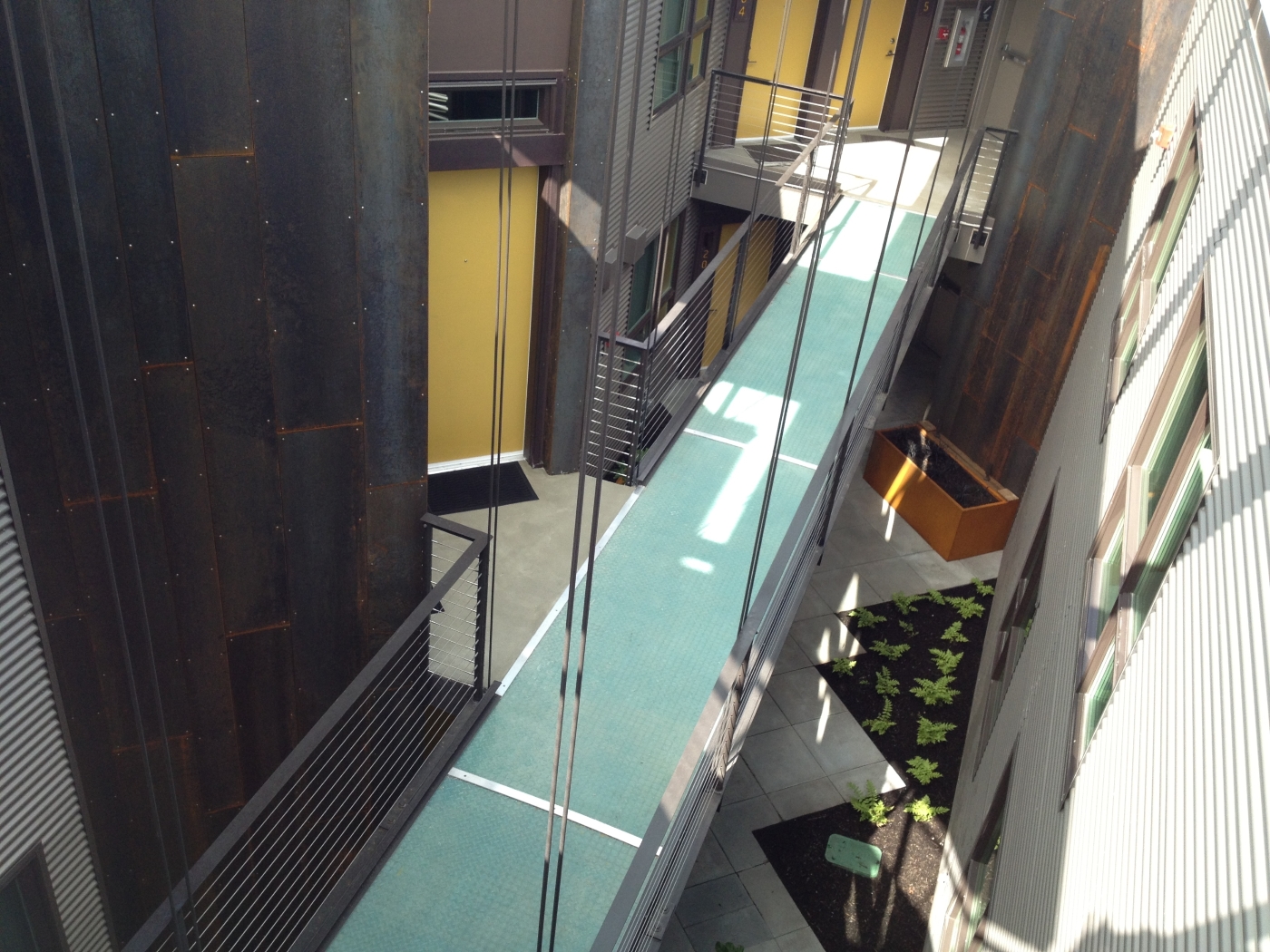
The apartments also have some unique touches. Coleman said he didn't want hotel-like corridors so he found translucent fiberglass panels made in China and used them to make a suspended footbridge across the atrium. The panels glow green during the day and are lit at night by LEDs.
The south-facing atrium brings in light and ventilation for the apartments, and most have a deck or balcony.
“Having the atrium open so you can get light into it is key,” Coleman said.
The building has 12 flats with two bedrooms, two baths; and six flats with one-bedroom, one bath. Rents start at $1,600 a month and all the units are leased.
Smith and Coleman originally expected to attract empty-nesters, but they ended up with professionals and young couples.
On top of Atrium is a 4,000-square-foot deck with views of Seattle and Bellevue, as well as a space for dogs, barbecue, wet bar and refrigerator.
Day 31 LLC, run by Coleman, was in charge of constructing Atrium. Coleman contracted with Compass and subcontractors. He said he had to “call in a lot of favors because everyone was so busy and this was a small project.”
Coleman developed the concept for Atrium and designed most of the details in a design-build process. Johnston Architects worked with Coleman on basic permit drawings and navigating the master use process.
Coleman said he and Smith hope to make the 31st Street area into more of an urban village — with retail and housing — even though it lies within a small neighborhood commercial zone.
“When we moved here in 1989, it was a different neighborhood,” Smith said.
Coleman agreed: “In the early days, it was a pretty tough neighborhood.”
Both Smith and Coleman grew up in Seattle. Smith is a civil engineer who was the city's first regional transit manager for the early stages of light rail. Coleman has a background in architecture and construction.
The two men hope their projects will inspire others.
Maybe it's working: Smith said another developer wants to turn an old gas station down the street into townhomes.
Benjamin Minnick can be
reached by email or by phone
at (206) 622-8272.
Related Stories:


