 |
Subscribe / Renew |
 |
Contact Us |
| ► Subscribe to our Free Weekly Newsletter | |

Construction Bids
| home | Welcome, sign in or click here to subscribe. | login |


 print print  email to a friend email to a friend  reprints add to mydjc reprints add to mydjc |  |
September 27, 2018
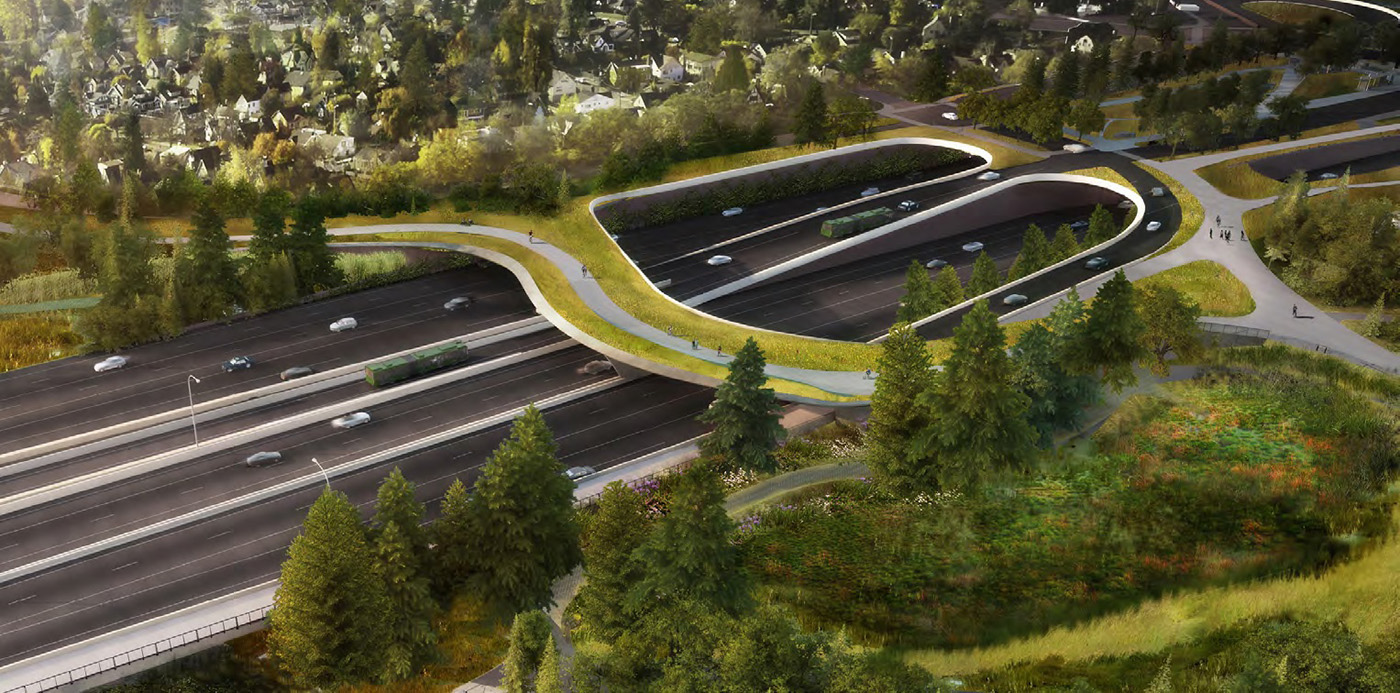
The next phase of construction for state Route 520 is scheduled to begin in 2019 when crews break ground on the Montlake project at the SR 520-Montlake Boulevard interchange.
The Washington State Department of Transportation will announce a contractor in the coming weeks. The estimated amount for the design-build contract is $425 million.
These firms submitted qualifications: Graham Contracting, Shimmick-Parsons Joint Venture, Flatiron West, Atkinson/Traylor Joint Venture and Kiewit Manson.
This will be the first stage of the $1.6 billion “Rest of the West” construction between Lake Washington and Interstate 5 in Seattle.
The scope of the contract includes the new Montlake interchange, a landscaped lid over SR 520 with regional transit stops, a bicycle/pedestrian landbridge with green space east of the lid, and a West Approach Bridge South structure for eastbound traffic between Montlake and the floating bridge.
Here are the remaining projects that will complete the highway's $4.5 billion reconstruction:
• The SR 520/I-5 Express Lanes Connection project, scheduled to begin in 2020, will add a new reversible transit/HOV ramp between SR 520 and the I-5 express lanes, including a reversible Mercer Street ramp.
• The Montlake Cut Bascule Bridge project would build a second, parallel drawbridge across the Montlake Cut.
• The Portage Bay Bridge and Roanoke lid project will replace the old Portage Bay Bridge with two new parallel structures (one for eastbound traffic and one for westbound traffic), plus an extension of the SR 520 trail, a new Roanoke lid, and a connection over I-5 for bicyclists and pedestrians.
Since SR 520 construction began in 2011, WSDOT has rebuilt the highway's Eastside segment between Interstate 405 and Lake Washington, replaced the old four-lane floating bridge with a new six-lane span, and opened the first of two parallel west approach bridges across Union Bay.
The remaining work is expected to take about 10 years.


