 |
Subscribe / Renew |
 |
Contact Us |
| ► Subscribe to our Free Weekly Newsletter | |

Construction Bids
| home | Welcome, sign in or click here to subscribe. | login |


 print print  email to a friend email to a friend  reprints add to mydjc reprints add to mydjc |  |
March 13, 2024
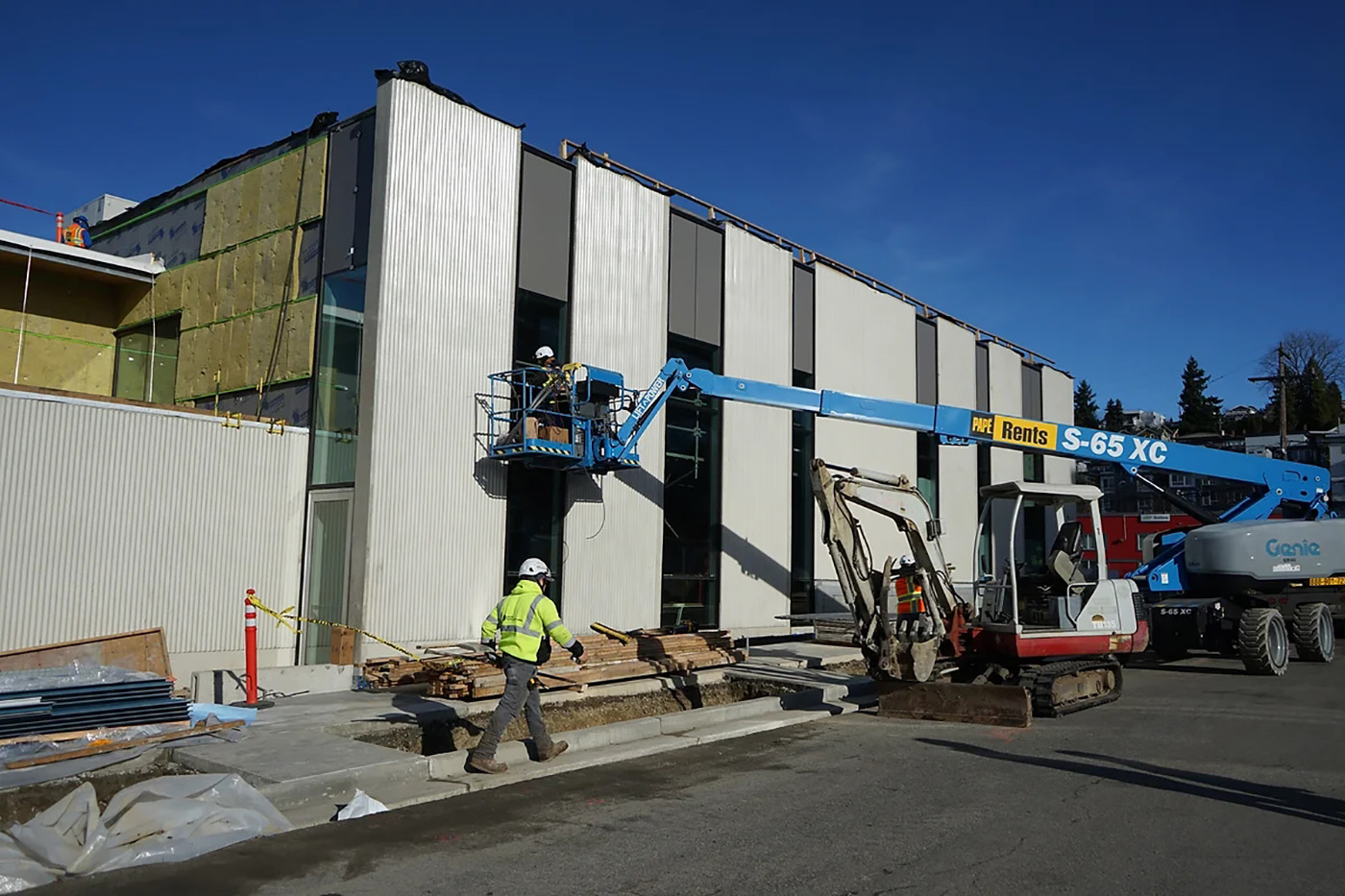
The National Ready Mixed Concrete Association, through its Build With Strength initiative, has announced 10 winners of the 2024 Concrete Innovations Award. Three of the projects are in the Seattle area.
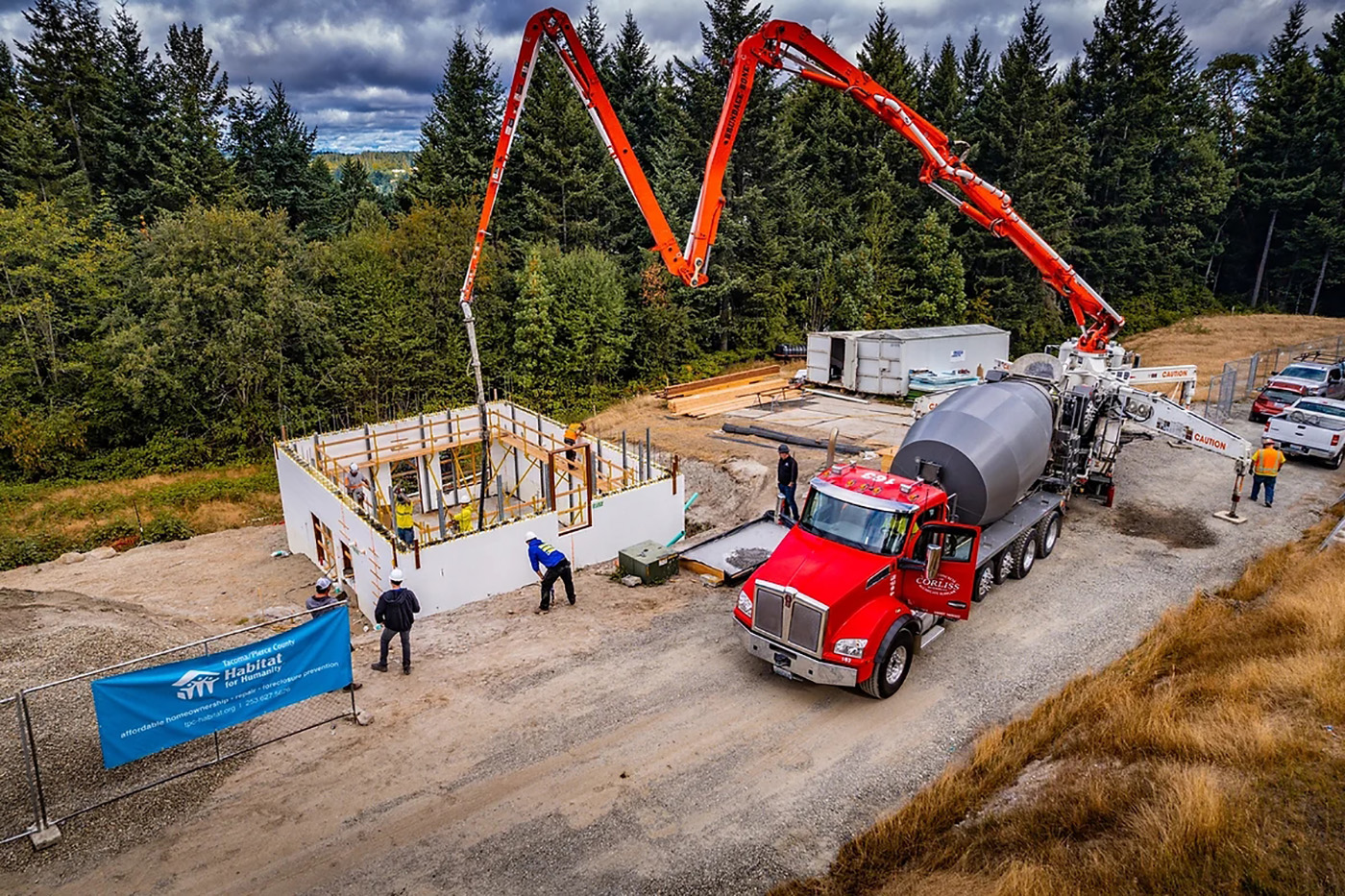
The local winners are the Hubbard's Corner project in Seattle's Green Lake neighborhood, a Habitat for Humanity home in Gig Harbor and the Seattle Storm Center for Basketball Performance in the Interbay neighborhood.
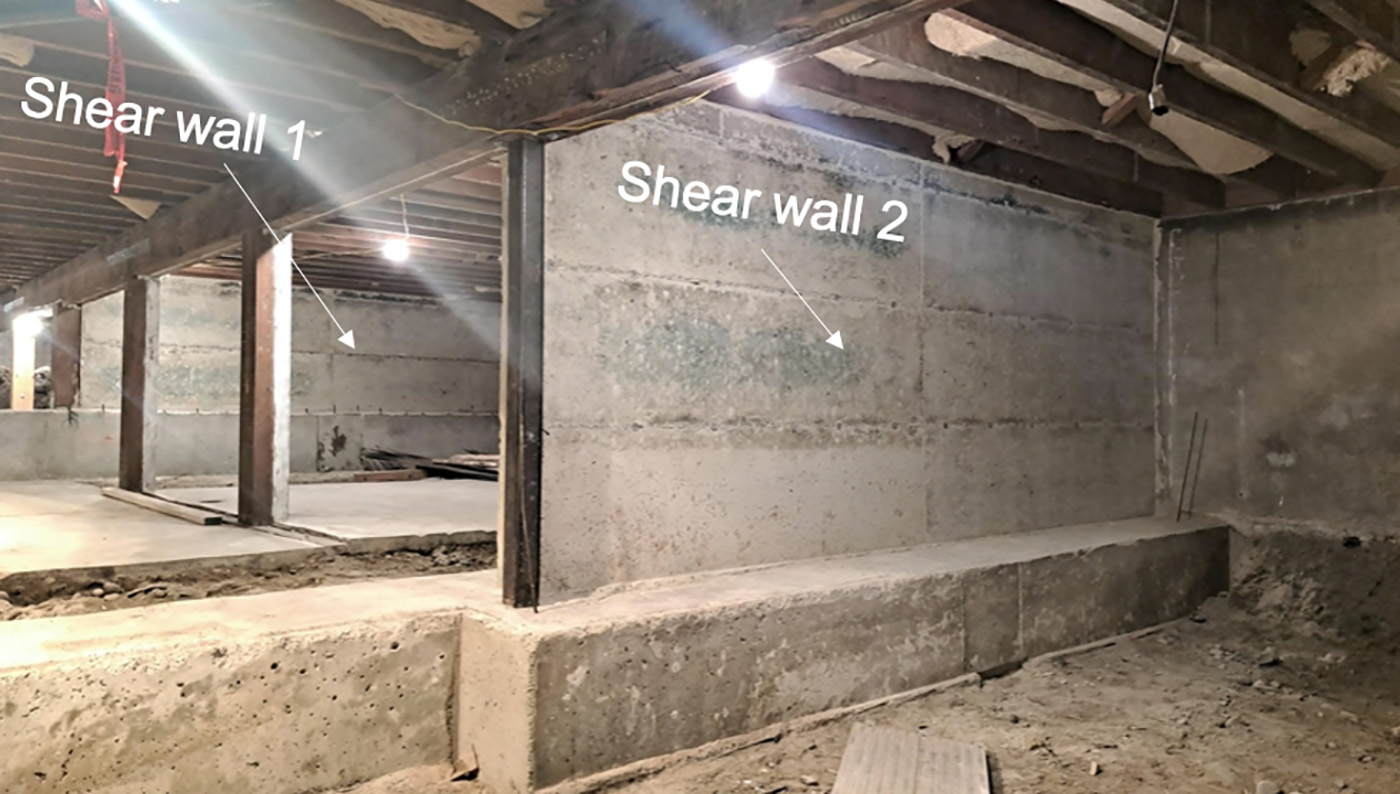
Hubbard's Corner was recognized for its innovative use of 60 tons of cement-free concrete, from C-Crete Technologies, in the foundations and shear walls of a commercial building.
“This landmark pour, a collaboration between C-Crete and NRMCA member Heidelberg Materials, marked a significant advancement in cement-free concrete technology which uses zeolite, a naturally occurring crystalline material, as a replacement for Portland cement,” a news release reads.
The association acknowledged the Gig Harbor project for constructing sustainable homes with a lower environmental impact through the use of BioLock admixture by Solid Carbon. Heidelberg Materials also supplied the concrete in Gig Harbor, this time using its Climate Earth technology to publish environmental product declarations (EPDs) to show one of the lowest recorded carbon footprint for commercial concrete in North America, according to the association.
Contest judges gave their nod to the Seattle Storm facility for the use of low-carbon concrete, which serves as the fundamental carbon-reduction element of the building and achieves up to a 68% reduction in the carbon footprint for some elements. The 50,000-square-foot center was designed by architectural firm Shive-Hattery and ZGF Architects to LEED Gold standards. Stoneway Concrete supplied the eco-friendly concrete.
The other seven winners were:
• An affordable family housing project in San Francisco that achieved a 36% decrease in the embodied carbon of the concrete.
• Indiana University's Ferguson International Center, which sidestepped the use of traditional cement and aggregates, marking a notable decrease in embodied carbon.
• An interstate freeway flood control facility in Minnesota that can hold 4.8 million gallons of stormwater across six interconnected concrete tanks.
• New Canaan Library in Connecticut, which achieved an energy use intensity 89% below the U.S. baseline partly by using locally sourced, recycled and energy-efficient materials.
• Prologis Nexus in California, an industrial building that reduced embodied carbon emissions by more than 40%.
• Harvey Milk Terminal 1 Boarding Area B at San Francisco International Airport, which received LEED BD+C New Construction Platinum v4.0/4.1 certification.
• The Hope Center + Berkeley Way Apartments in California, where the concrete mixes used 55% less cement than the average for concrete of equivalent strength.
The annual awards program celebrates excellence in concrete manufacturing, research, design and construction that reduces environmental impacts. Winners represent building and infrastructure projects substantially designed and built using concrete and having improved all-around performance, including reduced carbon footprint.
The Build With Strength initiative seeks to educate the building and design communities and policymakers on the benefits of ready-mixed concrete and encourage its use as the material of choice for buildings.


