 |
Subscribe / Renew |
 |
Contact Us |
| ► Subscribe to our Free Weekly Newsletter | |

Construction Bids
| home | Welcome, sign in or click here to subscribe. | login |


 print print  email to a friend email to a friend  reprints add to mydjc reprints add to mydjc |  |
May 21, 2024

The Port of Seattle is poised to break ground this morning on the new Maritime Innovation Center at Fishermen's Terminal.
The project comprises the adaptive reuse and transformation of the existing historic Ship Supply Building into a modern facility, which the port hopes will become “a globally recognized home for maritime innovation.”
It will serve as a new centralized hub for the city's maritime industry professionals and, according to the port, will “bring together students and innovators from business, public agencies, and academia, along with community stakeholders to collaborate around maritime industry needs and opportunities.”
To achieve this, the Ship Supply Building, which dates to 1918, will be restored and modernized into a 15,000-square-foot facility with a mix of spaces for incubators, accelerators and anchor tenants, along with fabrication and reservable spaces for meetings, seminars and classes. Companion improvements include wayfinding and site signage, interpretative signage, and landscaping.
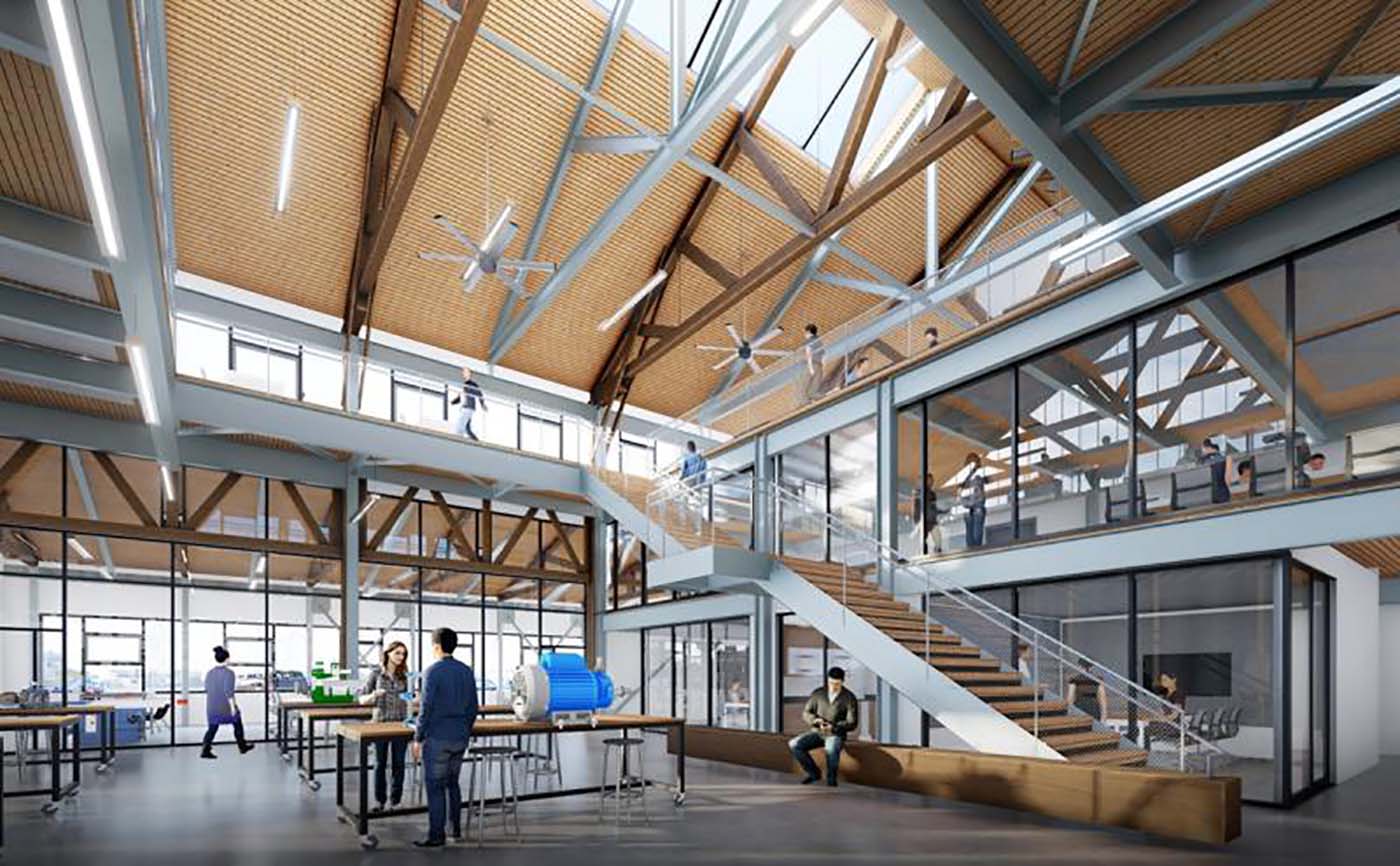
The DJC first reported on the project in August.
The Miller Hull Partnership has designed the new center, which Forma Construction Co. will build.
The center is aiming for Living Building Challenge (LBC) certification and has high sustainability objectives such as having its own utility, generating its own energy, capturing its own water, and processing its own waste.
Other green design features include:
• Net positive energy.
• Photovoltaic energy production.
• Salvaged materials.
• High-performance envelope.
• Reduced carbon emissions.
• Natural ventilation.
• Natural lighting and views.
• Rainwater capture.
• Ground source heat exchange.
• Gray and black water treatment.
• Stormwater treatment.
• Red-list-free materials.
The port is planning to open the Maritime Innovation Center in 2025. It will operate the facility in partnership with Maritime Blue.
The port in November authorized a budget of $36.61 million for the project.


