|
Subscribe / Renew |
 |
Contact Us |
| ► Subscribe to our Free Weekly Newsletter | |

Construction Bids
| home | Welcome, sign in or click here to subscribe. | login |


 print print  email to a friend email to a friend  reprints add to mydjc reprints add to mydjc |  |
August 6, 2026
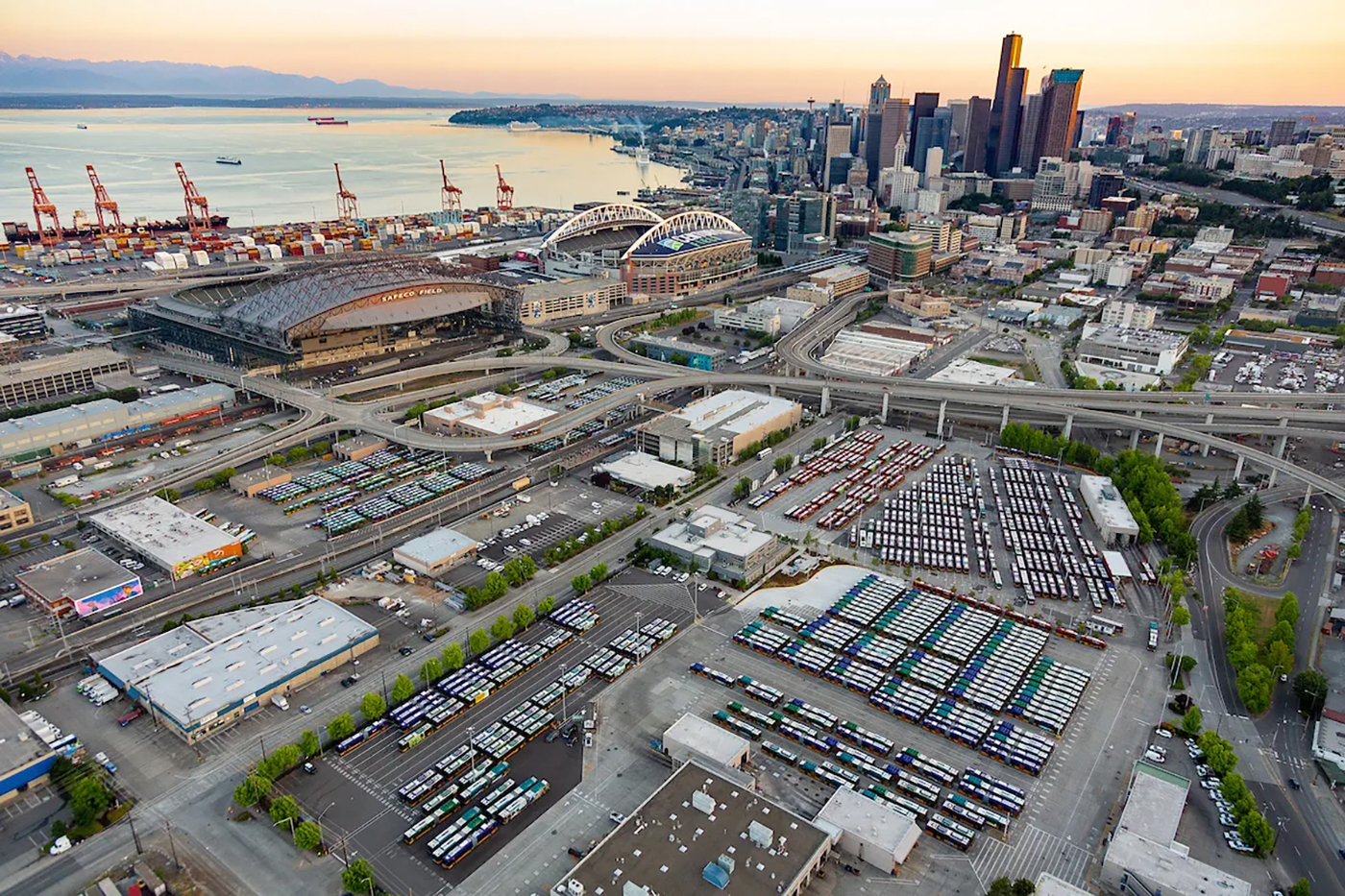
The shortlist is in for King County Metro's $165 million central campus electrification.
The progressive design-build project will add infrastructure and upgrade facilities to support charging and maintaining battery-operated buses at Metro's existing Central, Atlantic and Ryerson bus bases in SoDo.
Metro estimates substantial completion of the work by the end of 2031, according to the RFQ.
The apparent low bidder teams were reported in the DJC on July 28: BNBuilders; Hoffman Construction; a joint venture of Stacy & Witbeck and Clark Construction; and a joint venture of Swinerton, Shimmick and SAL.
The agency said in the RFQ that it expects to make its selection and begin negotiations in December and execute the design-build agreement in March.
The project is slated for a 4-6 month validation period and a 20-24 month preconstruction period, with an estimated $14 million design and preconstruction budget and a $165 million construction estimate.
The work centers around electrifying infrastructure to charge and maintain zero-emissions vehicle (ZEV) battery buses at the agency's three Seattle bus bases, all in SoDo: Central and Atlantic bases at 1270 Sixth Ave. S., and Ryerson just across Sixth Avenue South at 1220 Fourth Ave. S.
The selected design-builder will construct new electrical infrastructure including connections, along with bus chargers and associated superstructures. Additional features will also need to be added to support bus charging and maintenance in the space, including bridge cranes and working platforms in the bays.
The work includes renovating or replacing the bases' maintenance building and yard areas.
MOVING TOWARD ZERO EMISSIONS
The transit agency set a past goal of operating a net-zero emissions fleet by 2035. But next-generation buses need next-generation charging and maintenance facilities.
After retiring its last diesel bus in 2020, Metro launched its South Base Test Facility in 2022 to kick off battery-electric bus operations.
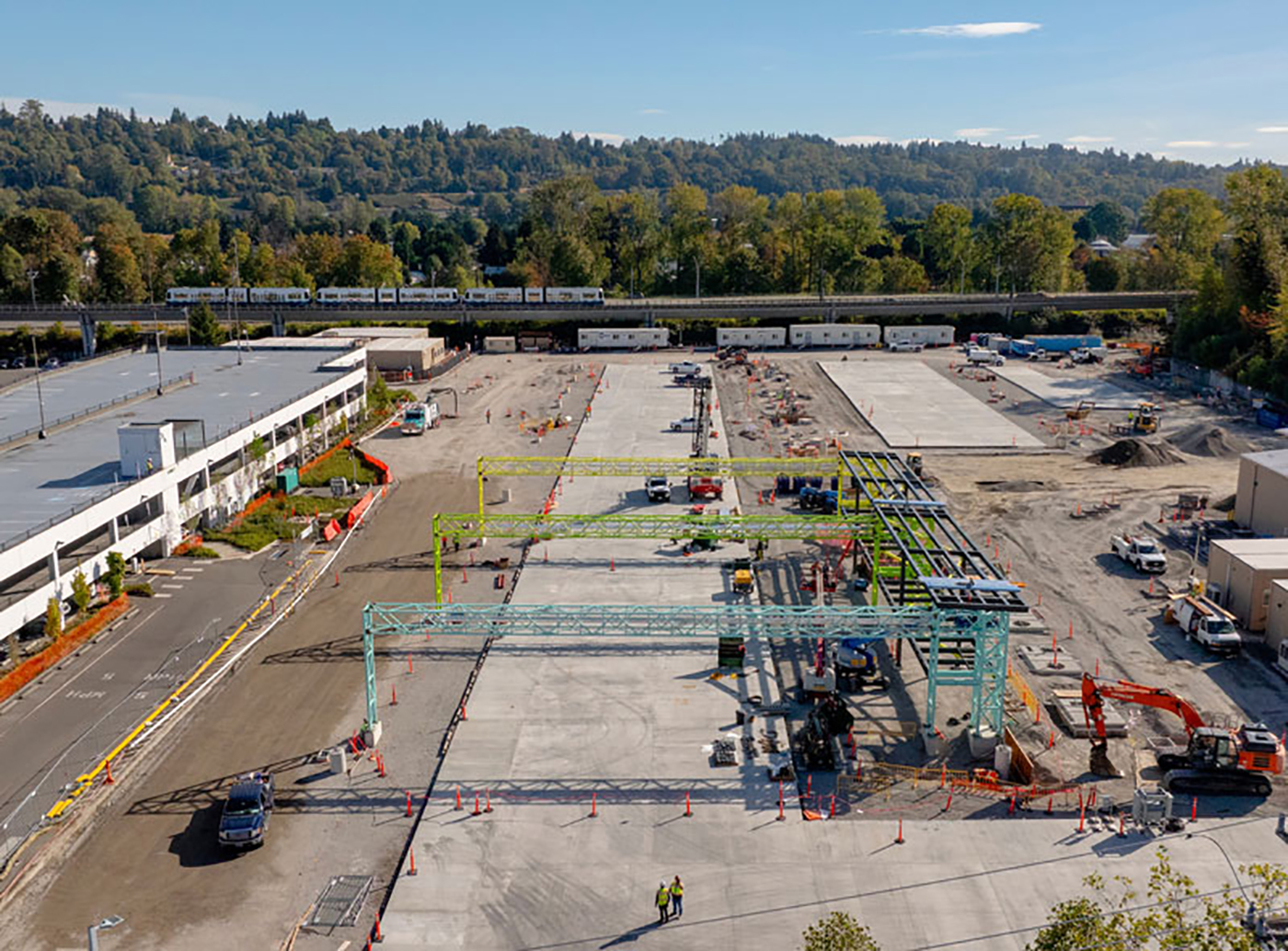
The agency has begun transitioning its fleet to next-generation battery-powered buses, including 40 from New Flyer that joined the fleet in 2021 and 89 that started arriving this February from California-based Gillig and are now serving south King County routes from its new all-electric Tukwila Base.
NEW TUKWILA BASE SERVES AS MODEL
Construction wrapped last year on Tukwila Base. The $115 million project, initially called Interim Base, was designed to serve as a prototype for future base electrifications and as a training ground for Metro employees.
Bus charging began this spring at the new base built about 200 yards south of Metro's South Base, at 12100 E. Marginal Way S. It can serve up to 120 ZEV buses.
Ground was broken on the 54,000-square-foot Tukwila Base two years before. McKinstry designed and built its electrical power infrastructure. That project team also included Stantec, electrical engineer; Lund Opshal, structural engineer; Rolluda Architects, site and architecture; LPD Engineering, civil engineer; and HBB, landscape architect.
NEW SOUTH ANNEX TIMELINE UNCLEAR
In addition to the SoDo electrification project now shortlisted, Metro has been planning a new South Annex Base also in Tukwila, northwest of its South Base and new Tukwila base.
Plans for the annex base include infrastructure to support 250 battery-electric buses and a sustainable maintenance building.
Metro most recently reported a goal to open that new base in 2028, but it is now unclear when the agency will move the project into construction.
The agency has eight bases in all: one in Shoreline and two in Bellevue, along with South Base, Tukwila Base, and the three in SoDo.
Shawna Gamache can be
reached by email or by phone
at (206) 219-6518.