 |
Subscribe / Renew |
 |
Contact Us |
| ► Subscribe to our Free Weekly Newsletter | |

Construction Bids
| home | Welcome, sign in or click here to subscribe. | login |


 print print  email to a friend email to a friend  reprints add to mydjc reprints add to mydjc |  |
January 7, 2003
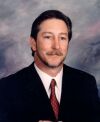
Wells |
Company officials say the move strengths Bothell-based NCA’s position as the largest Pacific Northwest environmental laboratory network.
Inland Environmental Laboratory, a division of Inland Environmental Resources Inc., provides environmental testing services for industrial and consulting firms in Eastern Washington and Idaho. Operating from its new 6,000-square-foot facility, Inland provides a variety of testing services. NCA also has a lab in Spokane.
North Creek Analytical Vice President Dennis Wells has been named laboratory director for the two facilities. NCA will operate both facilities separately for an interim period before consolidating labs into the former Inland Environmental facility.
Dick Handley, president of Inland Environmental Resources, will lend his knowledge of the local market to the venture.
NCA bills itself as the largest environmental laboratory company in the Pacific Northwest, with 185 staff members, four labs in Washington and Oregon, a service center in Alaska and a fleet of mobile laboratories.
Environmental litigator joins Ater Wynne
SEATTLE -- Steve Parkinson, an environmental litigator, has joined Ater Wynne's Litigation, Environmental and Land Use Groups at the law firm's Seattle office. He helps businesses resolve environmental problems, meet regulatory requirements and defend against environmental claims and liability.
He has experience with Superfund cleanup sites, and also represents clients in environmental litigation involving real property transactions, insurance claims and permitting. He graduated cum laude from Harvard Law School.
Planners call for GMA adjustments
SEATTLE -- Washington state's Growth Management Act does work but further action is needed if it is to remain successful.
That's the assessment of the state chapter of the American Planning Association, whose members spent months studying what has occurred since the Legislature passed the act in 1990. The association's 1,300 members were asked to participate in a Web-based survey. Comments were analyzed at a conference.
To show the act is working, the association cited Puget Sound Regional Council statistics. Even though the region's population growth was a robust 8 percent from 1995-2000, 87 percent of the population growth occurred within urban growth areas, or UGAs. Employment growth jumped almost 19 percent, and 96 percent of it occurred within UGAs.
To improve the act, the chapter offers 19 recommendations. Among them: require every state agency to comply with GMA; develop a statewide economic development strategy; refine the state's role in determining annexations; mandate revenue sharing agreements to enhance city and county cooperation; articulate a vision for rural areas; and fully integrate the growth management, shorelines management, state environmental protection and watershed management acts.
The group outlined its proposals in "Livable Washington." Free copies of the report are available by calling the association's Washington chapter at (206) 682-7436.
$24M goes to NW Superfund sites in 2002
WASHINGTON -- A total of $23.8 million was allocated to Superfund cleanups in Idaho, Oregon and Washington last year, according to officials of the U.S. Environmental Protection Agency.
Among the affected sites are:
Among the affected sites are:
<@_Round Bullet>l<@$p> The 8-acre wood treating site at Wyckoff/Eagle Harbor project on Bainbridge Island received $4.6 million. The work includes what the EPA calls an innovative pilot project using steam injection to recover wood treating contaminants from soil and groundwater.
<@_Round Bullet>l<@$p> Bunker Hill in Kellogg, Idaho, received a total of $13.2 million. The Central Treatment Plant at Bunker Hill, the largest source of metals pollution in the Coeur d'Alene River, received $4.7 million for an upgrade, $5 million went to clean up Bunker Hill residences and $3.5 million was allocated for other projects.
<@_Round Bullet>l<@$p> The Oregon Department of Environmental Quality received $4 million to build a barrier wall designed to prevent creosote contamination at the former McCormick and Baxter wood treating site from entering the Willamette River in Portland.
<@_Round Bullet>l<@$p> The Hamilton/Labree waterline project in Chehalis received $2 million. The line supplies 19 homes and businesses with clean drinking water to replace water from wells contaminated with the industrial solvent perchloroethylene.
<@_Round Bullet>l<@$p> Vancouver's Frontier Hard Chrome Superfund site received $530,000 to start work, which includes demolition of buildings to provide access to soil contaminated with high levels of chromium. Construction of soil and groundwater treatment systems is to start early this year.
Wildlife brings $2.2B to Washington
OLYMPIA -- The Washington Department of Fish and Wildlife estimates that fish and wildlife activities contribute $2.2 billion to the state's economy.
Using U.S. Census data, the federal Fish and Wildlife Service detailed the economic contribution made by people pursuing fish- and wildlife-related activities across the country.
State officials examined the annual effect on Washington communities. Results are in a publication called "Adding It Up" that examines benefits from the sale of items from bait to boats, and chronicles the growth of annual fish and wildlife-themed festivals.
The report is at http://www.wa.gov/wdfw; click on the "Adding It Up" link on the right side of the page.
Energy group makes push for better windows
PORTLAND -- The Northwest Energy Efficiency Alliance has launched a program to increase the number of efficient manufactured windows in small- to medium-sized commercial buildings.
According to the group, the commercial building sector consumes about a quarter of the electricity in the Northwest, where about 28 million square feet of commercial window glazing is installed annually. The program seeks to increase market share for energy-efficient products by working with architects, developers and window manufacturers.
The goal is increase the market share of the products from an estimated baseline of 12 percent to 50 percent by 2005 and to 70 percent by 2010.
The alliance has awarded a nearly $1.5 million contract for the new commercial windows program to The West Wall Group LLC, a Salem, Ore.-based energy-efficiency consulting company. The company will work with the window industry to help it communicate the benefits of energy-efficient windows to the commercial building sector, according to Gary Curtis, president and founder of the West Wall Group.
It's big, it's green and it's in D.C.
WASHINGTON -- On Jan. 17, the National Building Museum will open a major exhibition, "Big & Green: Toward Sustainable Architecture in the 21st Century."
Through in-depth profiles of about 50 green projects worldwide and an examination of global ecological and economic forces, the exhibition will demonstrate the transformative powers of sustainable design. Big & Green will be on view through June 22.
As part of the exhibit, the museum is publishing a 200-page catalogue about the exhibit, hosting a range of public programs and conducting public tours of award-winning sustainable buildings in the Washington, D.C., metro area.


