 |
Subscribe / Renew |
 |
Contact Us |
| ► Subscribe to our Free Weekly Newsletter | |

Construction Bids
| home | Welcome, sign in or click here to subscribe. | login |


 print print  email to a friend email to a friend  reprints add to mydjc reprints add to mydjc |  |
December 14, 2004
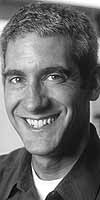
Klasky
|
Klasky was executive director for nonprofit Net Impact and specialized in technology projects for Deloitte & Touche. He also co-founded Donor Empower, which shows nonprofits how to use computer tools for fundraising. Klasky has master's degrees in business administration and education from Stanford University.
IslandWood is a 255-acre outdoor learning center that provides science, technology and arts classes. Its aim is to promote environmental and community stewardship. For more information, see http://www.islandwood.org.
UW symposium on air pollution Jan. 24
SEATTLE — The University of Washington Particulate EPA Air Pollution Research Center will hold a free symposium for the public on Jan. 24, 2005.
The event will be held in the Magnuson Health Sciences Center's Hogness Auditorium from 8:30 a.m. to 4:30 p.m. Experts from epidemiology, toxicology and exposure assessment will present results of six years of research on combustion-derived airborne particles, for example those from wood smoke, agricultural burning and diesel exhaust. For more information, call (206) 616-6570.
King County to offer compost training
SEATTLE — King County will offer training sessions on composting starting Wednesdays from Jan. 26 through March 16, 2005. Participants will get 40 hours of training on waste prevention, recycling and home composting.
The Master Recycler Composter training sessions will be held at SeaTac City Hall, 4800 S. 188th St. in SeaTac from from 6:15 to 9 p.m. Field trips are scheduled for Jan. 29, Feb. 5 and March 12, 2005.
Training is free and open to all King County residents who live outside of Seattle. Graduates are expected to volunteer at least 40 hours in their communities to share their expertise.
Since 1990, more than 500 have been trained to teach others about composting. For more information, contact Karen May at (206) 296-4353 or (800) 833-6388. E-mail karen.may//www.metrokc.gov/dnrp/swd/mrc/index.asp. Applications are due Jan. 17, 2005.
PSE to buy proposed wind farm
BELLEVUE — Puget Sound Energy says it plans to buy the proposed $200 million Hopkins Ridge Wind Project in Columbia County.
Hopkins Ridge will be located about 15 miles northeast of Dayton on 11,000 acres of open wheat fields. It would provide 150 megawatts of wind power using 80 turbines, enough energy to power 50,000 homes. It will take nine months to build the wind plant once contractors get a notice to proceed, but it could be finished as early as next year.
Puget Sound Energy and Blue Sky Wind will look at siting, equipment, construction and facility operations. Blue Sky is an affiliate of RES America Developments and Renewable Energy Systems, which has built 30 wind projects in six countries.
The announcement follows the utility's recent plan to buy the 230 megawatt Wild Horse Wind Power Project in Kittitas County.
Eric Markell, Puget Sound Energy's senior vice president of energy resources, said the utility's goal is to get at least five percent of electricity from renewable resources by 2013.
Energy from Hopkins Ridge will be delivered by the Bonneville Power Administration's transmission system, connecting with a 115-kilovolt North Lewiston-Walla Walla transmission line.
LEED introduced for commercial interiors
WASHINGTON, D.C. — The U.S. Green Building Council has introduced a LEED green building rating system that applies to commercial interiors, called LEED-CI.
LEED-CI is for building owners and occupants as well as interior designers and architects. Criteria include efficiency of water usage, lighting and lighting controls, and emissions.
Rick Fedrizzi, president of the U.S. Green Building Council, said the commercial interiors market is 16 times bigger than the market for new commercial construction.
The council is developing a rating system for core and shell developments, which will be called LEED-CS.
LEED, or Leadership in Energy and Environmental Design, is a guideline for sustainable green building that's being used by federal agencies, state and local governments, and private companies around the country.


