|
Subscribe / Renew |
 |
Contact Us |
| ► Subscribe to our Free Weekly Newsletter | |

Construction Bids
| home | Welcome, sign in or click here to subscribe. | login |


 print print  email to a friend email to a friend  reprints add to mydjc reprints add to mydjc |  |
August 12, 2024
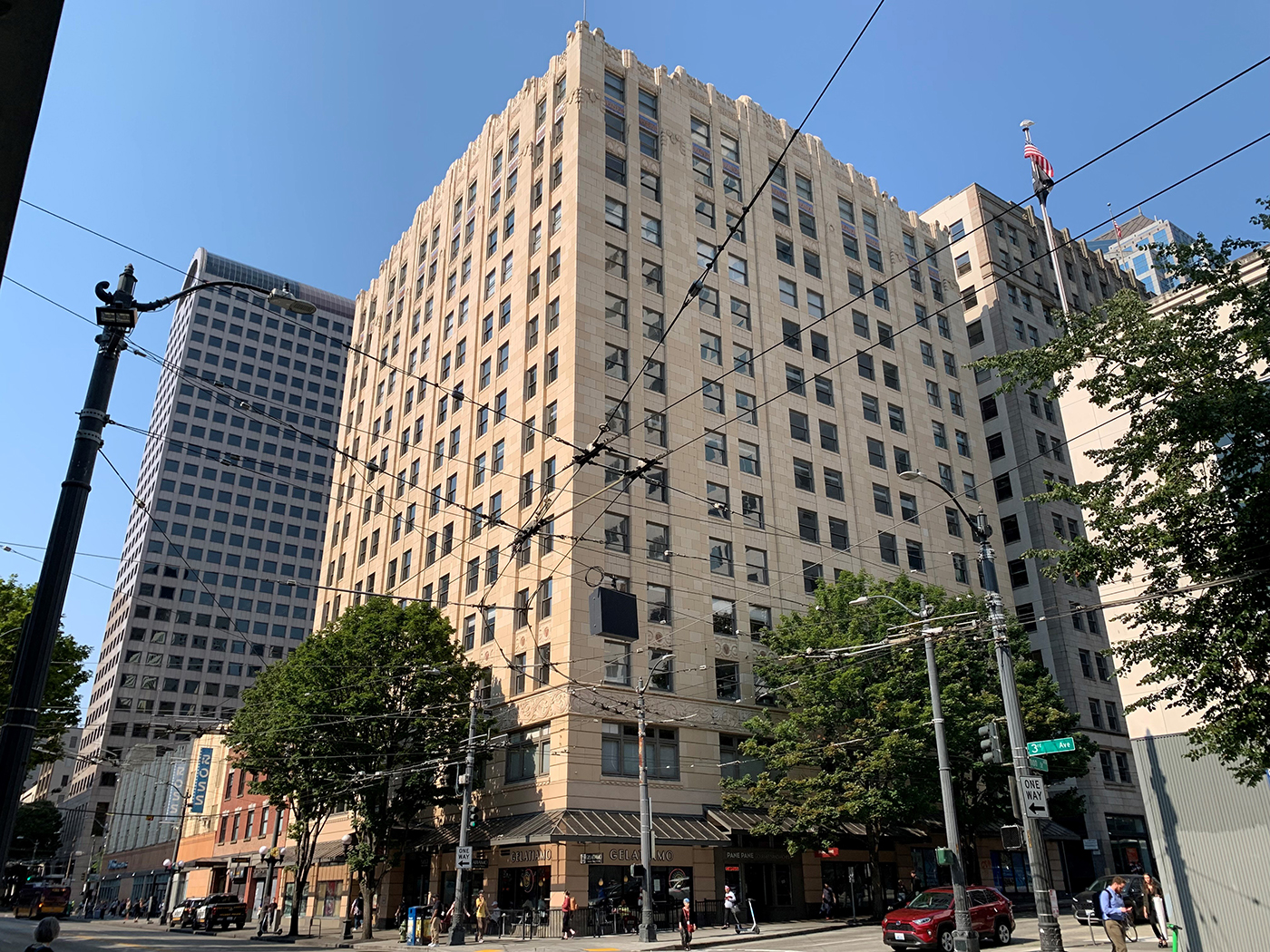
The handsome, almost century-old Joseph Vance Building, at 1402 Third Ave., sold in early 2018 to Brickman and GeenOak. That deal was worth about $43.3 million, at a time when the 14-story office building was home to many small tenants and, at grade, a Bartell drug store.
That was well before the pandemic, and times have changed. The Bartell is long gone. Leasing materials from Newmark indicate the offices are very empty. And the county has recently knocked off about $10 million from the property's assessed value. (That includes the neighboring three-story 1910 Sterling Building, once home to a Subway.)
Earlier this year, CIBC sold its $35.5 million loan for the prior acquisition to Orton Development, which is based in the Bay Area of California. Orton is a specialist in repurposing old properties and adaptive reuse. It has never before worked in our market.
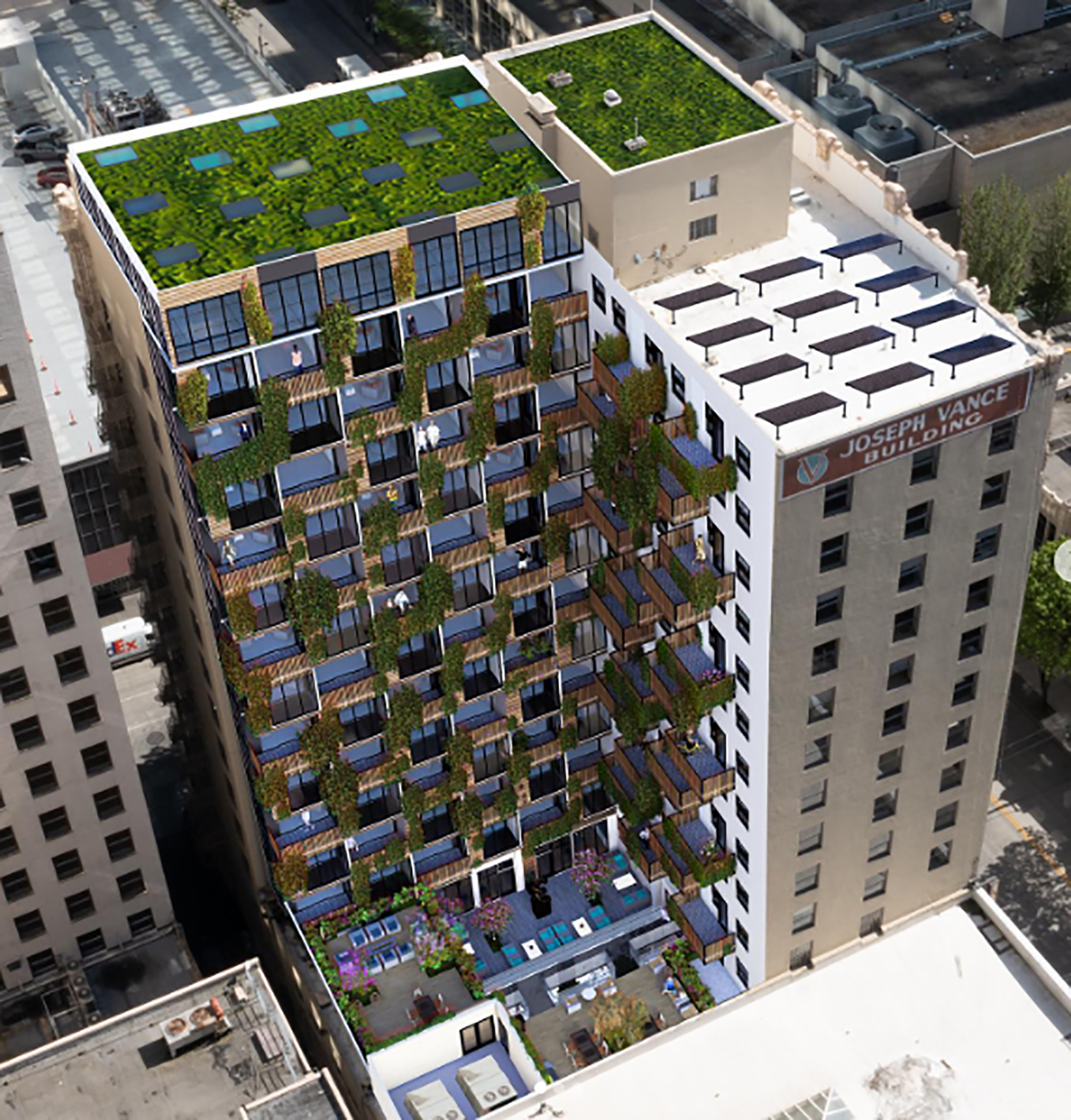
Last week, on behalf of Orton, architect Weinstein AU filed an early plan to convert the upper office floors to about 155 apartments. Some 10,000 square feet of retail would be reconfigured at grade, on the corner of Union Street. (Real Retail is the current broker there; the few remaining tenants include Gelatiamo and the Pane Pane sandwich shop.)
Orton's James Madsen told the DJC on Friday that, “We bought the note” (meaning the loan). In two other unreported deals, Orton bought loans backing the Miken Building, at 1417 Fourth Ave., and Broderick Building, at 615 Second Ave. Those loans were also to Brickman/GreenOak, which had purchased that pair in 2018 for about $35 million. Those will remain offices. CBRE's national office sold the debt, said Madsen.
As for the Vance Building, he explained, Weinstein AU previously made it a case study on residential conversion, in response to a city-sponsored competition last year. That should help, if the Vance plan proceeds. “We are exploring the idea of conversion,” but it's not a done deal, he cautioned. “We're really at the early stages. It's a very exciting time.”
Half-empty buildings can now be had at “a reasonable price,” he noted; and he sees “support from the city,” which is indeed pushing for such conversion projects.
Orton did some residential conversions decades ago, but those were mostly artist lofts in industrial buildings. More recently, said Madsen, “We have a lot of experience with rehab and value-addition” to older structures.
“We are new to Seattle, really like the market,” he said. “We're excited about growing our footprint. We're learning the lay of the land.”
The Vance and Sterling buildings aren't landmarked. They're in a struggling area of downtown where the city is seeking to encourage new residential development, with increased zoning heights, and office-to-residential conversions. (Design review won't be required for the latter, per the mayor's Downtown Activation Plan.)
The new conversion plan carries a nominal value of $25 million. It doesn't include any new floors for the Vance Building. (The Sterling isn't part of the proposal.) The building has, above its second floor, an east-facing open-book layout. That L-shape offers about 8,500 square feet per floor, which is fairly ideal for conversion. Weinstein's project history says it was originally intended to be a hotel.
Constructed in 1929, before air conditioning, the building's layout was meant to encourage natural cooling and ventilation. Postwar buildings with larger floor plates and A/C are less well suited to residential conversion. An old freight elevator could be removed, along with the common bathrooms on each floor, which would increase the rentable area. Storage could also be carved out of the dark spaces, and amenities added.
New plumbing and wiring for individual apartments would be costly, of course; and new structural work may be required. Designed by Victor W. Voorhees, the Vance Building now has about 113,321 square feet above grade, including the retail.
Separately, Dan Dahl and David Gurry of Kidder Mathews are representing the Miken Building. And for the Broderick Building, JLL's Tim Jones and Charlotte Evans represent that space.
Brian Miller can be
reached by email at brian.miller@djc.com or by phone at (206) 219-6517.