|
Subscribe / Renew |
 |
Contact Us |
| ► Subscribe to our Free Weekly Newsletter | |

Construction Bids
| home | Welcome, sign in or click here to subscribe. | login |


 print print  email to a friend email to a friend  reprints add to mydjc reprints add to mydjc |  |
August 5, 2025
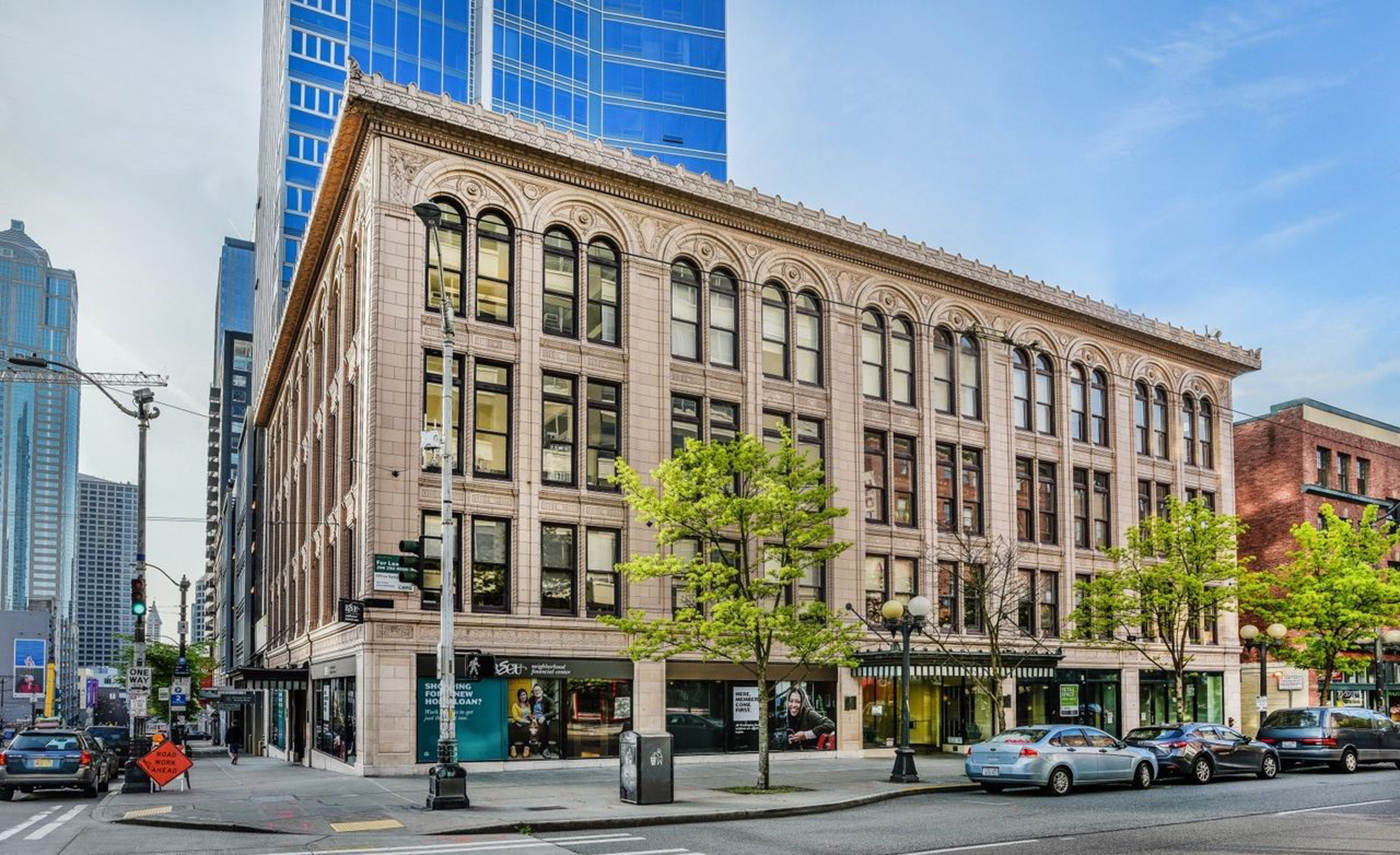
Plans emerged in April, as the DJC first reported, for a residential makeover of the little Doyle Building in downtown Seattle. The century-old office building, at 119 Pine St., is landmarked. The city's Landmarks Preservation Board will have its first presentation on the proposed conversion/addition scheme tomorrow.
Fana Group owns the four-story building on the corner of Second Avenue. It may intend to sell or partner with BNBuilders on the project. Clark Barnes is the architect. Their goal is to create around 150 units or so.
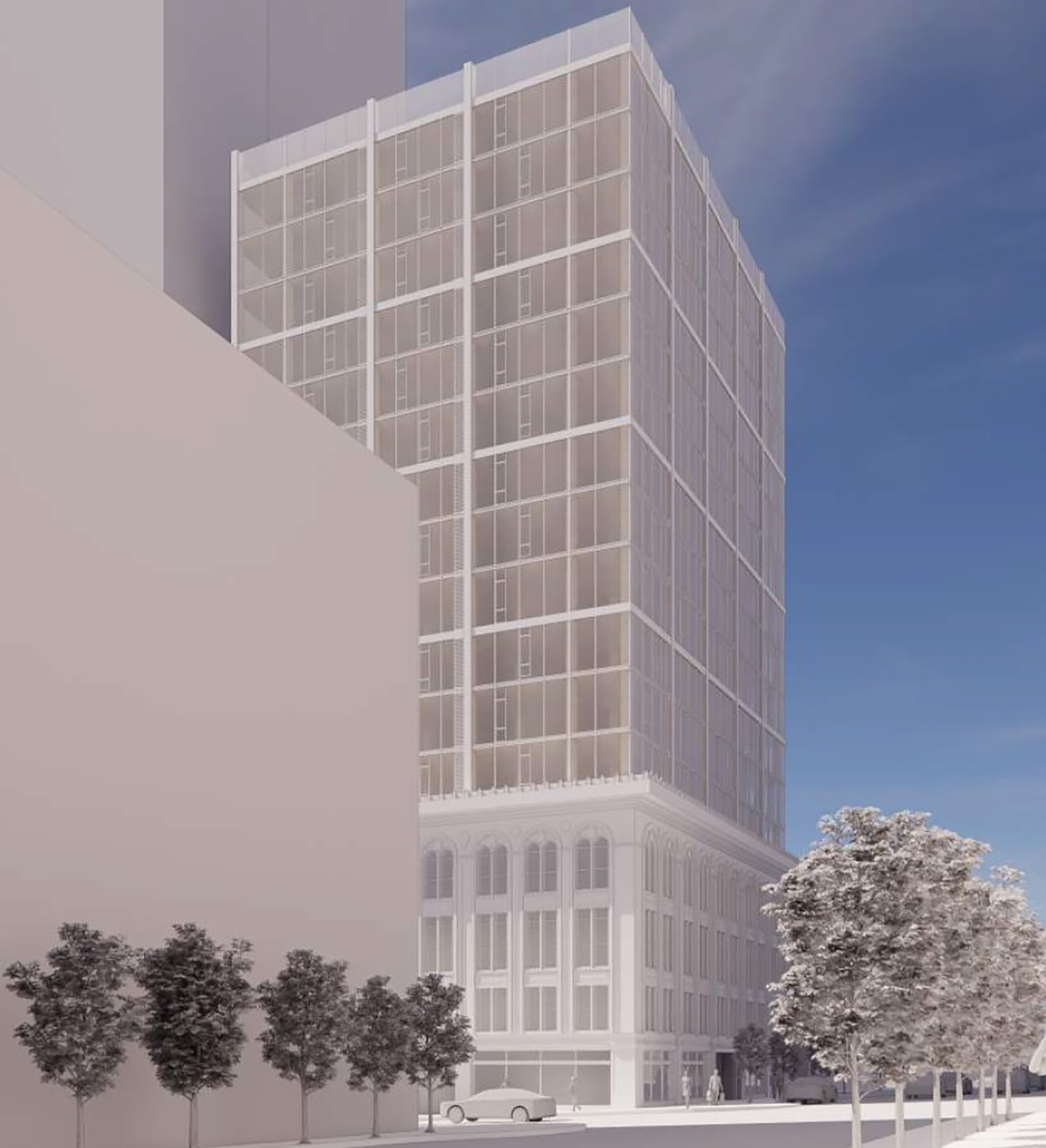
A 12-story Type IV-B wood addition to the building is proposed, using cross-laminated timber and glulam. The old office floors, with around 6,500 square feet each, would undergo interior demolition. The ground floor would then convert to a lobby, amenities and probably some retail. About five structured parking stalls, on the west alley, would be for loading. The basement could have a bike room and storage. The new elevator and stair core would use standard concrete construction.
Seismic work is likely for the preserved masonry shell, which would have apartments on its upper three levels. Those units would continue with the mass-timber addition, reaching a height of 16 stories and a size of some 150,000 square feet. The hybrid building would rise to around 180 feet.
City briefing materials say, “The Doyle Building faces an uncertain future. The three upper floors have an office occupancy of 50%, a reflection of the depressed downtown office market. The economic outlook for a small historic office building is bleak when considering that the rents barely cover the operating expenses and the mortgage. The building faces the very real possibility of dereliction and/or continued degradation as a result of its low occupancy and economically infeasible rent.”
The Doyle addition team also includes Aspect Engineering, civil; and McCullough Hill, legal.
Design review and SEPA review aren't required for downtown residential projects. The Doyle team also cites the recently approved Second Substitute House Bill 1183, which encourages mass-timber construction.
The Doyle landmarks presentation states, “Section 6 of this bill states that, ‘a city or county planning under RCW 36.70A.040 may not require facade modulation or upper-level setbacks as a condition of permitting the following types of residential projects: (d) the conversion of existing buildings to housing or mixed-use development that includes housing or (f) mass timber construction.'”
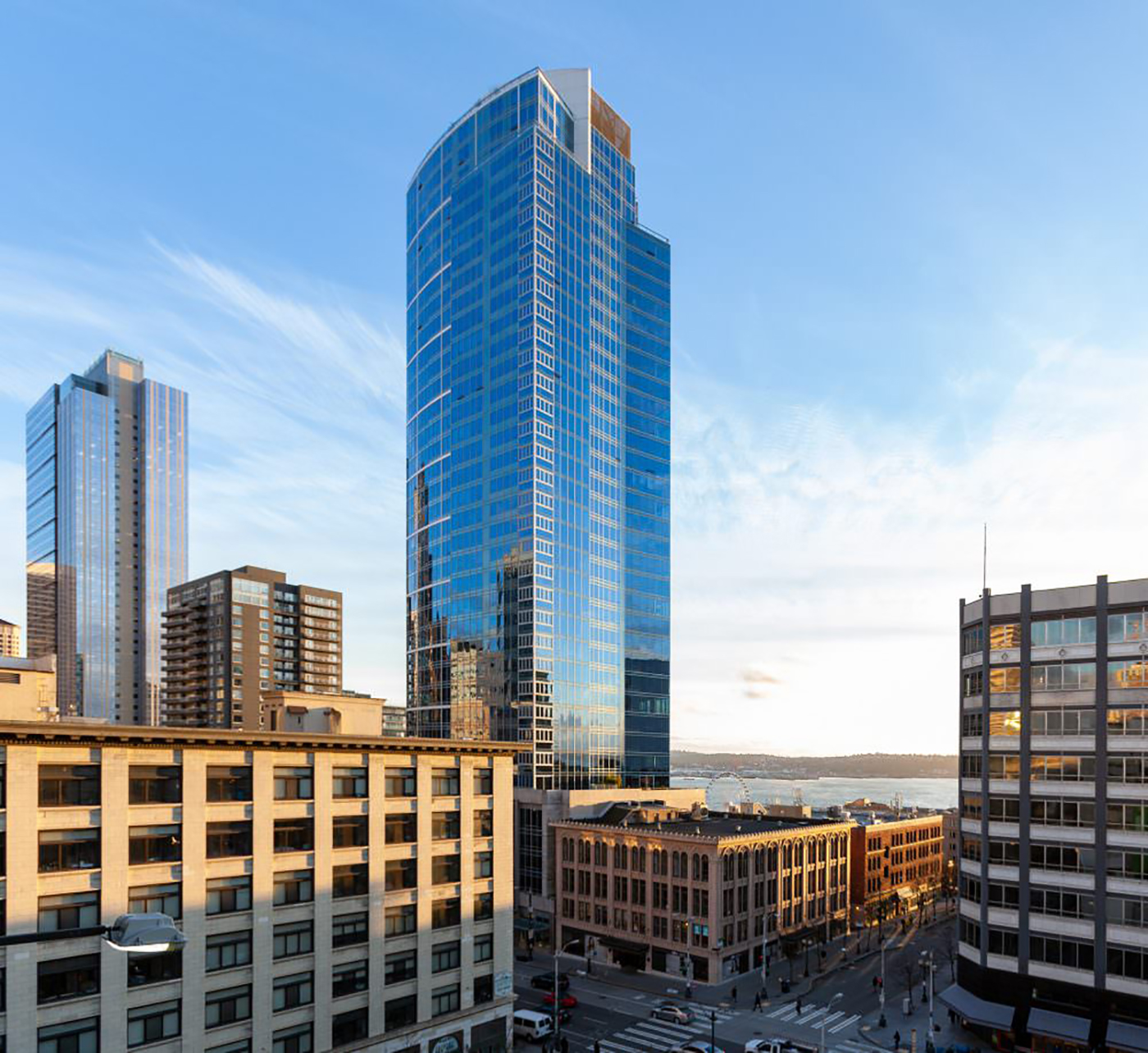
Mass-timber construction generally precludes setbacks. The historic Doyle Building abuts the five-story podium of its south neighbor, the 1521 Second condo. The latter's upper tower is set back about 15 feet from the lot line.
The proposed Doyle addition would have no south-facing windows on that side. At 1521 Second, owners in those north-facing units may have concerns about their views being impacted. A pair of newly constructed high-rise towers, from rival developers, would typically have 60 feet of separation between their upper levels.
Apart from landmarks board approval, which typically takes a year or two, the Doyle addition plan has yet to enter the normal city permit process. If it later achieves a master use permit, that city approval could be appealed to the Hearing Examiner.
The Doyle team also notes, “After considering demolition of the building, the applicant proposes a mass timber addition that will create an economically viable project and preservation of the historic facades designated as a landmark.”
The building's namesake is architect A.E. Doyle. Clothing retailer J.S. Graham was the original tenant. Architects Howard Anderson and Ibsen Nelsen restored the Italian Renaissance-style facade in 1973; landmarking followed in 1988. Fana paid nearly $8.6 million for the building in 2012.
The 38-story, 142-unit 1521 Second was completed in 2008 by Samis Land Co. and Opus Northwest. Weber Thompson was the architect.
Brian Miller can be
reached by email at brian.miller@djc.com or by phone at (206) 219-6517.