 |
Subscribe / Renew |
 |
Contact Us |
| ► Subscribe to our Free Weekly Newsletter | |

Construction Bids
| home | Welcome, sign in or click here to subscribe. | login |


 print print  email to a friend email to a friend  reprints add to mydjc reprints add to mydjc |  |

September 8, 1999


|
|
Nguyen |
Q: What does your firm do?
A: We provide a variety of services to clients, all focused on controlling construction costs, and at the same time maximizing project budget values. We want to be an integral member of the design team, and we want to make a difference to the process of design and construction. The majority of our work is for large public institutions like the University of Washington, large corporate campuses and hospital campuses.
Q: What are a few examples of the work you have done?
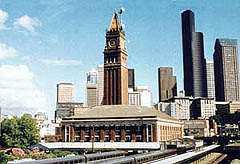
A: We're currently working on the King Street Station, which is a historic renovation to the existing Amtrak stop here in Seattle. The project involves restoring the building to its early 1900s grandeur, if you will, and at the same time providing modern conveniences for travelers.
|
|
Seattle's King Street Station project required Davis Langdon Adamson to find craftspeople with cost information. |
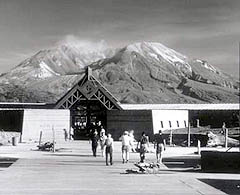
Another project is the Visitor's Services Center and Johnston Ridge Observatory at Mount St. Helens. We worked on this project 10 years ago when there wasn't even a road built to access the site. Some of the challenges included figuring out how to price the cost of construction when access wasn't readily available. Another challenge was figuring out availability of the local work force to do the project, and we were dealing with two government agencies.
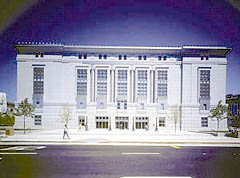
I also worked on the new San Francisco Main Public Library. This was another civic project. We got to work with an internationally acclaimed design team. What was interesting was integrating a building into an existing Beaux Arts architecture on two facades and providing a modern face to the other two facades. On that project we set the budget for the bond measure and the budget withstood the design and construction process.
Q: At what point does your firm typically enter the process?
A: We like to be involved at an early phase because that's the most critical in determining the successful cost outcome of the project. And often it's a difficult process because in order to commit funds to conduct a feasibility study, people will often ask the question of how much the overall project cost is. So a number might be thrown out or a budget might be established that has no basis and is not connected to the program at all.
Q: How new is the field of cost consulting?
|
|
The Mount St. Helens Visitor's Services Center required the firm to find local workers. |
It's analyzing the cost of buildings based on the function of the element and not the material the element is made of. For instance, concrete can be used as a structural element and as an architectural element. Our approach to budget analysis keeps the cost of architecture concrete separate from the structural concrete, so that if during design there is a budget problem we can understand where the problems are and how to value engineer it.
Q: How do you successfully cost-plan in a market like Seattle's today?
A: In today's booming economy, the labor and material shortage definitely affects construction costs. When supply is low and demand is high, costs increase. We plan for this in several ways. First, we acknowledge that it is an issue and include a line item in our cost plan purely for escalation, which is a real cost.
Secondly, we alert the team very early on in the planing process so that we are all aware of the risks of a volatile market, and build a contingency plan. Third, we stay current with the market. During the planning process, we speak to suppliers and subcontractors and get their opinions on current and future cost trends.
We also speak to members of the planning and design community to get an understanding of other projects currently underway that may affect availability of current and future resources, and we adjust pricing accordingly.
Finally, we can plan for unexpected bid conditions by recommending bid contingencies and alternates. This summer, most of the projects we have been working on have been coming in below budget.
Q: Since your services can be of such value to clients, has business been booming?
A: We will constantly be in demand if there are projects that need to be designed within established budgets. Most public and private projects have fixed funds and people trying to get the maximum value out of the funding available. We're in a strong market right now, it's really based on the robustness of the construction industry. The need is there.
|
|
The San Francisco Main Public Library required matching architecture with a new design. |
Using the systems approach we were able to provide the team with an understanding of the cost of all the required elements of the projectvs. the variable elements. And with that information, they were able to make decisions that brought the project within budget.
Q: What is your strategy for success?
A: We always give people options. I think that our strategy is to provide not just what they are asking for but to come up with a solution for them. I think that's why we're successful. We identify possible cost reductions, but also alternatives and choices they have and get them involved in the process.
Q: What do you enjoy most about the job?
A: It's taking a concept that is either in the owner's mind or architect's mind, establishing a budget, seeing that budget endure the design and construction process and have that budget live from the beginning to the end.
I personally love going into a building that was a twinkling in somebody's eye, to be standing inside the building and seeing it constructed and knowing that we contributed to the success of the projects. I like doing this because designers get to work on a few projects a year, and in doing what we do we see more than a hundred projects come through our office in a year.
Previous columns:


