 |
Subscribe / Renew |
 |
Contact Us |
| ► Subscribe to our Free Weekly Newsletter | |

Construction Bids
| home | Welcome, sign in or click here to subscribe. | login |


 print print  email to a friend email to a friend  reprints add to mydjc reprints add to mydjc |  |
June 8, 2005
Gehl
|
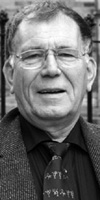
This week Jan Gehl — an expert on turning car zones into people zones — is in town to support the concept behind the declaration that City Councilman Peter Steinbrueck, architects, developers and others signed while on a recent trip to Scandinavia.
The two-sentence resolution says the city should "make Second Avenue an example of how people, pedestrians and bicyclists can co-exist with transportation to create a more vibrant city."
That means having wider sidewalks, pedestrian paths and "really dedicated bike paths like they have in Copenhagen," says one of the signers, Patricia Chase, co-founder of International Sustainable Solutions, which is organizing the European trips.
Chase said the group debated whether there should be any cars on Second Avenue. How many lanes might be reserved for walkers and bicyclists would be hashed over at City Hall later.
In a speech to an estimated 450 people Monday night, Gehl said cities thrive when they constrain motorized vehicle movement in favor of pedestrians and bicyclists.
"I know of hardly a case where you invite people in where it has not been a resounding success," he said. "I'm not talking about throwing out the cars. I'm talking about having a better balance."
| |
|
What do you think?
Send in your comments about this article to:
|
Gehl speaks from experience. He founded Gehl Architects — Urban Quality Consultants of Copenhagen, and he visits cities around the world as a speaker and urban design consultant. Nowhere are the effects of people spaces as dramatic in his hometown.
More than 40 years ago, Copenhagen planners realized the city was choking on traffic. City engineers slowly began to reduce the number of stalls for cars, based on the premise that if you don't give motorists a place to park, people will walk, bicycle or take transit.
There were skeptics. They said Copenhagen is too cold, people won't bike and they wouldn't gather in plazas or outdoor cafes. Denmark, they said, isn't Italy.
City leaders were undeterred, and continued to turn parking lots into plazas. From 1962 to 1996, the amount of what Gehl calls "people space" increased from 15,800 to 95,750 square meters.
The city incrementally extended bike lanes. Today, a third of the city's workers bicycle to their jobs and a third take transit. People meet in plazas and outdoor cafes from March through December.
Gehl said it wasn't a cultural problem but a space challenge. "We realized we had not had any space where we could be like Italians."
The economy didn't crash, he said, it thrived. Studies indicate there are four times as many people spending time in Copenhagen compared to 40 years ago.
Nine municipalities around the world, including Portland, have taken the Copenhagen tack, according to Gehl, who calls the concept "reconquering" the city. But would it work in Seattle, where voters 10 years ago approved a developer-backed plan to reopen the pedestrian-only Westlake Plaza to motor vehicles?
Opening streets to pedestrians and bikers could be expected to cause consternation among merchants and developers. Yet developers, including Jim Potter of Kauri Investments, Bruce Lorig of Lorig Associates, William Justen of Samis Land Co., Richard Stevenson of Clise Properties and Douglas Howe of Touchstone signed the resolution.
Chase said the Seattle delegation met in Copenhagen to craft the resolution. Unanimous consensus was reached in about an hour, she said, adding: "Just the amount of clout in that room was pretty huge."
The idea, she said, is to start with one street, as Copenhagen officials did. "If it's successful it would hopefully spread to a lot of other streets downtown."
Two Second Avenue merchants said they are not opposed. One, in fact, thought closing a portion of the busy corridor to cars might be a good idea.
"If you could open up bicycle access that would be cool. Really cool," says Charlene Shim, co-owner of Chief Printing and Copying near Second and Cherry. She thinks it could be good for business.
Next door, Garry G. La Bou, owner of Seattle Hair Works and Aesthetics, was less enthusiastic. "That would be fine if they did that, but where are they going to put the cars?"
He said city officials "really screwed it up" when they took out street parking on the west side of Second to make a transit lane. "I don't have any place for my customers to park."
City officials said they heard about the group's proposal this week. City Planner John Rahaim said Seattle could try it six months before the monorail, which will run down Second, opens.
Patrice Gillespie-Smith, chief of staff of the Seattle Department of Transportation, said the city is looking at how to make the avenue more inviting for walkers and cyclists. "We are trying to be pro-active before the (monorail) design is finalized."
Gehl will appear at a dinner party tonight hosted by International Sustainable Solutions. It will be on a public street: Occidental Avenue South between South King Street and Qwest Field.
The event for 300 is sold out and is the first in a series of public events on streets that ISS is planning. Other events will include sidewalks dances and brunches on bridges.


