 |
Subscribe / Renew |
 |
Contact Us |
| ► Subscribe to our Free Weekly Newsletter | |

Construction Bids
| home | Welcome, sign in or click here to subscribe. | login |


 print print  email to a friend email to a friend  reprints add to mydjc reprints add to mydjc |  |
 |
May 30, 2024

Chatto
|

Rivera
|
When the Seattle Storm’s owners commissioned the state-of-the-art, $64 million Center for Basketball Performance in Seattle’s Interbay neighborhood, they sought a design that met the needs of their elite athletes while reaching for a new standard for environmentally friendly sports facilities. After all, the Storm were the first WNBA franchise to sign The Climate Pledge, promising to achieve net zero carbon emissions by 2040, and play their home games at Climate Pledge Arena, the first net-zero carbon arena in the world.
MEETING SUSTAINABILITY GOALS
Looking to be as green as possible, the Storm turned to our project teams, relying on our expertise in sustainable building to achieve targets for energy-efficiency and low-carbon metrics. The facility, designed by ZGF and Shive-Hattery, includes two courts, locker rooms, a players’ lounge, a strength and conditioning center, hot and cold plunge pools, and a recovery suite on the first floor.
The second floor houses offices for the coaches and the team’s administration. The building gives the organization a facility of their own after years of practicing at a local university, which was available to the team only between 10 a.m. and 2 p.m. The 50,000-square-foot, all-electric project is pursuing LEED Gold certification, which qualified the project for the city of Seattle’s Priority Green expedited permitting program and allowed the team to explore innovative solutions.
USING GREENER CONCRETE
Low-carbon concrete requirements played a significant role in the design of the new building, including the tilt-up concrete “sandwich” panels comprising the exterior. Tilt-up concrete panels were chosen by the owner for their efficiency and how they meshed with the site’s industrial context. The panels provide both an internal and an external finish, eliminating the need for additional finish materials.
At the same time, the design team recognized the potential impact of concrete reduction, and ZGF worked with structural engineer Holmes to specify ambitious but achievable sustainability benchmarks for the concrete mixes used on the project. Concrete is the most widely used material in the world. Consequently, it is also responsible for about 8 percent of global warming emissions because cement — the binder between aggregate materials like rocks and sand — requires heating limestone, clay, chalk and other ingredients to scorching temperatures of 1450 degrees Celsius, creating an enormous amount of greenhouse gases.

Sellen Construction worked with Stoneway Concrete, the project’s concrete producer, to find innovative strategies to reduce that impact. The first strategy was to replace cement with slag, a waste product of steel production, customizing the slag mix for the concrete. For the tilt-up walls of the building, for instance, the cement reduction was as high as 80 percent.
Using slag has another benefit: it creates a lighter, more pleasing look. That meant portions of the building could be exposed concrete without finishes, further reducing the carbon required to build the project. Lastly, we extended the cure time of the mixes to reduce the amount of cement and slag. Concrete typically has a 28-day cure time to reach the necessary strength. On this project, a 56-day cure time was used in some of the tilt-up walls and portions of the foundation that did not need to be at full strength in the first month. Those longer cure times led to a substantial reduction of cement in the mix.
As a result, the embodied carbon of the project’s concrete is at least 40 percent lower compared to standard practices in the region. In fact, it’s the highest reduction that ZGF has tracked, earning the project a 2024 Concrete Innovations Award from the National Ready Mixed Concrete Association.
ENERGY EFFICIENCY
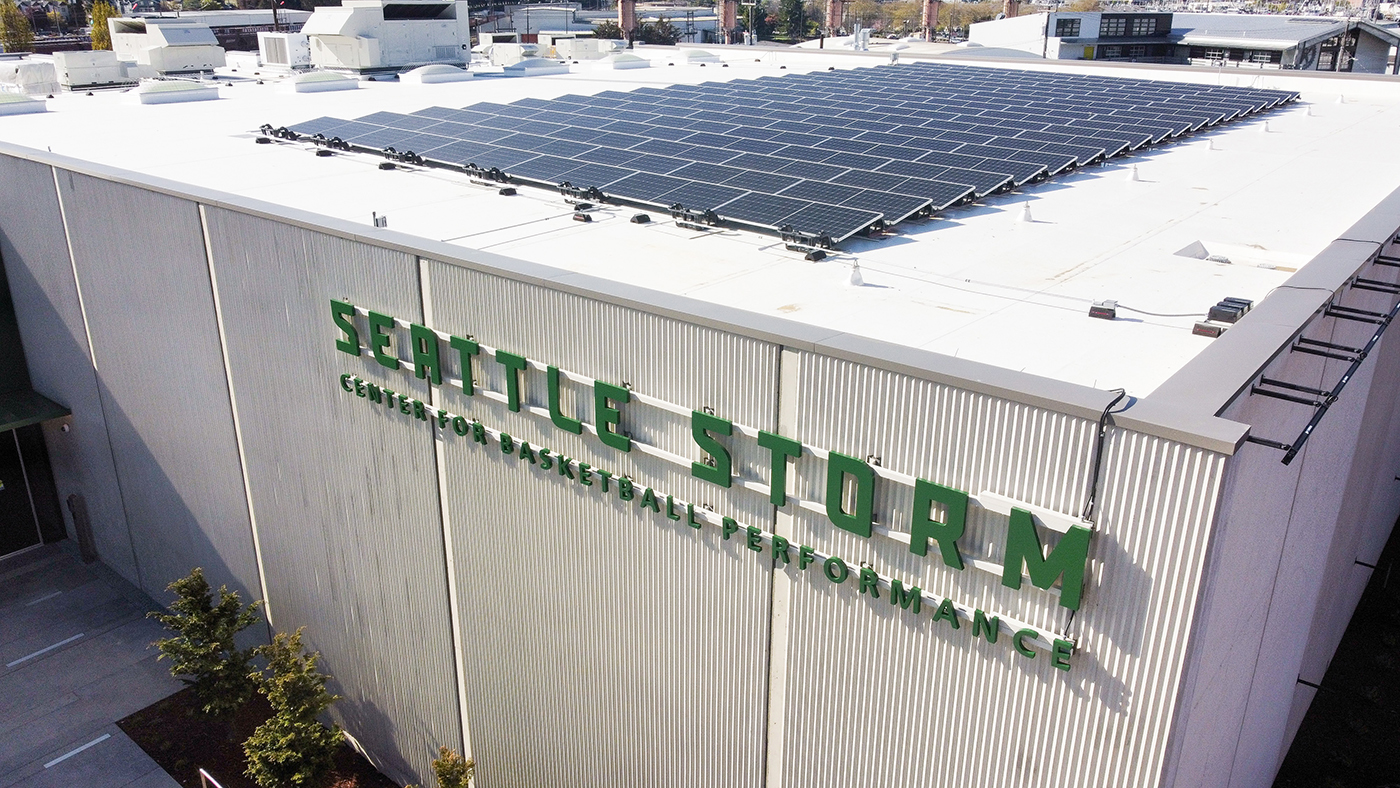
The team took a holistic approach to reduce the carbon footprint of the building’s daily operation, looking at multiple systems to achieve efficiencies.
Heat pumps, efficient lighting, optimized building envelope and recovering heat through the ventilation system were implemented. Athletic facilities require large amounts of fresh air, and the Center for Basketball Performance reduces energy consumption with a ventilation system that uses the outgoing warm air to help heat the incoming fresh air. Keeping that heat or that cooling inside the building is essential for efficiency. The roof features R50 insulation, which is far higher than the R20 required by building codes. Exposed concrete in the walls acts as a thermal buffer, moderating temperature changes.
Because windows tend to be the weak link in the thermal envelope, the facility has a low window-to-wall ratio of approximately 6 percent compared to a more typical 30 or 40 percent. This decision was made in part because the practice courts require consistent lighting, but the overall impact is reduced energy costs for the Storm.
The team then looked to the sun as a clean energy source. A 60-kilowatt solar roof array produces more than 12 percent of the all-electric facility’s energy needs. The combined impact of the solar array and other operational efficiencies enabled the Center for Basketball Performance to reduce energy costs by 46 percent compared to similar facilities.
DESIGNING FOR ATHLETES
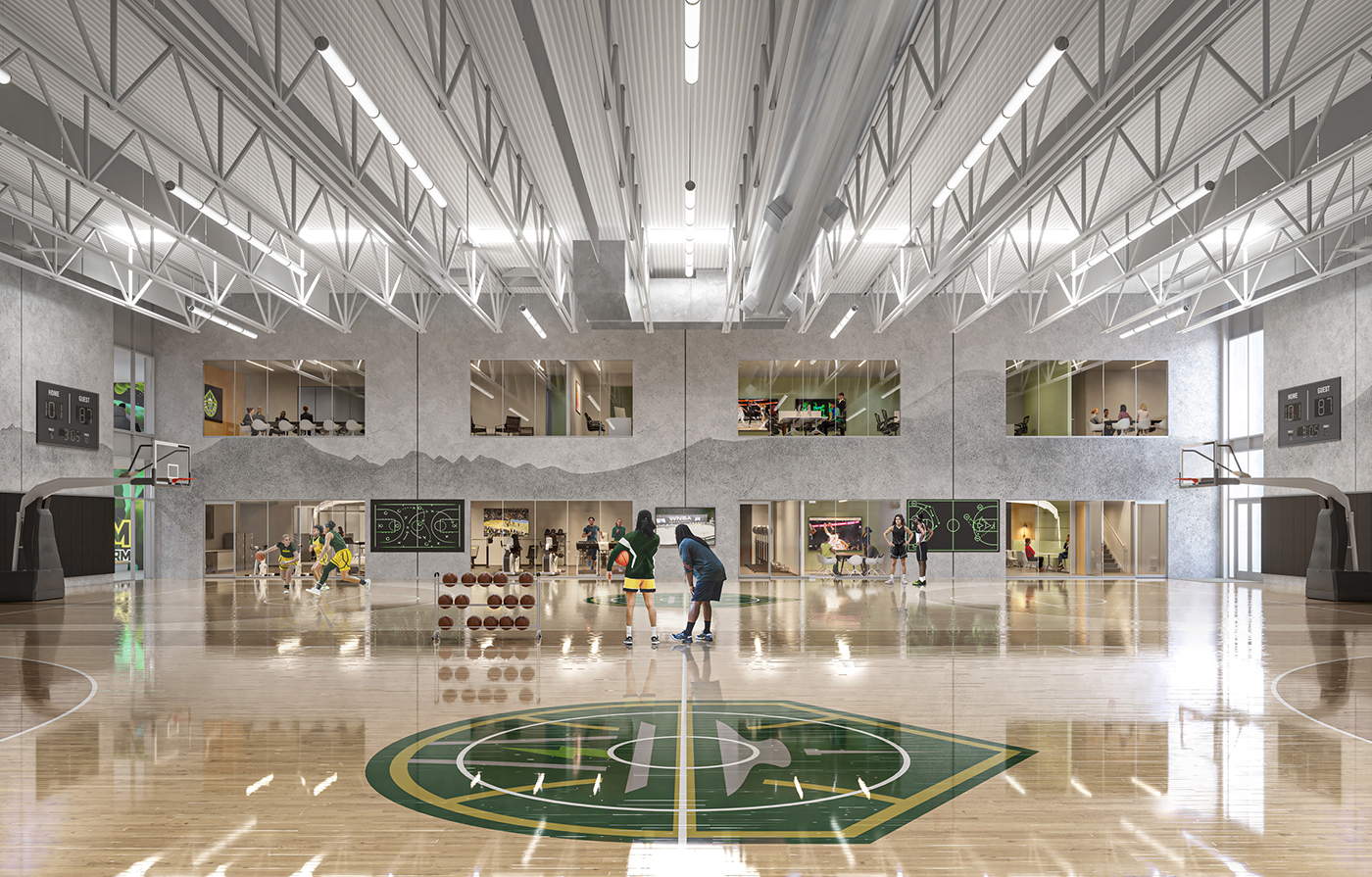
Reducing the environmental impact of the building was a driving force of the design. Merging that core principle with the needs of the athletes was paramount. Employing a holistic approach to sustainability — including healthy building materials and reducing carbon emissions — to meet the project’s sustainability goals was vital. Most importantly, though, the building supports the reason we’re building it in the first place: to elevate and support elite athletic human performance.
Chris Flint Chatto is a high-performance building specialist at ZGF Architects and Angi Rivera is Sellen’s director of sustainability.
Other Stories:


