 |
Subscribe / Renew |
 |
Contact Us |
| ► Subscribe to our Free Weekly Newsletter | |

Construction Bids
| home | Welcome, sign in or click here to subscribe. | login |


 print print  email to a friend email to a friend  reprints add to mydjc reprints add to mydjc |  |
 |
March 3, 2025

Septelka
|
The Bachelor of Science in Construction Management (CM) at the University of Washington (UW) is a comprehensive four-year degree designed to prepare students for leadership roles in the construction industry. The program covers essential topics such as business management, project management, construction technology, and safety regulations. The program encourages students to explore the potential of the built environment and provides an excellent entry point into the industry, especially for women. Our graduates are fully prepared to pursue various careers in construction management, including roles such as project managers and field engineers.
According to the National Center for Education Statistics (NCES), compared to degrees in architecture (ARCH) and civil engineering (CE), CM programs are underperforming in attracting women. Our UW CM Program has performed better than the national average over the past 10 years, and our current Class of 2025 has 16 women students, representing a quarter of the class.
Women in UW’s CM program excel in both academics and leadership roles. In the classroom they perform exceptionally well, making up 25% of the top 20% of their senior CM cohort, and many have received scholarships. This year, 17 women competed on teams at the 38th annual Associated Schools of Construction (ASC) Regions 6 & 7 Student Competition. Notably, two of these teams had female representation of 50% or more, with one team achieving 2nd place in the national competition for Sustainable Building.
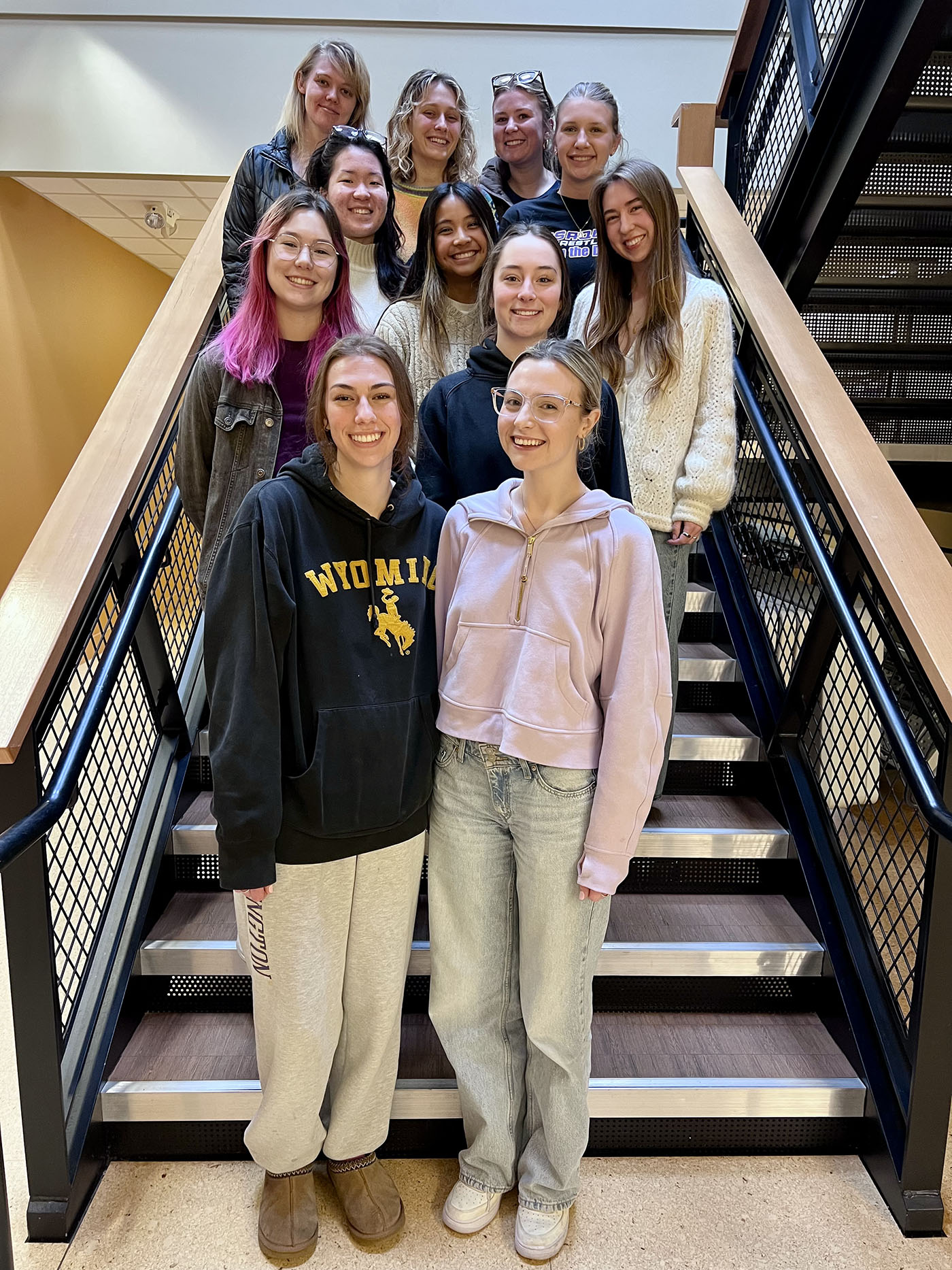
Women in CM are also making significant contributions to professional associations. For example, two women are currently serving on the Executive Board of the University of Washington’s Associated General Contractors (AGC), including as president. Their active involvement in and out of the classroom demonstrates that our female CM students are collaborative team players and have the potential to step into leadership positions, even though females are underrepresented in the CM program by one to four.
LAYING THE FOUNDATION
The question is, why construction? To gain some insight and explore some answers, I asked this question to the women in our CM senior class. Most of the women said they learned about the CM program after they entered college. Some found the program through friends, while others found it after becoming disinterested in their chosen academic pathway. A few learned about the program from taking an elective class or attending CM department or student events.
Several women chose to pursue CM due to their interest in the courses, the promising career opportunities, and the higher pay compared to architecture. Some were inspired by the dual degree (Architectural and CM) advantage to enhance their industry understanding. Another saw CM as an alternative to engineering and the preference for the business and tangible aspects of the built environment.
Additionally, a passion for building and problem-solving, along with a desire to create a diverse and inclusive construction industry, motivated another to choose this path. One student noted, “I have always known I learn best when participating in hands-on learning, so when I found out my classes involved making concrete... I was hooked!”
A few of the women students had a family member or friends working in design or construction that influenced their decision. For one student, parental encouragement played a role, as they were convinced of the new opportunities it would provide her. Childhood experiences, like building a chicken coop with their dad, inspired one student to seek a career in engineering and design. Another student noted seeing the fulfillment their dad found in the construction industry influenced their decision to pursue a similar path.
The most rewarding aspects of the CM program for these students included building connections with industry professionals through career fairs, guest speakers and internships. The opportunity to apply classroom knowledge in real-world scenarios, and develop essential skills in leadership, problem-solving, and team coordination has been highly fulfilling and empowering for them. One student noted: “Had I taken these CM courses before my architecture studios, my designs would have been ten times better.”
Some students did recognize they faced challenges in the CM programs, often related to gender dynamics in male-dominated classes. They overcame these challenges by relying on support from female classmates and friends, pushing through discouragement, maintaining resilience and continuing to voice their opinions despite feeling their contributions were undervalued. One student noted, “Honestly, I just ignore it.”
To encourage more students to pursue a CM degree path, they suggested increasing awareness through better advertisement of the major and campus events. Some noted that more CM exposure within the College of Built Environment (CBE), such as through classes, site visits, or mentorship, would help students when considering career choice. Others suggested starting outreach efforts earlier, during high school.
INTERNSHIPS: FROM BOOKS TO BRICKS
All the students participated in internships, rating their experience 4.3 out of 5 stars, which helped affirm their career choices. Many enjoyed the team environment and real-life applications, with some finding a deeper connection to classroom concepts. One student was still undecided between architecture and working for a general contractor.
Students encountered various industry challenges and learned the importance of addressing issues promptly and the amount of desk work required compared to fieldwork. The construction phase of their internship also limited the depth of their learning, such as whether they were assigned to closeout. Overall, they emphasized the need for clear communication and proactive problem-solving in the industry, highlighting how project assignments can influence what you learn during internships.
CLIMBING THE RUNGS: EMPLOYMENT
The majority of UW’s CM women have already secured a job after graduation and suggest companies focus on health, well-being and a supportive environment. They value competitive pay, good benefits, gender balance, fun work culture and work-life balance. A welcoming atmosphere, diverse workforce, and treating women candidates with the same respect and consideration as any other candidate were crucial in making their employment decisions. To attract and retain women candidates, they recommended businesses create an inclusive environment, support women’s voices, offer equal pay and opportunities, maternity leave and affinity groups.
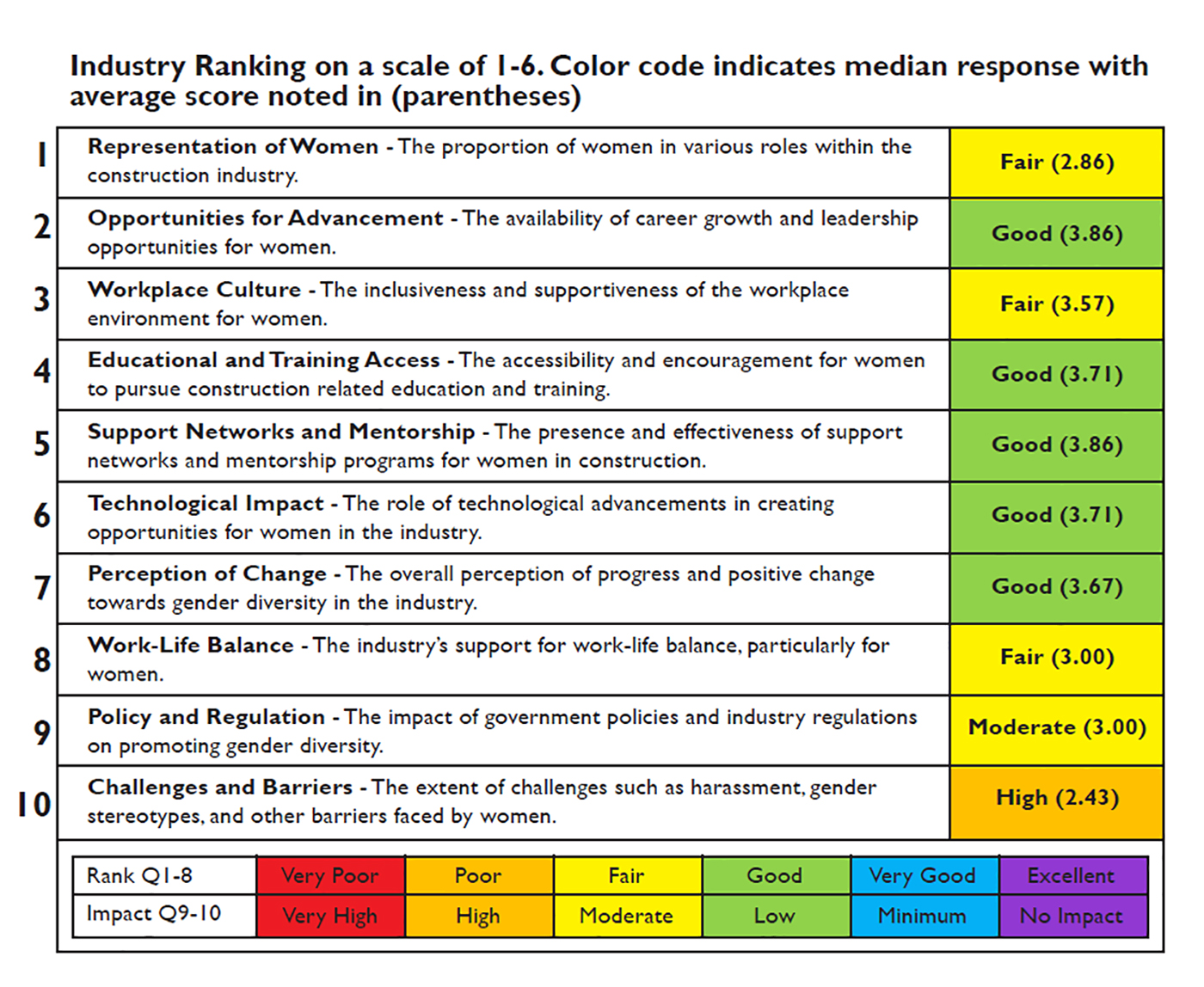
This women cohort, understanding the challenges and barriers ahead, is determined to overcome them. Their passion for design and construction and commitment to contributing to the built environment outweighs the possibility of a few bumps on the road they could face. In the survey, students ranked the industry in several areas, with opportunities for advancement and support, networking, and mentorships the highest. On the lower side, they ranked the representation of women and the challenges and barriers faced by women lowest.
Many students highlighted the importance of mentorship in their studies. Mentors provide encouragement, support, and valuable career advice. After graduation, students plan to seek mentorship through their company’s programs and connections, with some considering joining NAWIC.
Their advice to young women considering a career in construction emphasized confidence, persistence and resilience. Be a team player but be prepared to assert yourself and create your own space in conversations, as biases may still exist. Know when to seek support from allies and managers. Lastly, don’t hesitate to ask questions, as others likely share the same queries.
THE ELEPHANT IN THE ROOM
Now to the elephant in the room — DEI. As someone who started her career in the early 1970s, I wanted to hear what these young women thought about DEI as they prepare to begin their careers in a predominantly male-dominated industry.
While most students felt neutral about the role of DEI initiatives in their personal education path, they collectively agreed on the potential impact of eliminating DEI. They expressed shared concerns about the recruitment and retention of women in construction, fearing that a lack of DEI initiatives could deter women and other minorities from pursuing careers in the industry, adding to the decline of the construction workforce.
With executive pressure to remove DEI initiatives, students hope the industry will preserve such programs and recommend that companies continue with ongoing connections with organizations like NAWIC and employee support through bias-free training and inclusive strategies. Students stressed that their achievements should be measured based on comparable roles using the same metrics.
They advocate for equal recognition of women’s accomplishments alongside men’s as a crucial step towards true equality. One student summarized the group’s thoughts, “I would prefer to be recognized for a ‘construction’ achievement rather than a ‘women in construction’ achievement.”
REACHING NEW HEIGHTS
Let’s take a quick look at employment possibilities for these young women. Over the last 10 years, construction employment for women in management and professional occupations has seen significant growth.
According to the Bureau of Labor Statistics’ (BLS) Current Population Survey, the number of women in professional positions has increased by 111%, while those in management positions has risen by 81%. Traditionally, over the past 50 years, the largest sector of female employment has been in office and administration. However, this changed two years ago, and now more women are employed in management occupations. Over the past 10 years, women’s employment in trade occupations has risen by 85%. However, it’s important to note that there are 182% more women employed in management and professional roles compared to those in trade occupations.
This shift in employment for women in management and professional career paths is evidence that there is a need for more women majoring in CM and is excellent news for young women graduates entering the workforce.
But despite these positive employment numbers, we still have work to do regarding the percentage of workforce representation. Per the 2024 BLS data, women representation in professional occupations account for 21.9% of the workforce, reflecting a 5.8% increase over the past decade. In management roles, women represent 17.5%, with a 10-year gain of 3.7%. Sadly, women still represent only a 4 percent share of construction trade occupations, with a 10-year gain of only 1.6%.
BUILDING A BRIGHT CONSTRUCTION FUTURE
Looking ahead five years, students anticipate significant technological advancements and increased sustainability in the industry. While there are concerns about women’s representation, they are hopeful for more women in superintendent roles. Students aim to adapt to these changes, embrace technology and contribute to the industry’s development through innovative practices.
Students are not just advocating for their own advancement but envisioning roles where they can actively promote diversity and mentor others. They are committed to pushing for equitable policies and fostering a supportive environment.
Their parting advice for young women entering this male-dominated industry was to be confident, deliver quality work, and build supportive relationships, echoing their own journey and the challenges they’ve overcome. They noted that most people they encounter in the classroom, office, or out on the site want to see them succeed!
NEXT STEPS: FINAL THOUGHTS
While promising opportunities exist for women in management and professional roles, we need to increase women’s interest in construction to fill these roles. One insight shared by these college women was there is still a need to get the word out earlier before committing to a college major. All of them found their path to CM after they started college.
We need to do a better job of early outreach to educate young girls that construction is more than physical work on a job site. It’s an exciting field that encompasses technology, design, engineering, planning, project management and business leadership, offering a diverse range of career paths for women.
Pursuing a CM degree can open the door to management and professional positions, and pave the way for industry leadership opportunities. It offers a dynamic work environment, competitive salaries, and the chance to make a tangible impact on the world around us. Please encourage your friends, daughters, or anyone interested to explore the rewarding path of a CM degree as they consider their options and plan for the future. These women CM leaders are ready to lend a helping hand to guide them toward a career in construction.
Author’s Note: I want to express my gratitude to the women who volunteered for the survey. Their voices have been invaluable to writing this article.
Darlene Septelka is an associate teaching professor in the University of Washington’s Construction Management department.
Other Stories:


