 |
Subscribe / Renew |
 |
Contact Us |
| ► Subscribe to our Free Weekly Newsletter | |

Construction Bids
| home | Welcome, sign in or click here to subscribe. | login |


 print print  email to a friend email to a friend  reprints add to mydjc reprints add to mydjc |  |
 |
March 3, 2025

Crites
|

Clayton
|
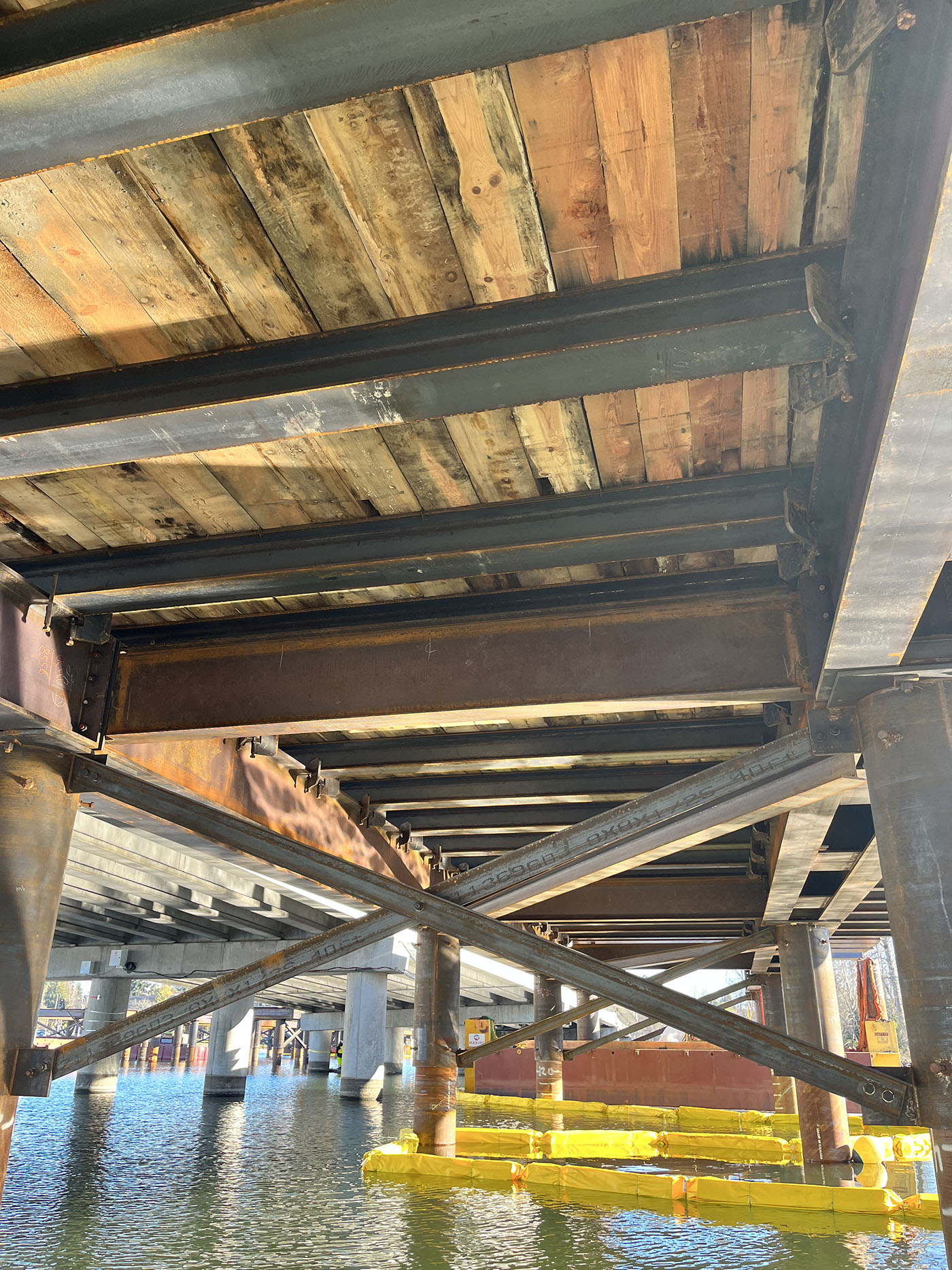
Brie Crites, president and owner of Farwest Fabrication in Puyallup, and Ryan Clayton, SVP/General Manager for Skanska USA Civil in the West, sat down this month to talk about their two companies’ decades-long partnership and the growing role that women play in the construction industry. Farwest currently is working with Skanska as a supplier of piles and steel for the temporary trestle Skanska is using during the construction of the new Portage Bay Bridge.
Q. As the president of a local small business, how have your relationships within the industry helped with your success?
BRIE CRITES (B.C.): Having good relationships with suppliers, vendors and contractors continues to be a necessity. As a small business, we understand that communication, defined project requirements and prompt payments are vital for success — along with our reputation of doing the work and doing it well. This has allowed us to steadily build relationships with contractors like Skanska that in turn sustain continuous work. Relationships built on mutual respect and trust allow local, small contractors like Farwest to feel supported by the contractor and confident that materials will be delivered timely to allow us to do our part of the project.
Q. What are some of the challenges you have experienced as President of Farwest?
B.C.: A big challenge I face is that people I interact with don’t always understand and appreciate the amount of time and effort I put into learning and becoming an expert in running all aspects of a construction business. Some of that comes from being a woman in the industry. I have found that learning the art of negotiation, effective conflict resolution styles and gracefully dealing with those who operate in the old way of doing business has helped me jump the many hurdles that come with these challenges.
Q. What do you think are the main barriers women in construction face today?
B.C.: A big barrier is the perception that the construction industry is not for women, especially the physical aspects of working in the field. Education and empowerment are the best ways we can support women in the AEC industry. This can be accomplished through mentor programs, internships, cross-training opportunities and advancements of technical skills.
I was recently a judge for a local trade organization that introduces the trades to high schoolers. I was pleased to see a handful of young women learning to weld and even more pleased to see that their skills and efforts were being recognized and supported. I feel like there is a positive change taking place within the industry. We are creating and maintaining a culture that’s based on support and advancement that allows for women and men to work equally, leading to relationships that are built on mutual respect.
Q. What are some things AEC businesses can do to support women-owned businesses across the industry?
RYAN CLAYTON (R.C.): A good way for AEC businesses to support their partner women-owned businesses is to work to understand the challenges they face in our industry. From there, we should look for ways to navigate those obstacles collaboratively so that we can use our individual resources to provide opportunities that align with the expertise and capacity of the business.
As a large contractor, Skanska has a unique opportunity to support women-owned businesses across the construction industry. We can help with growing their personal networks and highlighting the great work they do on our projects — celebrating them amongst our colleagues and even our competitors. We’ve found that having a bigger and more diverse set of suppliers has strengthened our business, and I believe if more companies grow their supply chains in a similar fashion, it will only benefit our industry.
Q. From the perspective of a general contractor, what makes a good small business partner?
R.C.: The best small business partners are experts in their craft. They understand and communicate the limitations that come with being a small contractor, and bid work that is scalable to their capacity. This allows our partners to perform their scope of work effectively and with a high degree of quality.
When we started working with Farwest more than a decade ago, our first project was probably for a few hundred thousand dollars. Now they’re playing a key part of our work on the L300 light rail project, the I-405 Brickyard project and the new Portage Bay Bridge, and their contracts probably have another zero on them.
Q. As a small, local contractor, what makes a good big business partner?
B.C.: A contractor that maintains respect for small business and the inherent limitations in resources make for excellent partnerships. As a small company we operate on much smaller capital than large companies. What makes for a good relationship with a large contractor is prompt payment. Our most successful partnerships have a willingness to work towards excellence in communication throughout all parts of a project while maintaining flexibility when and where required.
Q. Do you have any advice for women in the AEC industry?
B.C.: Go for it! Don’t let anyone tell you otherwise. This industry can provide an excellent career path that will offer many opportunities. The culture of the construction industry is in a dynamic place of change, and women are the pioneers. Follow your passion, learn as much as you can, take opportunities that inspire or challenge you, and most of all, enjoy the journey.
R.C.: The advice that I have for women in the industry will sound notably similar to the advice I would have for anyone in our industry. Build a strong network within your organization and beyond - that includes connecting with people up, down, and laterally along the chain of command.
Be clear about your goals and aspirations and constantly evaluate your comfort zone. The quickest way to get yourself stuck is to settle in once you get comfortable. And lastly, don’t be afraid to advocate for yourself, but at the same time know that quality work and effective critical thinking, more often than not, will speak for itself.
Brie Crites has been president and owner of Farwest Fabrication for the past 15 years. Ryan Clayton is senior vice president/general manager of Skanska USA Civil in the West.
Other Stories:


