 |
Subscribe / Renew |
 |
Contact Us |
| ► Subscribe to our Free Weekly Newsletter | |

Construction Bids
| home | Welcome, sign in or click here to subscribe. | login |


 print print  email to a friend email to a friend  reprints add to mydjc reprints add to mydjc |  |
 |
May 5, 2025

Smith
|
The concept of construction safety has undergone a profound transformation over the decades. In the early 20th century, the jobsite was an inherently dangerous place — where injury was common and formal protections were scarce. But as the industry matured, so too did its sense of responsibility. By the mid-20th century, a combination of federal legislation and forward-thinking builders began to lay the foundation for a new era — one where worker protection became not just a legal requirement, but a moral imperative. These early pioneers set the stage for the safety standards and training programs we continue to build on today.
Today, leading general contractors and their executives recognize that prioritizing safety is both a moral obligation and a strategic advantage. Protecting lives and preventing accidents remains the highest priority — a reflection of our industry’s deep respect for the people who build our world. But beyond that, companies with strong safety cultures often see measurable benefits: improved project performance, increased client trust and a distinct edge in a competitive marketplace. Safety, once seen as a cost, is now understood as a cornerstone of excellence.
Projects that run smoothly, and without incident, have a better chance of finishing on schedule and on budget. This limits the need for change orders, work stoppage, or other costly delays, providing safety-related outcomes every owner can readily embrace.
When builders are spared the common injuries that have long been accepted as part of the job — from minor bumps and bruises to more serious harm — the entire team thrives. Fewer incidents lead to greater productivity, smoother project execution and a stronger bottom line. But perhaps even more importantly, it creates a workplace where individuals can grow in their craft, advance their careers and take pride in being part of something safer, smarter and more sustainable.
Above all, when injuries are prevented, or even meaningfully reduced, we uphold the most sacred promise in our industry: ensuring every worker returns home safely to their family and loved ones at the end of the day. It’s a commitment that transcends policy or protocol. It speaks to the heart of who we are as builders — people entrusted not only with structures, but with lives.
Over the years, countless approaches have been tested in the pursuit of safer, healthier worksites. For too long, however, many safety programs relied heavily on fault-finding and punitive responses — believing that discipline alone could prevent repeat mistakes. But this approach missed the mark. Not only is it largely ineffective, it undermines trust and growth. Blame doesn’t inspire people to improve; it discourages them. True progress comes from understanding, accountability and a culture that sees safety as a shared responsibility, not a punishment.
That’s why Mortenson practices the Human and Organizational Performance (HOP) method of safety programming. It’s an approach we implemented years ago as a structural overlay to our long-time belief that accountability, as opposed to pointing fingers, and finding facts, not fault, are the real keys to workplace safety.
BRINGING DEFINITION TO THE SAFETY FRAMEWORK
The National Safety Council defines HOP as “a risk-based operating philosophy that recognizes that human error is part of the human condition, and that an organization’s processes and systems greatly influence employee actions and choices.”
While this framework extends beyond construction safety, we appreciate that HOP uses real scientific principles that help our employees learn from their mistakes, with the goal of addressing accidents in a collaborative, blame-free environment.
What makes HOP especially impactful is how closely it aligns with the core values that have come to define our company over time. Safety, in this context, isn’t treated as a short-term objective or shifting priority — it’s recognized as a lasting obligation. While priorities may change from project to project or year to year, values are enduring. HOP reflects a deeper commitment: one that sees people not as problems to be fixed, but as partners in building a safer, stronger future.
HOP works well at Mortenson because it ties seamlessly to our “Common Sense Leadership” principles — putting the organization first; showing dignity and respect, no matter our differences; acting with integrity and trust; and establishing a collaborative work environment; among other cultural virtues. Those ideals play out daily, helping to support our deep commitment to safe, healthy job sites.
A CULTURE OF WALKING THE SAFETY TALK
We are deeply committed to our Zero Injury Program, which underscores the responsibility we all share: to protect ourselves and each other, both on and off the job.
For the past 20 years in Seattle, every Friday morning is reserved for our leadership team to review all recordable job site injuries and near-misses. This dedicated time allows us to identify root causes, implement corrective actions and communicate these lessons across every level of the organization — from C-suite executives to job-site laborers.
Our safety strategy includes tailored safety plans for every project, whether it’s a 40-story tower or a tenant improvement. This careful planning is central to our vibrant safety culture, driving accountability across the board — from superintendents to apprentices and trade partners.
Finally, understanding that most jobsite injuries happen to workers new to a project, we’ve developed a multi-phase onboarding process. This ensures new craft workers are equipped with the knowledge and tools they need to perform their work safely, with structured engagement opportunities to support their growth.
REAL-WORLD SCENARIOS FOR HOP
These corporate values and day-to-day culture initiatives work hand-in-glove with every HOP element on every project. First, HOP assumes that human error is normal, and given our fallible nature, people will always make mistakes. While all GCs strive for an error-free work environment, messing up is simply a fact of life.
Moreover, the most effective systems are those that make it easier to do the right thing. We are all just one step away from disaster, and acknowledging this reality is the first step in preventing accidents and minimizing the impact of those that do occur.
The second guiding principle of HOP is that blame fixes nothing. In fact, mistakes are opportunities to improve a system of doing things, including running safe construction sites. You have to address the true cause of failure, and pointing fingers is counterproductive to that goal.
What it requires is a measured, cooperative fact-finding mission, across the entire job site, with no regard to titles and job responsibilities. This is part of HOP’s learning and improving are vital principle for success. Everyone is accountable, and the only way to achieve these improvements is through a thorough analysis of what happened, and why.
Next, HOP reinforces the idea that context drives behavior, particularly in a safety-focused environment. How we respond to failure is often more important than the incident itself. The way leaders engage and support their teams plays a critical role in shaping overall performance and safety outcomes.
TRADE PARTNER ADOPTION MEANS EVERYTHING
Finally, every successful safety program relies heavily on shared participation from clients and trade partners. We work diligently to ensure every project employee is intimately involved in both the planning and implementation of HOP safety measures.
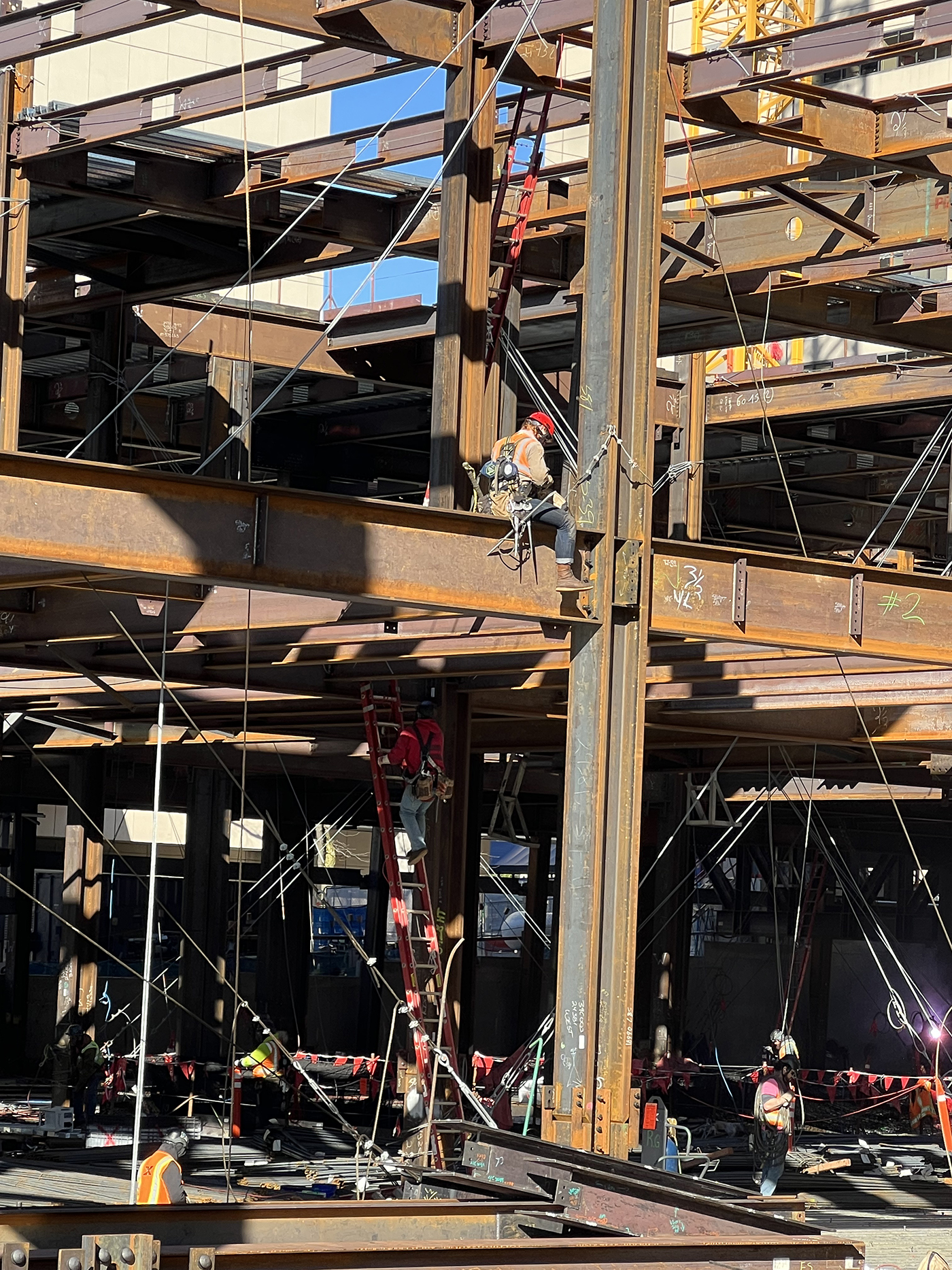
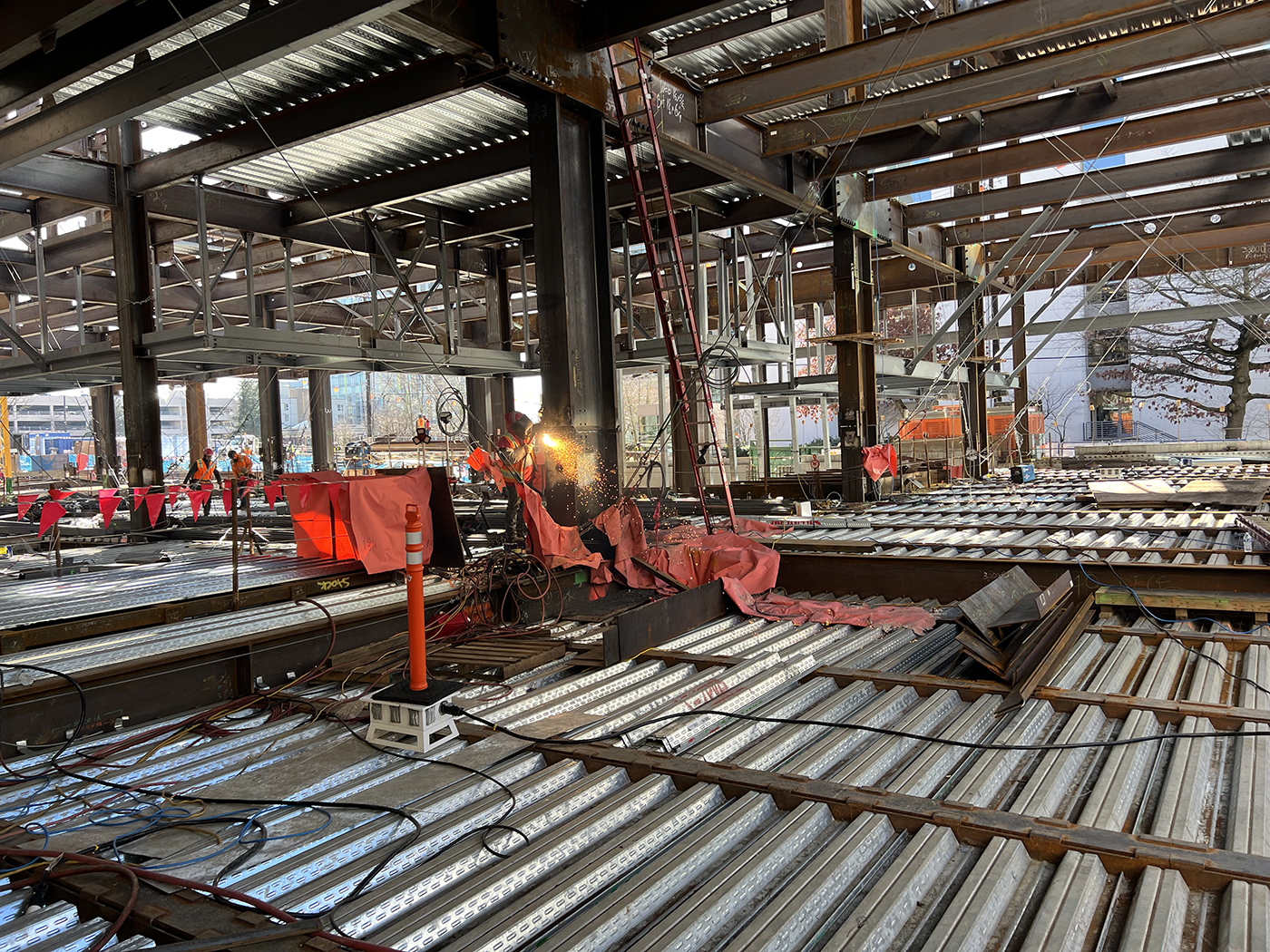
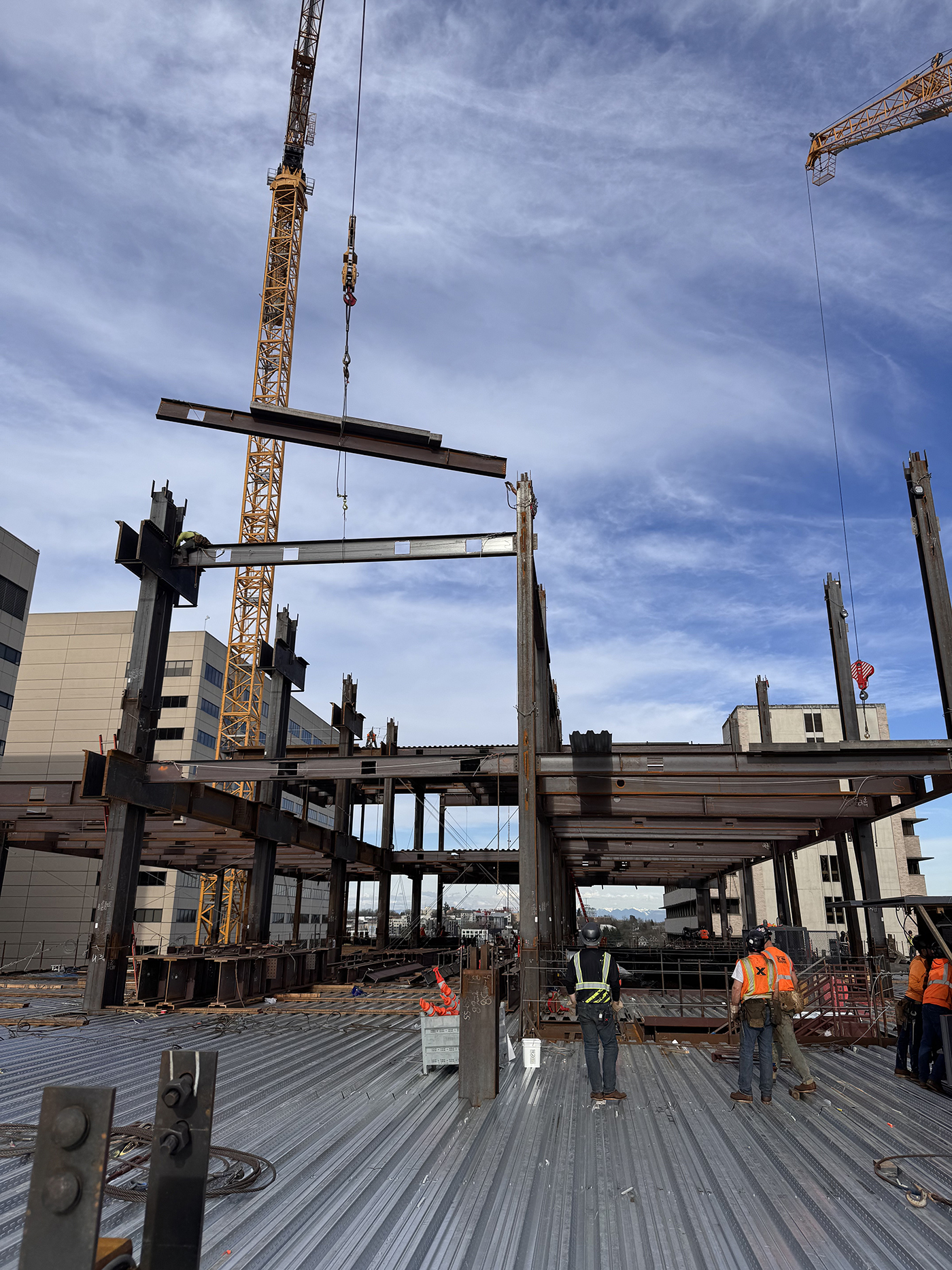
For instance, Apex Steel’s chairman Kevin Koester provides more than 300 iron workers on projects throughout the West coast. Apex is erecting steel for Mortenson on the 750,000-square-foot North Tower project, designed by the local office of Perkins & Will, on Providence-Swedish’s First Hill?Campus Expansion.?Some of the project’s steel pieces are 20 tons each, being coordinated by two overlapping, dual-operating tower cranes, so working safely requires a great deal of pre-planning and on-site engineering.
“We share Mortenson’s commitment to a safe job site, especially on a project with so many moving parts,” said Koester, referring to North Tower’s status as the region’s largest steel structure project since the Seattle Convention Center expansion. “HOP is the ideal program given its unique approach to fact-finding, avoiding blame and establishing an environment of full accountability,” he added.
Marc Paulsen, owner of locally based Corona Steel, agrees. The steel-erection firm has a long history of integrating safety strategies into its projects, one of the reasons Corona has been a Mortenson trade partner since 1992, when the companies collaborated on a Seattle-area government office building. Today, Paulsen and his firm erect steel on data centers, car-manufacturing facilities, and other large commercial projects around the U.S.
“Like Mortenson, safety is fully integrated into our work culture. It’s not only the right thing to do; job site safety makes sense from a business efficiency and profitability standpoint. That’s why we map out a comprehensive safety plan before each project begins, every single time,” said Paulsen.
Job site safety has always been a top priority for commercial contractors and their project partners. However, unlike in the past, today’s most successful initiatives are built on principles of shared accountability, rather than focusing on blame or retribution. When contractors align their safety programs with core corporate values and the unique cultures of their teams, they unlock long-term, sustainable success — ensuring the program’s impact is felt for decades to come.
Dustin Smith oversees the Mortenson Seattle office as safety director, responsible for establishing an optimal safety culture through the proper implementation of its Zero Injury Safety Program.
Other Stories:


