|
Subscribe / Renew |
 |
Contact Us |
| ► Subscribe to our Free Weekly Newsletter | |

Construction Bids
| home | Welcome, sign in or click here to subscribe. | login |


 print print  email to a friend email to a friend  reprints add to mydjc reprints add to mydjc |  |
 |
May 5, 2025

Molocznik
|
It is morally and ethically responsible to support a healthy work environment. But in an extremely competitive market, this approach transcends virtue, and has become an avenue for competitive edge. Organizations that embrace positive cultures have 72% higher engagement ratings than those with weak cultures, according to a 2023 Forbes article.
I wrote an article in November for Professional Safety that found that positive work cultures create an employee sense of “psychological safety,” or being comfortable and willing to express themselves authentically without fear of judgment or retaliation, which in turn not only bolsters safety culture, but has shown an increase in productivity, reduced absenteeism, and improved engagement.
Furthermore, overcoming the mental health crisis in construction is urgent. Stress, burnout, and, in extreme outcomes, suicide are all impacting bottom line, and much like safety can all be addressed in the workplace. You spend one-third of your adult life in the workplace. So much like economic status and individual community, the workplace is a social determinant of health. And with such an influential component to overall health and well-being, why would an organization not want to establish controls to mediate it?
NOT ALL SAFETY THREATS ARE PHYSICAL
Occupational safety has long been the vehicle in which other cultural and organizational policy messages have been communicated. The application of safety is fluid, and much like the evolving hazards it addresses, it tends to be “all encompassing.” That is where health and wellness meets safety, in this expansion of risk in the workplace. Threats that are physical or environmental are traditionally where the focus of occupational safety has been focused.
But workplace conditions also create organizational and psychosocial hazards, those that are much more complex and abstract. Workplace incivility, harassment and job stress are all examples of non-traditional threats in the workplace. Recognition of these hazards parallels mental health in the workplace, and when you statistically compare the existence of chronic pain with these types of hazards, their relationship is evident. Compound the existence of coping mechanisms through substances like alcohol and opioids, and like we have seen in the construction industry, tragic results like a high rate of suicide are actualized, as reported by OSHA on April 6.
The umbrella under which to address these issues is Total Worker Health®. This approach to overall worker success and wellbeing was born through research and design at the National Institute for Occupational Safety and Health (NIOSH). As of this writing, the future of this program’s continued development and evolution through the federal government is uncertain, however the application and value will continue to hold a high value for employers and their employees in all industries.
COMMITMENT, ACCESS AND COMMUNICATION
Fully understanding and addressing employee risks starts at the top of the organization, with leadership commitment and buy-in. This happens through support and participation in program initiatives, creating access to resources like investment in training and time, and overall clear communication to employees about the integration of this approach.
With an environment of leadership support, work in the organization can be evaluated and designed/redesigned for hazards and risk within a hierarchy of controls to either: eliminate, substitute, redesign, educate, or support and encourage personal change. For example, in this model if you were trying to address overtime and over work to avoid burnout, eliminating the problem might be addressed through managing offices and project hours and adapting closed hours, while substitution in the hierarchy might include having enough staff to supplement overtime or unforeseen issues with additional headcount.
THE IMPORTANCE OF EMPLOYEE BUY-IN
It can be daunting to look at an organization to try and evaluate its collective health, especially when this is done in addition to normal operations. But in the process of integrating the health, safety and wellness of the workforce, let’s not forget the greatest and most readily available resource to information; the employees themselves.
Development is dependent on buy-in and participation from employees; after all it is their experience that this approach is attempting to impact. Whether it is through surveying to determine areas of need for employees, or ideas on barriers for employees in their overall wellness, it is the employees who set the priorities.
Only through confidentiality and trust will buy-in be gained. For many, the blending of work life and personal life is uncomfortable. Historically, because the link of personal wellness and mental health and worker experience was not established, individuals might be apprehensive to share information like biomedical indicators, stress levels, and external conditions and habits that impact them for fear of misuse or retaliation. But by creating an environment where this type of information is only used to improve their (employees) experience, the barriers can be overcome.
FAR-REACHING POSITIVE IMPACTS
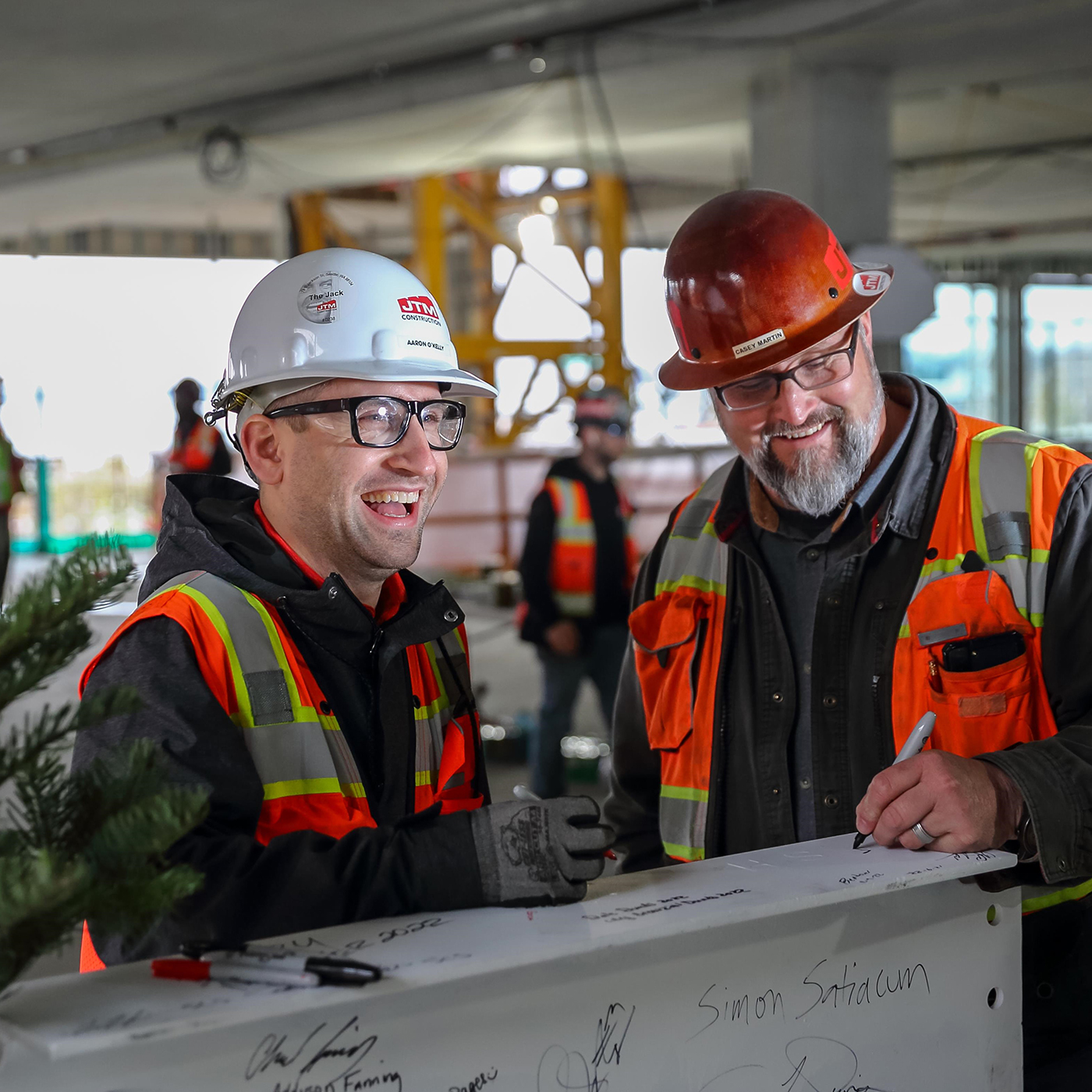
The overlap of stakeholders (leadership/employees) and departments (executives/HR/Project Management/Safety) within an organization in the integration of Total Worker Health, shows that this is not an add-on program, but a way of doing business. What can be expected as the positive outcomes are far reaching.
By creating this culture, results have shown a decrease in worker injury and illness, which in-turn can have a financial impact through decreased workers compensation and insurance rates. A 2016 article in the Journal of Occupational and Environmental Medicine found that a decrease in absenteeism, which would certainly impact production, as well as a decrease in presenteeism which may attribute to quality issues and rework can also be the result in addressing overall worker health.
In a competitive market, employee retention is incredibly important, and those organizations who show compassion and care for employee wellness are much more attractive, especially to a younger workforce that demands it.
And finally, increasing employee morale is a dynamic that eludes many organizations who try and positively impact it by creating “one-size-fits-all” approaches. By engaging employee health and well-being, as long as there is employee buy-in, an individualized connection is created and can be much more impactful to morale.
Occupational health and safety has evolved from hardhats, ergonomic chairs and fall protection. The causal factors that can create a negative or injurious work experience for employees (like bullying, workplace incivility, or stress) are factors that have historically been written off as “personal issues.” But by addressing safety, health and wellness holistically, an organization can not only positively impact their employees lives, but can concurrently create a competitive edge.
Justin Molocznik is the Director of Safety, Health, and Environment at JTM Construction, recently serving as the President of the Board representing Construction with the Washington State Governors Conference and is Region I vice president for the American Society of Safety Professionals.
Other Stories: