 |
Subscribe / Renew |
 |
Contact Us |
| ► Subscribe to our Free Weekly Newsletter | |

Construction Bids
| home | Welcome, sign in or click here to subscribe. | login |


 print print  email to a friend email to a friend  reprints add to mydjc reprints add to mydjc |  |

July 12, 2007
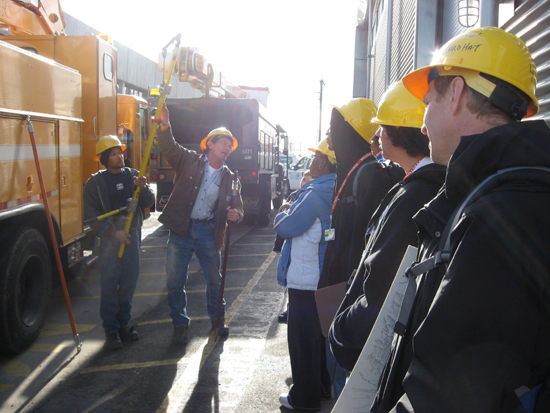
STUDENTS in a Seattle Public Schools' alternative high school program are learning about the city's electric and water utilities through a pilot program started last year.
The program, dubbed Utility U, is designed to teach students at the Interagency Academy downtown the history of Seattle City Light and Seattle Public Utilities, how the utilities operate, ways to conserve electricity and water, and perhaps get them interested in careers at the utilities, said Christine Frye, a teacher with the academy.
During last year's Utility U program, students visited the Cedar Falls Power Plant and the Cedar River Watershed Education Center, both in the North Bend area; the Seattle City Light South Service Center at Fourth and Spokane, where line crews who maintain and build parts of the electrical system receive their assignments; the Seattle Public Utilities water quality lab in Sodo; and the Lincoln and Volunteer Park reservoirs on Capitol Hill.
The class was taught by Frye and Mark VanOss, senior public relations specialist with Seattle City Light. Additionally utility workers spoke to the students, including water and electric meter readers who brought their meters.
“They learned about the topic and they leaned about what it took to be in that career,” said Frye.
Hands-on experiences are important for alternative students who tend to learn better when they see, feel, touch and do, said Frye. The students generally need a smaller setting to be successful, she said. Some are behind in credits or have difficulty in a traditional setting.
Students last year met a number of employees from both utilities, including construction workers, biologists, water quality technicians, researchers and accountants, she said.
The exposure is important to the utilities, which are facing baby boomer retirements.
“It's just not an area of work that most young kids would think about,” said J. Paul Blake, director of community relations development for Seattle Public Utilities.
To give students an even better perspective, SPU took on two students from the Utility U program as paid interns, both in customer service, Blake said. The utility expects to provide internships again when the program gets under way this school year.
As a final project in last fall's class, the Utility U students built a model of an energy-efficient house. To construct it, they searched the Internet and home improvement stories for appliances that conserve energy and are cost effective, Frye said. The project was presented to the heads of both utilities.
Frye said Utility U was a “huge success.”
“I think it opened doors that we didn't think it would end up opening,” she said.
Lynn Porter can be
reached by email or by phone
at (206) 622-8272.
Previous columns:


