 |
Subscribe / Renew |
 |
Contact Us |
| ► Subscribe to our Free Weekly Newsletter | |

Construction Bids
| home | Welcome, sign in or click here to subscribe. | login |


 print print  email to a friend email to a friend  reprints add to mydjc reprints add to mydjc |  |
 |
April 9, 2026

Rao
|

Urbas
|
Fire departments across the region are reevaluating the facilities that support their work. Many existing stations no longer reflect current standards for firefighter health, operational efficiency, or community engagement. At the same time, departments must respond to increasing call volumes, expanded emergency medical services, and growing populations, often within constrained public budgets and on challenging sites.
At The Miller Hull Partnership and BNBuilders, we have been exploring how Progressive Design-Build (PDB) delivery can help public owners navigate these intersecting pressures. By aligning architect, contractor and owner early in the process, PDB creates a framework for evaluating cost, scope and technical challenges before decisions become fixed. For public safety facilities, where operational continuity, specialized infrastructure and long-term durability are critical, early collaboration can meaningfully influence outcomes.
Through recent and in-process projects at Bates Technical College, the city of Bothell and Snohomish County, we have seen how this delivery model supports best-value decision-making while advancing contemporary priorities for firefighter health, training and civic presence.
MAKING AN ENGAGING TRAINING ENVIRONMENT AT BATES
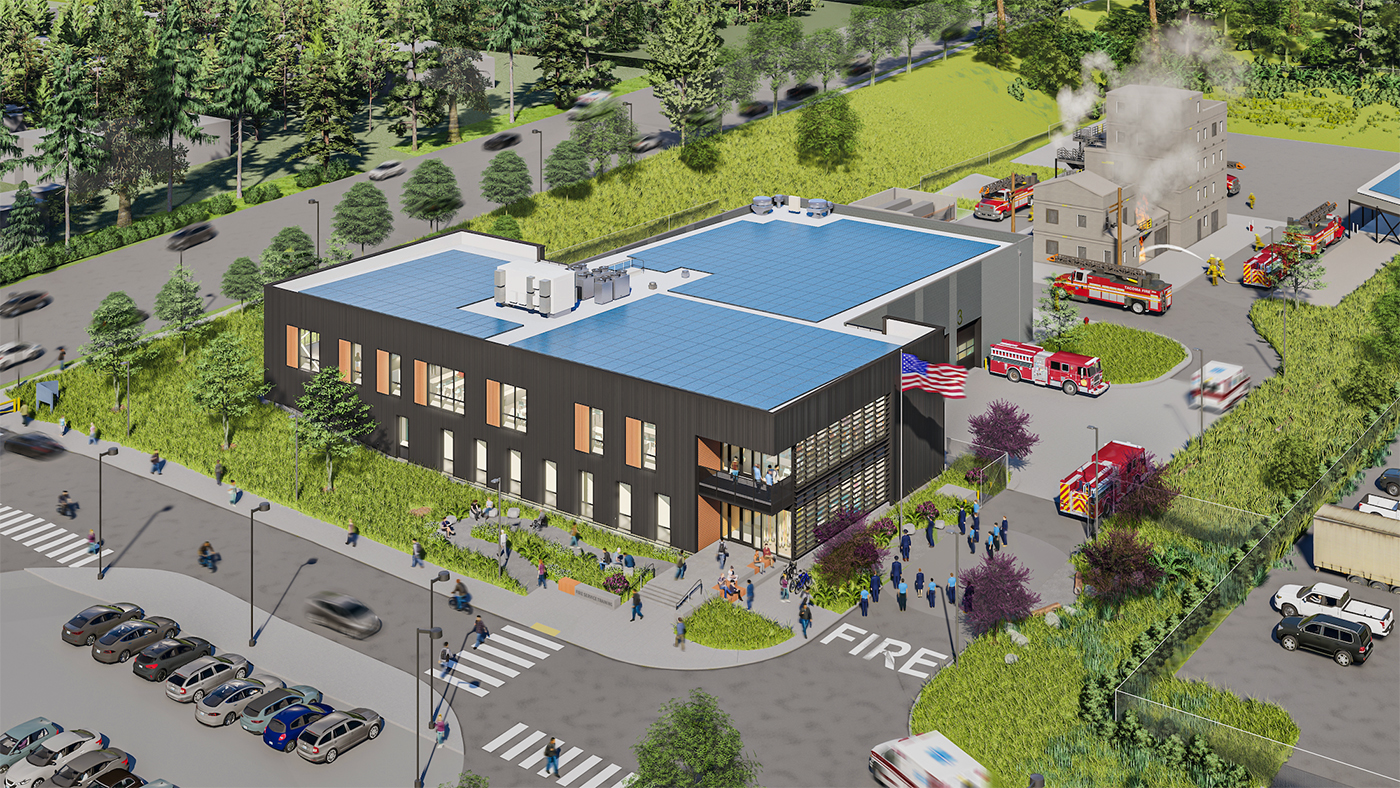
At Bates Technical College, the new Fire Service Training Center brings the Fire and EMT programs up to current standards for safety, instruction and quality of space. The facility expands enrollment capacity, supports additional certifications, and strengthens ties between the college and regional fire departments seeking both new recruits and continuing education.
The project combines traditional higher education environments with highly specialized training infrastructure. Flexible drill yard areas, a dedicated live-fire training structure, simulated apparatus and fire station areas, EMT classrooms and simulation labs are integrated into a cohesive campus addition.
The live-fire training structure — including propane-fueled Class B training props, search-and-rescue maze panels, entanglement training and firefighter challenge drills simulating residential and commercial environments — presented an unusually idiosyncratic scope of work. These elements required close coordination to align with National Fire Protection Association curriculum requirements while maintaining alignment with the college’s budget and long-term operational goals.
Through Progressive Design-Build, we were able to work closely with Bates and specialty consultants to evaluate the configuration of the training tower and associated training props early in the process. This collaborative structure allowed technical requirements, constructability considerations, maintenance procedures and educational priorities to be discussed concurrently, rather than sequentially, helping the college make informed decisions about scope and performance.
Through early interactions with potential training prop vendors, PDB also allowed the college’s instructors to have a higher degree of control over the details of the finished product than would be possible with a traditional design-bid-build process.
The project also advances the college’s sustainability commitments. With support from a Washington State Department of Commerce Decarbonization Grant funded through the Climate Commitment Act, the facility will incorporate a 265-kilowatt photovoltaic array and is on track to achieve net-zero energy performance. It will be the first all-electric facility on campus and is targeting LEED Gold certification. Integrating specialized fire training infrastructure with ambitious carbon reduction goals required coordination across disciplines, another area where early collaboration proved essential.
MAINTAINING UNINTERRUPTED SERVICE FOR THE BFD
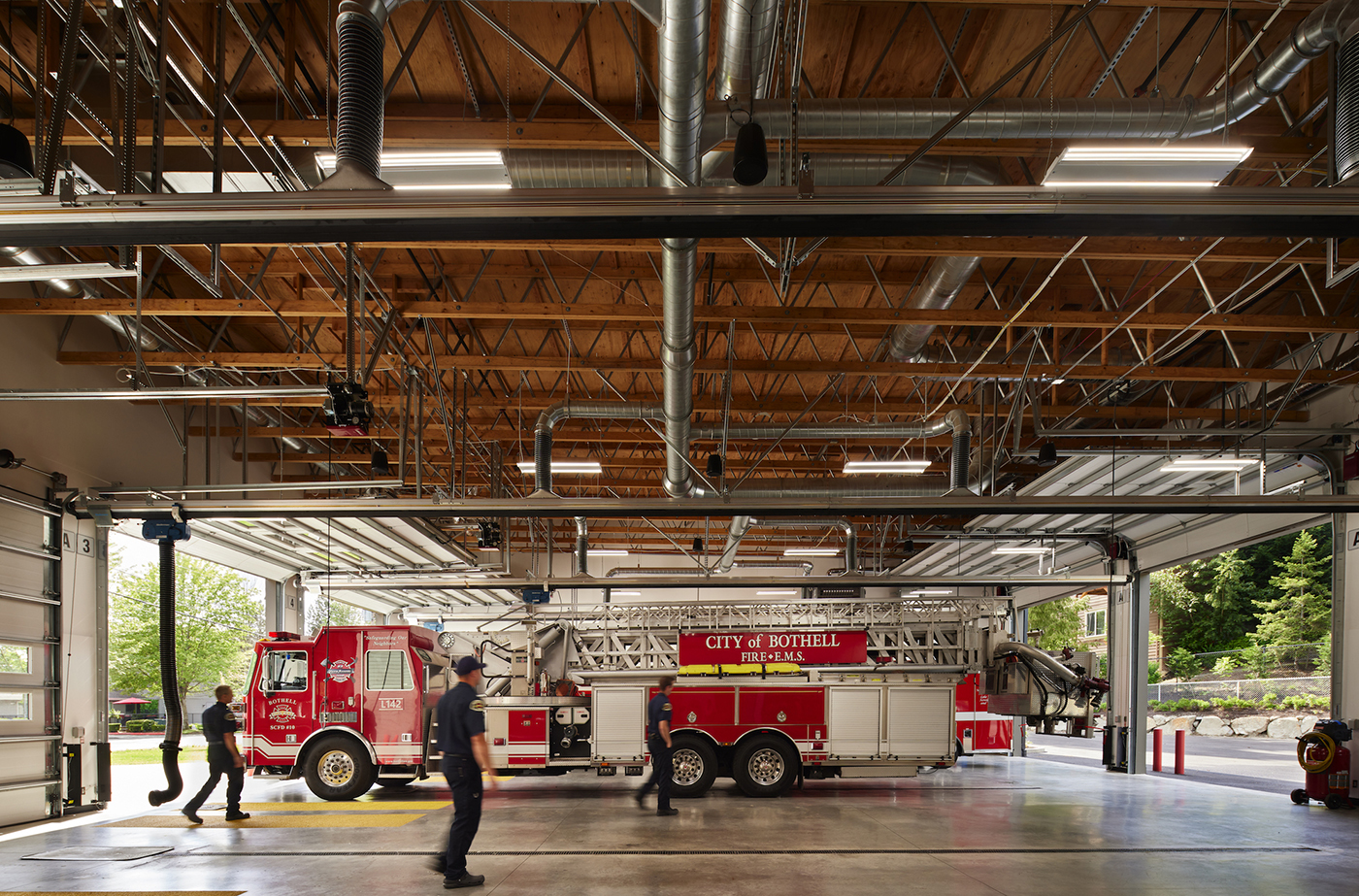
For the city of Bothell, the central challenge was operational continuity. Voters approved funding to replace two aging stations — 42 and 45 — but both needed to be rebuilt on their existing sites while maintaining full emergency response capabilities.
Under a Progressive Design-Build structure, we were able to evaluate dozens of potential interim operating scenarios within a condensed timeframe. Architects developed test fits for temporary facilities while builders provided real-time cost modeling and phasing analysis. Owner representatives simultaneously explored property options and lease feasibility. Because these efforts occurred concurrently rather than sequentially, the city could compare scenarios based on schedule, cost and operational impact before advancing the most cost-effective design and interim operating scenario.
Beyond phasing, the new stations reflect evolving standards for firefighter health and well-being. Increased awareness of occupational cancer risks has reshaped station planning nationwide. In Bothell, we incorporated “healthy in, healthy out” principles through clearly defined decontamination zones, direct circulation from apparatus bays to wash areas, durable and easily cleanable materials, and dedicated fitness and recovery spaces. Individual bunk rooms and private showers provide more equitable accommodations for a diverse workforce.
Although Station 42 sits within a historic downtown corridor and Station 45 occupies a more commercial and suburban context, we aligned systems and material strategies to streamline costs and create a cohesive identity for the department. Station 42 also supports expanded conferencing space to function as an Emergency Command Center, while Station 45 includes a satellite workspace for the police department to better serve adjacent growing communities.
In this case, Progressive Design-Build allowed us to address site constraints, interim facilities and evolving health standards within a single, integrated decision-making framework.
DESIGNING AND BUILDING ON CHALLENGING SNOHOMISH SITES
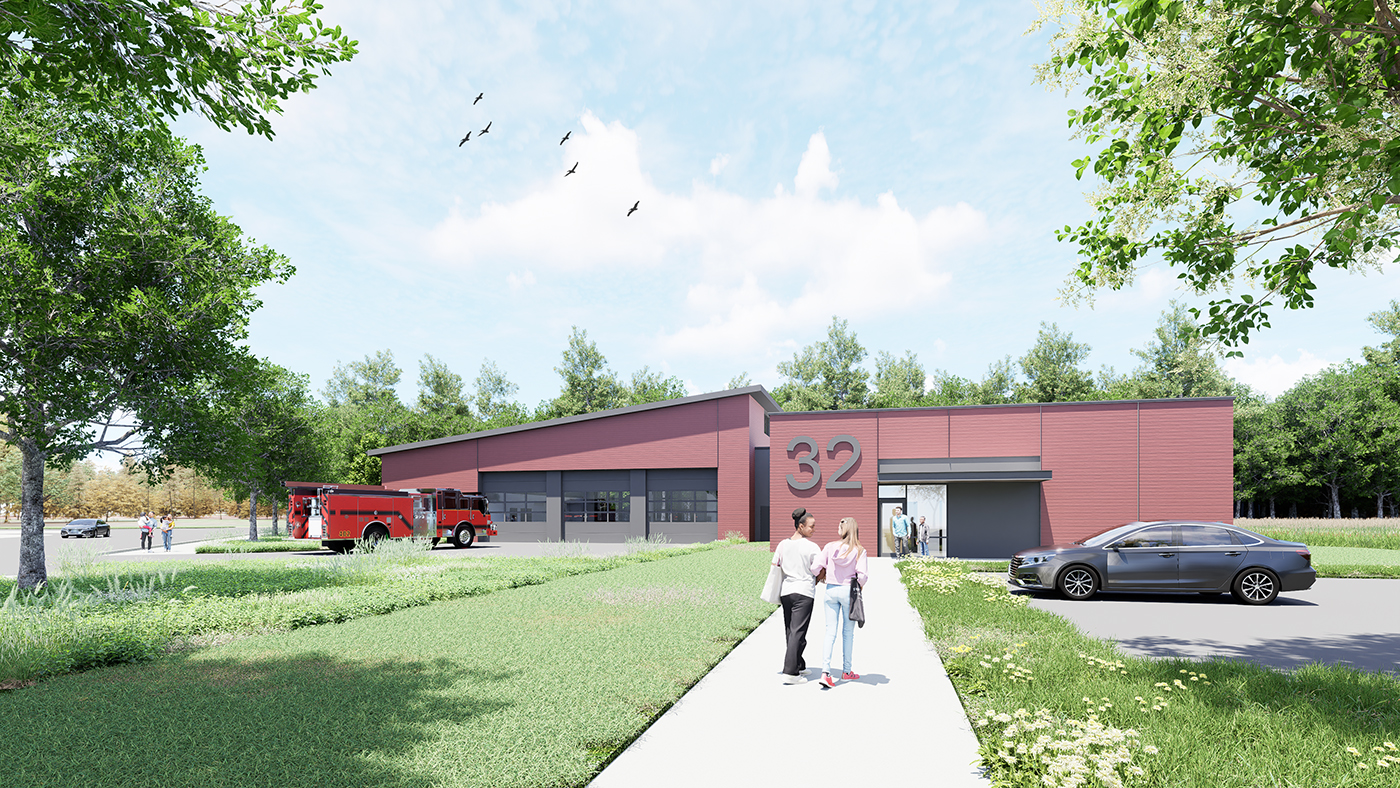
We are currently in the final stages of design and permitting for two new fire stations for Snohomish Regional Fire and Rescue—Station 32 in Monroe and Station 81 in downtown Lake Stevens. Similar to the Bothell projects, the team had to provide a solution for interim operations at one of the stations, and incorporate healthy design features while providing a welcoming civic presence for the facilities.
The most significant challenges for these projects, however, involve poor soils and challenging groundwater conditions at both sites. PDB allowed us to engage specialty design-build ground improvement contractors much earlier in the design process than would be possible with traditional delivery methods.
Through plenty of early dialogue between BNB, the ground improvement contractor, the project structural and civil engineers, and the owner’s geotech consultant, we were able to quickly arrive at the most cost-effective solutions to foundation design and stormwater management for both sites.
BNBuilders was also able to conduct much more extensive site investigations during the early phases of the project than would be typical from the information gained from an owner-retained surveyor and environmental consultant. This allowed the team to better understand the technical implications of soil and groundwater conditions before design decisions were fully established, and also identify unknown underground obstacles and unclear existing utility routing that helped inform the design approach and feasibility of our interim operating concept.
DESIGNING FOR THE FUTURE OF THE FIRE SERVICE
Fire stations and training facilities are evolving. Departments are moving away from shared bunk rooms, reconsidering hose towers and fire poles, prioritizing drive-through apparatus bays and incorporating spaces that support community engagement. Health, durability and operational clarity increasingly guide design decisions.
Progressive Design-Build does not simplify these challenges, but it creates a structure for addressing them collectively. By aligning cost modeling, technical expertise and operational input from the outset, public owners are better positioned to evaluate trade-offs and manage risk in a transparent way.
For civic facilities that must support life-saving work for decades, that early alignment can help ensure that investments are resilient, responsible and reflective of the communities they serve.
Zubin Rao is a senior associate at The Miller Hull Partnership. Geri Urbas is a project executive at BNBuilders.
Other Stories:


