|
Subscribe / Renew |
 |
Contact Us |
| ► Subscribe to our Free Weekly Newsletter | |

Construction Bids
| home | Welcome, sign in or click here to subscribe. | login |


 print print  email to a friend email to a friend  reprints add to mydjc reprints add to mydjc |  |
 |
June 27, 2024

Tuttle
|
As a landscape architect, I work on a variety of projects that involve paving patterns, finding trees that behave well in urban conditions, designing walls and addressing stormwater runoff. Designing a nature park is different. The attraction is working with what’s already there, not creating something new. Your end users are not only people, but also winged and four-footed creatures. The plant palette you consider is limited. The less you build, the better.
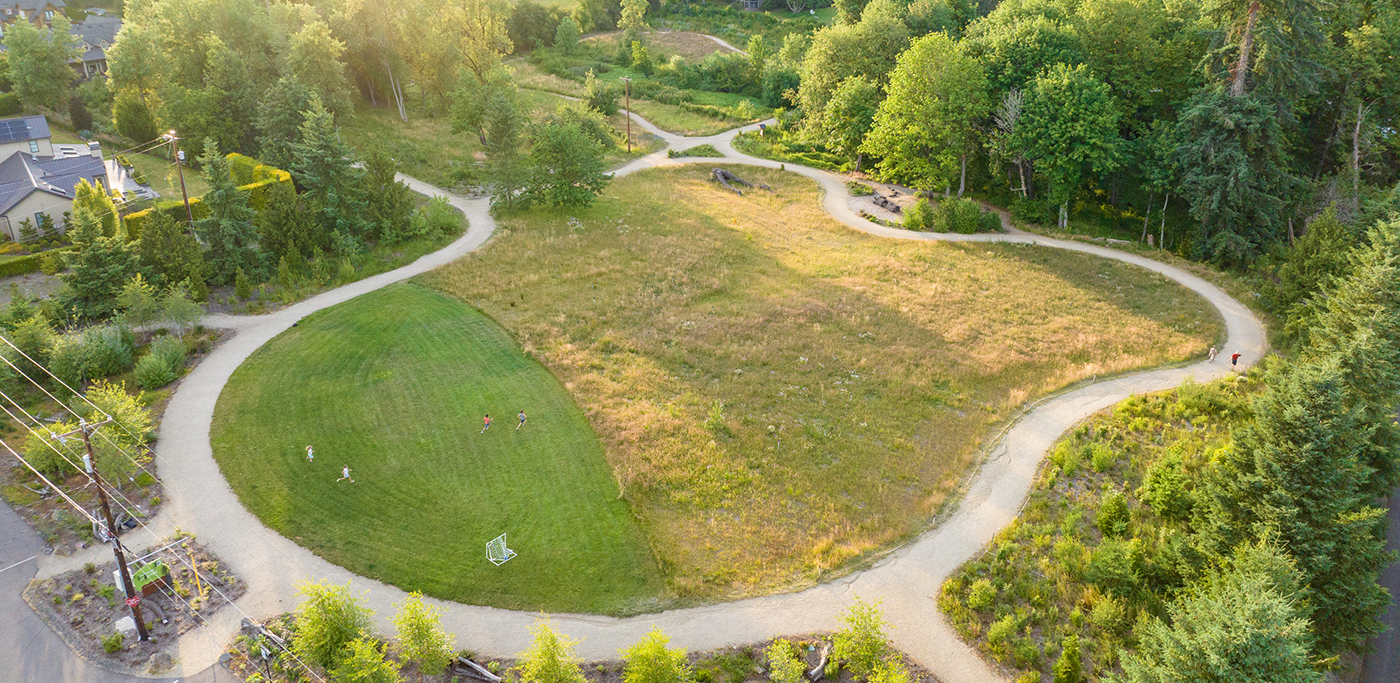
When we designed Woodmont Natural Park of Lake Oswego, Oregon, we were confronted with the need to think a little differently about design. In many cases, there’s a tendency to design with a strong hand and force the land to fit your project or pro-forma, but in the case of a nature park the focus is on clearing the brush and letting nature sing. Adding limited, carefully curated site features allows nature to show off. And the virtue of restraint becomes central, along with the acceptance that the park will evolve over time. We learned that each of these design ideas can unfold into a complex strategy of its own.
Woodmont Natural Park garnered the Award of Excellence from the Oregon Chapter of the American Society of Landscape Architects. I think the park’s success lies in the opportunity it offers the community to commune and connect with nature, and in its ability to simultaneously support an ecosystem while also drawing nourishment from it.
If you’re considering a design intervention at a nature park, chances are there is already a redeeming quality to that piece of land. A stream, a forest, a wetland — something that makes it special. Protecting and enhancing that natural element, character or feature, and allowing the community to engage with it is the primary goal. Sometimes this is best done by removing barriers and obstacles that may crowd, harm or eclipse that special element. In the case of Woodmont, hundreds of invasive trees were removed to open up a meadow and reveal a stunning native forest. This is design by subtraction. By removing non-native plants or other physical obstacles, the site is opened up to restoration and appreciation.
But it’s also about addition. The addition of people, pathways, viewpoints, plants, resting areas and so on. Sometimes there is an opportunity to supplement the natural ecosystem with native and transitional plants to improve the long-term health of the park. There may be a need to add seating, which can be achieved with thoughtfully selected boulders instead of benches from a vendor.
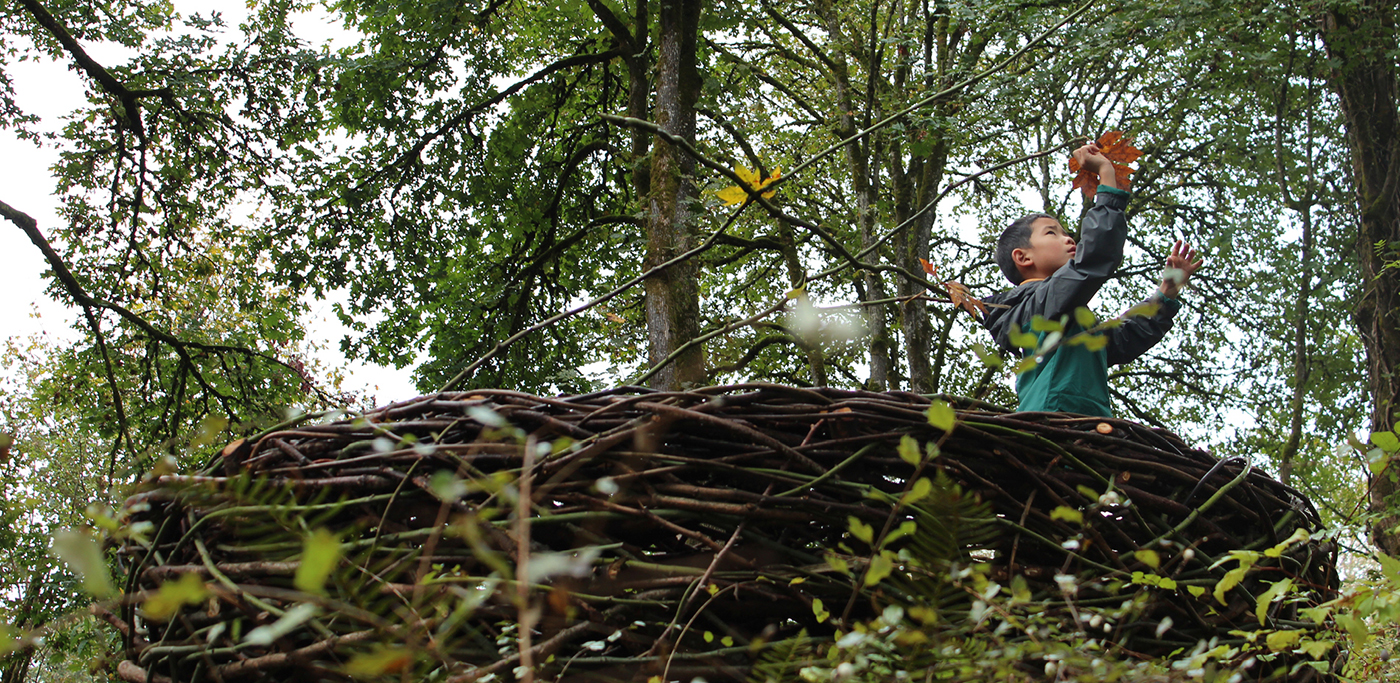
The addition of simple or even understated features should also defer to nature. Pathways should lead you on a journey that engages you with the best that the park has to offer, whether that’s brushing up against a large tree or holding your anticipation for the reveal of a large vista.
In many ways, the humble pathway is the key to a nature park’s success. It takes us where we’re supposed to go, shows us what we need to see and avoids what should be left untouched. Under foot, pathway material should be true to place, secure to the step and improve access for everyone. Adding a well-choreographed pathway that anticipates views and natural features will determine how people emotionally connect with the park.
The true magic of designing a nature park, however, comes down to restraint. Less is more. In the course of design, ideas abound, and there are many well-intentioned moves landscape architects could make. But the one move we must make is to show restraint. Fewer materials, less disturbance, more subtlety, more nature.
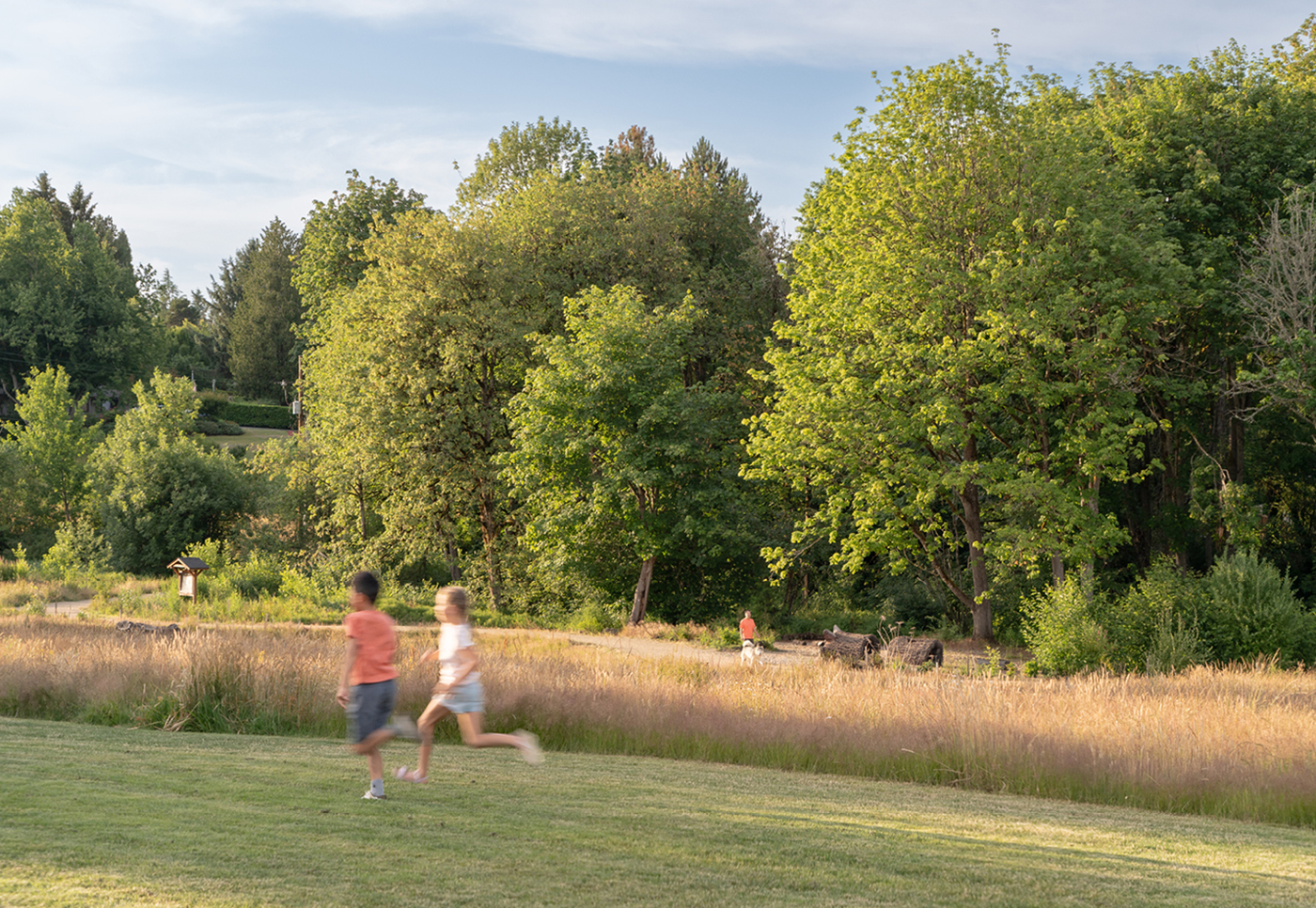
When Mackenzie designed Woodmont Park, we refrained from concrete, asphalt and benches and intentionally opted for decomposed granite paths, boulders for resting and logs for exploring. We created opportunities for nature to occur and evolve on its own, and to be discoverable by observant visitors. In lieu of creating larger spaces for visitors, we made them smaller. The pathways are just enough to get people to connect with a forest, a wetland, a grove and a meadow. We provided a light touch on intervention to evoke beauty, and in the process dramatically limited our resource consumption through preservation and upcycling existing site materials.
When visitors come to a nature park, they come to experience an ecosystem in action. It’s not about a playground or athletics, it’s about mental health and a reconnection to nature. Season to season, a nature park will express itself differently. Year to year it will evolve, unfold and shift. Wind, rain and sun will sustain but also degrade the park. Some of the elements we design will eventually erode and wear out — and that’s exactly how it should be. Nature is the star of the show and that’s what people come to experience.
Time will be the judge of a nature park’s design. Will all the plants, animals and people be harmoniously enjoying the park decades from opening day? Will the park of the future reflect its past? If limited interventions are imposed and thereby felt, and if nature is put on display and the park is designed to age gracefully, then chances are good that the verdict will be in your favor.
Steven Tuttle leads Mackenzie’s landscape architecture practice and has nearly 20 years of professional experience in the northwest.
Other Stories: