 |
Subscribe / Renew |
 |
Contact Us |
| ► Subscribe to our Free Weekly Newsletter | |

Construction Bids
| home | Welcome, sign in or click here to subscribe. | login |


 print print  email to a friend email to a friend  reprints add to mydjc reprints add to mydjc |  |
 |
June 27, 2024

Hartlage
|
Over 124,000 plants will grow along Seattle’s new waterfront, representing over 500 varieties of native and ornamental plants. Nearly 800 trees will provide shade and habitat in addition to the project’s shrubs, vines, perennials, grasses, ferns and bulbs.
In the years since design commenced on the 20-acre, mile and a half long project, we have been frequently asked, “How are these plants organized and how will they be maintained?” The planting design addresses two foundational aspects: the narrative theme of the location and the functional need of the location.
The plant selection strategy brings it all together in the final vision that can now be experienced by pedestrians, bicyclists, scooterists, and drivers, all along the waterfront. Each segment of the waterfront is broken into approximately two-block zones/districts with established narrative themes based on use and location.
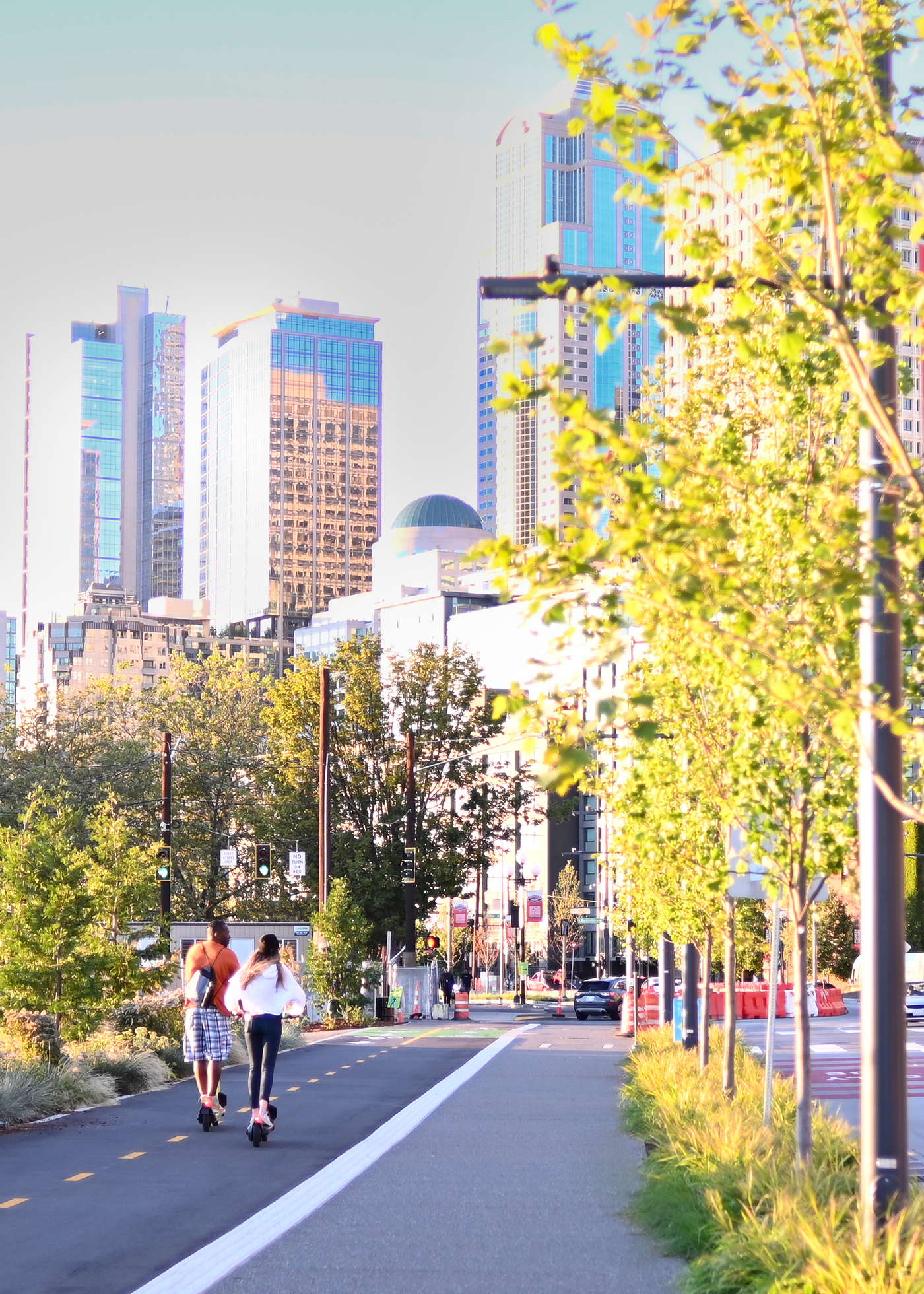
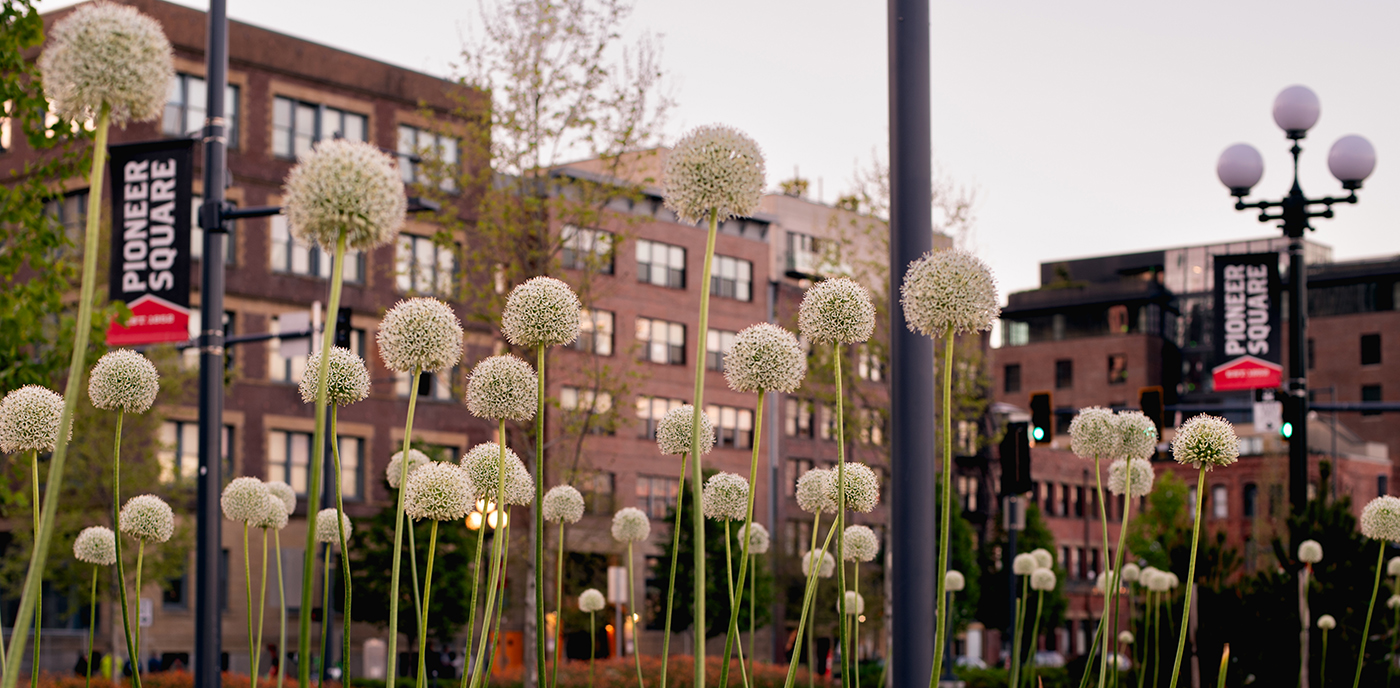
PIONEER SQUARE DISTRICT
The Pioneer Square planting palette includes street trees that reflect the requirements of the Pioneer Square Historic District, and promenade plantings that include near-shore habitat species to evoke the character of the Puget Sound lowlands. Trees, shrubs and understory plantings represent native species commonly found in the forested areas near Puget Sound shorelines and are similar to plantings of the adjacent Washington Department of Transportation (WSDOT) South Access project to the south, providing an easy character transition.
PIONEER SQUARE BEACH DISTRICT
The Pioneer Square Beach planting palette includes street trees that reflect the Pioneer Square Historic District, and beach plantings (by others) that include near-shore habitat species to evoke the character of the Puget Sound Beach. Trees, shrubs and understory plantings along the promenade represent native species commonly found in Puget Sound Shorelines and are similar to plantings of the habitat beach.
THE TRANSIT HUB
The transit hub planting includes street and promenade trees selected for their formal canopy structure, balanced upper branching habit, and ability to withstand urban conditions with vehicular and pedestrian traffic. Understory planting serves as a buffer between the roadway, bicycle facilities and promenade, while maintaining sightlines and clear visibility for buses, drop-off areas and commuters.

CENTRAL WATERFRONT DISTRICT
The central public space planting areas evoke Puget Sound shorelines where sand, gravel and rocks meet shoreline grasses, with sculptural shrubs and trees in the near-shore background. Native-inspired conifers selected for interesting character, scale, and sculptural interest are used throughout the informal planted terraces. Shrubs and understory plantings represent native species commonly found on Puget Sound shorelines and beaches. Street trees selected for their straight, upright form and fall color link the historic piers’ plantings with the central public space plantings.
PIER 66 / WATERFRONT PARK
Expected heavy visitation in the central core requires highly ornamental and multi-seasonal plantings including a bosque of shade trees.
OVERLOOK WALK
Overlook walk includes the roof of the new Seattle Aquarium addition and is intended to replicate the ecosystems of the region, from the Cascade Mountains to Puget Sound. These are native plants except for the conifers, where weight restrictions prohibited the use of Douglas Firs and Western Hemlocks. Instead, we specified smaller growing conifers.
THE BELLTOWN DISTRICT
The Belltown bluff planting is inspired by Puget Sound bluff natural vegetation. Deciduous tree species are used along the bluff slopes, while conifers grow along the top of the bluff where the ground is more level. Shrub species include ones typically found in the Pacific Northwest bluff understory. Street trees in Belltown have been selected for their straight, upright form, fall color and ability to survive in tough urban conditions and grow well in the narrow corridor going up Dzidzilalich/Elliott Way.
DISEASE AND RESILIENCE
A complex set of functional needs or themes have been addressed as well. Large-scale street trees provide shade and heat island remediation along the major roads. A variety of trees were selected for durability, disease resistance, and impacts from climate change. In each zone, the design team and city of Seattle selected two to four species to avoid monocultures and avert the possibility of a disease impacting tree canopy. Diseases, for example Dutch Elm Disease, tend to impact specific tree families, so selecting from different families minimizes the risk of collapse of the entire tree canopy should an unforeseen issue or new disease arise in the future.
STORMWATER
Bio-filtration planters are utilized throughout the project to treat runoff from roadways. These require plants adapted to drying and flooding events.
MAINTENANCE
Planters in the median and along the east side of Alaskan Way are less complex in both variety and maintenance requirements and will be maintained by Seattle Department of Transportation (SDOT). Areas to the west of Alaskan Way are maintained by a trained gardening crew managed by the staff of the Seattle Center.
We expect procurement and installation to finish in 2025. To ensure success, the following were considered carefully:
PLANT SPACING
Plant spacing is intended to cover the bare soil to suppress weeds, conserve water, and discourage people from walking in the beds. There will be areas in which desire lines, or the quickest distance between two points, cannot be overcome, but in general, in our experience dense planting does deter this behavior.

PROCUREMENT
Due to the variety and quantities of plants required for the project we wrote specifications that would ensure quality planting material and no last-minute substitutions. The team made every effort during the design process to use plants available in the marketplace, though it was known that about 20% would need to be custom grown for the project.
Plants, like all products, come and go in production. Specifications required the landscape contractor to submit viable sources a year in advance of installation. Every tree was tagged for procurement at various suppliers across the region. All other plants were photo documented six months in advance, and again when procured and awaiting installation. The process allowed no substitutions.
Tracking plants in this manner allowed the design team to make appropriate substitutions in advance for the few crop failures, rather than make last-minute substitutions with poor alternatives.
SOILS AND IRRIGATION
A permanent irrigation system provides irrigation for the entire project with state-of-the-art controls that will be managed by the Seattle Center.
Initially, after research and consultation with James Urban, the project team planned to use 100% mineral soils on the project. In the end, we could not find a supplier that could deliver soil with the optimal particle size of soil aggregates. Ultimately, we used WSDOT soils specifications and completed regular testing to ensure fertility, particle size compliance, and compaction. city of Seattle bio-filtration soil mix was used in the bio-filtration planters. Overlook Walk utilizes a custom roof mix.
INSTALLATION
When plants had to be held due to a few project delays, quality was not sacrificed, which is often the case in this scenario. Plants can become rootbound and overgrown when held too long. Growers were accommodating and adjusted to schedule changes.
All plants were approved upon arrival at the site and placement was supervised. In many cases complex matrices or plant layouts could include one to seven varieties. Test areas were staged, approved, and the pattern was replicated throughout a given bed. The contractor made almost no changes to the initial plant layout, and plants were installed quickly upon arrival at the site.
MAINTENANCE
Waterfront Seattle’s gardeners, led by the Seattle Center team, have been in place since late last summer. The maintenance team has begun to assume responsibility as the design team approves substantial completion on a bed-by-bed basis.
The dynamic nature of the plantings in the Seattle Waterfront’s urban garden will require changes in the future as gardens grow and evolve over time. A variety of changing conditions will necessitate this evolution, increasing shade due to large scale street trees, changing weather patterns, possible disease susceptibility due to climate stress and other unforeseen events.
The Seattle Waterfront project is a legacy project that will improve water quality, remediate urban heat island effects, increase biodiversity in the urban core, create a dynamic urban landscape for visitors and residents of the city, and alter Seattle in unforeseen ways both economically and in quality of life.
Richard Hartlage is the founding principal and CEO of Land Morphology. His designs have been featured in The New York Times and Architectural Record and he has contributed to six books on horticulture and design, including Bold Visions for the Garden and The Authentic Garden.
Other Stories:


