|
Subscribe / Renew |
 |
Contact Us |
| ► Subscribe to our Free Weekly Newsletter | |

Construction Bids
| home | Welcome, sign in or click here to subscribe. | login |


 print print  email to a friend email to a friend  reprints add to mydjc reprints add to mydjc |  |
 |
October 14, 2024

Lehrman-Schmid
|

Wise
|
The drive for inclusion in the construction industry is accelerating, driven by the need to secure a sustainable workforce and the growing awareness that harmful stereotypes undermine the industry’s image and hurt employee retention. Belonging has emerged as a central framework for building inclusion, emphasizing the need for safe, supportive environments where individuals feel valued, connected and free to be themselves.
Build with Pride Seattle (BWPS), a new non-profit organization serving the LGBTQIA+ and allied members of the AEC industry in Washington, was founded to emphasize this very topic. Built around the idea of community belonging, the organization’s founders saw the need to create a supportive network for personal connection and hub for shared industry resources.
Co-founder Kabri Lehrman-Schmid (she/her), a superintendent with Hensel Phelps, explains, “Construction is naturally inclusive — we connect expertise across diverse skillsets and uphold shared values like pride-of-work. What’s missing, however, are the personal connections and support networks that come from meaningful communities. Marginalized groups in our industry need reasons to stay and tools to thrive if we’re to expect lasting change.”
LGBTQIA+ BELONGING IS ESSENTIAL
Estimates suggest the LGBTQIA+ community makes up just 2% of the construction industry, with many remaining unseen due to fear and barriers to being open. This isolation limits access to support, role models and opportunities, impacting personal growth and making retention and engagement difficult. It also hinders the industry’s ability to attract diverse talent.
Supporting identity-based communities like BWPS and initiatives like Construction Inclusion Week highlights the importance of workforce diversity. These resources help individuals navigate bias and shape paths for success.
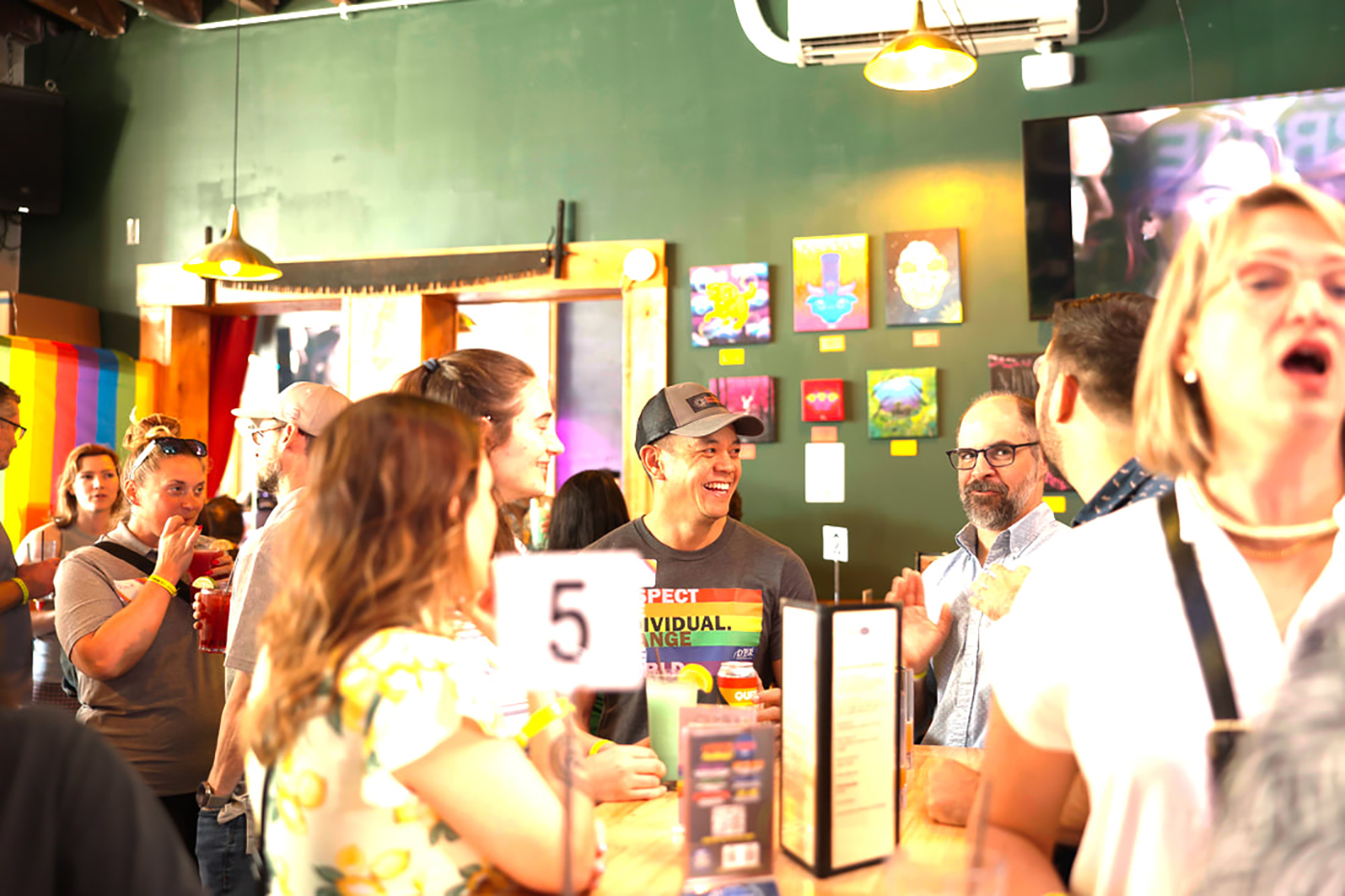
Courtney Wise (she/her), co-founder of BWPS and marketing manager at JTM Construction, shared the success of BWPS’ inaugural Pride event in June 2024. “We expected 100 attendees, but demand was so high we had to expand the room; it showed the need for belonging in the industry.” Over 200 people from 85 AEC companies attended, many feeling acknowledged for the first time in their careers.
A FOUNDATION OF SAFETY
Conversations about inclusion in construction often highlight psychological safety as key to fostering belonging. It builds on shared beliefs, contributions and a team’s capacity for learning together, encouraging open communication and allowing workers to express their experiences and needs. This safety strengthens their sense of belonging, while its absence can lead to disengagement or disconnection.
For marginalized groups, especially LGBTQIA+ individuals, psychological safety is critical. An acknowledged community can provide resources that foster a renewed dedication to the profession.
Ryan Ames (he/him), senior vice president of Compass Construction, was amazed and proud to participate in the AEC industry’s commitment to LGBTQIA+ and allied members at BWPS’ June gathering. “Moments like these remind us how much representation matters,” he reflected. “Walking into a crowded room of strangers and feeling an immediate sense of connection is something I’ve rarely experienced at other industry events.”
TRADESPEOPLE WILL BENEFIT
Inclusion has been a challenge in construction, due in part to the historic biases that have led to in-group hiring practices and unwelcoming working conditions. A 2017 LGBTQIA+ survey by Construction News revealed that 54% of respondents did not feel comfortable being open about their sexuality or gender on site. When workers don’t feel they belong, they’re more likely to leave the industry.
Jai Briar (he/him), education supervisor at the Construction Industry Training Council of Washington reflects, “For tradespeople, the resilience needed to establish themselves in the face of bias and harassment deserves support and validation. A visible and accessible LGBTQIA+ network can provide an apprentice skills and training that are not always freely offered at the jobsite.”
Creating opportunities for connection can transform the experience for young recruits. Briar adds, “As someone responsible for transitioning students into the industry, it’s discouraging to see the loss of talent when queer and transgender tradespeople can’t find a safe space to grow their careers.”
COMPANIES HAVE OPTIONS
In the construction industry, belonging takes on several forms, reflecting the unique culture, work environment and business challenges. Organizations have internal and external pathways to consider:
Inclusive jobsite culture: Jobsites offer a critical opportunity to foster and uphold inclusive values and behavior. Leadership plays a key role in embedding inclusion into every aspect of jobsite culture, while individuals learn that their daily interactions are essential in building a strong, inclusive community.
“I’ve seen firsthand how poor communication and ignoring input can lead to project delays and crew conflicts,” says Eliot Hills (he/him), senior project engineer at BNBuilders and co-founder of BWPS. “When I prioritize listening, trust and creating a safe space, I’ve seen crews quickly recover from delays and start working together. Building an inclusive jobsite community is key to success.”
Employee Resource Groups (ERGs): Employee-led groups unite employees with shared characteristics, experiences, or interests to provide support, networking, and advocacy while advising leadership on improving engagement.
Account Manager Kim Scavotto (they/she), describes how ERGs can amplify the voices of marginalized communities, “As co-leader of the McKinstry Pride Alliance, I’ve witnessed the powerful impact of creating safe spaces where people can be their authentic selves. While traditional change management can be slow, these employee-led groups are able to quickly adapt to employees’ needs, offering essential support.”
Community Organizations and Events: Safe spaces offer resources for LGBTQIA+ and allied professionals seeking community connection. Companies can advocate for employee participation or partner with industry organizations building those networks.
“Developing new partnerships between existing resources is an essential way BWPS is facilitating the growth of a successful community and increasing safety in our region,” says Lehrman-Schmid.
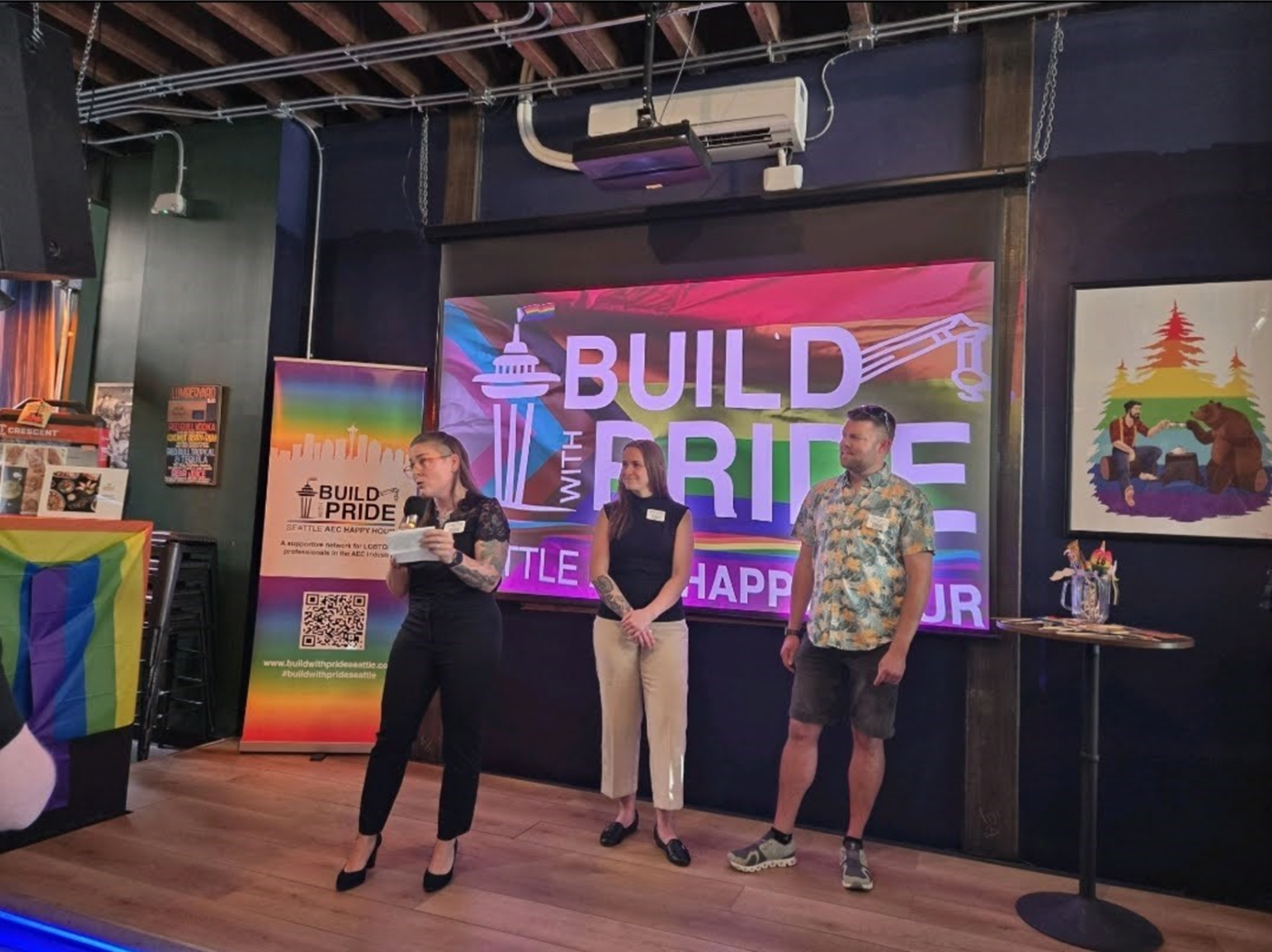
During their Construction Inclusion Week kickoff event on October 10th, BWPS celebrated the creation of a scholarship fund that connects the membership network of the Greater Seattle Business Alliance (GSBA) to the training resources of ANEW’s pre-apprenticeship program.
Check out their website: http://www.buildwithprideseattle.com
BWPS considers themselves a “bridge” for AEC companies, helping them retain and grow LGBTQIA+ professionals and allies. By celebrating identity-based communities, the industry fosters networking and skills transfer, creating an inclusive environment where individuals feel valued, and teams grow stronger.
Kabri Lehrman-Schmid is a superintendent with Hensel Phelps, with 17 years of experience, currently leading the S Concourse Evolution project at SEA. Courtney Wise is a marketing manager with 12 years of experience in the AEC industry.
Other Stories: