 |
Subscribe / Renew |
 |
Contact Us |
| ► Subscribe to our Free Weekly Newsletter | |

Construction Bids
| home | Welcome, sign in or click here to subscribe. | login |


 print print  email to a friend email to a friend  reprints add to mydjc reprints add to mydjc |  |
 |
November 21, 2024

Ferguson
|
Several years ago, an employee of mine made the difficult decision to move to Des Moines, Iowa. While I lost a gifted designer, a witty friend, and the Dungeon Master of our monthly D&D campaign, I was thrilled for what he and his wife were able to do in Des Moines that they had lost hope of doing in Tacoma: they bought their first home.
It’s no secret to anyone living in Tacoma and the greater Puget Sound that the housing outlook feels abysmal. Like my employee, many of Tacoma’s residents find it impossible to envision themselves owning a home. Those who need to relocate to the South Sound are struggling to find affordable housing. These people are middle-income earners like nurses, junior police officers and fire fighters, teachers, and yes, people in the built environment industry.
THE MISSING MIDDLE
As an owner of a Tacoma-based small business, it hurts to watch my staff wrestle with this current reality. But we’re seeing encouraging signs coming through our studio doors: more developers are looking to build “missing middle” housing projects.
These project types range from detached single-family homes to house-scale buildings with multiple units (duplexes, triplexes, fourplexes) to mid-size apartment buildings. As a component of increasing affordable housing, missing middle, also called “middle housing,” adds to a more diverse range of housing types and costs, increases density and creates a wider array of attainable home ownership options.
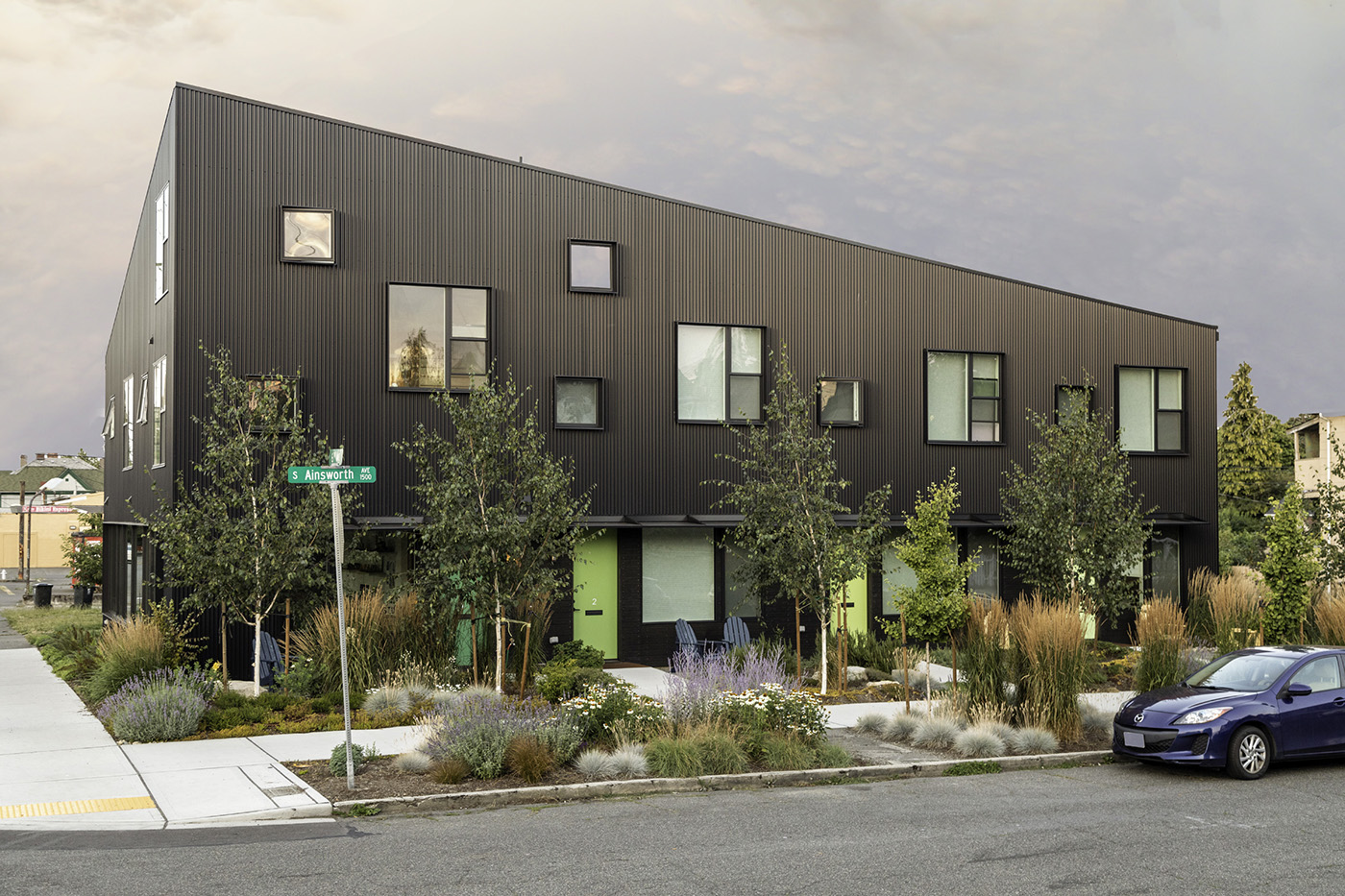
We commonly think about “affordable housing” as housing stock that is subsidized by the government, and made available to people who qualify based on low-income level thresholds. In reality, that definition applies to the way policy works to provide housing for people who otherwise may not have safe options. Instead, the US Department of Housing and Urban Development (HUD) defines affordable housing as “housing where the occupant pays no more than 30% of gross income for housing costs, including utilities.”
This is where the “missing middle” fills a gap in the housing market for moderate-income earners who don’t qualify for subsidized housing but who struggle to find homes with rents or mortgages that cost 30% or less of their income.
HOME IN TACOMA
Missing middle housing types are currently allowable in certain parts of Tacoma, but a new zoning initiative by the city seeks to increase possibilities and clarify requirements for building more of these projects in more single-family neighborhoods.
The Home in Tacoma Phase 2 (HITP2) code—developed by the City with consultant Mithun, and subconsultants ECOnorthwest and Parametrix— was issued to the Tacoma City Council this summer after two years of intense planning and community outreach by the Tacoma Planning Commission (TPC). As a member of the Tacoma Permit Advisory Task Force, I have been involved in planning discussions for HITP2, providing architectural expert feedback and permit process insights.
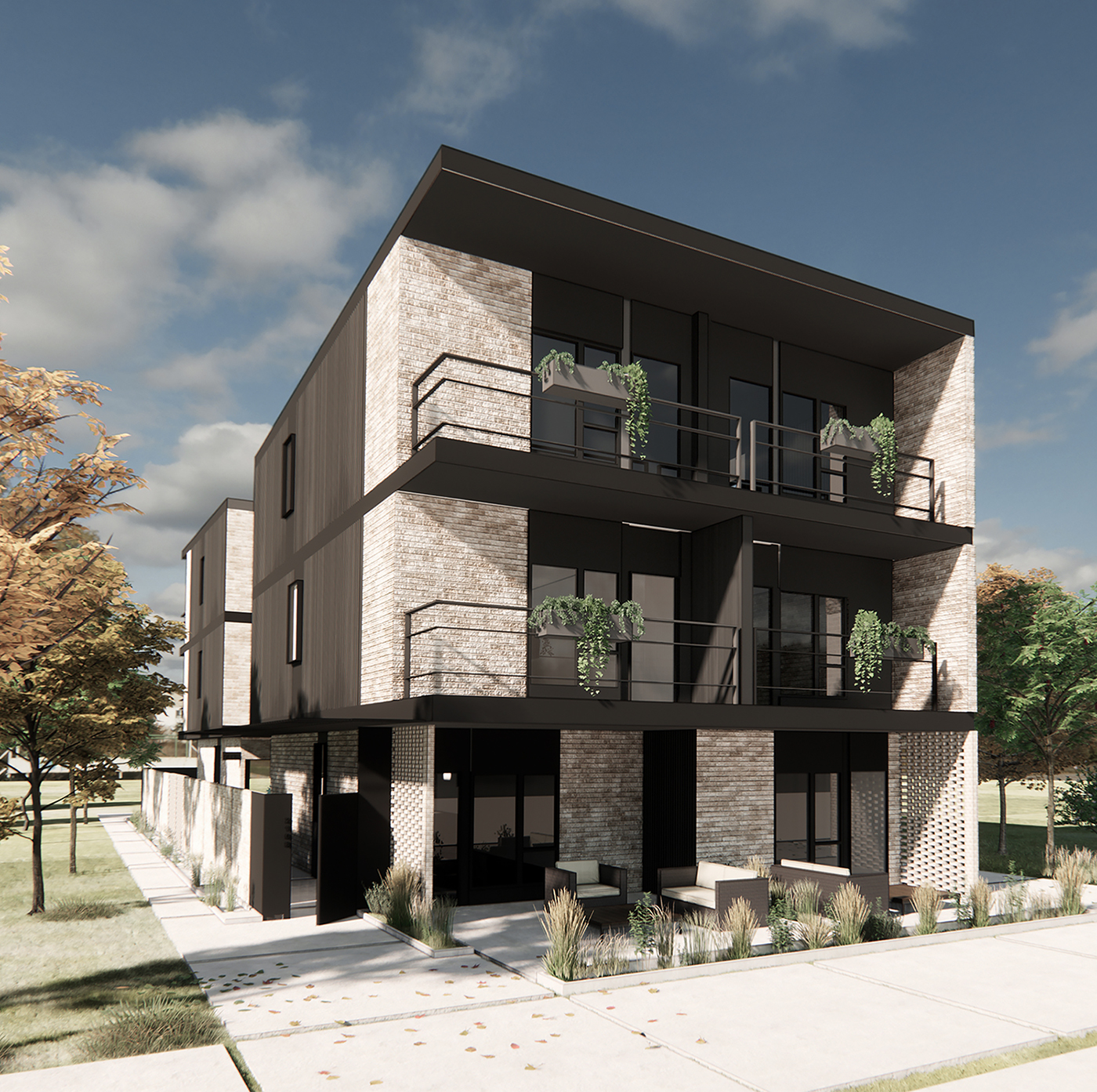
The final recommendation by the commission is a promising and historic shift in Tacoma zoning code.
While the plan covers a broad spectrum of policy implementations, there are three main keys to the code's efficacy:
• Updates Tacoma’s Zoning Map to replace existing Residential (R) zones with new Urban Residential (UR). The new UR zones are differentiated by the allowable density and housing types in each zone. This widens the types of housing allowable across the city, increasing density and creating a more diverse housing stock.
• Establishes density, scale, Floor Area Ratio, setbacks, form-based housing types, and other controls allowable in each new UR zone. While these design requirements do not address style or character, they are intended to keep middle housing projects within the neighborhood scale of the community they are in.
• Implements Unit Lot Subdivision (ULS) law passed in Washington state, which allows separate ownership of individual middle housing units. This allows properties to be subdivided into individual lots, enabling units to be separately owned and thus reducing the land costs for each home. This works particularly well for Houseplex, Rowhouse and Courtyard Housing types.
The plan also includes development bonuses to encourage construction of missing middle housing attainable by households earning 60% to 80% of the area median income (AMI) for rentals, and 100% AMI for ownership, expanding the demographic of potential homeowners and renters.
COMMUNITY REACTION
The community has been vocal during HITP2’s formation and review. During the Planning Commission’s public comment period between February 5 and March 8, the city received over 1,500 comments from Tacoma citizens, and at the Tacoma City Council’s September 24th meeting to review the HITP2 package, 50 people signed up to speak. While the feedback the commission received has largely been supportive, several reoccurring topics of concern were voiced over and over: tree retention policy, parking requirements, infrastructure updates and the potential for displacement of existing residents already struggling to maintain their homes.
Truthfully, I too shared some of these concerns while participating in discussions during my involvement developing HITP2. As a local architect who works with local developers to create the best projects we can for my hometown, I feel deeply that we have a responsibility to look out for our neighbors.
Home in Tacoma is a practical compromise that balances the needs of current homeowners with those of people who wish to be homeowners tomorrow and can’t envision a future where that is feasible. As a born-and-raised South Sound homeowner, father, mentor and leader, I want that future to be attainable to as many people as possible.
Ben Ferguson is the managing principal and founder of Ferguson Architecture in Tacoma and serves on the city of Tacoma’s Permit Advisory Task Force.
Other Stories:


