 |
Subscribe / Renew |
 |
Contact Us |
| ► Subscribe to our Free Weekly Newsletter | |

Construction Bids
| home | Welcome, sign in or click here to subscribe. | login |


 print print  email to a friend email to a friend  reprints add to mydjc reprints add to mydjc |  |
 |
November 21, 2024

Hall
|
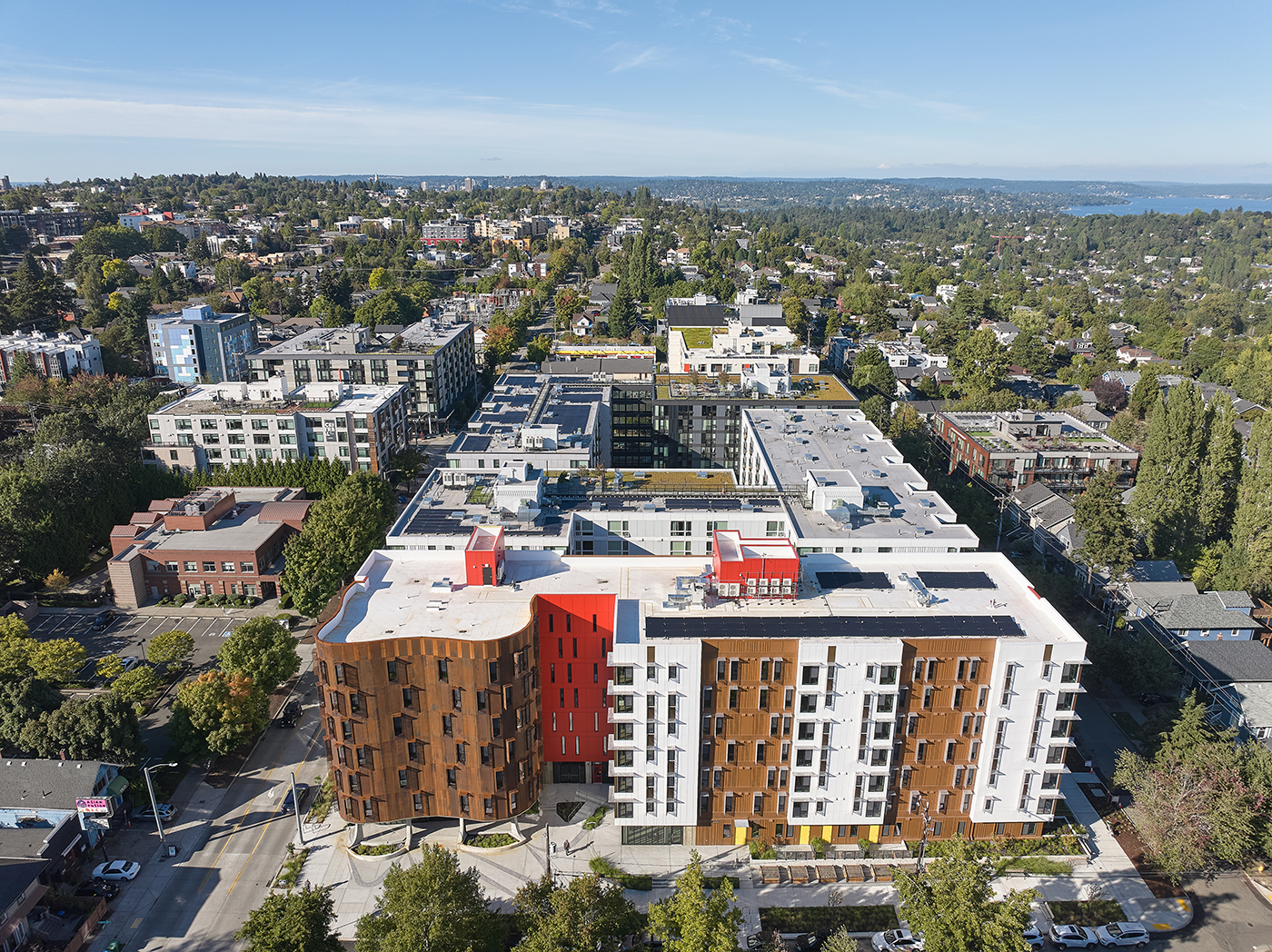
At the corner of 23rd and Spring in Seattle’s Central District, Africatown Plaza is now home to 126 families who previously would have been forced out of Seattle by the rising cost of living. While this affordable housing is much needed, the story of this development is about community, art and collaboration.
Led by Africatown Community Land Trust (ACLT) in partnership with Community Roots Housing, the building is the culmination of more than 15 years of action and organization, with eyes on the future for more opportunities to take direct action against gentrification, the housing crisis and the lack of opportunities for BIPOC communities.
COMMUNITY INFORMED DESIGN
Long before the current architects became involved, the leaders of ACLT met with the neighbors and residents to bring forth ideas for this new development. The property was originally purchased by Lake Union Partners as part of the larger block, then donated to Forterra, who transferred it to ACLT.
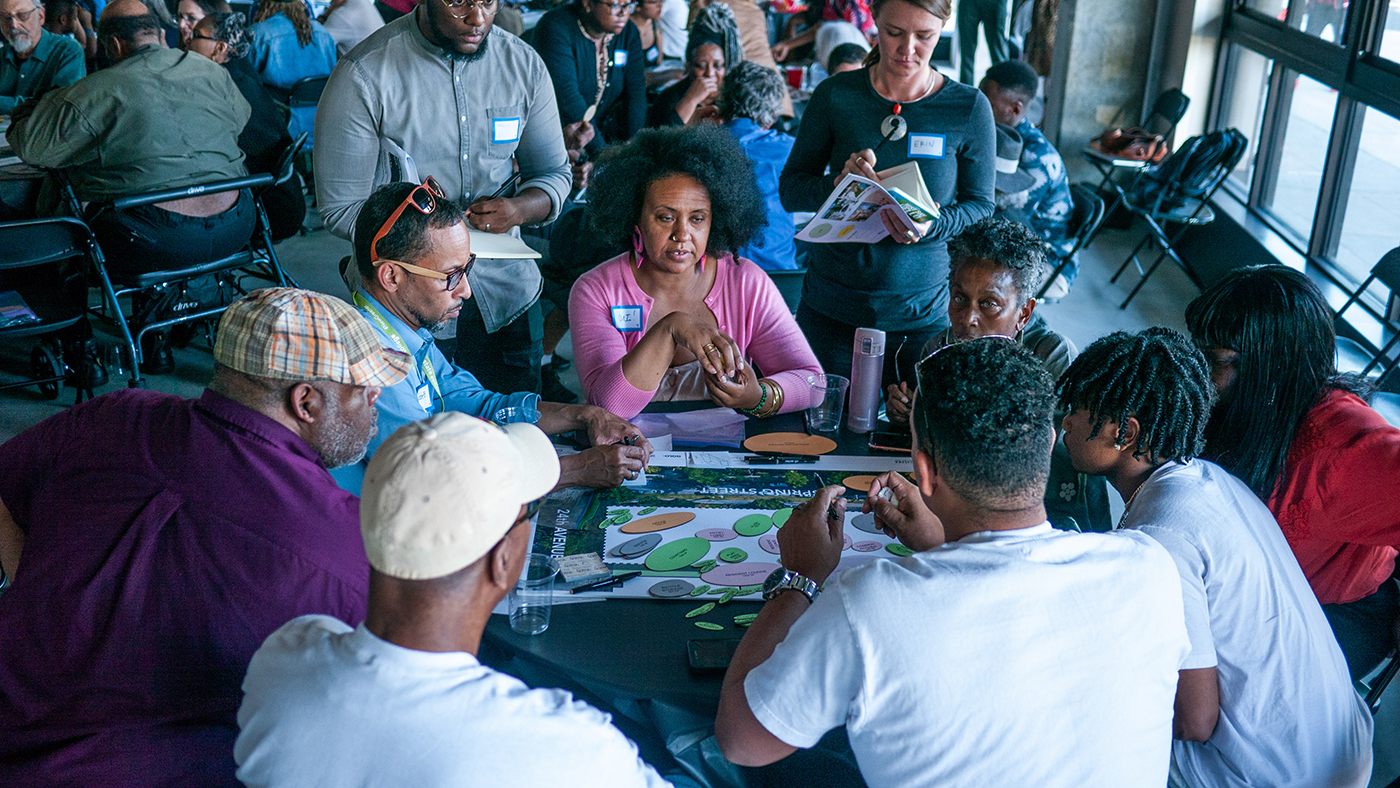
Here, ACLT sought out ideas through design ciphers and other community led and inspired design and information gathering sessions. Visionary architects including Donald King and Sharon Sutton helped guide the community vision of what this space could become through these ciphers facilitated by the University of Washington College of Built Environments.
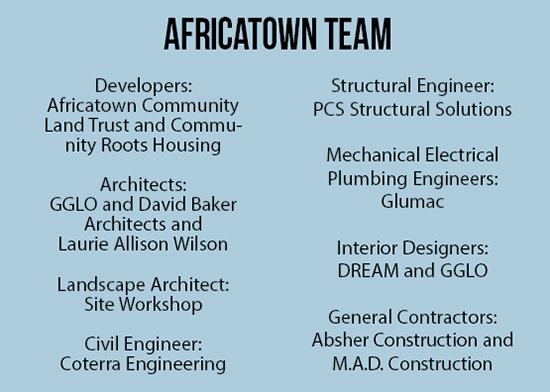
Building upon this community legacy, ACLT then formed an architectural design partnership between GGLO, David Baker Architects, and Laurie Allison Wilson to bring those initial ideas forward to reality. With the design team in place, we held multiple community gatherings to continue to bring forth additional ideas, goals and aspirations from the stakeholders before we started the design process.
We heard about the effects of gentrification within the Central District which had changed this neighborhood from more than 80% Black residents in the 1950s to fewer than 10% Black in the early 2000s. We heard from current and former residents about the importance of recognition, but also growth, of this rich diverse neighborhood history which had helped make Seattle what it is today.
Stakeholders uplifted Afrocentric Design Principles including use of color, pattern, uplifting the community and making do with what is available. Those were highlighted in addition to the community’s desires for spaces for gathering, celebration, art and a welcoming place to return home to.
With the ideas from the community firmly rooted, our design team forged the development of the design to craft the building and surrounding site. We then brought those ideas back to the community several additional times to check, confirm, and refine the design, while ensuring it was in keeping with the initial information from the stakeholders.
ICONIC ELEMENTS
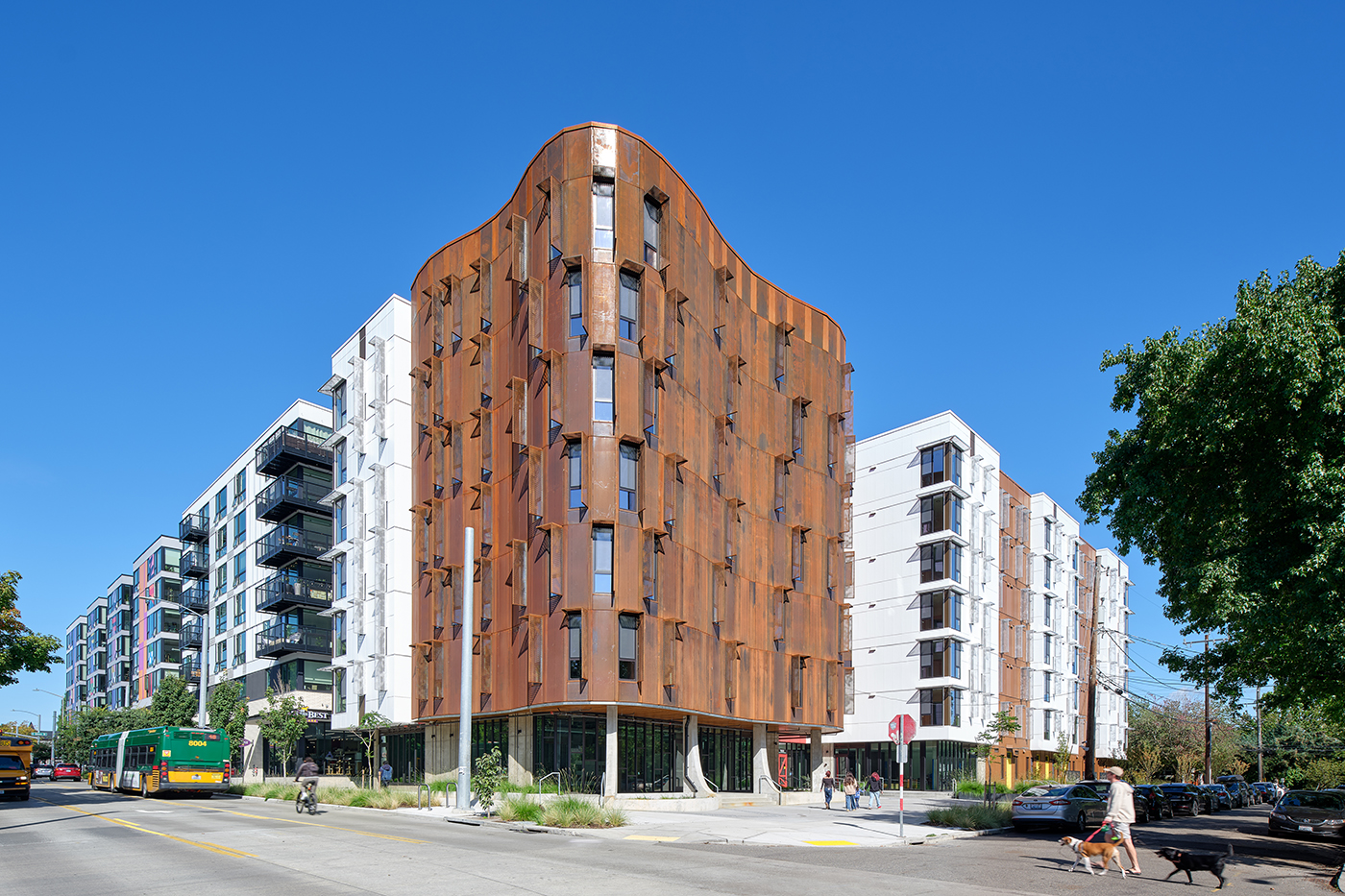
The design team created the form of the building with a series of undulating forms wrapped in Corten weathering steel. This element is to be the icon of the development, instantly recognizable as the center of the concept of Africatown. Inspired by the baobab trees of Africa, which were historic gathering spaces, this feature provides shelter, shade and community for the ground level plaza. The plaza is to be the center of celebrations, gatherings and community educational opportunities for decades to come.
The plaza’s patterns of curving forms in the concrete and lush landscaping evoke the story of water and nature as life giving forces creating a place of refuge and home. Site Workshop’s landscape architectural design with plants inspired by ,and adapted from, international locales provides additional references to communities across the globe. A community garden for the residents to use sits on the front porch, allowing for creativity and ownership of the space by the residents.
The patterning and coloration of the panel siding was inspired by African textiles. The design team arranged the texture of the vertical boards in a series to recall the patterns within the fabric in a cost effective and visually appealing manner. Earthen tones set the backdrop with punches of bright red and yellow to provide drama and interest to the building façade.
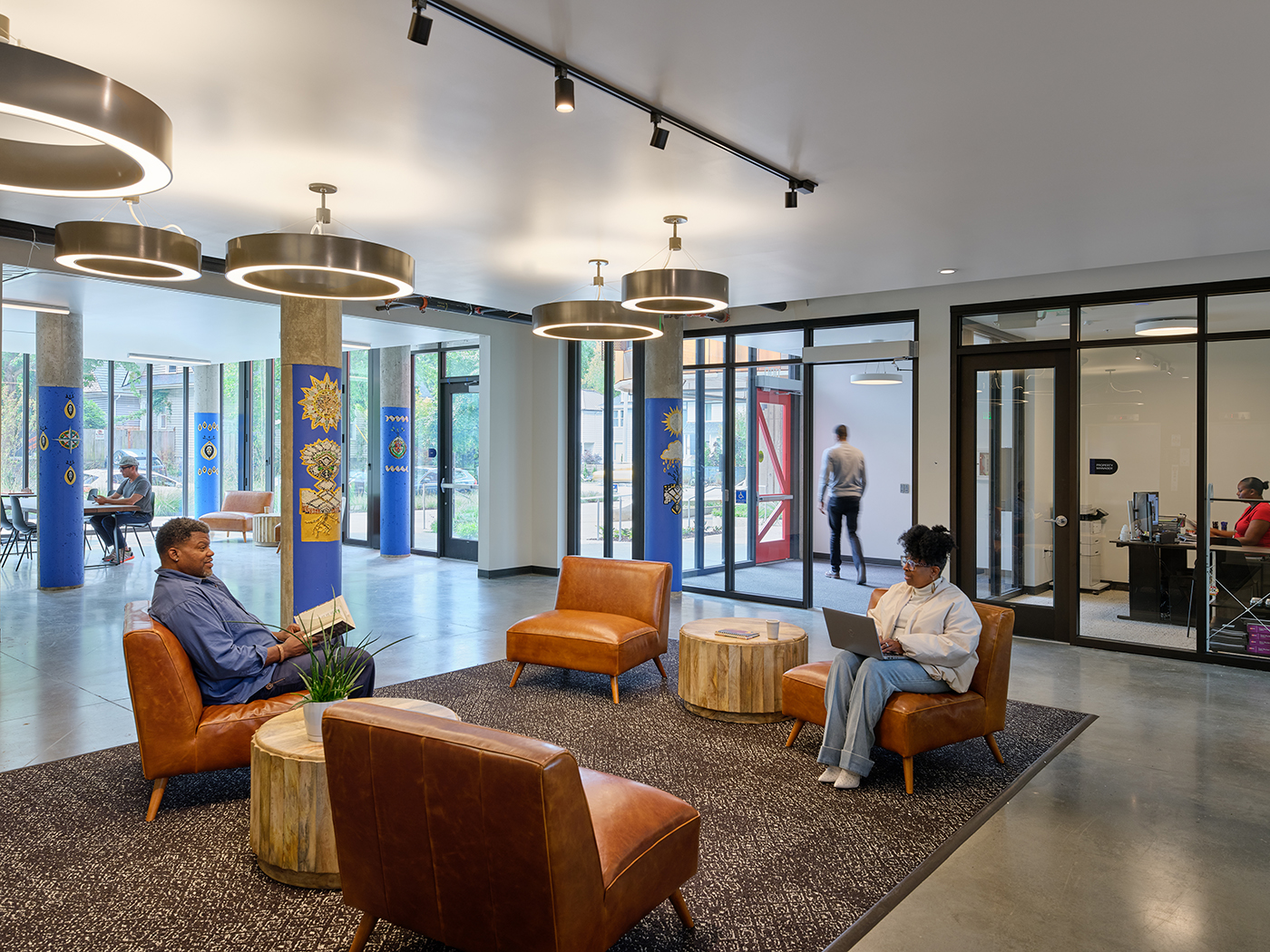
With the building itself as art, ACLT then put forth a call for artists from around the city and across the world to further develop creations to inspire and educate. From the patterns on the exterior screens, to the paintings on the interior columns, to the textiles which are part of the interior of the building, and the paintings and collages which will hang on the walls in the future gallery, art is integral to Africatown Plaza.
COLLABORATIVE PARTNERSHIPS
The emphasis during the development process was not only the creation of new homes for people, but looking towards the future for the next developments.
The Sankofa bird of African heritage which looks simultaneously backward to history and forward to the future was a guiding icon within the design and development team. The community’s and ACLT’s goals of the creation of additional homes, spaces, and places will require increased capacity for development and knowledge. This process has set the stage for future developments of increased size, capacity and complexity.
This design partnership elevated Black designers and engineers providing opportunities for engagement and skill building. The client team grew within their capacity and staff to deliver affordable housing in partnership with the city of Seattle and Washington state.
The construction team was a joint venture between Absher Construction and MAD Construction. MAD Construction as a Black owned contracting team grew in their capacity to deliver housing at scale. Through the realization of the community’s goals, a significant number of the construction workers on the site were BIPOC and locally hired.
These goals were forward looking so the next developments can be led by Black architects, Black construction teams and Black developers. With the challenge of housing affordability within the city and the nation becoming so drastic, building the skills of everyone to do more will be one step towards solving the problem.
A NEW HOME
In early October, Africatown Plaza opened the doors and welcomed families to their new home. Marked with a celebration of music, art, inspiration, and optimism for the future this ceremony was the end of one phase of the design. The start of the next phase of the development is just beginning, creating life and opportunities for the new residents. The opening of Africatown Plaza creates a place for gathering and community, inspired by and informed by its history and surroundings looking forward to a bright future.
Jon Hall is an architect and principal with GGLO, driven by a desire to improve our community by creating affordable and environmentally sustainable urban housing.
Other Stories:


