|
Subscribe / Renew |
 |
Contact Us |
| ► Subscribe to our Free Weekly Newsletter | |

Construction Bids
| home | Welcome, sign in or click here to subscribe. | login |


 print print  email to a friend email to a friend  reprints add to mydjc reprints add to mydjc |  |
 |
December 16, 2025

Lande
|
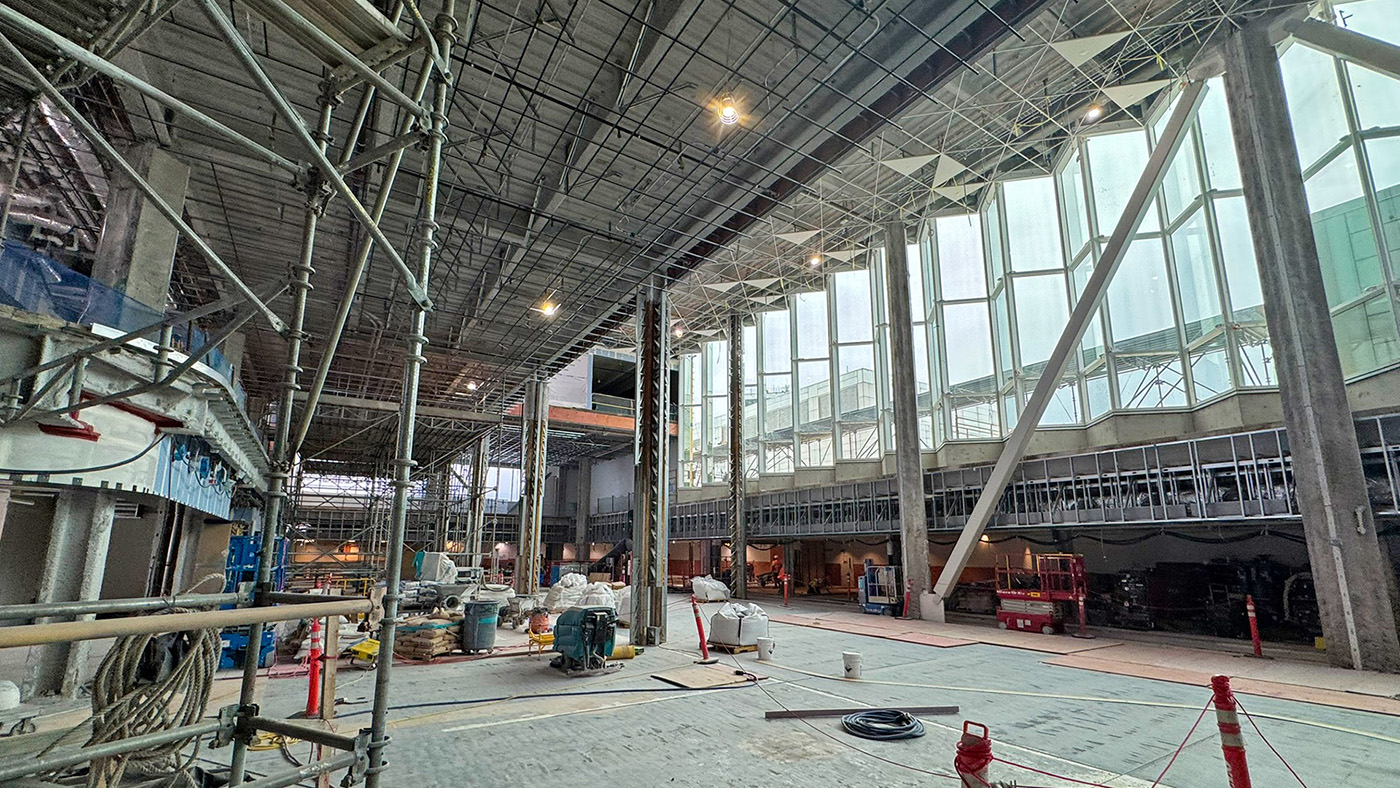
If you’ve traveled through Seattle-Tacoma International Airport (SEA) lately, you may have noticed just a bit of construction happening. Ok, maybe more than a bit.
SEA is currently navigating dozens of major capital projects — all while maintaining operations at one of the most space-constrained airports in the country. Each project is another piece in the broader modernization puzzle.
After completing some recent projects like the Central Terminal Renovation, N Concourse Modernization, and the International Arrivals Facility, the airport has been making strides to update its 1970s-era facilities and bring them into a modern era. A running joke claims the airport sometimes feels more like a construction company, with an airport on the side. This speaks to just how complex it is to plan projects to upgrade the airport, while keeping the airport open and operational.
SEA has an incredibly limited footprint and has nowhere to expand outward, so coming up with ways to modernize the airport has to fit within that footprint and requires getting creative. To give context, SEA is 2,500 acres in size with 89 gates for 52 million annual passengers. In comparison, Phoenix (PHX) has 3,400 acres with 119 gates; Miami (MIA) has 3,300 acres and 131 gates, while San Francisco (SFO) has 5,200 acres and 115 gates. All these airports serve about the same number of annual passengers as SEA.
FROM IDEAS TO PROJECTS
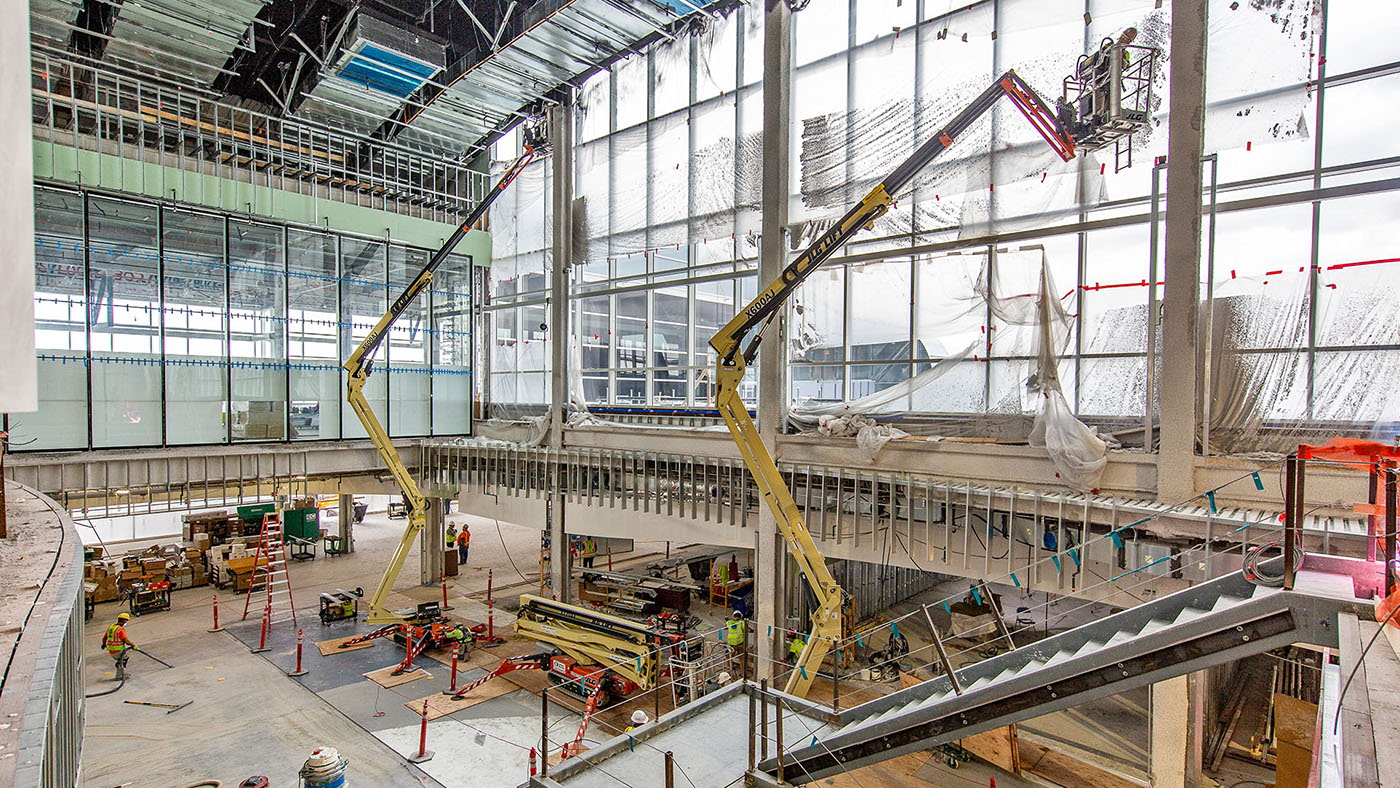
The giant jigsaw doesn’t just include projects happening in and around the airport, but the teams working to make them fit. The Capital Programs Department helps with the early stages of planning and scoping modernization projects. Mandy Xiggores, assistant director of Aviation Capital Programs, said, “We bring diverse airport stakeholders together to develop concepts that become the foundation for the large projects you see all over campus.” Planning so many projects at the airport relies heavily on stakeholder engagement and looking at every possible option.
The Capital Programs team does a lot of research and engagement with multiple stakeholders, and analyzes alternatives before a project even gets drafted. Xiggores says that depending on the size of the project, the planning and definition can take years before the design process even begins.
But when it does come to fruition, it can be brilliant. Xiggores was a part of the Restroom Renovation project, which upgraded and added restrooms on the B, C, and D concourses. While restrooms seem like such a small piece of a greater puzzle, it’s a piece that is equally important to every person, and used by all.
This project also added the airport’s first and only All-Gender Restroom, on which Xiggores learned a lot about building accessible spaces for all passengers. One of her wish list projects includes expanding the restroom upgrades across the entire airport property.
MANAGING THE BUILD, MINIMIZING DISRUPTION
When a capital project moves from the development phase onward into design and construction, the Aviation Project Management Group (AVPMG) steps in and helps carry the torch. They sit right in the middle of the puzzle and help manage all these capital projects, coordinate how and when the design and construction take place, and take steps to ensure it doesn’t excessively impact the operating airport.
“SEA is a very important part of the transportation network and economic engine of the region,” said Stuart Mathews, assistant director for the AVPMG team. He goes on to say, “Modernizing SEA means a more efficient, less stressful, and more pleasant experience for the traveling public. It is very important for the region to have an airport that can serve its needs long into the future.”
There could be hundreds of projects happening at a time, some visible and obvious, but some behind walls or out of sight. The AVPMG team is tasked with coordinating all these projects while keeping within bounds of the current airport and minimizing traveler impacts. Mathews said, “We are often planning interim conditions, phasing, and amenities to mitigate those impacts.”
PREPARING FACILITIES FOR OPENING DAY
While the airport tries to keep everything business-as-usual and is continually striving for five-star service, construction impacts are inevitable when you’re one of the busiest, and most compact airports in the country. AVPMG teams up with the Operational Readiness, Activation, and Transition team (ORAT), and they work together to track potential impacts. Charles Goedken is the Senior Manager for the ORAT team and said, “At SEA, we work in a very collaborative manner to reduce those impacts as much as possible, helping construction projects move forward to completion.”
While the ORAT team helps focus and take lead on activating and opening new facilities and everything that goes into that, they are also engaging stakeholders to learn what their needs are in the new facility, teach them about new equipment, confirm procedures and contingency plans, develop operational trials, identify operational risks and issues, and ensure they’re prepared to operate in the new facility upon completion.?
The SEA ORAT team is still fairly new and was formed during the N Concourse Modernization project around 2018, and it’s a project that Goedken is very proud of. He said, “Not only is the facility beautiful and a huge improvement over the old 1973 concourse, but I’m proud of how ORAT started, developed our principles and procedures, and showed how to successfully open a new facility by engaging with stakeholders and the project team.”
UPGRADING FOR TOMORROW
While looking towards the future, Goedken said, “The Pacific Northwest is still growing, and all transportation hubs will struggle to keep up with the pace. SEA is no different. Though our future is bright, there will be construction impacts as we continue to maximize the space we have to keep up with regional growth.”
SEA is not a construction company with an airport on the side; it’s an airport equipped with the best of the best teams working to make sure it doesn’t always feel like a construction company. However, you might as well be the best at both!
Upgrade SEA is the current capital campaign focused on modernizing SEA Airport and taking it into the future to meet the region’s demand and growth. Some Upgrade SEA projects that wrapped up in 2025 include the Restroom Renovation and Checkpoint 1 Relocation projects. But the future looks even brighter with Roadway Improvements, SEA Gateway Project, and the C Concourse Expansion planning to wrap up in 2026.
Modernizing SEA may be a massive jigsaw puzzle, but each new piece brings the region closer to a more welcoming and efficient airport for generations to come.
Aly Lande is the capital project marketing specialist at the Port of Seattle and helped launch Upgrade SEA, a brand campaign for all SEA Airport capital projects helping to improve the traveler journey.
Other Stories: