 |
Subscribe / Renew |
 |
Contact Us |
| ► Subscribe to our Free Weekly Newsletter | |

Construction Bids
| home | Welcome, sign in or click here to subscribe. | login |


 print print  email to a friend email to a friend  reprints add to mydjc reprints add to mydjc |  |
 |
December 16, 2025

Stoyak
|
The C Concourse Expansion at Seattle-Tacoma International Airport (SEA) is a major step in the Port of Seattle’s effort to improve the travel experience and keep up with a rapidly growing number of passengers. The four-story, 110,000-square-foot addition expands on the existing 99,000-square-foot C Concourse building and turns one of the airport’s busiest hubs into a more spacious, welcoming and efficient destination.
The project reimagines how travelers move, rest and connect, introducing an expanded Gate C3 waiting area, vibrant new dining and retail options, and modern amenities such as a post-security sensory room, interfaith prayer and meditation room, a nursing room, and an public lookout. Behind the scenes, upgrades to baggage systems, loading docks and mechanical infrastructure enhance both comfort and operational performance.
Guided by the port’s vision to deliver a world-class, climate-conscious airport experience, the expansion combines practical features with the warmth and energy of the Pacific Northwest. This project creates a space that reflects Seattle’s identity and prepares the airport for future growth.
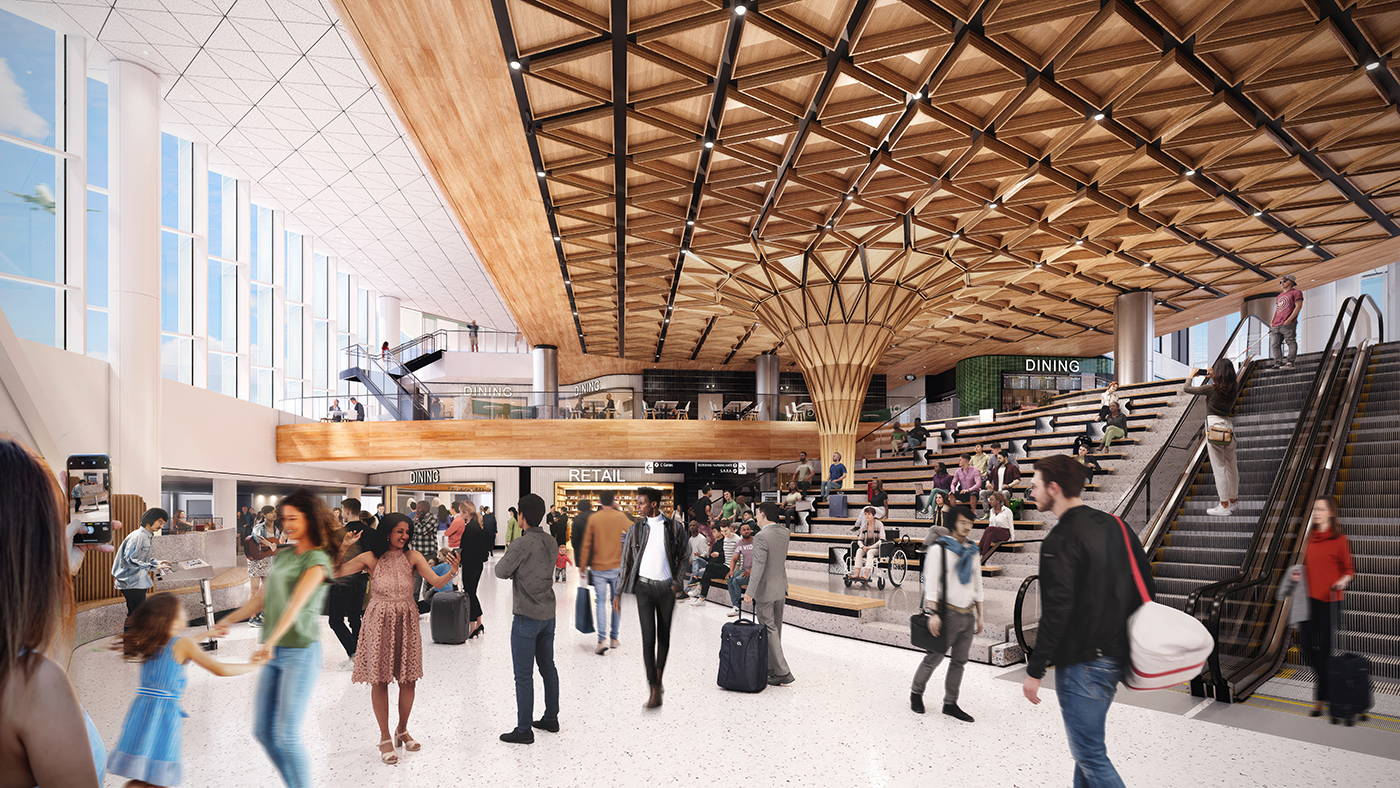
From the start, the design team of Miller Hull and Woods Bagot emphasized the importance of circulation, proposing to route passengers through the heart of the planned dining and retail hub to establish an active marketplace within a daylit atrium.
The project’s concept of “Bringing In, Seeing Out” fosters a connection to the Pacific Northwest through its materiality, framed sightlines to the outdoors, public art, and climate-conscious design. The concourse interior evokes the textures and energy of the region’s renowned artisanal markets, anchored by a central marketplace offering dining and retail options.
Inspired by local outdoor community markets, the atrium marketplace grew to include a busker area to expand the port’s popular live music program, a Grand Stair that provides a space for viewing and a clear connection to mezzanine-level dining venues, retail kiosks to support local merchant start-ups, and a public outdoor lookout with views of the airfield and the Olympic mountains.
The team collaborated with the port’s Art Program to feature the work of over a dozen artists across multiple venues including; a 40-foot video display wall, a collection of art displays integrated into the Grand Stair seating area, feature art glass installations by Fumi Amano and Crystal Worl, and integrated artworks within the interfaith prayer and meditation room, sensory room, and nursing room.
Collaboration with Turner Construction identified several permit and bid package opportunities to initiate early relocation and demolition activities, update underground utilities, and release key material packages — such as structural steel for detailing and fabrication — ahead of the main construction effort.
As part of a series of biophilic strategies, early collaboration with ceiling fabricators and manufacturers helped identify approaches for the “Tree at C,” a centerpiece of the design featuring western hemlock panels that rise organically from the Grand Stair and branch into the feature ceiling spanning the Concourse and Mezzanine levels. Working closely with the port, the team coordinated with flooring manufacturers to develop terrazzo mixes for the flooring below, incorporating a variety of local stones to further strengthen the connection between the new building and its surrounding context.
“The C Concourse Expansion project will be more than just a transit hub — it will reflect the world it serves and the collaborative process behind it. Working closely with the port from concept through construction, we’ve experienced a level of engagement that meaningfully informs every decision. Their consistent involvement, from technical guidance to broader design discussions, fosters a true partnership,” said Woods Bagot Principal Katy Mercer. “Together, we’re creating spaces that embrace the diverse backgrounds of all passengers — an authentic, shared vision where every traveler finds a sense of belonging, and every corner tells the story of the place it represents.”
Rich Whealan, principal at The Miller Hull Partnership, said the project also had many sustainability firsts.
“The port’s first implementation of their Sustainable Evaluation Framework process resulted in other firsts for SEA, including the first photo-voltaic panel installation with a 500 kW array that will product 12% of the project’s annual energy, the first all-electrical project, including air-source heat pumps for space heating and hot water systems, the first public outdoor space on the airside, and the first project at SEA to target LEED Gold certification,” Whealan said.
The expansion is leading the way in sustainability. Being the first project to use the port’s new Sustainability Evaluation Framework means every decision, big or small, takes into account the environment, the community and the local economy. By weaving these values into each step of planning and design, the team is making sure this project does more than just build; it’s about making a real, lasting difference for people and the planet.
SEA wants to be the greenest and most energy-efficient port in North America, and this project is a big step toward achieving that. The expansion brings in creative solutions, like heating and cooking systems that don’t rely on fossil fuels, solar panels on the roof to provide renewable energy, and smart windows that tint automatically to keep things cool. Water-saving fixtures reduce unnecessary water use, while new dishwashing and food-donation systems minimize landfill waste and support local food banks.
What started as a goal for LEED Silver certification quickly grew into an ambition for LEED Gold, showing just how serious the port is about building green and thinking ahead.
“The Sustainability Evaluation Framework is essential for the port. It’s a powerful tool to embed sustainable design and equity principles into the port’s capital construction projects,” the port’s Sustainability Communications and Reporting Program Manager Mallory Hauser said. “This framework is what allowed us to design the new C Concourse Expansion at SEA, which is our greenest building to date, by successfully prioritizing climate consciousness hand-in-hand with passenger comfort.”
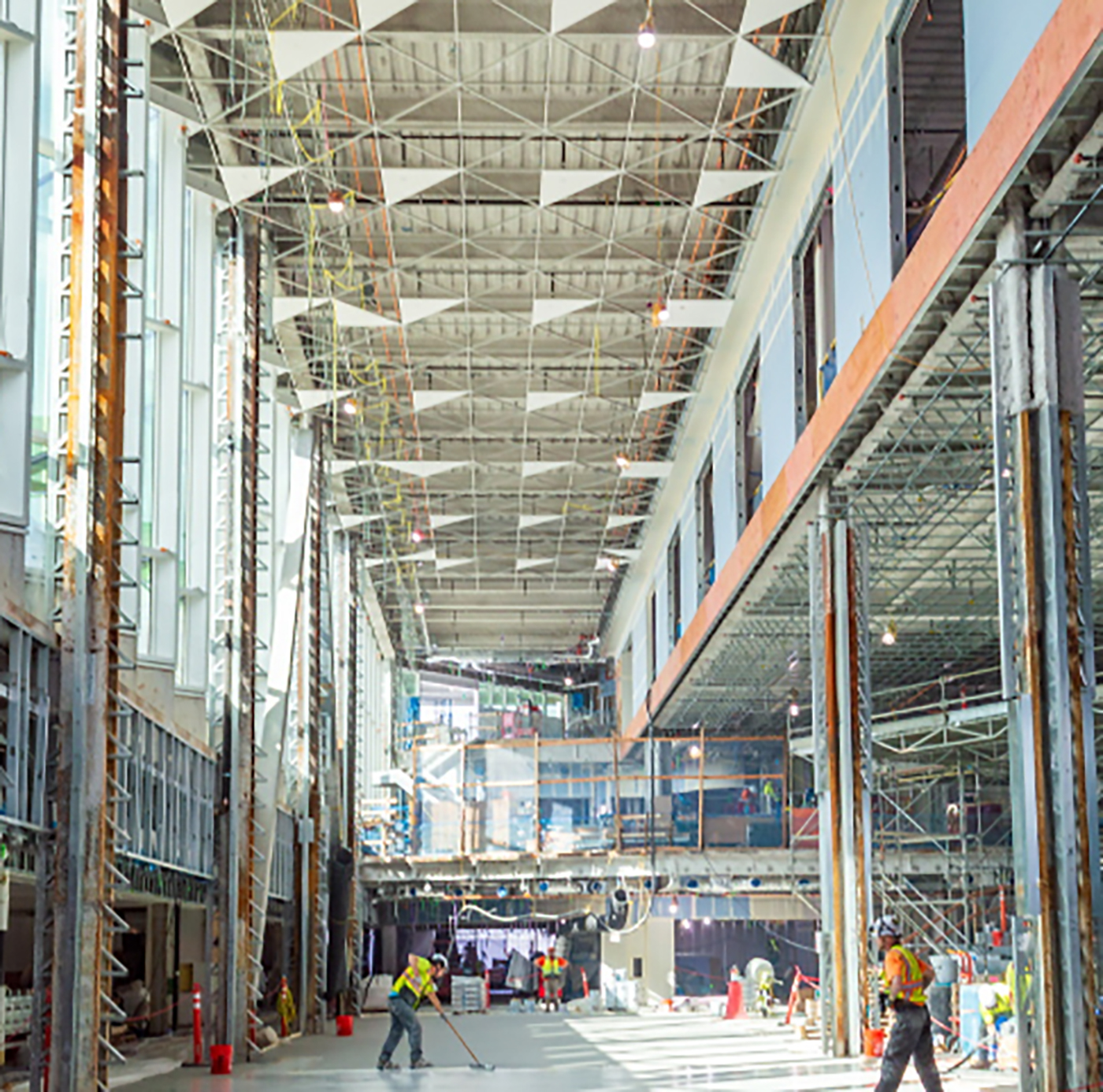
Delivering the expansion is a true team effort that requires thoughtful planning, problem-solving, and constant communication. Constructing a four-story addition in the center of one of the country’s busiest airports meant Turner and our trade partners had to keep work advancing while thousands of travelers, dozens of airlines and retail vendors, and essential airport operations continued uninterrupted. To achieve this, Turner developed a highly coordinated approach that allowed construction activity to progress without any unplanned impacts to daily airport operations.
The team worked closely with the port, TSA, retail and dining vendors, and airline partners to adjust access routes, schedule work around peak travel periods, and manage complex airside logistics, including constructing a tower crane at SEA for the first time in decades. Just-in-time deliveries, strategic after-hours work, and the use of prefabrication reduced congestion in the terminal and kept the building process moving safely and efficiently.
Safety remained the constant foundation of every decision. Working inside an active airport terminal required enhanced protocols and continuous collaboration and communication with airport stakeholders. Turner’s workforce embraced the unique environment, creating a space where both workers and travelers could move confidently throughout the building. The project also reflects Turner’s commitment to the community. Local businesses, diverse subcontractors, and apprenticeship programs played key roles in delivering the concourse, creating opportunities for firms across the local region and contributing to a stronger, more inclusive industry.
“It has been an incredible opportunity to work collaboratively with our trade partners, the port, and design team, to leverage the knowledge, experience, and innovation that each brings to the construction of the C Concourse Expansion,” said Kris Stoyak, Senior Project Manager with Turner. “Turner is proud to be part of the team that delivered such a remarkable building, which is certain to provide an exceptional travel experience for millions of people.”
The opening of the C Concourse Expansion marks a major milestone for Seattle-Tacoma International Airport and a meaningful step forward in how travelers experience SEA. The new concourse offers a brighter, more spacious environment, with expanded amenities and a public outdoor lookout that connects passengers to the beauty of the Northwest. The design creates a true sense of place, bringing in natural light, local materials, and welcoming public art that reflects the region’s character.
Beyond the enhanced experience for travelers today, the project is a key part of SEA’s larger capital improvement program to prepare the airport for the future. With upgrades happening across the airport from modernized terminals to more efficient infrastructure, the port is investing in long-term capacity, sustainability, and community-focused growth.
“The C Concourse Expansion represents more than a new building for the Port of Seattle, it demonstrates what is possible when innovation, environmental leadership, and partnership come together,” said SEA Airport spokesperson Perry Cooper. “The port is proud to deliver a transformative space that elevates comfort and connection while advancing its climate goals.”
Kris Stoyak is a senior project manager with Turner Construction Company in Seattle, with nearly 20 years of construction experience.
Other Stories:


