 |
Subscribe / Renew |
 |
Contact Us |
| ► Subscribe to our Free Weekly Newsletter | |

Construction Bids
| home | Welcome, sign in or click here to subscribe. | login |


 print print  email to a friend email to a friend  reprints add to mydjc reprints add to mydjc |  |
 |
December 16, 2025

Wagner
|

Keim
|
For much of the past century, airports throughout the U.S. were built for a very different era of air travel. Electrical systems were sized for incandescent lighting and basic mechanical loads, while data networks were often an afterthought. Today, many of these facilities, including Seattle-Tacoma International Airport (SEA), operate with electrical, technology, and communications infrastructure that can be half a century old, well beyond its intended service life and inadequate for modern air travel.
Rather than waiting for failures, many airport owners are taking a strategic, long-range approach. They are investing in programs that rebuild electrical and digital backbones, improve resiliency, and create capacity for emerging technologies so their facilities are prepared to serve communities for the next 50 years and beyond.
At SEA, that modernization journey has been underway for well over a decade. One of the most critical early steps came in 2010, when the Port of Seattle deployed nine 2-megawatt generators to provide emergency backup power in response to potential flood risks to the regional utility. That interim system was later replaced through a design-build project that added 10 3-megawatt generators as part of a long-term resiliency plan. Mortenson was selected to deliver that project and brought the new generation system online in 2018. Since then, the Port of Seattle has had a robust safety net in place to mitigate any potential impacts to the utility grid.
Building on that work, Mortenson has continued to pursue highly technical infrastructure projects at SEA, focusing on the critical behind-the-scenes systems that keep the airport running. Today, that targeted effort includes the Main Terminal Low-Voltage (MTLV) and Concourse Low-Voltage (CLV) GC/CM projects, the Telecom Meet Me Room (MMR), and critical gate and concourse upgrades that strengthen the airport’s core systems while respecting the realities of operating one of the nation’s busiest airports.
Airports like SEA are no longer simply public buildings with gates. They function as complex, interconnected systems. Electrical distribution, low-voltage technology, airline equipment, and airside infrastructure must all work together as a single ecosystem. From Mortenson’s perspective, and in collaboration with the Port of Seattle, futureproofing an airport means:
• Upgrading the electrical and digital backbone, especially low-voltage systems, so emerging technologies such as biometrics, automated baggage handling, digital wayfinding, and electrified ground equipment can be integrated seamlessly
• Planning with a 50-year horizon, not simply meeting today’s minimum code requirements
• Leveraging GC/CM and other collaborative delivery models to minimize risk, manage cost escalation, and protect 24/7 operations
• Executing highly sequenced, live-environment phasing that replaces mission-critical systems while keeping passengers moving safely
_big.jpg "click to enlarge")
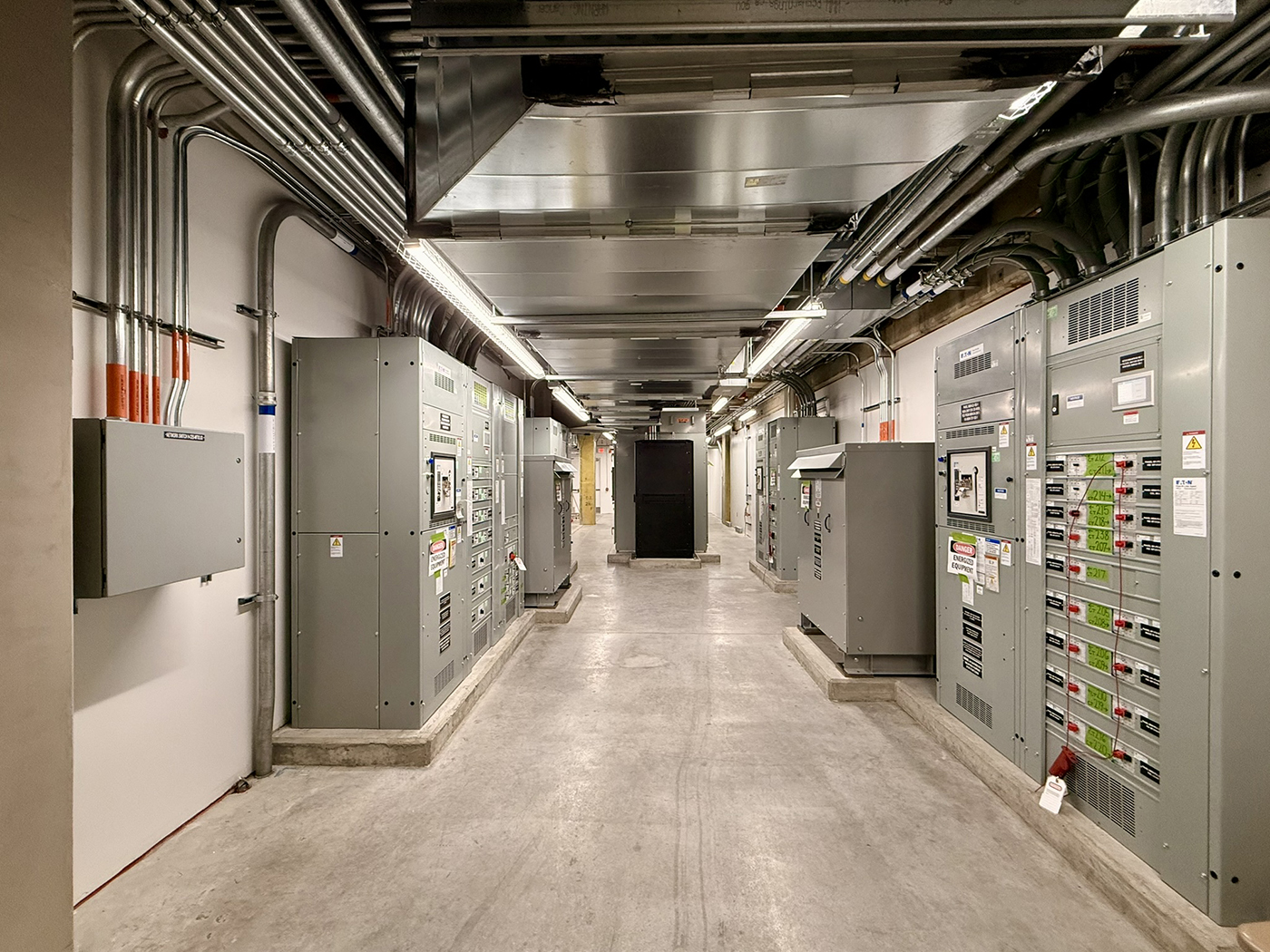
The Main Terminal Low-Voltage (MTLV) GC/CM program is a cornerstone of the current modernization strategy. Many of the existing panels and feeders were at or beyond their intended life, with some equipment no longer supported by manufacturers. Over the decades, incremental additions for new security, concessions, and technology demands had created a patchwork system that was increasingly difficult to maintain and lacked the clear capacity to handle future loads.
Through the GC/CM preconstruction process, the team conducted in-depth assessments and field investigations, developed a multi-year phasing plan, and coordinated outages with airport stakeholders months in advance. Shutdowns were confined to carefully scheduled overnight windows, often between midnight and 4 a.m., with contingency plans ready if work needed to be extended or rescheduled. The result is a safer, more resilient low-voltage backbone for the main terminal that can support future growth, provide clearer capacity paths for upgrades, and simplify long-term maintenance.

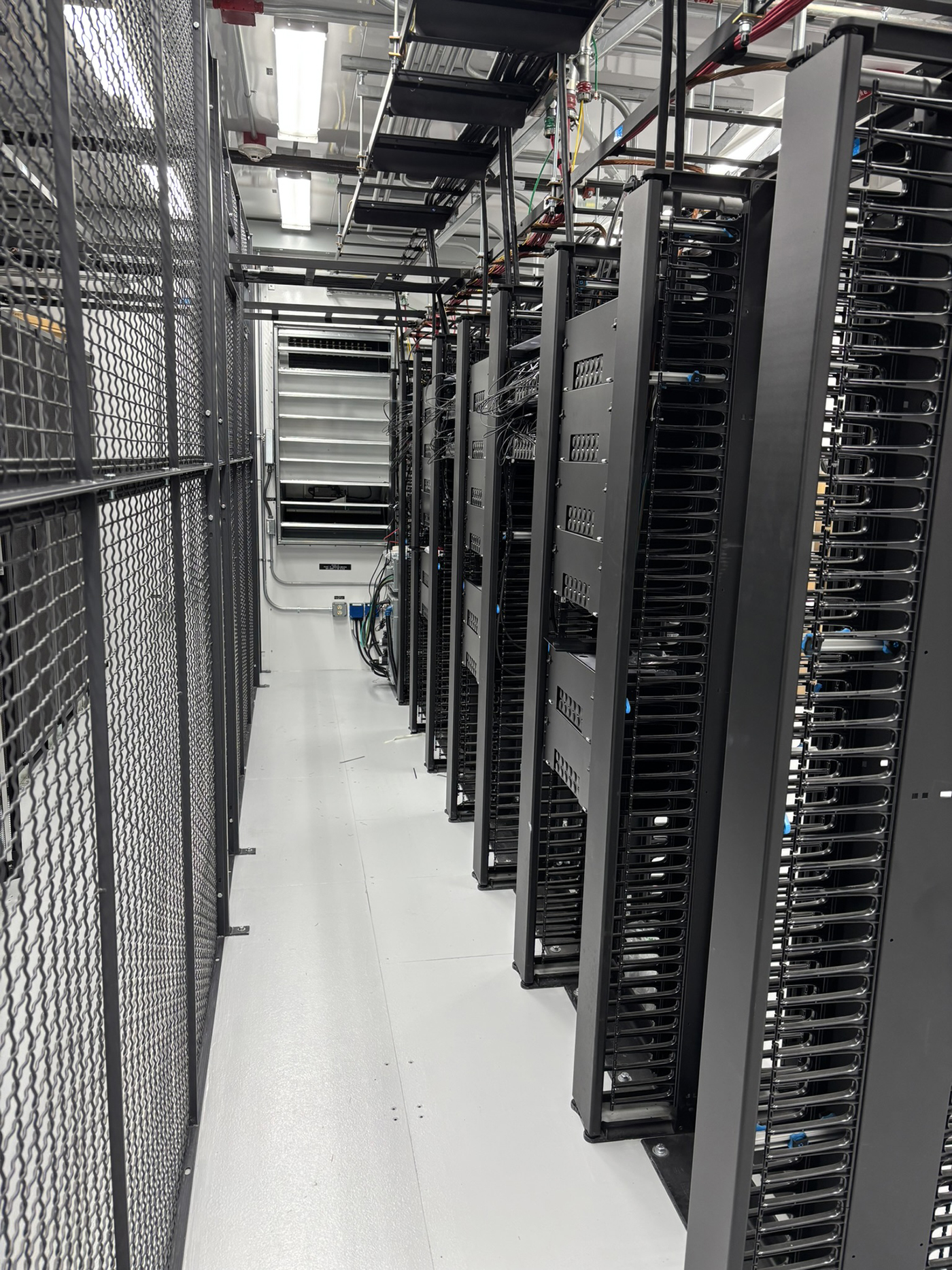
As airports expand their digital operations, the reliability of their network infrastructure becomes just as important as their electrical systems. SEA’s new Telecom Meet Me Room (MMR) reflects that shift because it consolidates and strengthens the airport’s core network and carrier connections. This design-build project established a secure, centralized hub for telecom and IT systems designed to support redundant fiber routes, diverse carrier paths, and future growth. It also enhances cyber and physical security for critical network assets and simplifies how future projects plug into SEA’s digital backbone.
Future-proofing features for the MMR include upgrading from copper to high-speed fiber, creating dual redundant data pathways to each main distribution point, expanding capacity for new service providers, and aligning with SEA’s Master Plan to support long-term digital transformation. Network cutovers are planned as carefully as electrical shutdowns, with detailed rollback plans when needed.
Renewal of electrical infrastructure in Concourses B, C, and D, delivered under the Concourse Low-Voltage (CLV) GC/CM program, extends this future-proofing strategy gate by gate. The work replaces aging low-voltage distribution equipment with modern switchboards, panels, and feeders sized for future loads, and coordinates closely with new 400-hertz gate power systems to support current and next-generation aircraft operations.
Panel-by-panel investigations, tracing decades of legacy circuits, were required just to understand existing conditions and design accurate, constructible solutions. In many cases, the team uncovered undocumented connections and outdated equipment that had to be addressed before new systems could be safely energized. More than 200 strategically phased electrical shutdowns, often between midnight and 4 a.m., and coordinated with airlines, building tenants, and airport operations, have been used to avoid operational disruption while the work proceeds.
Mortenson and the Port of Seattle share a passion for strengthening SEA’s critical infrastructure and keeping the airport operating safely for the traveling public. Rather than treating each scope as a one-off project, Mortenson approaches this work as part of a long-term modernization journey led by the port.
The focus is on sequencing construction logically, coordinating multiple programs with port stakeholders and trade partners, and using collaborative delivery models such as design-build and GC/CM. This approach helps manage risk while tackling some of the airport’s most technically challenging infrastructure.
As aging domestic airports face rising passenger volumes, climate pressures, and rapidly evolving technology, SEA’s approach offers a compelling model. Strategic, system-focused upgrades, planned and delivered collaboratively, can extend the life of existing facilities while improving safety, reliability and operational flexibility. SEA’s modernization strategy is not about a single project or ribbon-cutting moment. Rather, it is about patiently rebuilding the airport’s critical infrastructure, system by system and concourse by concourse, so it can reliably serve the region for decades to come.
Tyson Wagner is a MEP executive in Mortenson’s Seattle office and a key leader for aviation infrastructure projects at Seattle-Tacoma International Airport, leading complex systems work, and related resiliency and airside upgrades. Danny Keim is a project executive in Mortenson’s Seattle office and a key leader for aviation infrastructure projects at Seattle-Tacoma International Airport, with recent work focused on concourse upgrades, critical systems modernization and long-term resiliency planning.
Other Stories:


