 |
Subscribe / Renew |
 |
Contact Us |
| ► Subscribe to our Free Weekly Newsletter | |

Construction Bids
| home | Welcome, sign in or click here to subscribe. | login |


 print print  email to a friend email to a friend  reprints add to mydjc reprints add to mydjc |  |

October 20, 1999

By SAM BENNETT
Journal Staff reporter
|
What does your firm do?
We provide civil engineering and landscape architecture services, but we like to think that we provide them in a truly integrated way. They're similar disciplines. We feel we have an ability to address the technical issues from a perspective that's more grounded in ecology and that we're able to solve problems in a more creative and more complete way.
What have you been doing lately?
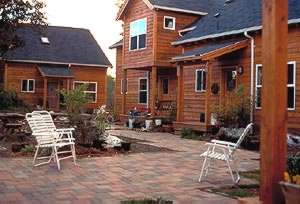
We have a project under construction now, CIEL Co-housing in West Seattle, in which we acted as the lead consultant through the master planning phase, but with very close communication and collaboration with the client and the architect in a very open, consensus-driven design process.
|
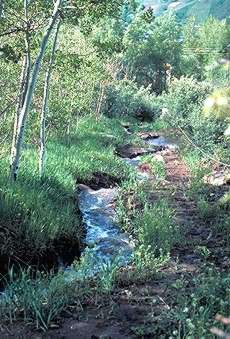
Another project is a single family residence in Bellingham in which we're working very closely with a visionary client to work with a natural systems, with ways to use storm water as both an aesthetic and natural systems resource.
How has eco-friendly design evolved during your career?
When I was going through school in the late '70s there was a lot of interest in appropriate technology. Architects were very interested in solar design. They were very interested in earth sheltered housing. It seemed that the emphasis there was more focused on techniques that addressed energy consumption. It's a little different than the approach now. Today there's more of an awareness of natural systems, the way things are interrelated on a wider, broader systemic basis. Now it's a more ecological focus. We're looking at what are the impacts that storm water has on salmon, and fish migration. We're seeing that the things we do on an individual property have an impact on that, so we're trying to find ways to minimize the impact. Stormwater, vegetation, soil, the way that we've changed those has a profound impact on what happens off the property.
How easily can you sell developers on sustainable designs?
|
How well can sustainable designs be implemented in city settings?
Within the city there are things we can do. It may not have the same naturalistic expression, but it's critical to treat storm water runoff in the city because we have the concentration of oils and we have the heavy metals and we have a lot of use of herbicides and pesticides on the lawns. In a more natural setting we can use constructive wetlands, but in other settings we might use a more technical treatment media to address those problems. Any small gain you can make, even in a very heavily urbanized area, any vegetation you can introduce has value.
Do you see this as a passing trend or something more permanent?
We've got some really strong, good architecture firms interested in this and I'm really excited to see what comes out of their intrigue and embrace of this philosophy. I think it's going to be enduring.
What brought you into the field?
I started with an interest in architecture. I then became interested in landscape and went into landscape architecture. What I realized is that throughout my career, because civil engineering and landscape architecture are so closely related, much of what I would be able to do as a landscape architect would be influenced by civil engineers. So I went into civil engineering with the objective of becoming a better landscape architect.
Previous columns:


