|
Subscribe / Renew |
 |
Contact Us |
| â–º Subscribe to our Free Weekly Newsletter | |

Construction Bids
| home | Welcome, sign in or click here to subscribe. | login |


| Greenfire May 31, 2013 |
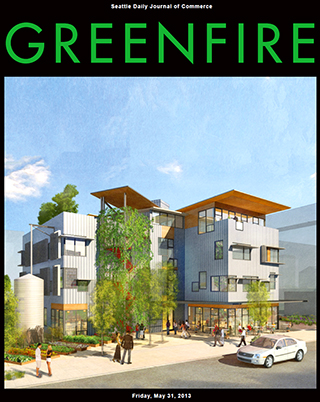
Green campus fires on all sustainable cylinders
Greenfire ready to generate environmental dividends
Energy use? Green vision carries over to the construction process
Sharing space with nature in the city
Urban agriculture blossoms in Ballard
Are you ready for some urban farming?
A Look Around
|
||
Name: Location: Size: Opened: Owner/principal: Project manager: Seneca Group Architect: Johnston Architects General contractor: Interior design: Landscape architect: Mechanical design-build: PSF Mechanical MEP design development: WSP Electric design-build: Merit Electric Civil engineer: 2020 Engineering Structural engineer: DCI Engineers Property manager: Blanton Turner
| ||
|
Energy Conservation
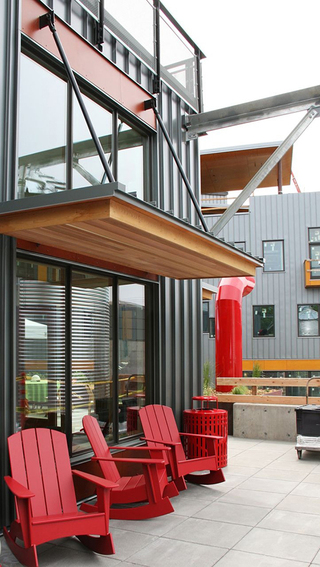
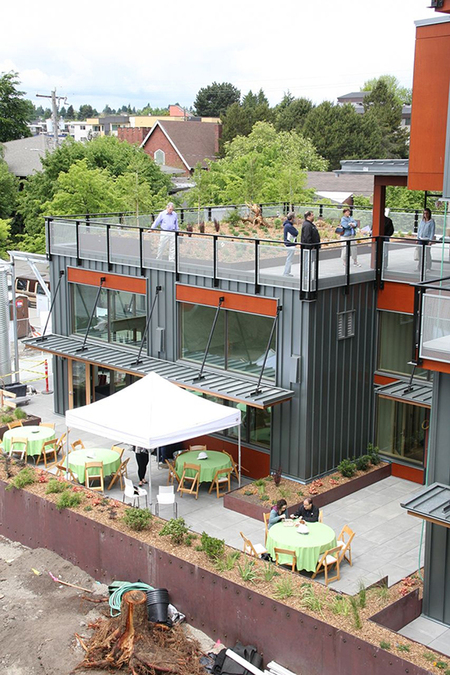
The energy benchmark for Greenfire is the Architecture 2030 Challenge. This means that all comparisons are against 2030 goals, not today’s standards. Office • Designed to use 70 percent less energy per square foot than the average office building from the 2030 Challenge benchmark • Energy savings supports LEED platinum certification and the 2030 Challenge • Hybrid natural ventilation/cooling of office/retail building minimizes use of fans and mechanical cooling • Integrated ground source heat pump optimizes energy production, storage and sharing between the varying building uses • Lighting concept exceeds Seattle Energy Code by as much as 35 percent • 75 percent of heat is recovered from exhausted air Apartments • Designed to use at least 40 percent less energy per square foot than the average multifamily building from the 2030 Challenge benchmark • Seeking LEED gold certification • Integrated ground source heat pump optimizes energy production, storage and sharing between the varying building uses • Lighting concept exceeds Seattle Energy Code by as much as 35 percent • 75 percent of heat is recovered from exhausted air Solar • Solar hot water system produces 70 percent of domestic hot water in the apartment building • A 10-kilowatt solar PV system reduces purchased electrical energy by as much as 5 percent annually Water • “Greenfactor” score of 6.12, twice the city-required minimum of 3.0 • Largest project in the city that uses rainwater as its sole source of irrigation • All irrigation needs met by collected rainwater • Rainwater harvested saves 70,000 gallons of city drinking water per year • 32,000 gallons of rainwater storage • 43 percent of the total site area is landscaped • 46 percent of the landscaped area is planted with native plants • 95 percent of the landscaped area is planted with native and/or drought-tolerant plants • 16 percent of the landscaped area is set aside for urban agriculture • 8,000 square feet of planting is considered high habitat value • 61 trees will be planted • 150 different plant species will be planted • 55 different plant species on the roofs • Chlorine-free rainwater used for organic food gardens Construction recycling • 99 percent diversion rate Restoring nature Just over half of the rainwater that falls on the site is used by the landscapes. This is close to the amount of rainwater that would have been used by the old growth forest trees that were once on the site. Typical developments have more than 90 percent water runoff due to impervious surfaces. |
||
|
Special section team |
||
|
Advertisers: |
||