 |
Subscribe / Renew |
 |
Contact Us |
| ► Subscribe to our Free Weekly Newsletter | |

Construction Bids
| home | Welcome, sign in or click here to subscribe. | login |


 print print  email to a friend email to a friend  reprints add to mydjc reprints add to mydjc |  |
 |
February 10, 2025
HDR
Fry Creek Pump Station
City of Aberdeen
Located in the 2,500-square-mile Chehalis Basin, Grays Harbor has faced 14 federally declared flood disasters over the past 50 years, primarily affecting the cities of Aberdeen and Hoquiam. These floods have caused significant damage to homes, businesses and infrastructure, impacting 25,000 residents and assets valued at over $1 billion. Existing flood-control systems in these cities are outdated and inadequate for handling the increasing intensity of storms and high tides.
Fry Creek, Aberdeen’s largest drainage basin, serves as the outfall for both Aberdeen and Hoquiam’s stormwater systems, and is tidally influenced by Grays Harbor.
The original Fry Creek Pump Station, built in 1977, was designed to pump excess water from the creek during high tide events. However, over time, the channel became obstructed, and developed areas around the cities exacerbated flooding, overwhelming the pump station and causing significant damage to homes, businesses, and critical facilities like the Grays Harbor Public Utility District and Pacific Care and Rehabilitation Center.
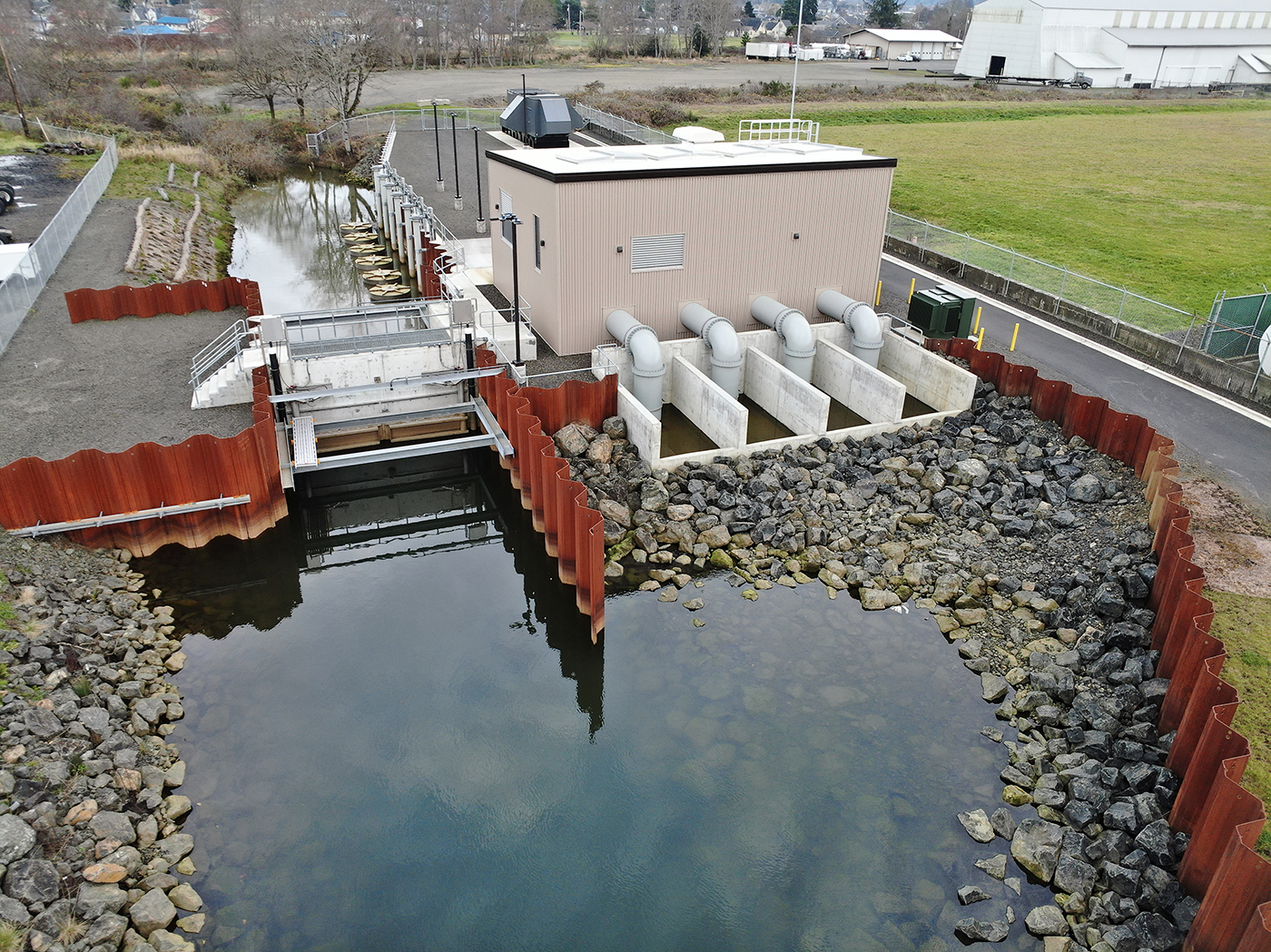
In response to a severe storm in 2015, Aberdeen and Hoquiam secured over $130 million in state, federal and local funding to support three major flood-control projects: the North Shore Levee, North Shore Levee West Segment and Fry Creek Pump Station. The $22 million, state-of-the-art Fry Creek Pump Station has a capacity of 300 cubic feet per second, and uses four vertical propeller pumps to separate tidal influences from the basin.
The station includes tide gates and fish barrel intake screens to protect migratory coho salmon and resident cutthroat trout. It is designed to handle peak flows and future sea-level rise.
With advanced features like variable-frequency drives for energy efficiency, the Fry Creek Pump Station is one of the largest in western Washington. Completed on schedule and on budget, it provides significant flood protection for the region. The project will work in conjunction with the North Shore Levee to remove over 5,000 properties from the FEMA-mapped flood zone within the next five years.
Other Stories:


