 |
Subscribe / Renew |
 |
Contact Us |
| ► Subscribe to our Free Weekly Newsletter | |

Construction Bids
| home | Welcome, sign in or click here to subscribe. | login |


 print print  email to a friend email to a friend  reprints add to mydjc reprints add to mydjc |  |
 |
February 10, 2025
Shannon & Wilson
Glennallen Response Base Hill Slope Stabilization
Alyeska Pipeline Service Company
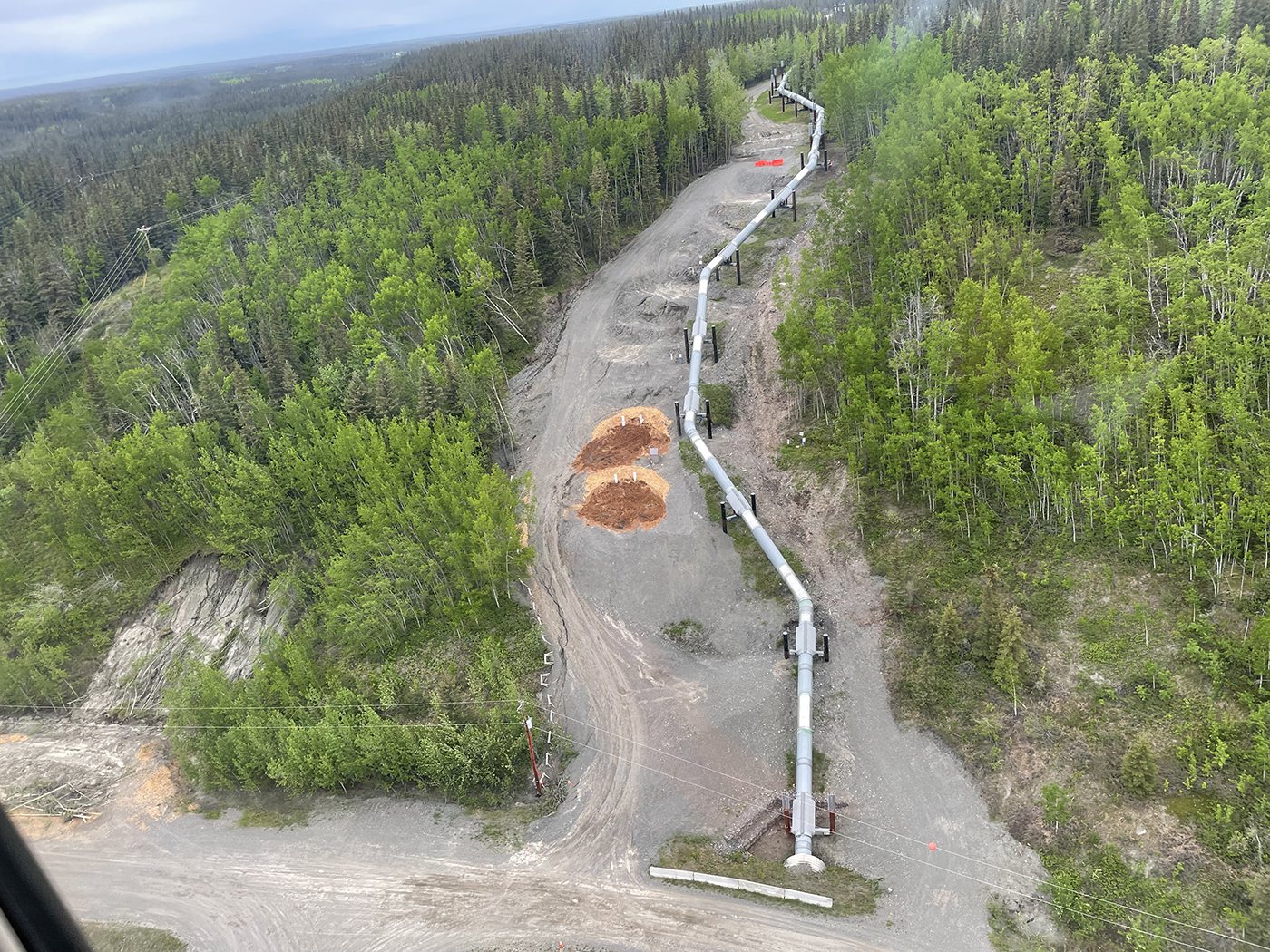
The Glenallen Response Base (GRB) Hill Stabilization project addressed critical landslide risks threatening both the Trans Alaska Pipeline System (TAPS) and the Glennallen Response Base. In collaboration with the Alyeska Pipeline Service Company (APSC), Shannon & Wilson designed and implemented a slope stabilization system using tieback anchors and environmentally friendly woodchip insulation to ensure the long-term safety of TAPS infrastructure.
Shannon & Wilson employed advanced geotechnical design methods, conducting long-term tieback anchor load tests in glaciolacustrine clay, a material prone to creep. These tests revealed much higher bond strength values than expected, which led to the development of a 3D geologic model using LeapFrog Geo. This model optimized the placement of anchors and reduced project complexity. By targeting specific soil layers with high bond strength, the team was able to cut the number of required tieback anchors by over 50%, improving design efficiency.
The project’s smart use of data resulted in significant cost savings. By reducing the number of anchors, construction time was cut from two summers to just one. This, along with material, labor, and mobilization savings, reduced costs by more than $3 million. Additionally, environmentally sustainable practices were incorporated by using woodchip insulation derived from wood waste instead of synthetic materials. The woodchip insulation also enhanced erosion control, protecting nearby streams from sedimentation.
The GRB Hill Stabilization project successfully reduced landslide risks to the lowest level for APSC, and the stabilized slope will require less maintenance and monitoring in the future. The project also produced valuable data on glaciolacustrine clay bond strength and creep behavior, contributing to future geotechnical research and slope stabilization projects. The project’s success exemplifies how advanced engineering and sustainable practices can work together to ensure long-term infrastructure safety and cost efficiency.
Other Stories:


