 |
Subscribe / Renew |
 |
Contact Us |
| ► Subscribe to our Free Weekly Newsletter | |

Construction Bids
| home | Welcome, sign in or click here to subscribe. | login |


 print print  email to a friend email to a friend  reprints add to mydjc reprints add to mydjc |  |
 |
February 10, 2025
WSP USA
East Marginal Way Water Design
Client: Seattle Department of Transportation
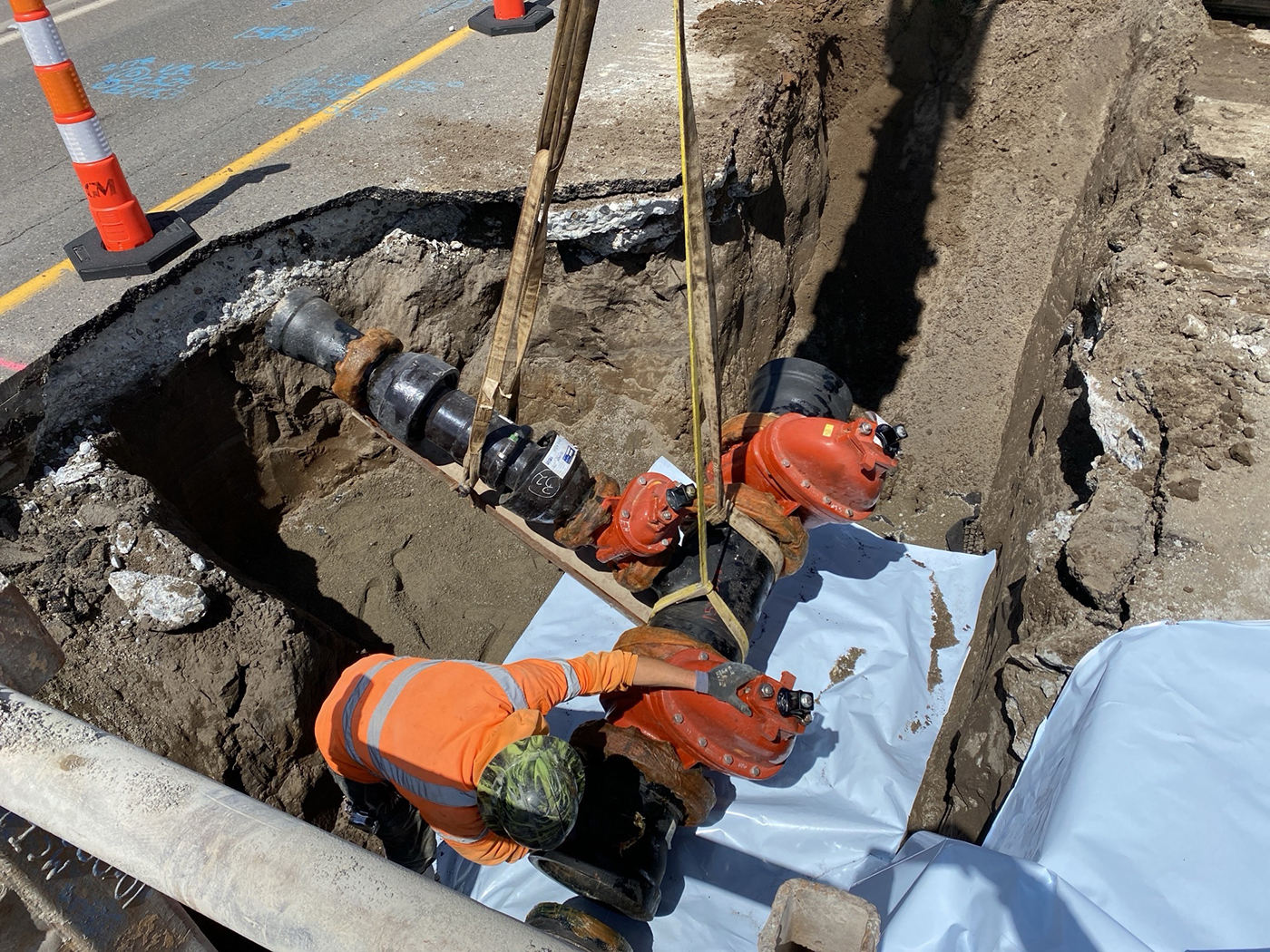
The East Marginal Way Corridor Design Improvements, a multidisciplinary project led by the Seattle Department of Transportation and Seattle Public Utilities, focused on enhancing infrastructure resilience. The project aimed to protect aging water utilities from seismic events while improving multimodal transit safety. Key components included replacing over a mile of 12-inch water main, laterals and hydrants with hazard-resistant ductile iron pipe (HRDIP), marking a regional first for replacing conventional cast iron with HRDIP as part of Seattle Public Utilities’ seismic resiliency efforts.
The new water main boosts system resiliency, ensuring uninterrupted water and fire flow to critical port terminals, including the Coast Guard, following a seismic event. A major challenge was designing the system to withstand seismic loads due to complex site geology. The existing water main sat above 30 feet of artificial fill, which would experience up to 32 inches of total settlement and 16 inches of differential settlement during a Cascadia earthquake. Additionally, the project site had mildly corrosive soil, hazardous materials and contaminated groundwater, complicating utility installation.
To address these challenges, the team designed HRDIP with joints capable of extending more than 16 inches, ensuring the water main remained functional after liquefaction. The team also used biaxial geogrids and geotextile linings to improve soil suitability for pipe installation. Engineering solutions balanced the need for strength to handle water pressures with flexibility to move with the surrounding ground during earthquakes. Custom fittings, such as bell-to-flange adapters, telescoping joints, and specially calculated thrust blocks, were used to accommodate ground movements.
The project, federally funded and compliant with Build America, Buy America requirements, was completed four months ahead of schedule. It set a precedent for future seismic upgrades, ensuring critical facilities will have reliable water during major earthquakes.
Other Stories:


