 |
Subscribe / Renew |
 |
Contact Us |
| ► Subscribe to our Free Weekly Newsletter | |

Construction Bids
| home | Welcome, sign in or click here to subscribe. | login |


 print print  email to a friend email to a friend  reprints add to mydjc reprints add to mydjc |  |
 |
November 21, 2024
GABRIELLE GLASS

Glass
|
In order to increase the housing supply and comply with regulations from the state, Seattle is undergoing a Comprehensive Plan process, where nearly every corner of our city will be upzoned—it has the potential to increase density across the city.
This could bring about significant changes not only for residents but also for developers and architects. Many arterial streets in the current zoning plan will receive an upzone to Lowrise 3 (LR3). This is designed to open up new affordable housing opportunities.
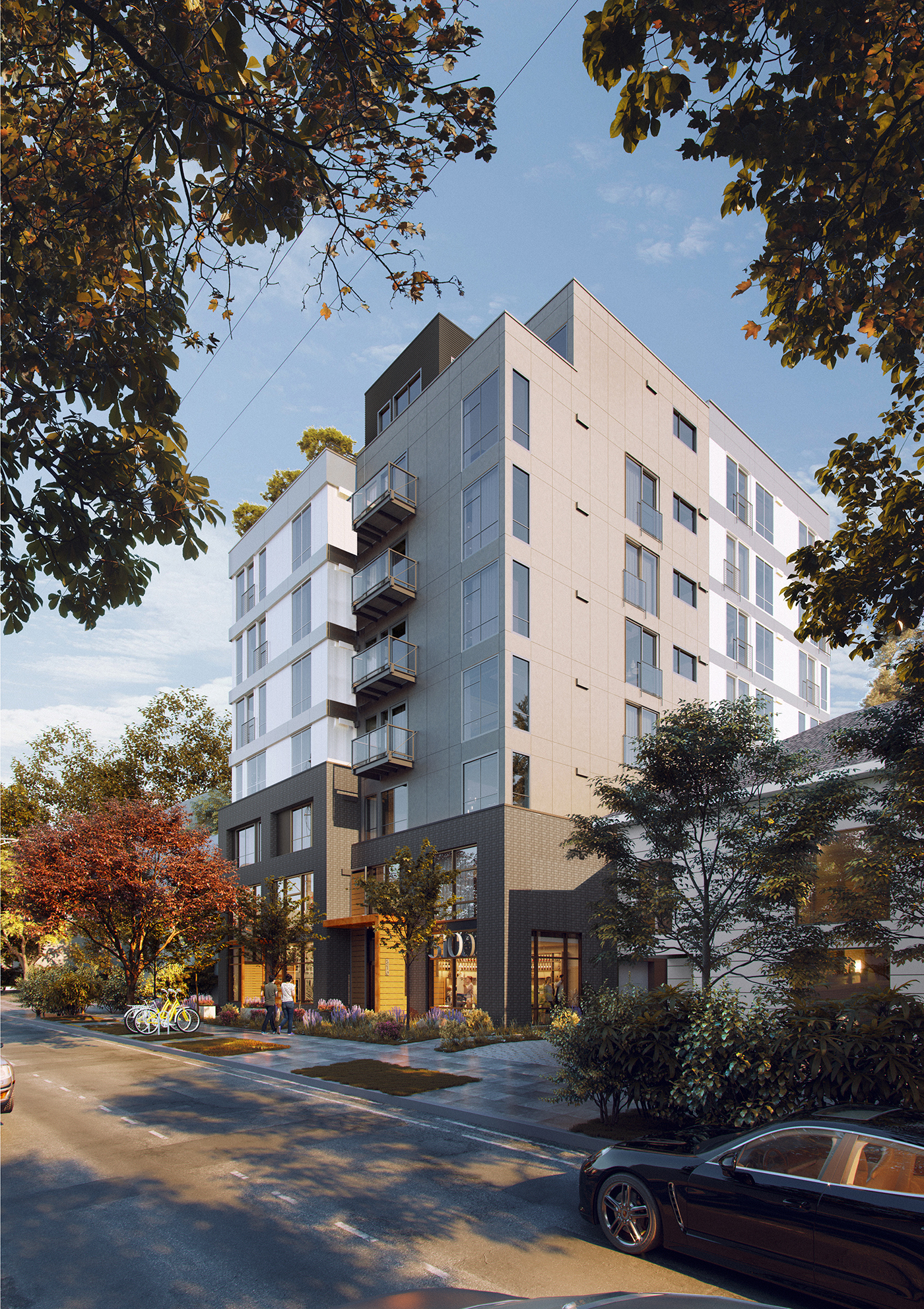
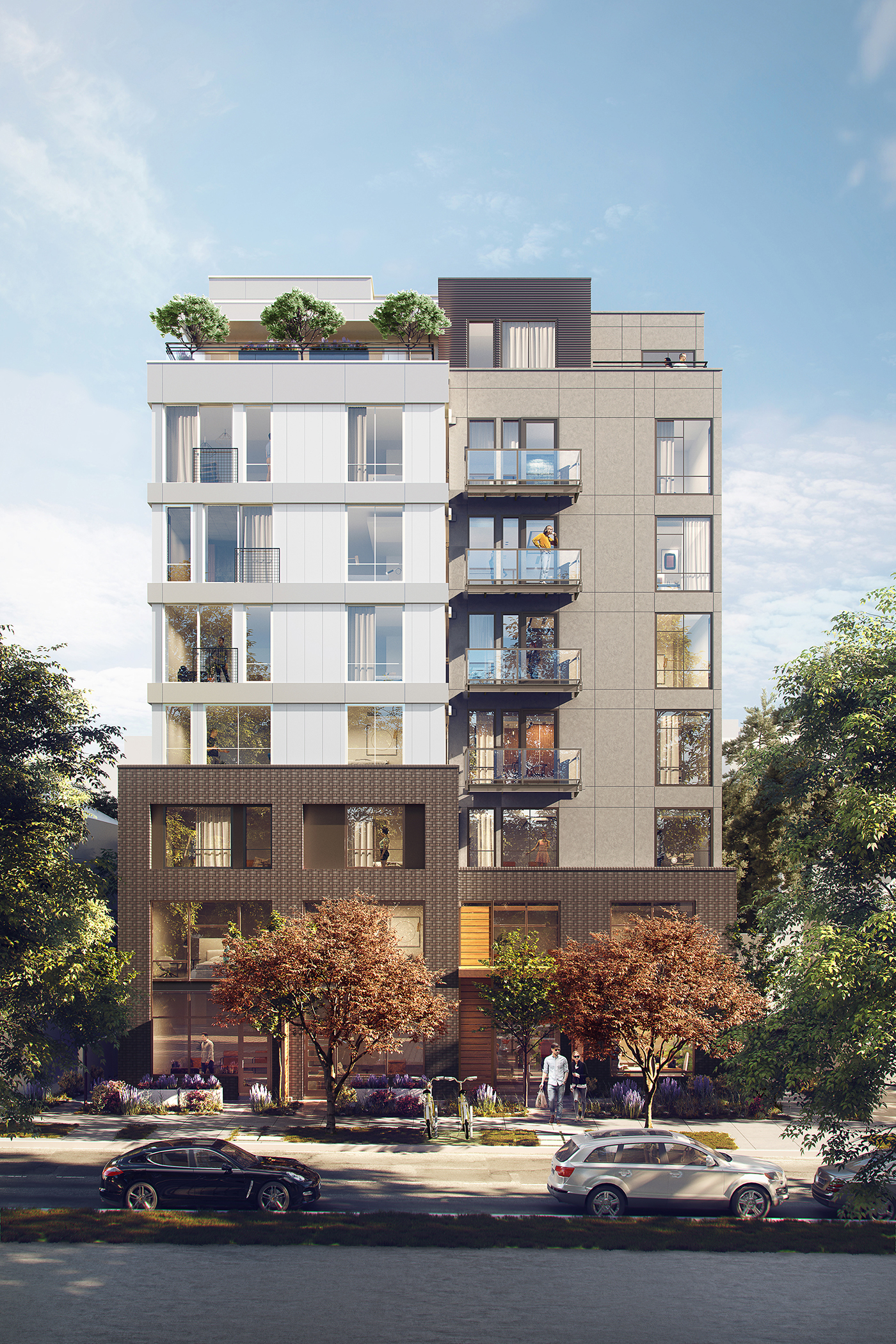
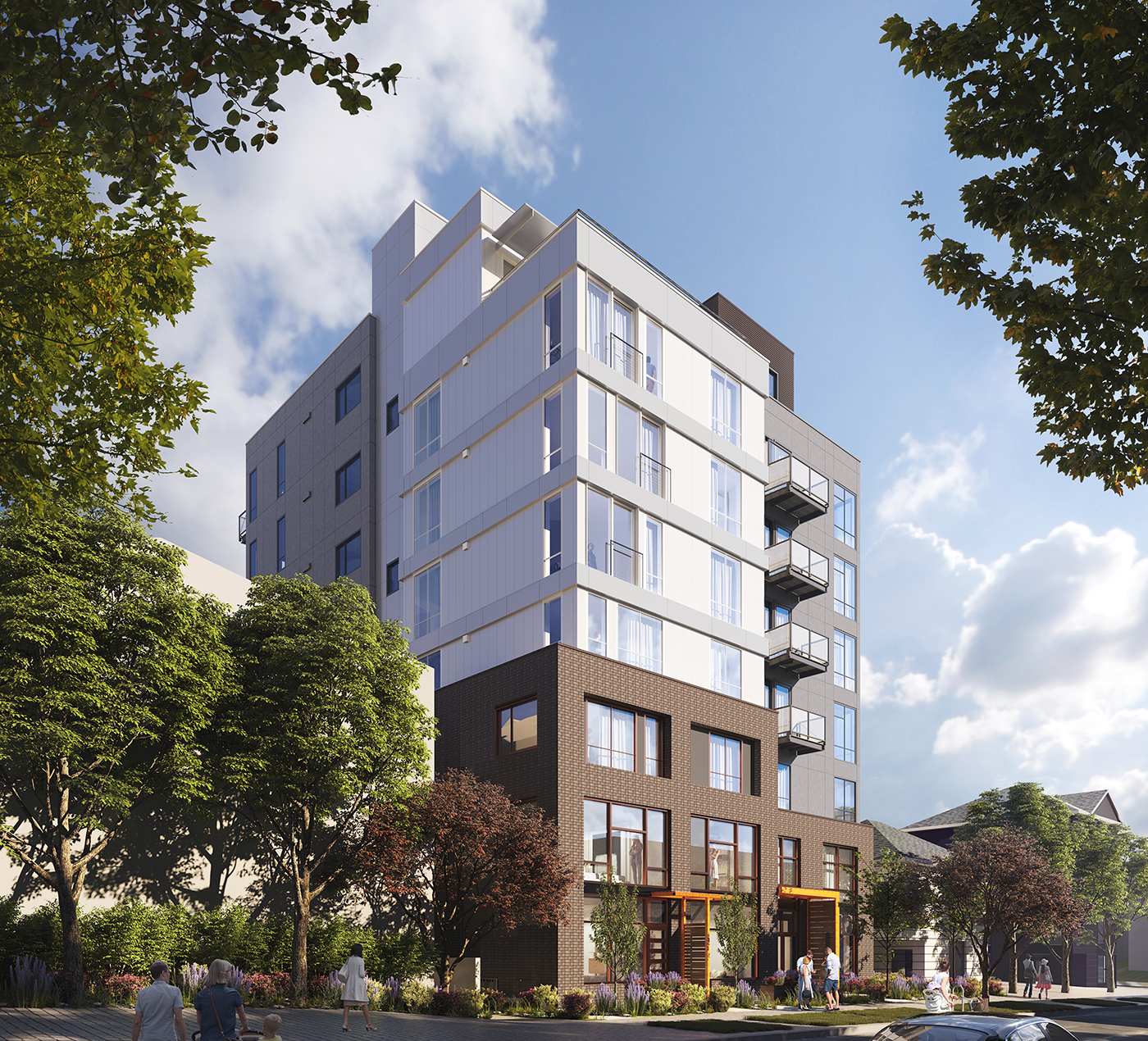
Architects can provide innovative approaches in smaller-scale and more affordably constructed projects. A prime example is a project I’m currently working on in the U-District. Originally focused on a Small Efficiency Dwelling Unit (SEDU), our client asked us to explore alternative cost-effective building types, including single-stair apartment buildings or a cluster of townhomes instead.
This article looks at how the proposed zoning adjustments, along with the benefits of small-scale projects and the design efficiency of single-stair buildings, can work together.
WHAT SEATTLE’S DRAFT UPZONES MEAN FOR SMALL SITES
Recently the city of Seattle released an update to the comprehensive plan. The draft zoning updates would upzone many arterial streets in Seattle to LR3 (Lowrise 3), which allows housing to be constructed up to five stories. Typically, these upzoned areas are narrow and often just one or two lots deep along arterial streets, presenting unique challenges and opportunities for development.
LR3 zoning allows for a mix of uses, including:
• Cottage housing developments
• Townhomes and rowhouses
• Apartments (including compact single-stair apartment buildings)
• Micro-apartments
SMALL-SCALE PROJECTS: A SMART SOLUTION
When working on smaller sites, architects can assist developers in choosing the most efficient and cost-effective design solutions for that site. The LR3 zone offers flexibility of project type, allowing a variety of project types to meet local demands. Each project type has its own benefits and considerations.
For our project in the U-District, we studied different options in order to provide our client with the best possible design to meet the needs of the community and the constraints of the site. Below are some of the attributes of small-scale housing projects that lend them to being part of the solution to increasing the supply of affordable housing:
FEWER LOTS TO ASSEMBLE
The smaller footprint of small-scale projects requires assembling fewer parcels of land than is often required for larger high-density projects. In some dense urban neighborhoods, like Seattle’s U-District, housing demand is high while available land for development is limited.
Land assembly can be a complex and costly process, and small-scale projects, particularly those that can be built on one or two lots, avoid the difficulties of purchasing and assembling large parcels of land. This makes these projects more feasible for developers working with tighter budgets or faster timelines.
FLEXIBILITY IN USE
An architect can review the local zoning and building codes to see if there are options available to lower construction costs, like using a single exit stair.
One of the advantages of LR3 zoning is the variety of building types allowed, permitting developers and architects to decide which building type best suits the neighborhood’s market demands, the client’s budget and the site’s constraints. This flexibility allows developers to respond to changing housing needs while remaining cost-effective.
LOWER OVERALL COSTS
Due to their smaller overall size, smaller projects inherently require less capital than larger developments. Where land prices are high, as they are in urban areas, a smaller building footprint will lead to smaller land costs. The flexibility permitted by the zoning code allows developers to weigh the local demand with the current construction costs and provide an in-demand and cost-effective housing option.
POTENTIAL CHALLENGES
Smaller footprint projects do come with their own set of challenges as well. The same basic functions of a building, including accessibility, trash, bike storage and car parking are still present, but smaller sites allow less flexibility on how to address these functions. An architect can see if there are ways to reduce these requirements, like checking if a reduction in parking is permitted.
SINGLE-STAIR APARTMENT BUILDINGS FOR EFFICIENCY
As we explore different design options for our U-District project, the idea of a single-stair apartment building stands out.
The building code in Seattle is more permissive compared to other jurisdictions, which often limit single-stair buildings to a low number of stories. The city of Seattle permits a single exit from an apartment project that includes up to five stories of above grade residential units with up to four units per floor.
While there are restrictions on how many units these types of projects can serve, single stairs provide a number of advantages, particularly when it comes to reducing overall project costs. The affordability and flexibility that this regulation provides are proving to be popular with other jurisdictions that look to Seattle when updating their codes.
BENEFITS OF SINGLE-STAIR DESIGNS
• Smaller Footprint: A single-stair apartment building requires less space, making its design ideal for narrow or irregularly shaped lots that are common in urban areas. A smaller building footprint can be tucked in with adjacent buildings in a neighborhood, helping to preserve the urban form while simultaneously addressing the housing shortage by adding more units.
• Increased Efficiency: Single-stair designs are more efficient, particularly on smaller sites. For smaller scale buildings, a reduction in required circulation space makes it possible to develop efficient buildings without compromising on the number of units. By providing a single exit, a project can reduce the number of required stairwells and connecting corridors. Architects can use the reduced circulation requirements to maximize unit square footage. For example, in our U-District project, reduced circulation space translates into larger units with more bedrooms, increasing the housing options and helping to address housing affordability in the city.
• Cost Savings: Fewer staircases and corridors in a project reduce overall construction costs. These cost reductions include savings on construction materials along with construction labor. Long term, ongoing building maintenance is reduced due to the reduction of shared building spaces. These savings can be critical in making smaller projects more financially viable, especially for small scale developers who may not have access to large-scale funding sources.
As zoning changes create new housing opportunities across Seattle’s neighborhoods, architects play a vital role in guiding developers through their options. SEDUs, townhomes and single-stair apartment buildings allowed in LR3 zones provide advantages in construction cost and speed, offering one path to improve housing affordability.
Gabrielle Glass is a project architect at Tiscareno and her recent projects include Solera — a 600-unit, mixed-income development in Renton.
Other Stories:


