 |
Subscribe / Renew |
 |
Contact Us |
| ► Subscribe to our Free Weekly Newsletter | |

Construction Bids
| home | Welcome, sign in or click here to subscribe. | login |


 print print  email to a friend email to a friend  reprints add to mydjc reprints add to mydjc |  |
 |
June 10, 2025

Tian
|

Rege
|
As Seattle grapples with population growth, rising housing costs, and the climate crisis, the role of architecture in shaping equitable urban environments is under renewed scrutiny. Among the city’s recent developments, Willow Crossing — designed by Studio19 Architects in partnership with GMD Development — stands out for its thoughtful approach to affordable housing near transit, combining density with cultural context, sustainability and neighborhood connection.
A CLEAR PURPOSE IN A SHIFTING CITY
Transit-Oriented Development (TOD) has become a popular framework for cities hoping to address housing and transportation together. But in neighborhoods like Othello — home to one of Seattle’s most diverse immigrant communities — TOD requires more than just meeting targets for unit counts or walkability. It requires a design approach that recognizes and reflects the people who already call these places home.
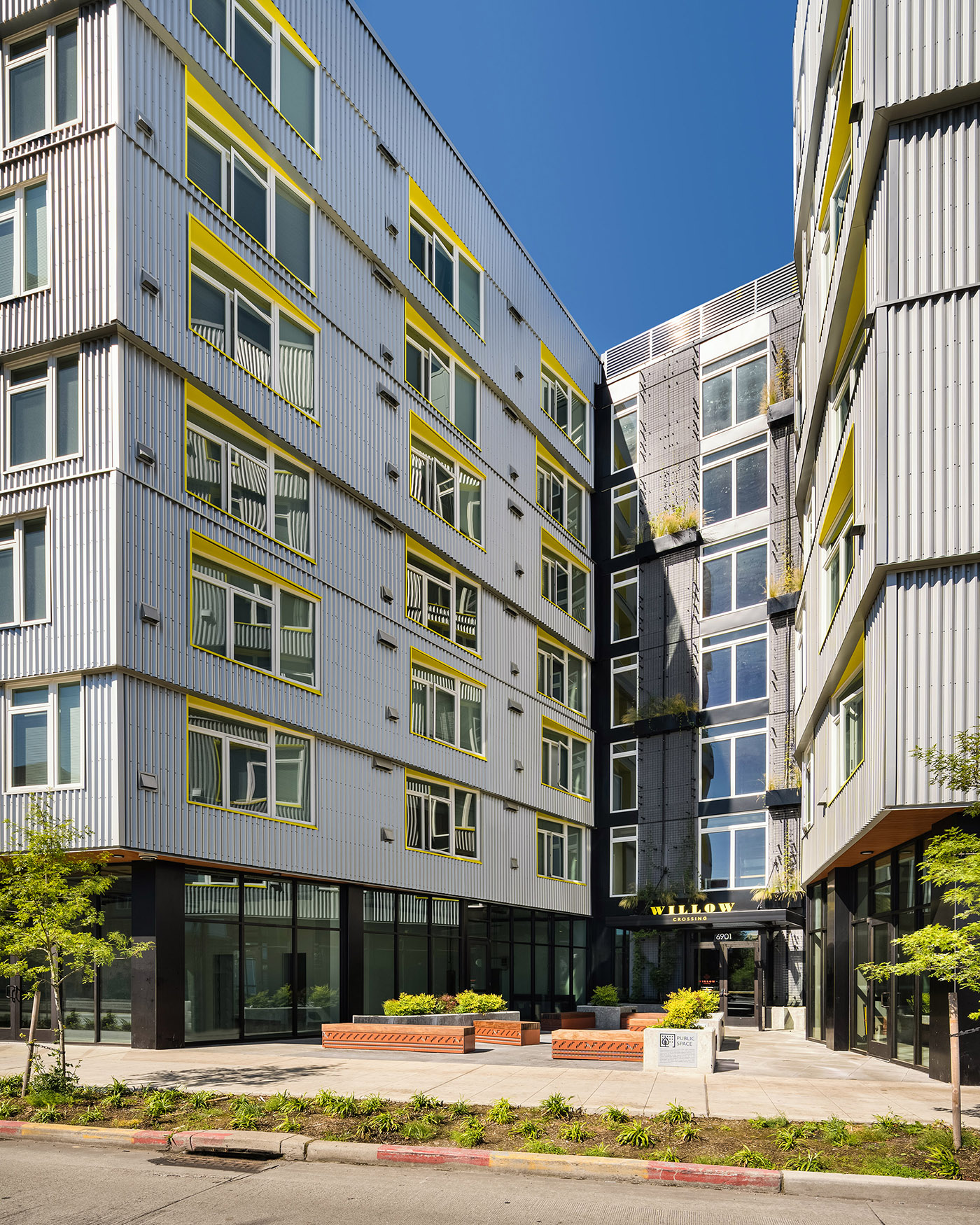
Willow Crossing, located a block from the Othello Link Light Rail Station, offers 211 affordable housing units in a dense, transit-connected site. But beyond numbers, the project tells a broader story about how buildings can foster belonging and community through thoughtful design.
LISTENING TO A NEIGHBORHOOD
The design team began by studying the neighborhood — not only its physical form, but its rhythms and stories. Othello is home to generations of refugee and working-class families, with over 40 languages spoken and a vibrant landscape of small, family-owned businesses. The project took these cultural narratives as a starting point rather than an afterthought.
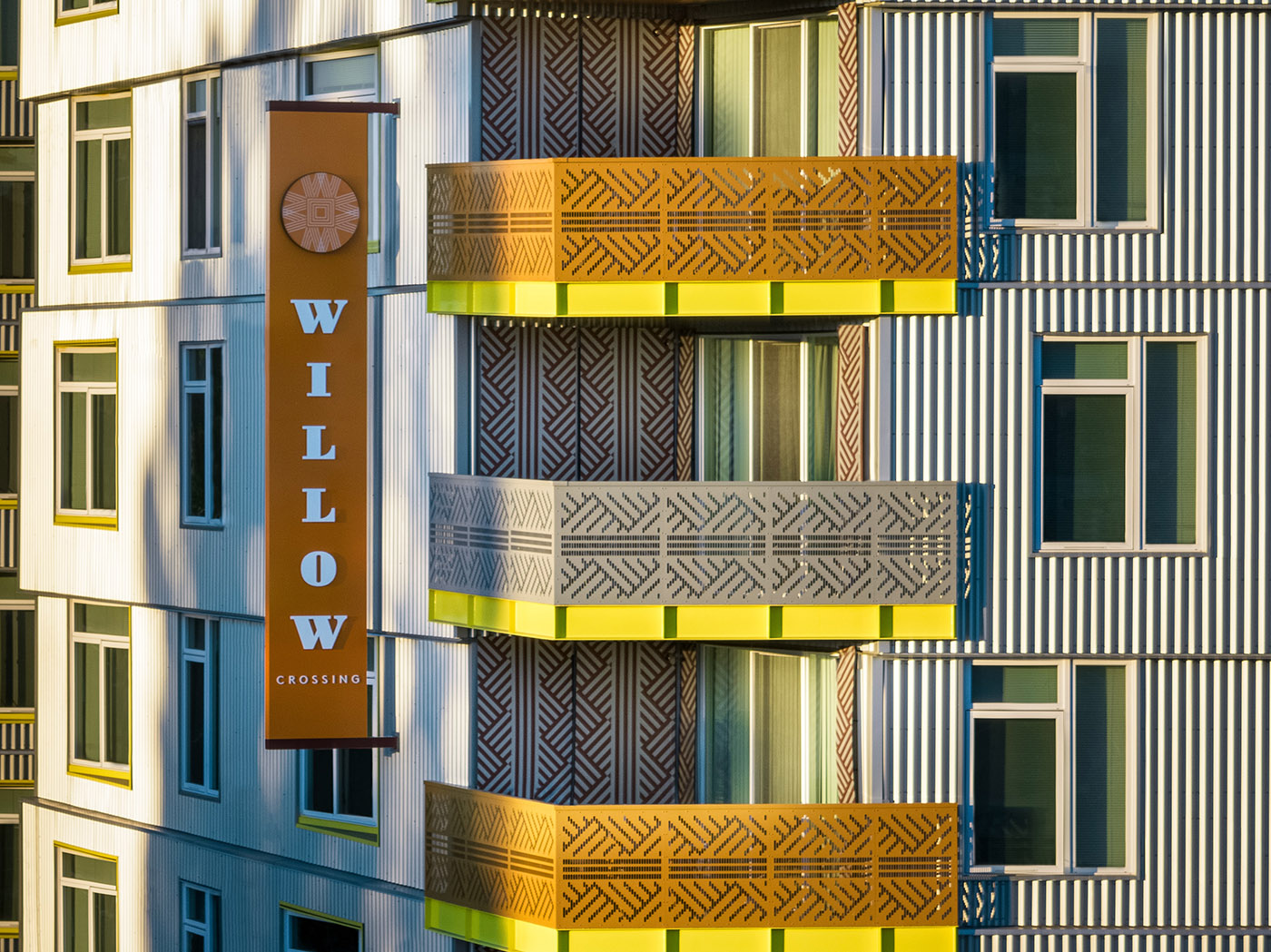
Architecturally, the building’s exterior patterns draw from East African tribal textiles —interpreted in a modern way. The use of color, rhythm, and detail is not only aesthetic but expressive, referencing traditions found within the community. The structure’s massing was broken down to align with the scale of the surrounding streets, aiming to avoid the anonymity that often marks large developments.
PUBLIC REALM AS A PRIORITY
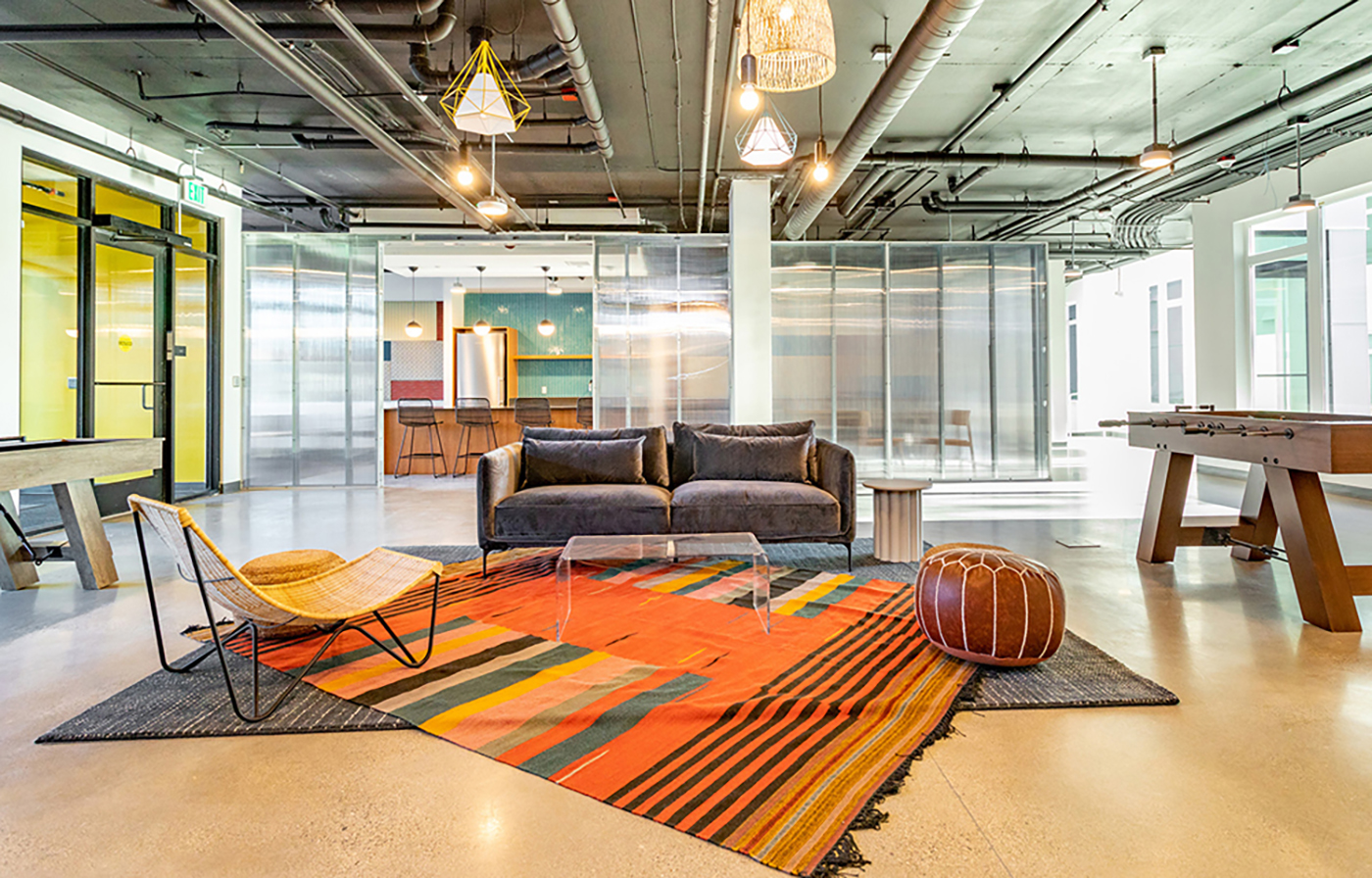
Rather than isolate the housing from its surroundings, the project opens itself to the street with public-facing elements that aim to support everyday life. A landscaped entry plaza, seating areas, and retail frontage help activate the sidewalk and create opportunities for gathering and exchange.
Retail spaces are scaled with intention — not oversized or impersonal, but appropriate for local entrepreneurs and nonprofits. These decisions reinforce the neighborhood’s identity as a place of small, community-led businesses. While TOD projects can sometimes risk feeling imposed, Willow Crossing is designed to feel rooted in its context.
COMMUNITY LIFE, INDOORS AND OUT
Inside the building, the design emphasizes shared spaces where neighbors can connect. A private courtyard offers a quiet retreat, while a rooftop garden provides opportunities for residents to grow food, socialize, or simply enjoy a view. Common rooms and circulation areas are planned to encourage casual encounters among households.
Instead of treating amenity spaces as afterthoughts or luxuries, the development treats them as essential parts of the building’s social infrastructure. Details like the scale of benches, the softness of planting, and the accessibility of entries are all part of an effort to design with people in mind — not just units.
SUSTAINABILITY EMBEDDED IN THE PROCESS
The project was designed to meet the Evergreen Sustainable Development Standard, Washington State’s benchmark for affordable housing sustainability. A living green wall softens the entry and highlights the building’s commitment to environmental design.
Environmental features like biofiltration planters and a planted roof are visible elements that also serve functional goals — managing stormwater, improving air quality, and reducing urban heat.
Behind the scenes, the development team worked to ensure that energy-efficient systems, healthy materials, and native landscaping were included in ways that balanced cost with performance. By embedding sustainability from the outset, the project avoided expensive add-ons and made environmental stewardship part of its core value.
MAKING THE PIECES FIT
Willow Crossing was made possible through a combination of public financing tools, including tax-exempt bonds, local housing funds and support from nonprofit impact lenders. The development also involved a street vacation process, which allowed for more cohesive site planning and the creation of shared outdoor spaces.
Coordinating the funding and permitting required sustained collaboration among public agencies, design professionals and the developer. Rather than taking a cookie-cutter approach, the team worked to tailor solutions that fit the site, the community and the project’s long-term goals.

A MODEL FOR FUTURE GROWTH
As more American cities turn to TOD as a strategy to address housing and mobility, Willow Crossing offers a useful model. It demonstrates how affordable housing near transit can be more than functional —it can be contextual, expressive and inclusive.
Rather than lead with buzzwords, the project leads with presence: a building that feels like it belongs, a landscape that invites neighbors in and a design language that speaks to the people who live there.
For cities like Seattle, where development pressures often collide with community memory, projects like this suggest a path forward — one where architecture serves as a bridge rather than a boundary.
Hui Tian, founder and principal of Studio19 Architects, specializes in community-driven design with a strong emphasis on quality and sustainability in housing developments. Saloni Rege is a design strategist and marketing-communications professional at Studio19, shaping architectural narratives.
Other Stories:


