 |
Subscribe / Renew |
 |
Contact Us |
| ► Subscribe to our Free Weekly Newsletter | |

Construction Bids
| home | Welcome, sign in or click here to subscribe. | login |


 print print  email to a friend email to a friend  reprints add to mydjc reprints add to mydjc |  |
 |
May 4, 2026
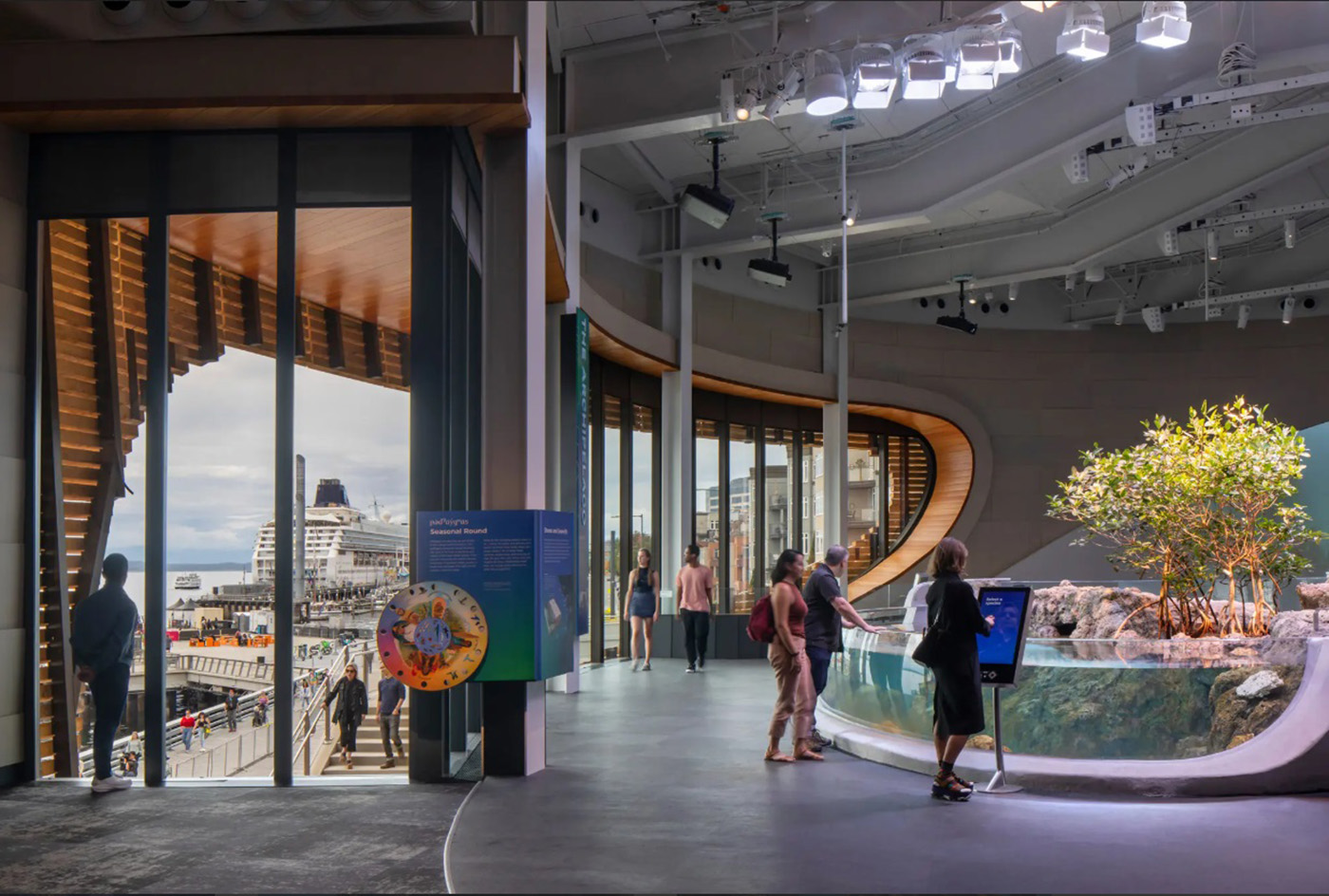
Seattle Aquarium Ocean Pavilion
Location: 1500 Alaskan Way, Seattle
Contractor: Alliance Partition Systems
Architect: LMN Architecture Urban Design Interiors
Labor partners: Western States Carpenters; International Union of Painters and Allied Trades
Seattle Aquarium Ocean Pavilion, a state-of-the-art two-story expansion of the Seattle Aquarium, is located along the Seattle waterfront. The project provides new marine life exhibits and educational spaces designed to enhance the visitor experience while meeting demanding performance requirements for a waterfront environment. LMN Architecture and Alliance Partition Systems contributed to the design and construction of this technically complex and visually distinctive project. Alliance Partition Systems performed the interior scope of work, including cold-formed metal framing, exterior sheathing, air and weather barriers, insulation, and interior drywall systems.
The Ocean Pavilion project is unique in its architectural complexity and constrained urban site. The design incorporates sweeping radius walls, a large circular west-facing window, and custom soffit conditions that required close coordination between architects, engineers, and trade partners. The building’s location on the active Seattle waterfront introduced additional requirements for waterproofing, durability, and material selection, while maintaining tight tolerances for finished interior spaces.
Construction presented significant logistical and technical challenges. The site had limited access with a single shared entry point, requiring careful scheduling of material deliveries, many of which were flown in by crane and installed the same day due to space constraints. Ongoing revisions to engineered drawings, long lead times for specialized materials such as Aqua Tough board and FRP, and the dense integration of mechanical and piping systems required continuous coordination and adaptability.
Through detailed planning, clear communication, and collaborative problem-solving, the project team successfully met aggressive deadlines and delivered a high-quality finished facility.
Other Stories:


