 |
Subscribe / Renew |
 |
Contact Us |
| ► Subscribe to our Free Weekly Newsletter | |

Construction Bids
| home | Welcome, sign in or click here to subscribe. | login |


 print print  email to a friend email to a friend  reprints add to mydjc reprints add to mydjc |  |
 |
May 4, 2026
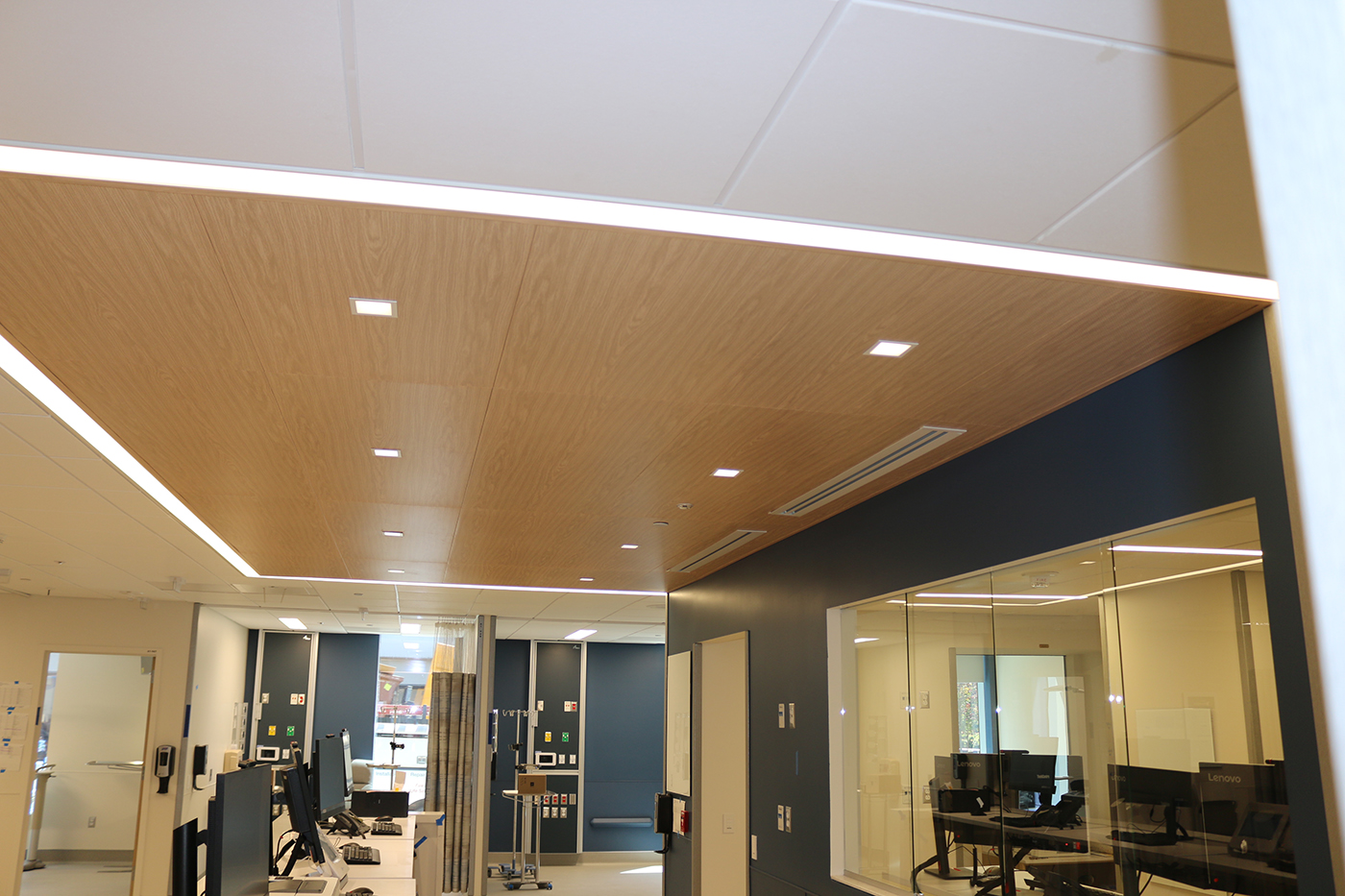
PeaceHealth Southwest Medical Center Emergency Department Addition
Location: 400 N.E. Mother Joseph Place, Vancouver, Washington
Contractor: Performance Contracting
Architect: ZGF Architects
Labor partners: Western States Carpenters; International Union of Painters and Allied Trades; Operative Plasterers’ & Cement Masons’ International Association
PeaceHealth Southwest Medical Center’s Emergency Department’s two-story, 55,000-square-foot expansion significantly enhances emergency care capacity at an active hospital campus in Vancouver, Washington. The project includes new treatment, exam, and trauma rooms, a 24-bed observation unit, and a 4,000-square-foot community care center dedicated to serving non-medical patients.
Designed by ZGF and constructed by Turner Construction, the addition connects to the existing hospital at six separate locations, requiring exceptional coordination and sensitivity to patient safety and ongoing operations. Performance Contracting performed the suspended ceiling and specialty ceiling scopes throughout the addition.
The project is notable for the precision required to integrate multiple ceiling systems within a highly technical healthcare environment. Acoustical tile ceilings, integrated lighting, and metal ceiling systems were required to align seamlessly, with tolerances held to under 1/8 inch. These complex ceiling transitions occurred at ten locations, all of which passed inspection without punch list items, reflecting the high level of coordination between trades.
Additional challenges included the installation of custom wood ceilings along angled corridors, where the ceiling edges were required to maintain consistent reveals aligned with adjacent glazing. Each wood panel was hand-cut to accommodate changing angles. When material quantities were underestimated by the supplier, early procurement and rapid collaboration allowed replacement materials to be secured without impacting the schedule. The judges saw the clear simplicity of the final finish at these edges especially notable.
All work was performed within an active medical facility, requiring strict particle containment, noise control, and logistical planning to protect patients and staff. Through careful coordination, proactive problem-solving, and precise execution, the project team delivered a functional, durable, and visually refined emergency department that meets the demanding standards of modern healthcare construction.
Other Stories:


