 |
Subscribe / Renew |
 |
Contact Us |
| ► Subscribe to our Free Weekly Newsletter | |

Construction Bids
| home | Welcome, sign in or click here to subscribe. | login |


 print print  email to a friend email to a friend  reprints add to mydjc reprints add to mydjc |  |
 |
July 30, 2026

|
Elliott Bay Connections (EBC) completes the transformation of Seattle’s waterfront, expanding continuous public experiences from Pioneer Square to Smith Cove. EBC’s greenway and revitalized Myrtle Edwards and Centennial parks, opened in June 2026, offer places to connect and engage with the history, nature and culture of the waterfront.
The public-private partnership was funded entirely by private philanthropy and delivered in partnership with the city of Seattle and the Port of Seattle. The design team, led by Walker Macy and a team of consultants with deep working knowledge of the waterfront, aimed to unify the waterfront experience and instill it with a newfound sense of place.
The project turns former “pass-through” spaces into civic destinations that highlight our region’s natural beauty. The revitalized parks now feature distinctive, delightful spaces: two expanded beach coves, a children’s exploration area, interpretive viewpoints, a restored rose garden, and a brand-new pavilion with public restrooms and concessions.
A MAJOR TRANSFORMATION
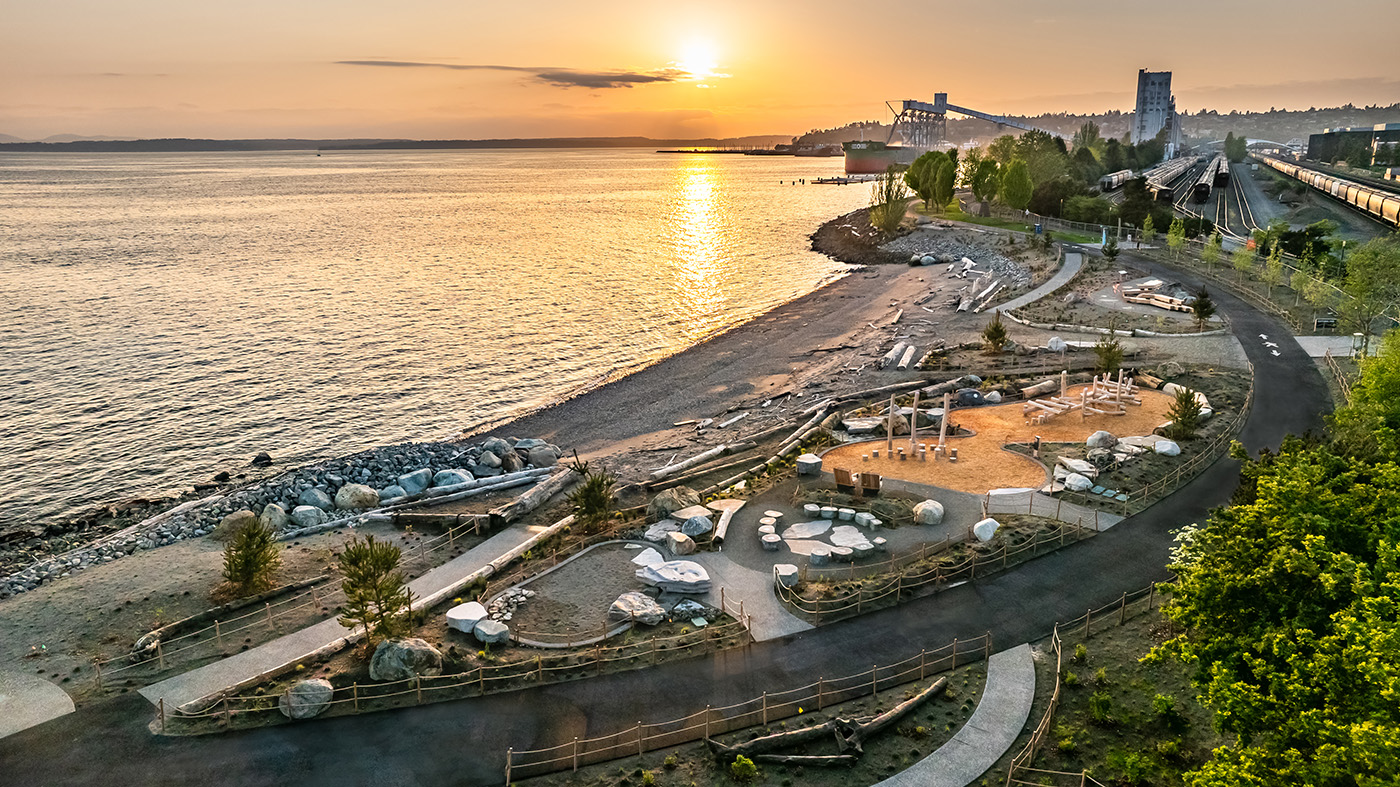
In 2006, Olympic Sculpture Park was a brownfield; removal of the Alaskan Way Viaduct was a subject of ongoing debate. A streetcar ran along Alaskan Way, and Myrtle Edwards and Centennial parks offered out-of-the-way trails, far from the perceived center of downtown.
In 2018, Walker Macy and MIG studied the feasibility of improving these connections and public spaces. Initially, we expected the project to involve streetscape renovations and basic park upgrades. And then, Seattle started to do big things.
With the creation of Waterfront Park and Overlook Walk, the team and project partners quickly realized EBC had enormous potential. Comprising over half of Seattle’s downtown waterfront, improvements along Elliott Bay could elevate the identity of downtown and complement the Central Waterfront.
After philanthropic donations were announced in 2023, the EBC team swiftly moved into community engagement and realization of the project’s vision, slated for completion by June 2026. EBC was guided by five goals: create a connected waterfront experience; provide opportunities to engage with nature and the water’s edge; foster social connection; honor Indigenous communities that have lived here since time immemorial; and support habitat and environmental sustainability.
One element of the project is quite literally a connection: the greenway replaces trolley tracks and dilapidated sidewalks along Alaskan Way with a ¾-mile multi-use trail between the Seattle Aquarium and Olympic Sculpture Park. It accommodates people of all ages and abilities walking, biking and rolling. The landscape takes cues from the historic Seattle shoreline, transitioning from forest and ravine to a beach-like character, and includes shade trees, thousands of native plants, lighting and places to rest.
Other project features elevate the quality of Myrtle Edwards and Centennial parks. Beloved for their Puget Sound views but characterized by simple lawns, aging trails, and scattered benches, the parks did not live up to their setting. Our team transformed the landscape with abundant native planting, expanded and improved the beaches, and introduced new amenities such as the children’s exploration area and a park pavilion, whose design honors the spectacular setting.
THESE ARE CIVIC SPACES
The revitalization of Myrtle Edwards and Centennial Parks supports community well-being and encourages cultural engagement. The new landscape is infused with stories about the environment and our relationship with it. Interpretive signage continues themes found throughout the waterfront, and multiple Indigenous consultants contributed art, design, and ideas that enrich the parks’ sense of place.
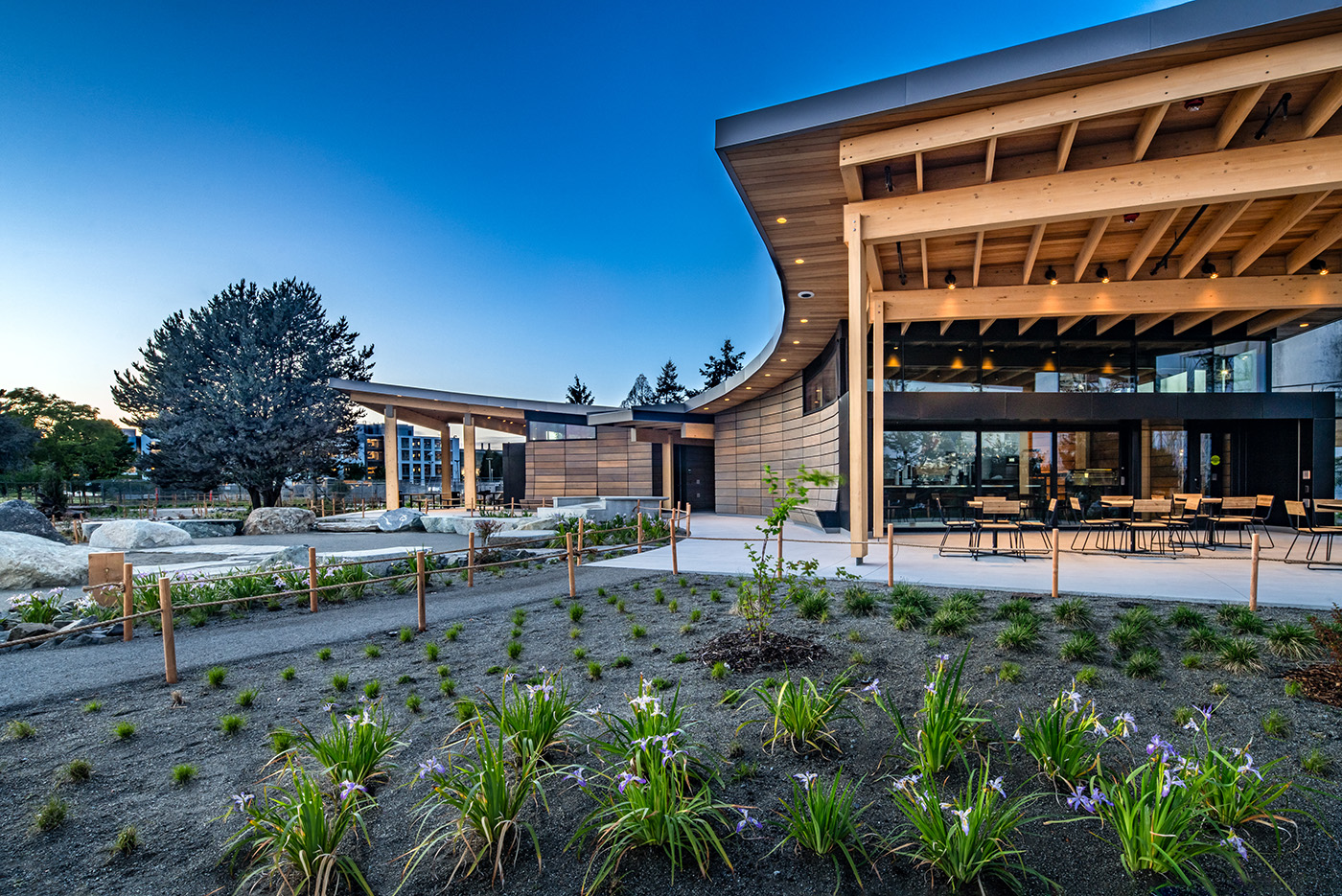
haʔłali, the new pavilion near the Pier 86 Grain Terminal, was designed by Formline Architecture + Urbanism, led by First Nation architect Alfred Waugh, whose work merges “Indigenous ways of knowing with Western design.” It features a café, restrooms, and an outdoor gathering space with a ceremonial fire pit and terraced seating that will host feasts and events. The building forms a gentle arc whose roofline tilts upwards at both ends, as if outstretching its arms in welcome, and signifying the importance of the Salish Sea to Coast Salish culture. haʔłali was named by the Suquamish Language Committee and translates as “the good place.”
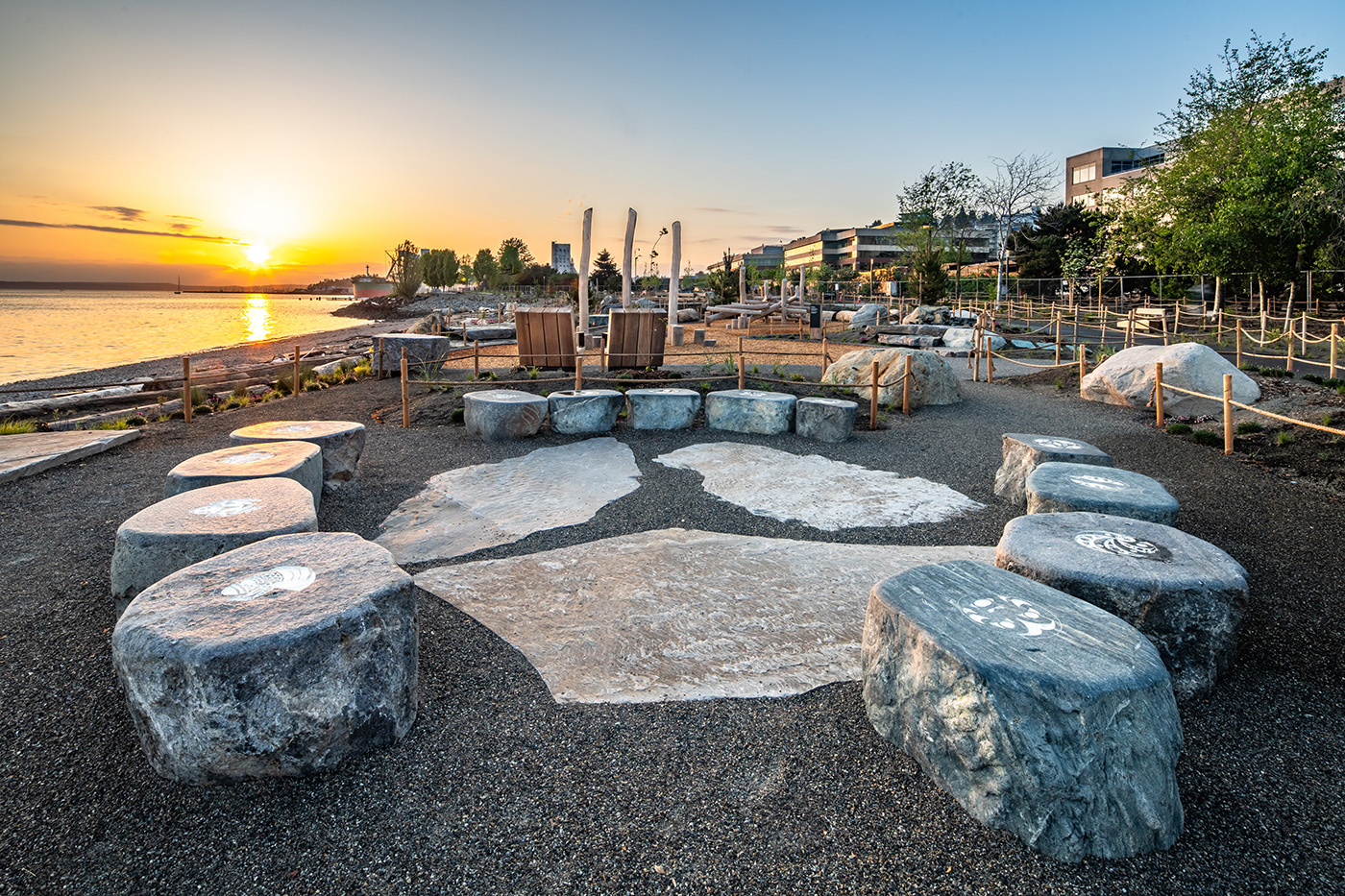
The parks were designed to spark curiosity and encourage exploration. We collaborated with Valerie Segrest (Muckleshoot) and Anabel Baker (a Samish artist) to create boulders engraved with the 13 Moons of the Coast Salish lunar calendar. Each moon signals changes in weather, plant growth, animal migration, and traditional food harvests. These boulders are nestled into immersive native planting on side trails (tell your kids to go find them all!). Smaller children can get a head start by visiting the Circle of Moons in the Kid’s Exploration Area, which also features custom interactive play elements like giant carved stone watercourses, stackable rocks in the sand pit, and wooden climbing structures that encourage creative play.
RESILIENT AND SUSTAINABLE
One of the project goals was to bring the experience of nature into the city, while making the parks more resilient to climate change and sea level rise, nurturing habitat and ecologies. We prioritized improvements that interweave human and ecological benefits.
The site itself was not natural—it was created from I-5 construction fill in the 1950s. To re-naturalize the shoreline, we replaced nearly 200 linear feet of rip-rap with natural beach near the Thomas St. Bridge. Its gentle, accessible grade and riparian planting can absorb the impact of rising tides and winter storms. The beach adds beauty, a place to touch the water, and supports fish and foraging seabird habitat.
Diverse upland landscapes include pollinator lawns and meadows full of colorful native wildflowers, rocky bluffs, and a rich forest understory replete with salal and salmonberry. This microcosm of Salish Sea landscapes is more varied than a typical narrow stretch of shoreline and enriches the site with almost entirely native species. Built features also use natural materials: furniture crafted from local fir, wooden play equipment, and boulders quarried from the Pacific Northwest.
CONTRIBUTING TO A VIBRANT DOWNTOWN
With EBC’s completion, the Seattle waterfront has grown to 50 acres of world-class, connected public open spaces stretching over 3.5 miles. Downtown residents and visitors can spend a whole day (or entire weekend) on the waterfront and enjoy the best of what our region has to offer, from Pike Place Market and Overlook Walk to the expansive, naturalized landscapes of Myrtle Edwards and Centennial Parks. These are landscapes that ground the city in its place and remind us that we are all part of a bigger story.
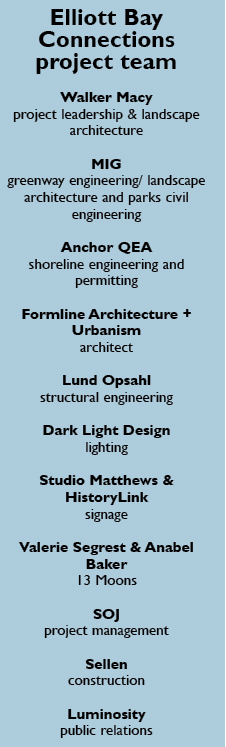
To learn more, and to see a complete list of project partners and consultant team, visit http://www.elliottbayconnections.org.
Lara Rose is a partner at Walker Macy who leads the design of impactful public projects including downtown parks, campuses, civic spaces and waterfronts.
Other Stories:


