 |
Subscribe / Renew |
 |
Contact Us |
| ► Subscribe to our Free Weekly Newsletter | |

Construction Bids
| home | Welcome, sign in or click here to subscribe. | login |


 print print  email to a friend email to a friend  reprints add to mydjc reprints add to mydjc |  |
 |
July 30, 2026

Prendergast
|
Transportation infrastructure projects shape how communities connect and businesses grow. They are among the most impactful investments a region can make, especially in a rapidly growing area like the Puget Sound.
For construction contractors, the role extends beyond building roads, bridges, rail lines and transit stations. It involves delivering infrastructure that supports long-term mobility, improves existing infrastructure, and addresses the evolving needs of the regions these projects serve.
Transportation projects come with defined deliverables, and must address the unique transportation needs of the communities they serve. These needs include reducing congestion, improving mobility, strengthening economic connections, and expanding access to jobs and services. Environmental stewardship and long-term sustainability also remain priorities shared by project owners and delivery teams.
_big.jpg "click to enlarge")
These projects are inherently complex. Success depends on close coordination among public agencies, designers, contractors, subcontractors, community stakeholders, utility providers, and others. They must be delivered safely while maintaining existing transportation systems that thousands of people rely on every day.
At Skanska, I’ve had experience across major infrastructure and transportation projects in the Puget Sound region including the Lynnwood Link Extension (L300) and the I-405 Brickyard to SR 527 Improvement Project (Brickyard). They both demonstrate how modern transportation infrastructure continues to evolve. I’ve learned that it is about creating more connected and more sustainable transportation networks to deliver improvements back to the community.
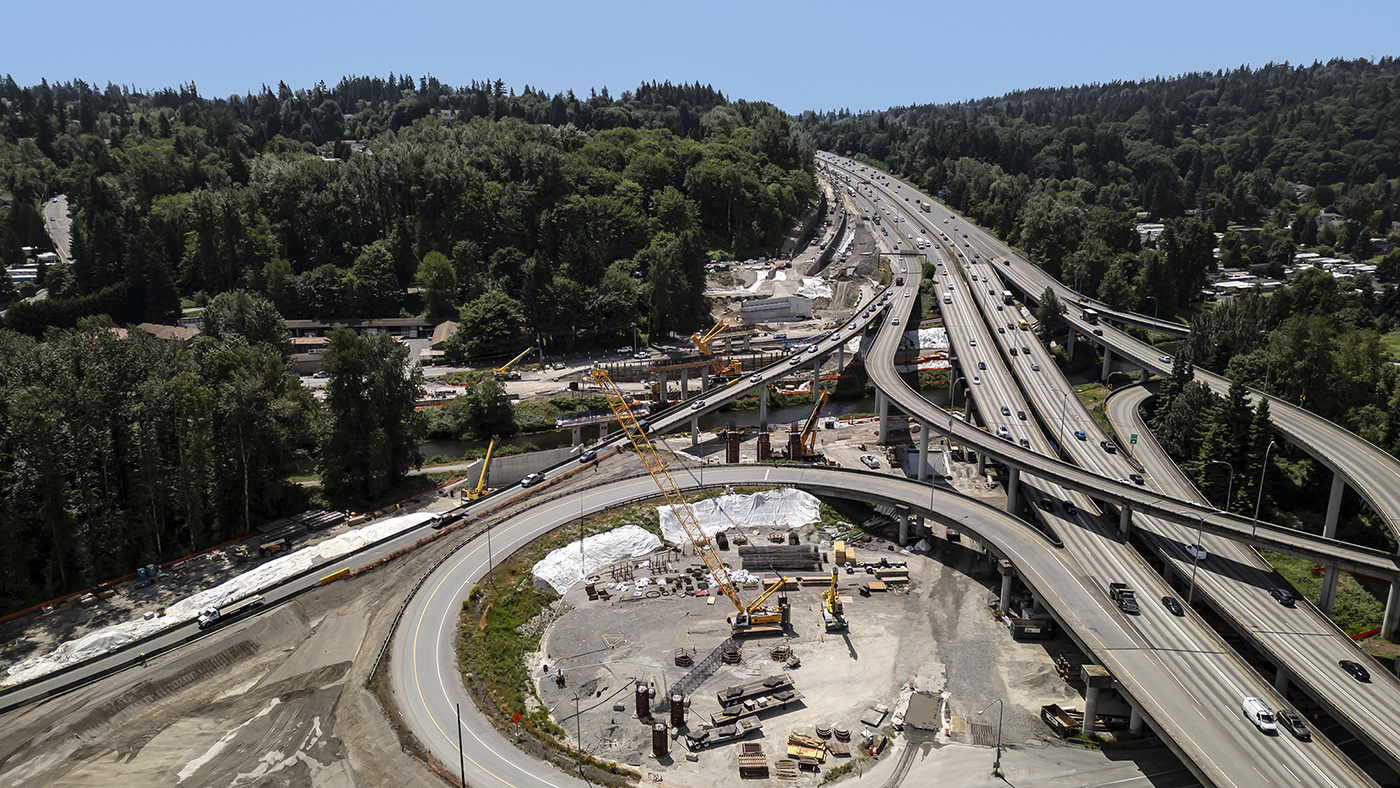
Currently, the Brickyard project will expand the dual express toll lane system along a critical section of one of the region’s busiest corridors. The project includes 5.5 miles of corridor improvements, new toll lanes, direct-access ramps, interchange upgrades, four new stations supporting Sound Transit’s Stride Bus Rapid Transit (BRT) system, and six new fish passageways throughout the project area.
The recently completed L300 included construction of 3.8 miles of aerial guideway, two elevated stations, and a five-story parking garage at Lynnwood Transit Center. Since opening in August 2024, approximately 4,500 people use the Link light rail station in Lynnwood every weekday.
HIGH LEVEL OF INNOVATION
What distinguishes projects like these is the level of innovation required to deliver them.
Brickyard includes several transportation innovations for the corridor. The Brickyard project will add the region’s second, third and fourth in-line BRT stations with direct access to the express toll lanes. The project also includes pedestrian bridges spanning I-405 to connect neighborhoods and park-and-ride facilities, along with electric bus charging infrastructure to support future transit operations.
Innovation was a large part of the construction of L300. Near McAleer Creek, the L300 team preserved approximately 97% of the original wetlands by using a temporary soldier pile wall with tiebacks rather than a construction approach requiring greater encroachment into sensitive habitat.
A FOCUS ON SUSTAINABILITY
Sustainability remains a core consideration in transportation infrastructure, particularly as project owners continue to prioritize environmental performance.
At L300, the Lynnwood City Center Station achieved LEED Gold certification from the U.S. Green Building Council, encompassing the station, parking garage and surrounding plaza.
To support these outcomes, the project incorporated low-emitting materials, recycled content and erosion-control measures. The completed facility achieved a 30% reduction in energy costs compared to the ASHRAE baseline, reduced indoor water use by 34%, and reduced irrigation demand by 71% through drought-tolerant landscaping. The project also achieved 81% diversion of construction waste from landfills, and met low-VOC material requirements across key building components.
And today, the Brickyard project explores additional ways to protect the environment through construction. We are building six new fish passage culverts designed to improve fish migration and reconnect streams that have been fragmented for decades. The project also includes stormwater management systems and green infrastructure elements to reduce runoff and protect nearby waterways.
These projects demonstrate that transportation infrastructure can deliver benefits beyond mobility improvements alone.
As the region continues to grow, transportation investments will remain essential to supporting connectivity, economic activity and access across the Puget Sound.
Pat Prendergast is vice president of operations for Skanska USA Civil.
Other Stories:


