 |
Subscribe / Renew |
 |
Contact Us |
| ► Subscribe to our Free Weekly Newsletter | |

Construction Bids
| home | Welcome, sign in or click here to subscribe. | login |


 print print  email to a friend email to a friend  reprints add to mydjc reprints add to mydjc |  |
 |
July 30, 2026

Page
|

Martz
|
What began as a hydrology study more than a decade ago has evolved into one of the most ambitious watershed planning efforts in the Pacific Northwest.
Today, the Chehalis Basin Strategy reflects a growing shift toward projects that deliver multiple benefits rather than focusing on solving a single problem. Across the approximately 2,700 square-mile basin in southwest Washington, infrastructure solutions are designed to deliver multiple benefits: flood protection, ecological restoration, community resilience and long-term planning.
The Chehalis Basin Strategy also unifies Tribes, federal and state agencies, local governments, conservation organizations, businesses, agricultural communities and residents around a shared goal: reducing flood damage while restoring aquatic species.
A DIFFERENT APPROACH
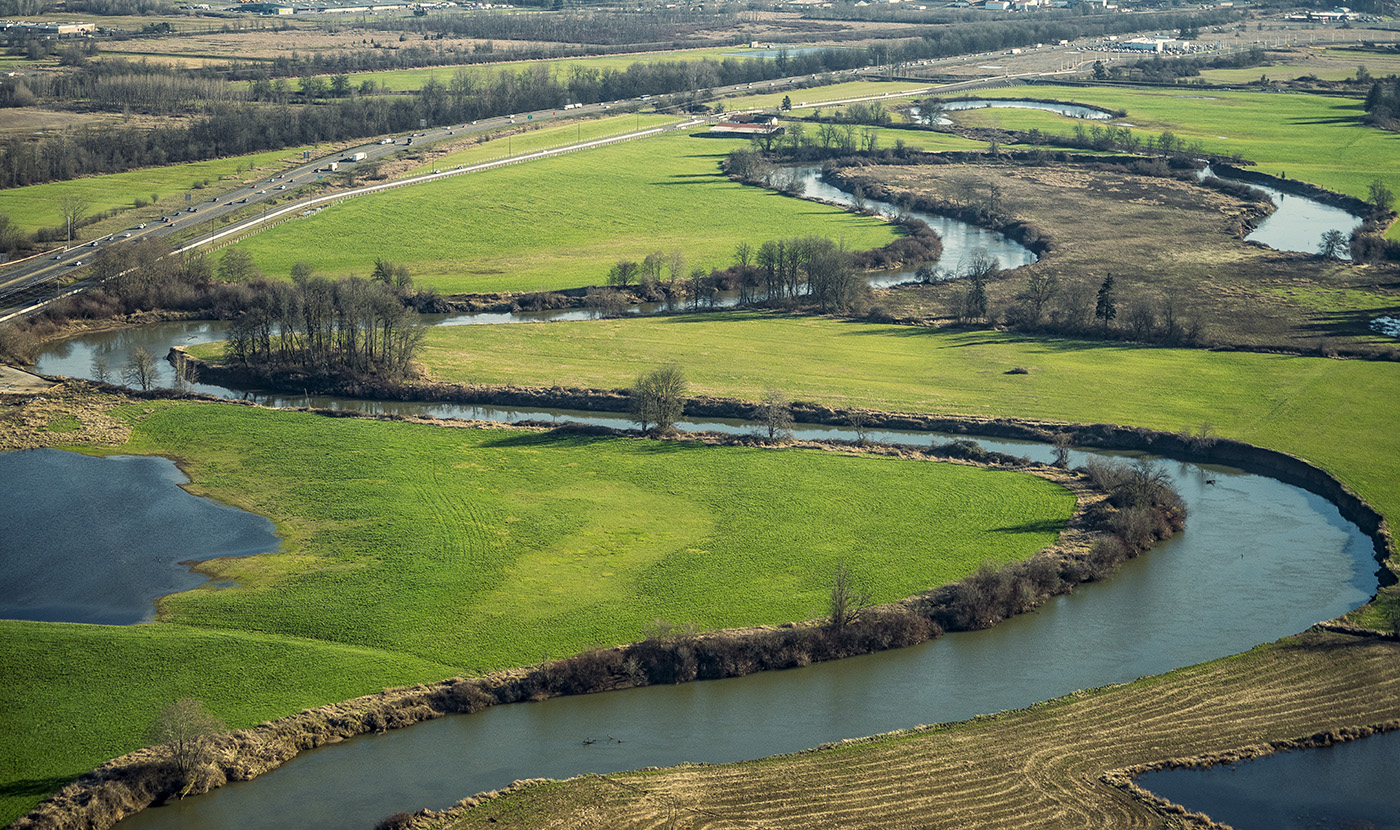
The Chehalis Basin Strategy is a strong example of the trend among communities and public agencies to maximize return on investment from available public infrastructure dollars. The program has been supported by sustained state investment of approximately $70 million to $75 million every 2 years, enabling long-term planning and implementation across the basin.
For generations, flooding has affected neighborhood and commercial properties, agriculture, transportation corridors and public infrastructure throughout the region. At the same time, salmon and other aquatic species have faced increasing pressure from habitat loss and changes to the natural river system.
Addressing either challenge independently would leave important needs unmet. Targeted flood-protection projects would do little to restore critical habitat. Habitat restoration efforts alone fail to address the significant economic and public safety impacts of recurring and worsening floods.
The Chehalis Basin Strategy was built on the premise that long-term solutions should benefit both people and the environment. Rather than treating flood protection and habitat restoration as competing priorities, the strategy seeks opportunities to advance them together through coordinated planning, scientific and engineering studies, and multi-party collaboration, an approach that translates into a diverse set of projects delivering measurable results across the basin.
MANY PROJECTS TELL THE STORY
This philosophy resulted in a diverse portfolio of multi-benefit projects throughout the basin. The Office of Chehalis Basin, housed within the Washington Department of Ecology, reports that the strategy included 68 active projects in 2025 alone.
Since investments began, the strategy has delivered measurable results: more than 115 river miles have been made more accessible to fish, more than 300 acres of habitat have been restored, and approximately 1,200 homes and businesses now benefit from flood-protection measures in the lower basin.
One element of the Chehalis Basin Strategy, the Aquatic Species Restoration Program, works with local, state and Tribal partners to improve habitat conditions throughout the basin. Guided by science-based prioritization, the program focuses resources where they can provide the greatest benefit for aquatic species populations and overall watershed health. Current initiatives include large-scale river restoration and floodplain reconnection projects, wetland protection and restoration, and estuary restoration planning.
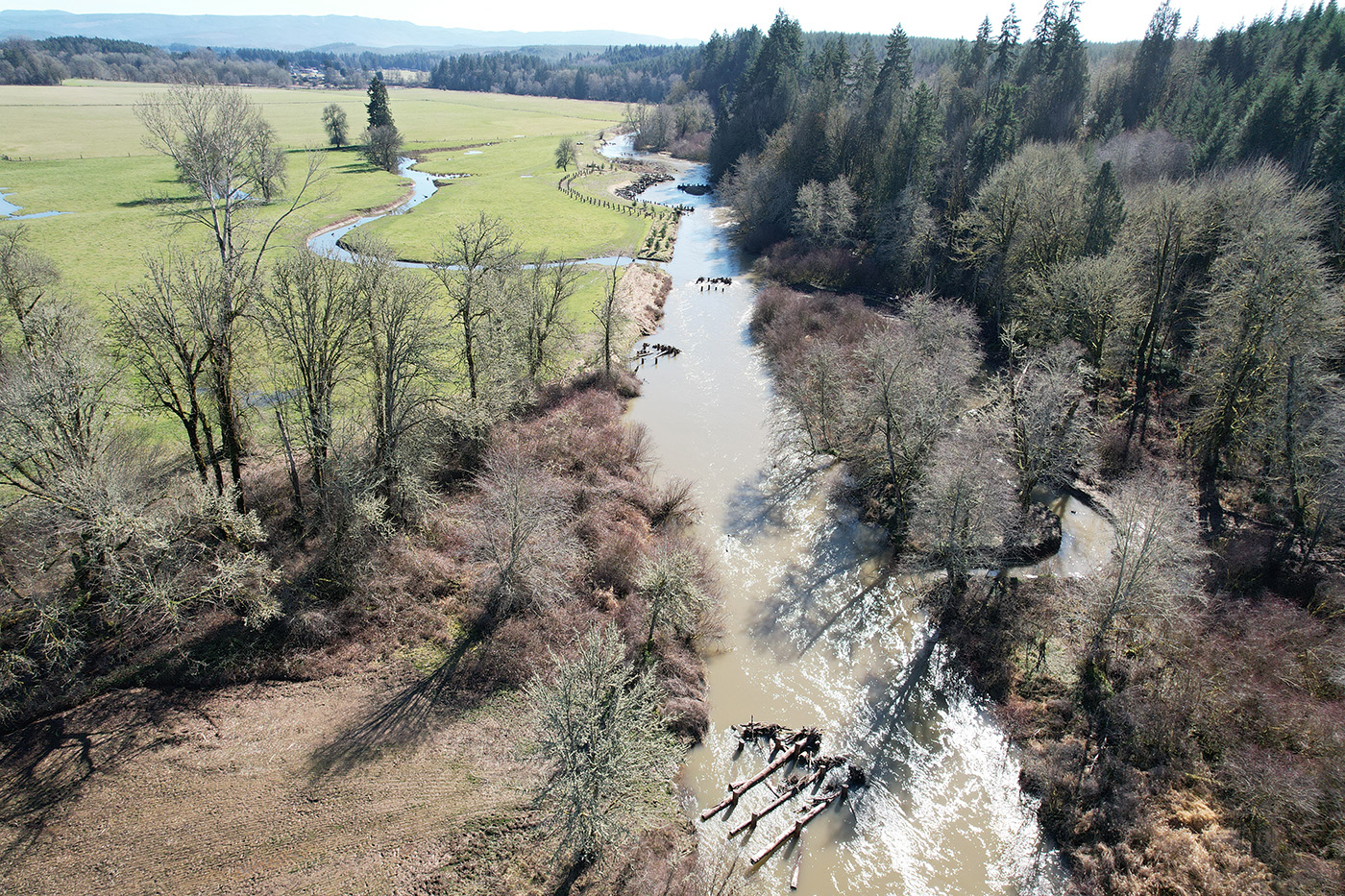
An experimental restoration project on Schafer Creek near Montesano serves as an example, where streambed sediment and large logs were strategically placed to help recreate the natural features of a healthy stream and cool water temperatures. The project is being extensively monitored to better understand how these changes affect habitat quality for salmon and other aquatic species while also providing insight to guide future restoration programs.
A large-scale river and floodplain restoration project on the Skookumchuck River restored more than 2.5 miles of river channel through the placement of engineered log jams. Multiple side channels and backwaters were reconnected to provide refuge for aquatic species while reestablishing connections to the floodplain.
The project will restore or enhance approximately 65 acres of riparian forest, and 68 acres of grazing fields will receive silvopasture (clumps of large trees that provide shading and cooling while still allowing grazing).
New pump stations in Hoquiam and Aberdeen help protect lower-basin communities from flooding caused by river flows, coastal flooding and tidal surges. Eight homes so far have been elevated across the basin, reducing their exposure to flood damage while maintaining critical affordable housing stock. Additional projects under consideration—including levees, floodwalls and a unique flow-through dam—reflect the strategy’s continued focus on integrated solutions that strengthen long-term community and environmental resilience.
COMMON GROUND, MULTIPLE BENEFITS
Taken together, these projects demonstrate how strategic investment can address multiple needs. For example, projects that reconnect floodplains can improve habitat while helping rivers manage high water flows more effectively. Flood-protection investments reduce risk to homes, businesses and infrastructure. By looking beyond individual project objectives, communities can create solutions that deliver broader and longer-lasting benefits.
Perhaps the most important lesson from the Chehalis Basin Strategy is that successful infrastructure projects require more than technical expertise alone.
Engineering, environmental science and planning remain essential. So does rigorous analysis. But long-term success also depends on meaningful and respectful collaboration among Tribal nations and stakeholders. It requires balancing competing interests, establishing shared priorities, and maintaining trust and a shared vision throughout project planning and implementation.
While the Office of Chehalis Basin has delivered smaller projects throughout the basin, it has continued to define large-scale flood damage reduction projects that meet the needs of many partners at the table. The time and effort to develop broad-based support grows with the scale of the project, and major infrastructure like dams and levees are no exception. Without multi-party support, projects struggle to complete environmental review, attract funding, and move into construction.
This reality is increasingly shaping how infrastructure projects are evaluated and funded nationwide, as agencies prioritize solutions that will deliver measurable, multi-benefit outcomes. Whether the challenge involves flooding, transportation, water resources or climate resilience, agencies are seeking solutions that produce broader public benefits while making the most of limited resources.
More than a decade after its launch, the Chehalis Basin Strategy continues to take shape as leaders evaluate long-term options for flood protection and aquatic restoration. Whatever form these future investments take, the effort has already demonstrated an important principle: the most effective infrastructure solutions are often those that solve more than one problem at a time.
Heather Page is a principal environmental planner and Merri Martz is a principal restoration biologist at Anchor QEA, an environmental science and engineering consulting firm specializing in aquatic, shoreline and water resources projects.
Other Stories:


